


What are the different sizes of aluminum extrusions?

There’s a lot to know about the dimensions of aluminium extrusions — choosing the right size affects cost, performance and application.
Aluminium extrusions come in a wide range of standard and custom sizes, defined by width, height, wall thickness, and length, all hinging on die size, press capacity and application demands.
In the sections below I’ll take you through how extrusion sizes are categorised, why profiles vary in width & height, where standard size charts live, and how custom sizes can be manufactured.
How are extrusion sizes categorised?
Extrusion sizes are often categorised by cross‑section dimensions (width × height), wall or flange thickness (for hollow or complex shapes), and length. Standard series sizes (for example in T‑slot framing) also apply. For example, in T‑slot framing systems you might see “20 mm series”, “30 mm series”, “40 mm series” etc.
Most aluminium extrusion sizes are categorised by their width × height profile, wall thickness, and length, often aligned with modular series like 20 mm, 30 mm or 40 mm systems.

Why categorisation matters
- Cross‑section width and height determine fit and function
- Wall thickness affects strength and material use
- Length is capped by press and shipping limits
- Series simplify design and procurement
Typical size categories
| Category | Typical width × height | Comments |
|---|---|---|
| Small series | 20 mm × 20 mm / 1″ × 1″ | Light duty frames, hobby, small assemblies |
| Medium series | 30 mm × 30 mm / 40 mm × 40 mm | Modular machine frames, workstations |
| Large series | 40 mm × 80 mm / 50 mm × 100 mm+ | Heavy machine bases, structural frames |
| Custom large | 100 mm × 200 mm+ | Large span extrusions, architectural elements |
Tolerances & standards
Tolerances in these categories follow international norms (ISO, EN, ASTM), affecting compatibility and part fit.
Extrusion sizes are typically categorised by series (eg 20 mm, 30 mm, 40 mm) which simplifies modular framing systemsTrue
Because many framing systems and T‑slot profiles adopt these standard series to allow compatibility and easier ordering.
All aluminium extrusions use exactly the same size series regardless of applicationFalse
Because different applications (architectural, automotive, structural) have different requirements so size series vary and custom sizes are needed.
Why profiles vary in width and height?
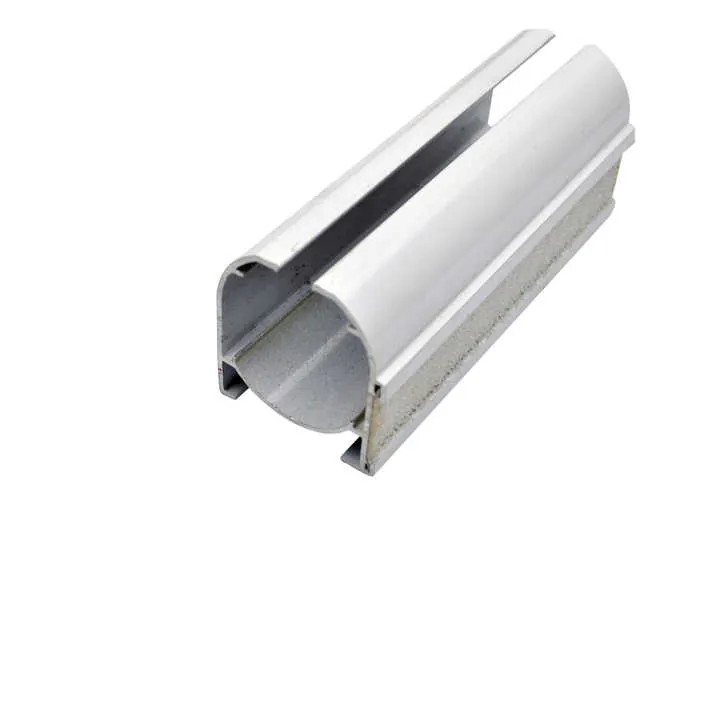
Profiles vary in width and height because different applications demand different structural, aesthetic and mechanical needs. Tooling limitations and press capacity also play a role.
Profile width and height vary to match application needs for strength, mounting, aesthetics, and are limited by die size and press capability.
Structural & functional reasons
- Bigger cross-sections resist bending
- Taller profiles hold better under load
- Narrow ones save weight and cost
- Added ribs or slots require space
Manufacturing constraints
- Presses limit max size (circumscribing circle)
- Thin walls may not extrude well
- Faster extrusion limits size complexity
Use-case examples
- Architectural: wider for curtain walls, heavy glass
- Machinery: follow modular systems
- Transportation: shape for aerodynamics or fitting
Trade-offs
- Larger = stronger but heavier and pricier
- Smaller = cheaper but weaker
- You must balance strength, cost, and fit
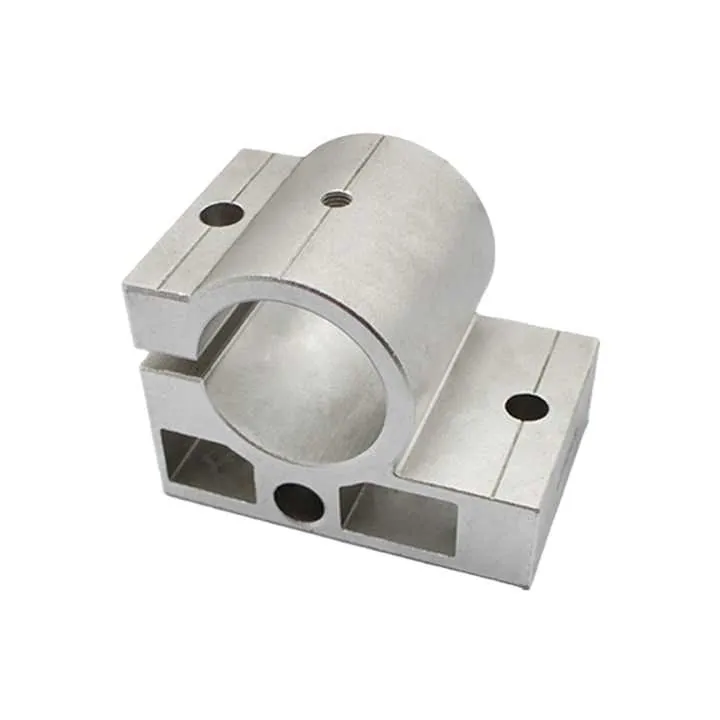
Profiles vary in width and height mainly due to structural load requirements and functional integrationTrue
Because load, span, mounting features dictate larger or smaller cross‑sections, and these drive width/height variation.
Width and height of an extrusion are fixed and cannot be changed to suit applicationFalse
Because extrusions can be custom designed with differing width/height to match load, span or mounting requirements.
Where to find standard size charts?
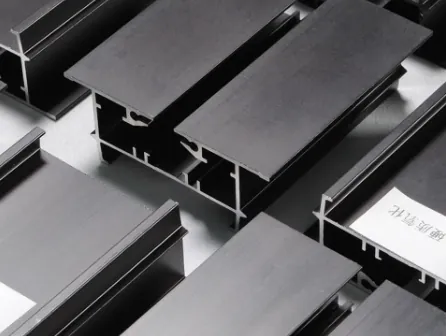
You can easily find standard aluminium extrusion size charts from manufacturers, metal suppliers, and framing system catalogs.
Standard size charts are available from manufacturers and include width, height, wall thickness, alloy, finish, and tolerance.
Common sources
- Supplier catalogs (e.g. MISUMI, 8020, item)
- Industry datasheets (EN 755, ASTM B221)
- Manufacturer websites (downloadable PDFs)
Typical chart contents
| Field | Details |
|---|---|
| Profile type | T-slot, angle, round, box, flat |
| Width × height | Outer dimensions |
| Wall thickness | For strength/load calculation |
| Alloy/Temper | E.g. 6063-T5, 6061-T6 |
| Finish | Mill, anodized, powder coated |
| Length | Often 6m or cut to size |
| Tolerance | Typically ±0.2 mm or per spec |
How to use them
- Select by strength or application
- Confirm matching with existing parts
- Cross-reference with slot size or accessories
- If it’s not listed — time for a custom die
Standard size charts are readily available and useful for selecting commonly used aluminium extrusion profilesTrue
Because many suppliers and manufacturers publish their available sizes, alloys, lengths and tolerances for easy reference.
If the size you need is not listed in standard charts then you cannot get it manufacturedFalse
Because many extrusion manufacturers (including large‑press operations) support custom tooling and custom cross‑sections outside of standard size charts.
Can custom sizes be manufactured?
Custom sizes are not only possible, they’re common — especially in large-scale structural, architectural or technical applications.
Yes, custom aluminium extrusion sizes can be made using new tooling, with specifications adjusted to match exact project needs.
When custom makes sense
- Need for unique profile shape
- Load demands exceed standard profiles
- Integrate proprietary mounting systems
- Improve fit/assembly efficiency
What’s required
- Die design: upfront engineering
- Prototype runs: validate extrusion and tolerances
- Volume: justify setup and tooling costs
- Press size: must fit die (your shop has 500T–4500T)
- Lead time: generally longer than standard
Comparison table
| Factor | Standard Extrusion | Custom Extrusion |
|---|---|---|
| Cost | Low | High upfront, scalable later |
| Speed | Ready-stock | Needs tooling & time |
| Size range | Fixed | Unlimited (within press limits) |
| Design fit | Good enough | Exact to need |
| MOQ | Low | Usually higher |
Business tip
If clients want large size or a slot design you don’t see in catalogs, custom is likely the solution. Your strength is being able to extrude large, complex shapes quickly. For many clients, custom sizing adds real competitive advantage.
Custom aluminium extrusion sizes can be manufactured when standard profiles do not meet the application needsTrue
Because extrusion manufacturers offer tooling for new cross‑sections when required by the client or application.
Custom sizes cost the same as standard profiles and take the same lead timeFalse
Because custom sizes require new tooling, design, sample runs and thus higher cost and longer lead time.
Conclusion
There’s no one-size-fits-all with aluminium extrusions. Sizes range from compact framing sections to oversized architectural beams. Whether you use a stock profile or commission a custom size, your decision depends on structural need, cost, press capacity and application fit. Use charts to guide you — and go custom when standard just won’t cut it.


