Can a 3D‑printed heat sink work for industrial electronics?
Leading paragraph:
I was facing a challenge: an electronics module running hot, standard heat sinks were bulky, costly, and not quite fitting the shape. What if I could print the heat sink? That thought pushed me into exploring 3D‑printed heat sinks for industrial use.
Featured paragraph:
Yes — a 3D‑printed heat sink can work for industrial electronics, provided the right materials, design and manufacturing process are used. In fact, additive manufacturing brings design freedom, weight savings and faster iteration that conventional methods struggle with.
Transition paragraph:
In the following I’ll walk through what a 3D‑printed heat sink is, the benefits of additive manufacturing in cooling, how to apply it in an industrial B2B manufacturing context (like the kind of parts we at Sinoextrud deal with), and finally look at some of the emerging trends in metal AM cooling designs. Let’s dive in.
What is a 3D‑printed heat sink?
Leading paragraph:
Imagine a conventional finned block of aluminium replaced by a shape you designed freely — that is the promise of 3D‑printed heat sinks.
Featured paragraph:
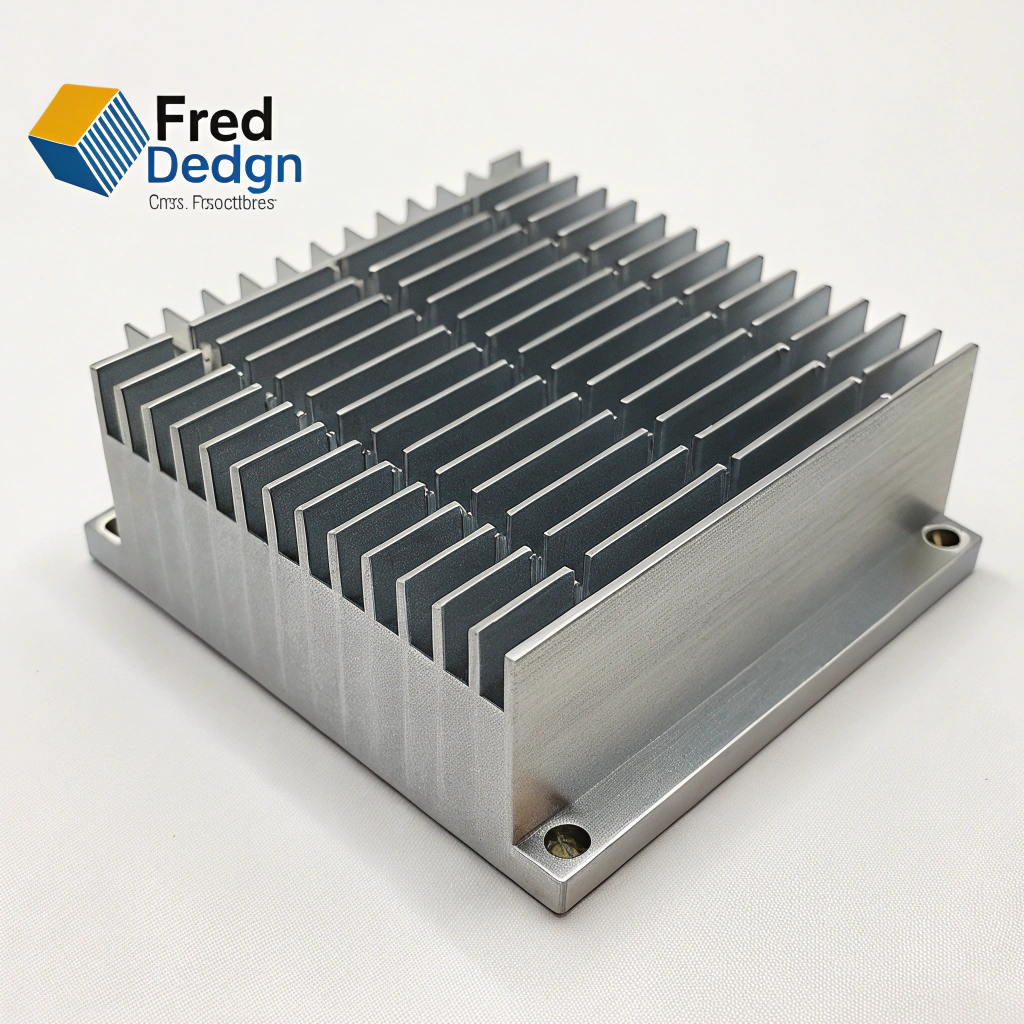
A 3D‑printed heat sink is a thermal management component built via additive manufacturing (AM) techniques rather than by traditional machining, casting or extrusion, allowing much more complex shapes and internal features.
Dive deeper paragraph:
In more detail:
- A “heat sink” is simply a component intended to draw heat away from a hot source (for example a power electronics module, LED driver, or industrial motor controller) and dissipate it into ambient or via a liquid medium.
- Traditional manufacturing methods (extruded aluminium fins, machined blocks, cast aluminium or copper) have design limitations: fin thickness, internal cooling channels, undercuts, complex internal geometries are often expensive or impossible.
- Additive manufacturing (3D printing) enables building the part layer‑by‑layer. This means you can integrate internal channels (for air or liquid), lattice structures, curved fins, internal voids for weight saving, etc.
- Materials: For industrial electronics, you typically want metal heat sinks (e.g., aluminium alloys, copper, or metal composites) because of high thermal conductivity. Some studies note that even polymer composite AM sinks with conductive filler can perform within acceptable numbers under natural convection if well designed.
- The manufacturing method may be selective laser melting (SLM), electron beam melting (EBM), binder‑jetting + infiltration, or other metal AM methods. These methods allow high complexity but also come with constraints (cost, build volume, surface finish, post‑processing).
- The digital workflow: CAD design → topology/lattice optimisation → AM build → post‑processing (heat treat, machining, surface finish, perhaps conformal cooling channels) → testing.
In short, a 3D‑printed heat sink takes the concept of thermal management hardware and applies the flexibility of additive manufacturing. For industrial electronics, this matters more and more as power densities increase, custom form‑factors emerge, and integration demands rise.
What are the benefits of additive manufacturing in cooling?
Leading paragraph:
When you shift from “machined block” to “freely shaped structure” you unlock new performance and design realms — that is the promise of AM cooling components.
Featured paragraph:
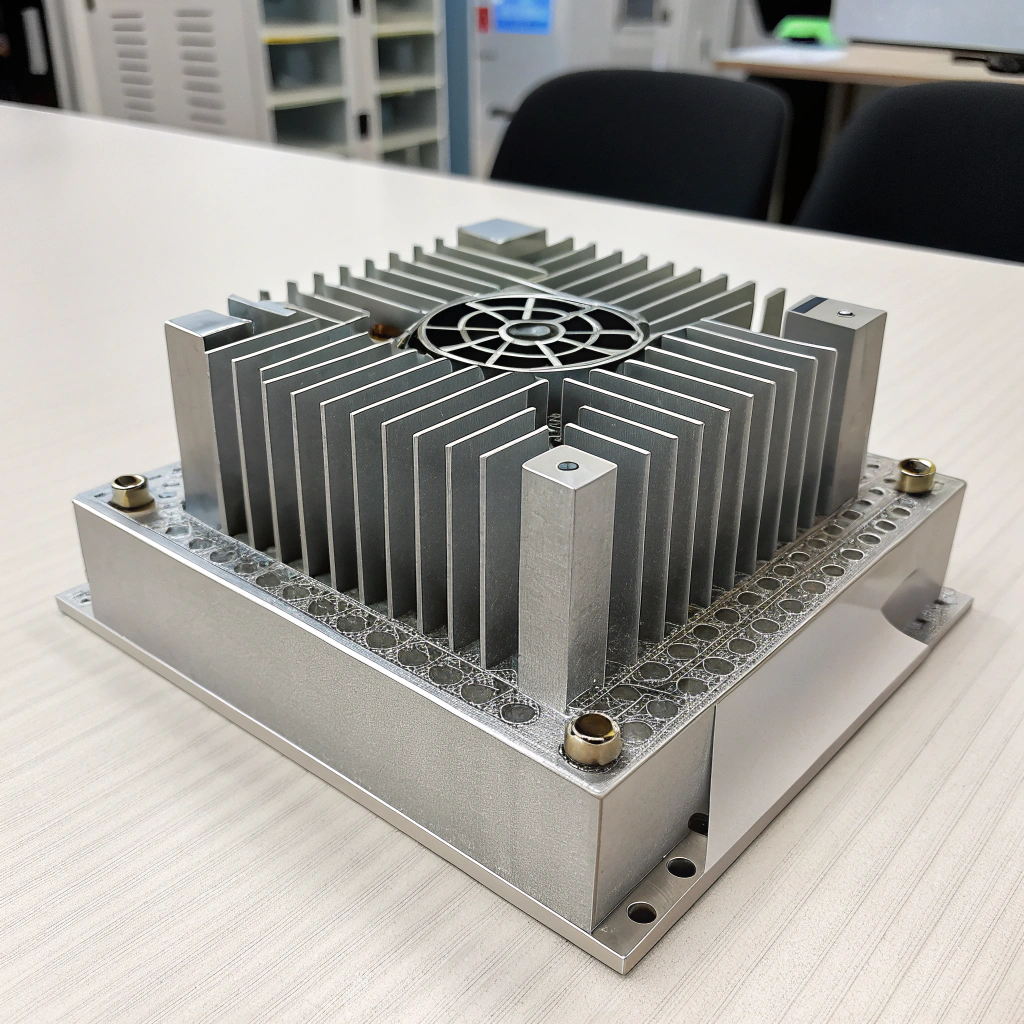
Additive manufacturing for cooling enables enhanced surface area, complex internal channels, weight reduction, custom geometry to match the heat source, and faster iteration cycles.
Dive deeper paragraph:
Here I’ll break down the main benefits, with commentary for industrial B2B manufacturing contexts:
1. Enhanced geometry freedom
Because AM builds layer‑by‑layer, you can generate geometries that are impossible or very costly with conventional methods. For heat sinks this means: curved fins, branching internal fluid channels, lattice or foam supports to increase surface area while reducing weight.
This freedom lets you tailor the heat sink more precisely to where the heat is generated. In industrial electronics, the waste heat may come from unusual shapes or modules, and you may need to integrate the heat sink into the housing or structural parts. AM lets you do that.
2. Improved thermal performance & surface area
More surface area exposed to air (or liquid), internal features that promote turbulence or fluid mixing, and tighter coupling between heat source and cooling medium are all possible. From an industrial electronics standpoint, this means you can stay within smaller volumes or tighter envelopes while still achieving the required heat dissipation.
3. Weight reduction
Especially for applications where weight matters (mobile industrial equipment, aerospace, subsea, robotics), replacing a heavy machined copper block with a lattice AM structure can reduce weight while maintaining or improving performance. For a manufacturer like us (Sinoextrud) supplying to say industrial motor controls or solar frames, weight reduction can translate into real system savings, easier handling, lower transport cost, and more flexibility.
4. Integration and customisation
AM allows custom shapes tuned to your heat‑profile, integration of heat sink with component mount, elimination of separate parts (which lowers assembly cost, fewer joints, fewer thermal interfaces). In a B2B manufacturing context, if a customer has a unique aluminum profile or chassis, you could print a heat sink that conforms exactly to their custom extrusion or structural part. That aligns with our strength: custom parts.
5. Faster time‑to‑market and design iteration
Because tooling is minimal, you can iterate designs quickly. You can test multiple fin layouts, channel geometries, lattice densities, internal pathways without needing new molds or expensive machining setups. From a supplier viewpoint: you can deliver prototype heat sinks faster and refine them before committing to larger volume builds, which is a competitive advantage.
6. Potential cost savings for low/medium volumes
If your volume is moderate (as is often the case in industrial electronics where runs may not be huge), the cost of AM may be competitive when you factor in tooling, machining, scrap, assembly and customization. This is especially true when you value performance and integration over pure low unit‑cost.
But also caveats (for balanced view)
- Material cost and AM machine cost are higher than standard extrusion or casting for high volumes.
- Post‑processing (heat treat, machining surfaces, finishing) may add cost and time.
- Thermal conductivity of metal AM parts can be somewhat lower or anisotropic if not properly processed.
- For very high volumes, conventional manufacturing may still win on cost per part.
- Design must account for AM constraints (support removal, orientation, build size, surface roughness, residual stresses).
Overall, the benefits make AM highly attractive for many industrial cooling applications — especially when customisation, complex geometry or weight matters.
How can I apply 3D printing for industrial heat sinks?
Leading paragraph:
I want to bring this into our industrial B2B world (large‑aluminium extrusion, industrial electronics, machined parts). Here is how I’d apply 3D printing for heat sinks step by step.
Featured paragraph:
Start with identifying the thermal requirement and form‑factor, then move through material/design selection, leverage topology optimisation, choose AM process, post‑process and validate — before scaling to production.
Dive deeper paragraph:
Here is a practical approach, with headings and a table to guide an industrial supplier or user:
1. Define thermal requirements and constraints
- Identify the heat source: power dissipation (W), temperature rise allowed, ambient conditions (air convection, liquid cooling, forced airflow).
- Define form factor: the available space around the electronics module, mounting points, interface thermal resistance, location of heat sink relative to chassis/housing.
- Define environment: industrial (dust, vibration, chemical exposure, temperature extremes), whether liquid cooling is acceptable, what fluid, pressure/flow requirements.
- Define manufacturing volume, cost targets, materials allowed (for example aluminium alloy, copper, stainless steel).
This stage is critical: the better you quantify the demand, the more precisely you can design the heat sink.
2. Choose material and AM process
In our industrial case, metal heat sinks make the most sense (e.g., aluminium alloys like AlSi10Mg, copper or copper alloys) because of high thermal conductivity.
Select AM process: if you need high thermal performance, powder‑bed fusion (SLM/EBM) or binder‑jet + infiltration may be needed. Consider build size, wall thickness, surface finish, post‑processing.
Also consider material certification and suitability for industrial electronics (e.g., corrosion resistance, mechanical strength, certification).
Since our company already works in aluminium extrusions and surface treatments, we might integrate a printed aluminium heat sink or printed copper heat sink with our custom profile or frame.
3. Design the heat sink (use geometry freedom)
Use CAD tools and maybe topology optimisation or lattice design to exploit AM’s freedom. Key design factors:
- Fin density, fin thickness, base thickness, channel shape (for liquid cooling).
- Internal cooling channels (for liquid or air) which follow heat source shape.
- Lattice or foam structures to increase surface area while reducing weight.
- Mounting interface and thermal interface material (TIM) must be designed for good contact.
- Orientation and build strategy matter: print direction influences thermal conductivity if using composites or certain AM materials.
- Integration with your system: maybe the heat sink becomes part of a structural aluminium frame you supply, or is integrated into a housing we extrude or machine.
4. Prototype & test
- Build small prototypes to validate thermal performance, mechanical fit, assembly.
- Measure temperature rise, thermal resistance, compare to simulation.
- Confirm that the AM process yields the required material properties (conductivity, density, porosity).
- Assess post‑processing: e.g., support removal, heat treat, surface finish, plating or coating if required (in our world we might apply surface treatments).
- Confirm durability in the industrial environment (vibration, shock, corrosion, thermal cycling).
5. Production planning and cost/volume assessment
- For low to medium volumes, AM may be viable. For high volumes, evaluate cost per part vs conventional manufacturing (extrusion + machining, die casting, etc).
- Consider hybrid manufacturing: perhaps the base of the heat sink is machined aluminium, and the AM part is the fin array, joined together.
- Review lead time, supply chain, quality assurance. For industrial B2B manufacturing, we need robust repeatability, traceability, certifications.
- Plan for finishing: surface treatments (anodising, coating, plating) may be needed for corrosion or electrical isolation.
6. Integration into your supply chain
Since we (Sinoextrud) are acting as a custom‑aluminium extruder and supplier, we could partner with metal AM houses or invest in AM capability to offer custom heat sinks.
We could package the printed heat sink with our aluminium extrusion frames (say for solar panel mounting with integrated electronics) or supply to OEMs building motor controllers, LED driver systems, etc.
We must ensure documentation, manufacturing quality (ISO standards) and shipping/logistics for global export (Africa, North America, Japan, Middle East, Europe).
A table summarising key steps:
| Step | Key Focus | Industrial Considerations |
|---|---|---|
| Thermal requirement | W, ambient, module shape | Industrial electronics harsh environment |
| Material/Process selection | Aluminium, copper, AM method | Certifications, conductivity, cost |
| Design & optimisation | Geometry freedom, lattice, channels | Fit to housing, assembly, integration with extrusions |
| Prototyping & testing | Thermal performance, fit, durability | Vibration, shock, contamination in industrial use |
| Production planning | Cost per part, volume, finishing | Lead times, supply chain, export logistics |
| Supply chain integration | Offer as value‑added service | Quality assurance, traceability, global shipping |
By following this workflow, you can apply 3D printing for heat sinks in an industrial electronics context — not just hobby parts but serious B2B components.
What are the trends in metal additive cooling designs?

Leading paragraph:
As power densities increase and new application areas (electric vehicles, HPC, edge‑computing, industrial power electronics) emerge, the cooling hardware must evolve — and metal additive manufacturing is at the heart of that evolution.
Featured paragraph:
Key trends include generative‑design and topology‑optimisation of heat sinks, integration of multi‑material and conformal cooling channels, high‑conductivity material AM (e.g., copper), and hybrid manufacturing for industrial scale.
Dive deeper paragraph:
Here are some of the major industry trends and what they mean for industrial electronics suppliers:
Generative‑design and topology optimisation
Rather than hand‑designing fin arrays, engineers now use topology and generative design tools to optimise the geometry of the heat sink. Designs with significant performance improvement and reduction in pumping power are emerging.
Another trend is manufacturability of lattice structures (gyroid, diamond, Schwarz P) produced by AM and delivering high surface area. For industrial electronics, this means heat sinks may no longer look like “blocks with fins”; they may look organic, tree‑like, or lattice‑structured. As a manufacturer, being able to offer or integrate such designs gives you a competitive edge.
Conformal and internal cooling channels
Instead of straight fins and uniform spacing, cooling channels are now being integrated in 3D within the heat sink to follow the heat sources precisely. This trend is especially important for high‑density power electronics modules (inverters, motor drives, LED drivers) where hotspots are irregular and you need cooling channels close to the source. As an industrial parts supplier, offering these internal channel designs via AM means you’re enabling higher power density systems.
Use of high‑conductivity metal AM materials
Traditional AM metals (aluminium alloys, stainless steel) are good but for high performance cooling the industry is moving toward pure copper or copper alloys printed via AM. For industrial electronics suppliers, this means you should watch material capability (copper AM is more difficult), cost implications, and ensure your supply chain can handle advanced materials.
Multi‑material and hybrid manufacturing
One trend is development of multi‑material AM heat sinks which allow combining different metals or metal/polymer layers for optimised thermal paths. The hybrid approach is quite relevant for a company already offering extruded and machined aluminium profiles. You could design a part where the base is an extruded aluminium frame (which we can supply) and the fin array is AM printed and then joined, leveraging both our strengths.
Customisation & on‑demand production
With AM the lead‑time for custom parts reduces, so heat sinks can be custom developed per customer rather than off‑the‑shelf. So the trend is towards customised cooling solutions, not just standard profiles. From an industrial supplier point of view, you can differentiate by offering “custom AM heat sink + extrusion frame + finishing” as a turnkey package.
Sustainability & lightweighting
Lightweight lattice structures reduce material usage and thus cost and carbon footprint. Some studies link AM heat sinks to greener operations (for example liquid‑cooled server racks utilising AM components). For industrial electronics exports (Africa, Middle East, etc), lighter parts mean lower shipping cost and easier installation — a tangible benefit.
Digital manufacturing and supply chain integration
Because AM parts are digitally defined (CAD → AM machine), you get advantages in version control, rapid iteration, digital inventory (“print when needed”), and supply chain flexibility. For a B2B manufacturer, this means you can serve global clients with customised solutions without huge inventory.
Also, we should watch the emerging trend of direct printing onto processors and advanced cooling for AI/edge computing. While that’s still emerging, it signals how cooling is becoming more integrated and miniaturised.
Volume & cost scaling
One challenge is achieving AM economics at volume. As AM machine technology matures, build volume increases and cost per part declines. The trend for industrial electronics is moving from prototype to small‑batch to production. For our business we should monitor when AM becomes cost‑competitive at say 500‑2,000 parts rather than just prototypes.
Conclusion
In summary: a 3D‑printed heat sink absolutely can work for industrial electronics if you properly align design, material, process and supply chain. The freedom of additive manufacturing opens up new cooling geometries, lighter parts, integrated designs and faster time‑to‑market. As a B2B manufacturer/supplier you should consider how to integrate AM heat sinks with your extruded aluminium offerings, partner or invest in AM capability, and stay aware of trends like lattice structures, copper AM, conformal channels, and customisation. If you do that, you’ll be well‑positioned to serve the next generation of high‑power industrial electronics.