


How do I choose a heat sink for high-frequency power electronics?
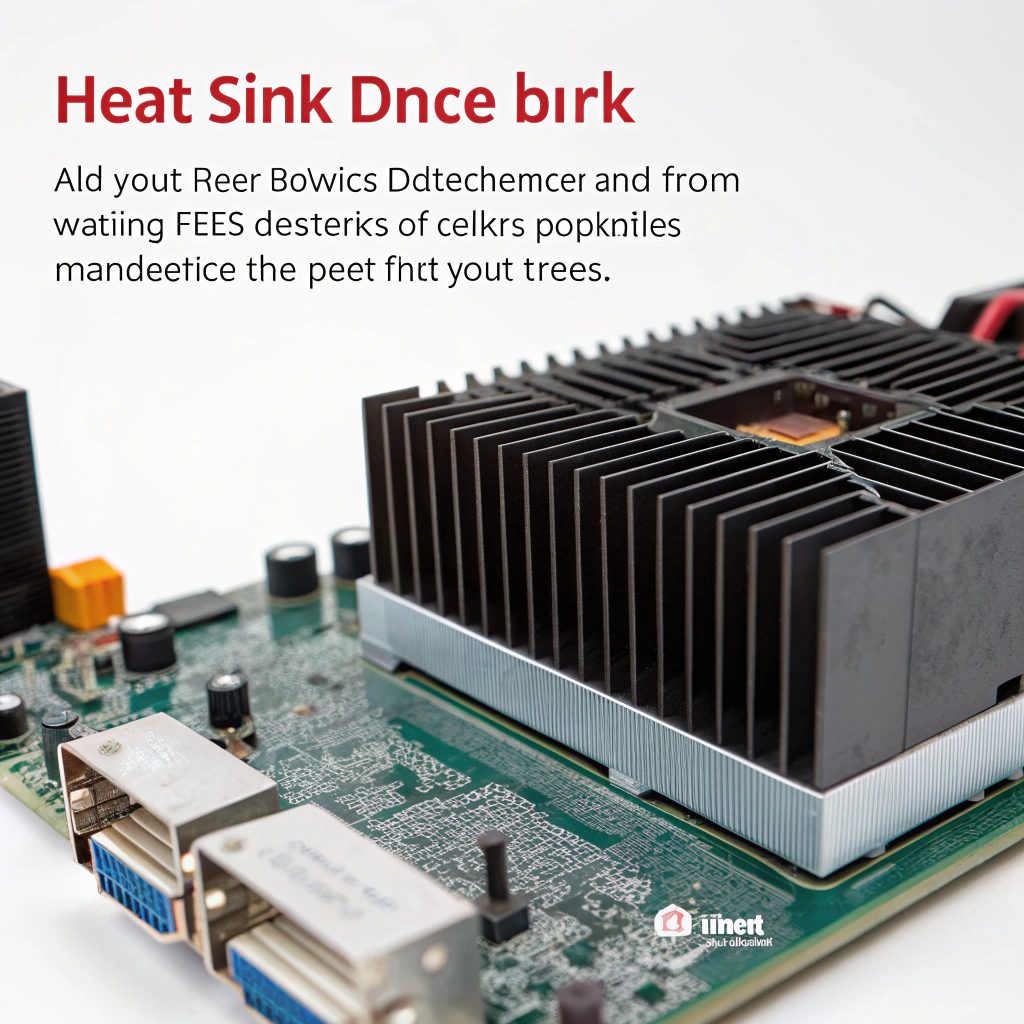
Many power electronics systems fail due to thermal mismanagement — I’ve seen devices burn out and entire designs scrapped just from underestimating heat.
Choosing the right heat sink for high-frequency power electronics means understanding switching behavior, thermal losses, airflow, and using the right materials and shapes to keep temperatures in check.
This article explains what high-frequency power electronics really are, why thermal design is critical, how I select proper heat sinks, and what trends are reshaping this field right now.
What are high-frequency power electronics?
Modern converters switch so fast that even small inductance and capacitance can throw the whole system off balance.
High-frequency power electronics refers to systems operating well above the usual 50-60Hz, typically in the hundreds of kilohertz to several megahertz range, using SiC or GaN switches.

In my projects, high-frequency usually means switching at 100 kHz to several MHz. These frequencies allow smaller inductors and capacitors, which helps reduce overall size. But they also create more switching losses. This heat builds up quickly and in smaller spaces, so cooling becomes harder.
High-frequency converters use fast semiconductors like MOSFETs, IGBTs, and especially SiC or GaN devices. These generate heat quickly, with sudden transients, because of rapid voltage and current swings. This requires better cooling paths from the chip to the air.
There’s also less space inside these systems for large heat sinks. As frequency goes up, devices shrink, and passive components get smaller. But the total heat doesn’t drop — it often rises. So heat sinks need to become more compact but more effective.
Here are four things I check when evaluating such systems:
Frequency Range
| Type of Converter | Typical Frequency |
|---|---|
| Low-voltage DC/DC | 200 kHz – 2 MHz |
| Medium-voltage Inverter | 10 kHz – 100 kHz |
| GaN-Based PFC | 1 MHz – 3 MHz |
| Research Prototypes | Up to 10 MHz+ |
Design Concerns
- Switching losses grow with frequency.
- Layout must minimize parasitics.
- Cooling must handle fast thermal transients.
- Junction temperatures must stay below 125–150°C.
These devices can’t afford hotspots or slow heat dissipation. That’s why high-frequency systems require specialized thermal design right from the start.
High-frequency in power electronics typically means switching frequencies above a few hundred kilohertz.True
Industry papers refer to high-frequency (HF) power electronics at ~3 MHz and above.
High-frequency only affects the size of the transformer and has no impact on heat sink design.False
Higher switching frequency increases losses, thermal transients, and affects the heat sink cooling requirements.
What benefits come from proper thermal design?
Overheating a power module can kill it faster than any electrical fault — I’ve seen perfectly good designs ruined by poor cooling.
Good thermal design extends life, improves efficiency, prevents thermal runaway, and allows safe operation under stress.
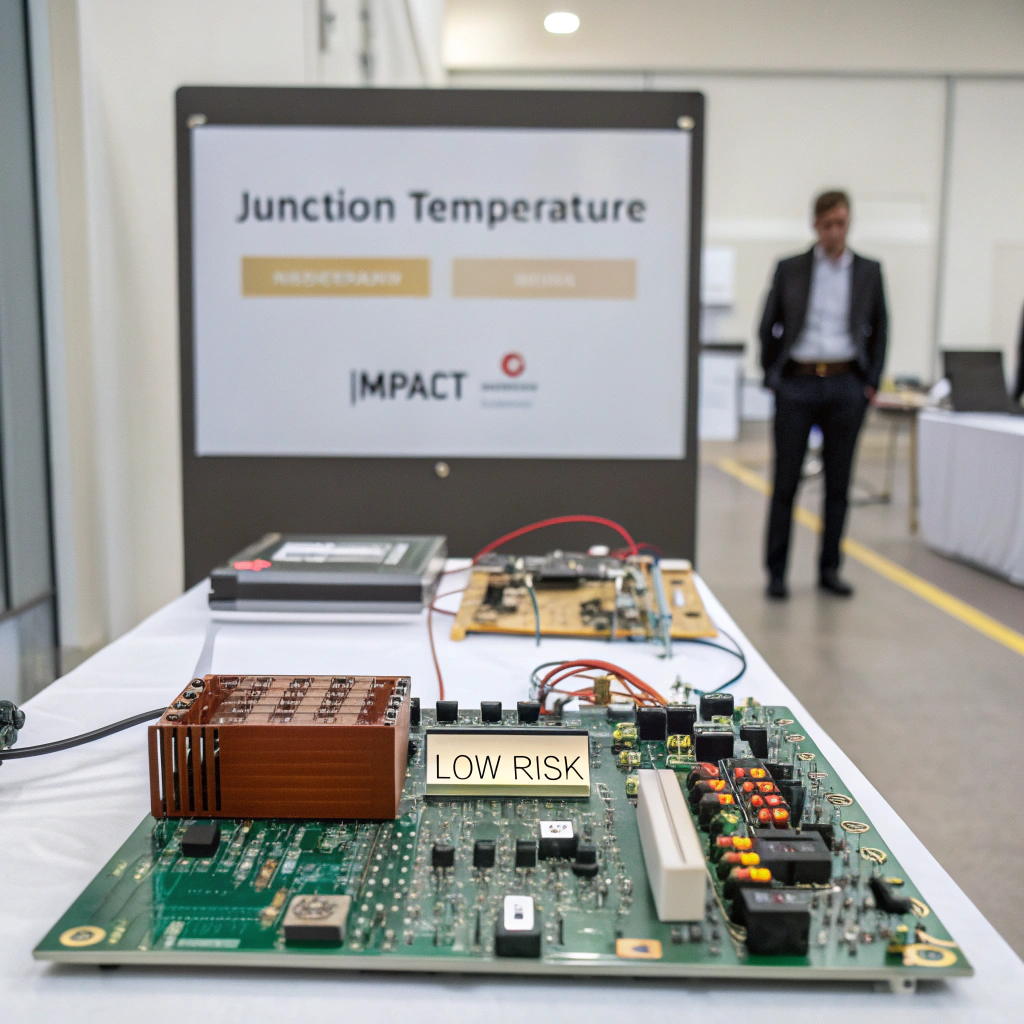
Without proper cooling, a high-frequency device may hit its thermal limit and shut down. Worse, it may degrade gradually — leading to early failure.
Benefits of Proper Cooling
-
Longer Device Lifetime
Heat reduces lifetime. Semiconductor wear-out accelerates with every degree over spec. Even 10°C extra can cut the lifespan in half. -
Stable Operation
When junction temperature stays low, electrical parameters stay stable. No thermal drift. No unexpected shutdowns. -
Higher Efficiency
Cooler components waste less power. Both conduction and switching losses drop with lower temperatures. -
Smaller Form Factor
Effective cooling allows more compact systems. Heat sinks can be better integrated when planned early. -
Better Safety and Certification
Meeting thermal specs is required for CE, UL, and other compliance. Proper cooling also avoids burns, fire risk, and electrical breakdowns.
Table: Device Performance vs Temperature
| Junction Temperature | Impact |
|---|---|
| < 100°C | Stable performance |
| 100°C – 125°C | Start derating |
| > 125°C | High risk of failure |
| > 150°C | Exceeds spec – likely permanent damage |
That’s why I treat heat sink selection as critical, not optional.
Proper thermal design can allow higher power density in high-frequency power electronics.True
By keeping temperatures down you can use smaller components and manage losses, supporting higher power density.
If a high-frequency device runs a bit hotter than its rating, it has no impact on its lifetime.False
Higher junction temperatures or more thermal cycling reduce lifetime and reliability.
How do I select a heat sink for high-frequency devices?
A good heat sink isn’t just a metal block with fins — it’s part of the electrical system’s success or failure.
You need to match thermal performance to real power loss, space, airflow, and interface resistance — not guess by size or shape.
Here’s my exact process for choosing heat sinks:
Step 1: Define the Thermal Budget
- Power Loss (Pd) — usually 10–100W for small modules, 500W+ for large converters.
- Ambient Temperature (Ta) — worst case. Often 40–50°C.
- Max Junction Temp (Tj_max) — e.g., 150°C.
- Interface Resistance — between case and sink.
- Compute allowable sink-to-air thermal resistance (RθSA):
[
R{\theta SA} = \frac{Tj{max} – Ta}{Pd} – R{\theta JC} – R_{\theta CS}
]
Step 2: Pick the Right Material
| Material | Conductivity | Cost | Weight |
|---|---|---|---|
| Aluminum | Good | Low | Light |
| Copper | Excellent | High | Heavy |
| Hybrid | Balanced | Medium | Medium |
For mass production, I usually go with anodized aluminum (6063-T5) because it balances cost, machining, and thermal performance.
Step 3: Match Airflow Type
- Passive: tall fins, spaced wide for natural convection.
- Forced: denser fins, airflow-specific design.
- Liquid-cooled: for >500W or compact systems.
Step 4: Model or Test
Use simulation tools or build a prototype. Measure with thermocouples under load. CFD helps visualize hot zones and confirm your math.
Step 5: Match Geometry to Real Constraints
- Fin height, thickness, spacing.
- Mounting method.
- Orientation — vertical gives better convection.
- Surface area vs footprint.
Step 6: Specify Clearly
| Parameter | Description |
|---|---|
| RθSA Target | °C/W value you must meet |
| Dimensions | Max size allowed |
| Mounting holes | Layout, spacing |
| Finish | Anodizing, powder coat, etc. |
| MOQ | Based on extrusion design |
Poor thermal interface or bad airflow kills a good heat sink. I never skip contact pressure specs or thermal paste recommendations.
Selecting a heat sink only requires looking at its dimension and ignoring airflow.False
Airflow and mounting affect thermal resistance greatly; ignoring airflow can lead to undersized cooling.
The sink’s thermal resistance from sink to ambient (RθSA) is a key parameter for sizing.True
The sink→ambient path must meet the remaining thermal budget after device and interface resistances are accounted.
What trends affect heat sinks for power electronics?
Devices keep shrinking and switching faster — I’ve had to redesign several heat sinks in the past year just to keep up.
New semiconductors, higher frequencies, smaller footprints and higher efficiency targets are forcing changes in heat sink materials, shapes, and cooling techniques.
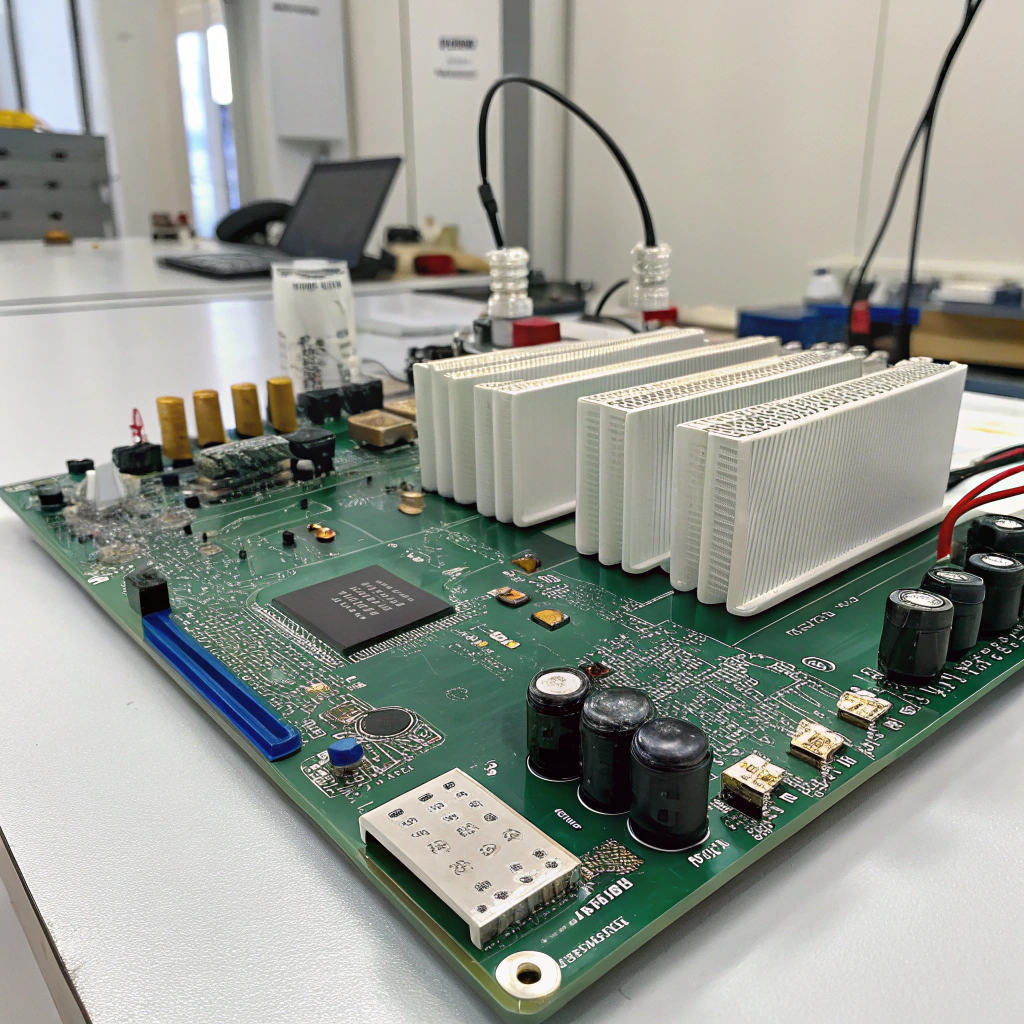
Here’s what I’m seeing in the market right now:
1. Wide-Bandgap Semiconductors
GaN and SiC switch faster, generate more heat per square mm, and need tighter thermal control. GaN transistors especially need low-inductance, high-efficiency cooling paths.
2. Liquid Cooling
As power densities rise, some systems switch to cold plates or microchannel liquid sinks. I’ve supplied profiles that get machined into cold plates for this.
3. Hybrid Heat Sinks
Copper base with aluminum fins is becoming more common. It spreads heat quickly while keeping the overall weight down.
4. Complex Geometries
Some designs use pin fins, folded fins, or vapor chambers. I’ve seen topology-optimized structures that can’t be made by extrusion — these are CNC or additive manufactured.
5. Surface Enhancements
Anodized, grooved, or coated fins improve heat transfer. Many customers now ask for black anodizing to increase emissivity.
Here’s a summary:
| Trend | Impact on Heat Sink Design |
|---|---|
| GaN / SiC Adoption | Lower RθJA needed, tighter packaging |
| High Power Density | Smaller, more efficient sinks |
| Liquid Cooling | More cold plates and channels |
| New Manufacturing Methods | Additive & CNC used alongside extrusion |
| Custom Surface Finish | More anodizing, spraying, branding |
This landscape is evolving fast. And at Sinoextrud, we’re adapting by offering custom profiles, better surface options, and fast prototyping.
Liquid-cooling and micro-channel heat sinks are becoming more common in high-power, high-frequency electronics.True
Recent literature shows micro-channel heat sinks outperform traditional air-cooled ones and liquid cooling is a future trend.
Traditional large finned aluminum heat sinks will remain the only cooling solution for all power electronics.False
Advances in cooling methods and higher performance demands mean alternative cooling solutions are increasingly required.
Conclusion
The right heat sink makes or breaks your high-frequency power design. Match it to your thermal budget, system needs and cooling method — or risk heat ruining everything.


