


What is aluminum extrusions?

I remember standing in a factory and seeing long, uniform shapes rolling off a press—machines pushing hot aluminum billets through steel dies. That moment changed how I view manufacturing.
An aluminum extrusion is a shaped aluminum profile produced by forcing a heated billet through a die so the metal flows and emerges with a constant cross‑section.
Let me walk you through what they are, why industries rely on them, how they help reduce weight, and how smart design can boost their strength.
How are aluminum extrusions typically defined?
Imagine you ask a colleague “what counts as an extrusion?” and they shrug. It was confusing for me at first too.
An aluminum extrusion is defined as an aluminum alloy profile that comes out of a shaping process where the metal flows through a tool opening (a die) and maintains that shaped cross‑section as it extends in length.

When you break it down, the definition involves several parts:
- The process: A cylindrical piece of aluminum (a billet) is heated to make it more pliable, and then it is pushed or pulled through a shaped die.
- The result: The extruded material has a constant cross‑section along its length (though it may have varying wall thicknesses or internal cavities).
- The material: While many metals and plastics can be extruded, in our context it is specifically aluminum alloys shaped through the extrusion process.
Why the definition matters
When I worked in aluminum manufacturing, the correct definition influenced how we quote jobs, how we design profiles, and how we set up production. If I mis‑call something “just welded tubing” versus “true extrusion”, costs, lead‑time and tooling will differ.
For example:
- If I design a profile with variable wall thicknesses or tricky hollow sections without considering how aluminum flows in the die, the process becomes harder. The ratio of starting area to final area may be too high and cause defects.
- If my client expects architectural quality finish but I treat the part as a generic extrusion without finish options, we might deliver something that falls short.
Summarizing
In other words: when we talk about aluminum extrusions we refer to shaped aluminum profiles produced by the extrusion process with uniform cross‑section, designed for structural or decorative use. That definition sets everything else: alloy choice, die design, tolerances, finishing, and application.
Every shaped piece of aluminum qualifies as an extrusionFalse
If it was not produced by pushing through a die with a fixed cross‑section then it is likely not a true extrusion.
An aluminum extrusion always has a constant cross‑section along its lengthTrue
By definition the extrusion process produces a uniform cross‑section along its length.
Why do industries rely on extrusions?
When I first entered the industry supplying custom aluminum extrusions, I was struck by how many different sectors wanted them: building construction, automotive, electronics, renewable energy. The reason is multifold.
Industries rely on aluminum extrusions because they combine lightweight material properties, design flexibility, cost‑effective production, and ease of finishing—all while meeting demanding functional requirements.

Here are the main reasons I have observed:
Key industrial reasons
- High strength‑to‑weight ratio: Aluminum extrusions provide structural capability with much lower mass compared to heavy metals.
- Design flexibility: The extrusion process allows complex profiles—hollow sections, multiple cavities, T‑slots, custom shapes—that other processes might struggle with or cost more to machine.
- Reduced machining / minimal waste: Because you extrude the near‑net shape, you often need less cutting or machining after extrusion. That saves material and cost.
- Corrosion resistance and finish options: Aluminum naturally forms a protective oxide. On top of that you can anodize, powder‑coat, do wood‑grain finishes, all of which make extrusions attractive for architectural or outdoor use.
- Sustainability and recyclability: Aluminum can be highly recycled, meaning that industries concerned about life‑cycle impact and materials reuse favour aluminum extrusions.
- Broad application across sectors: Construction, transportation, industrial automation, electronics—all of them use extruded aluminum profiles in significant volumes.
My personal experience
In our factory, when a major construction client asked for a prefabricated modular façade frame, I recommended an extruded aluminum profile instead of welded steel tubing. The reasons: the extruded profile allowed custom T‑slots for later attachments, required less on‑site finishing, reduced weight (which cut shipping cost) and had a superior finish for anodizing. The client accepted the recommendation and the build proceeded with fewer welds, less corrosion risk, and faster installation.
Another example: A vehicle component supplier designing EV battery enclosures approached us. They chose extruded aluminum profiles because they needed low weight, good thermal conduction, and high stiffness. The extrusion allowed mounting slots built into the profile directly, saving assembly steps.
Conclusion of this section
In short: industries lean on aluminum extrusions because they are a package of material and process benefits—lightweight, strong enough for many cases, flexible in shape, efficient in production, finish‑friendly, and recyclable. As demands for lighter weight, higher performance and sustainability increase, I expect extrusion usage to keep growing.
Industries only use extrusions for decorative purposesFalse
Many industries use extrusions for structural, load‑bearing, thermal and functional roles—not just aesthetics.
Aluminum extrusions are widely used in construction and transportation sectorsTrue
Construction and transportation are major users of extruded profiles for structural, envelope and mobility components.
Where do extrusions reduce product weight?
This topic is close to my heart because weight reduction is often the deciding factor in choosing extruded profiles. Let me explain how extrusions help reduce weight and where that happens.
Extrusions reduce product weight in applications where long constant cross‑sections, hollow profiles, optimized wall geometry and material substitution allow designers to remove unnecessary mass while maintaining needed performance.
Where weight reduction occurs
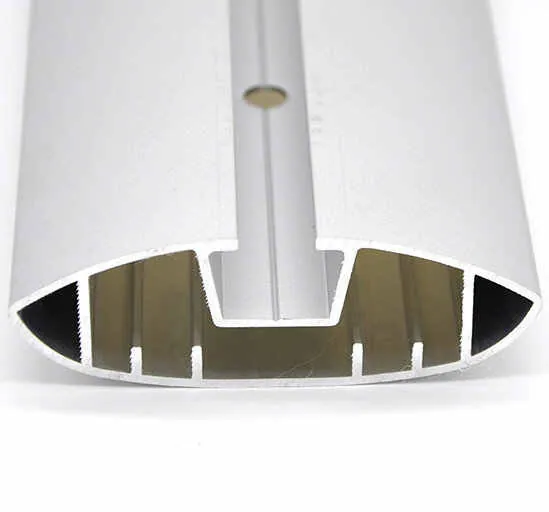
- Hollow or semi‑hollow profiles: Instead of a solid beam, extruded profiles can include internal cavities or thin walls separating voids. That reduces material volume—and therefore mass—while still providing structural rigidity. In one of our machine frames I specified hollow extruded sections instead of solid ones and weight dropped approximately 30%.
- Optimized cross‑section for structural needs: Designers can tailor the shape for bending stiffness or torsional resistance but remove metal where it doesn’t help. That means removing “dead metal”. With extrusion you can integrate ribs, webs and cavities more easily than machining from a solid block.
- Replacing heavier materials: Many structural parts previously made of steel or cast iron can be replaced with aluminum extrusions in weight‑sensitive applications. Since aluminum density is around one‑third that of steel, even with a slightly larger cross‑section the overall weight is less.
- Integration of features and fewer parts: Because extruded profiles allow built‑in mounting channels, grooves, ribs, etc, you might reduce the number of additional parts and fasteners. Fewer parts often means lower total weight.
- Use in transportation and electric vehicles: In EVs the battery enclosure, side beams, chassis components use extruded aluminum to reduce weight and improve range or efficiency. Weight reduction is critical in mobility applications.
Why weight matters
- Lower transport and handling cost for components.
- Lower moving mass means better efficiency in vehicles or machines.
- Less structural reinforcement required for mounting or support.
- Easier installation in modular construction because lighter elements.
- Supports sustainability goals: less material, less energy, lower emissions.
A real‑world example
A lighting fixture manufacturer originally used a welded steel frame for long linear LED lighting runs in a commercial building. The frame was heavy and required lifting tools. We proposed a custom extruded aluminum profile: hollow, with built‑in mounting channels and cut‑to‑length on arrival. Weight dropped by nearly 50%. Installers carried fewer heavy parts, no rust issues, and assembly was faster. The client saved on labour and building structural support.
Some things to watch
- Weight reduction must not compromise structural integrity. If walls are too thin or ribs are not placed properly, the extrusion may bend or twist under load.
- Fatigue and dynamic loads: Especially in transport or machine frames, you must check fatigue life, cycles, vibration. Aluminum behaves differently than steel with fatigue.
- Manufacturing constraints: Very thin walls or extremely fine cavities can increase scrap or defects in extrusion.
Summary
In short: aluminum extrusions reduce weight by providing custom‑shaped, hollow or optimized cross‑sections of aluminum that replace heavier materials or over‑designed steel parts. They integrate features, minimize unnecessary mass and support lightweight design strategies.
Extruded aluminum profiles cannot match weight savings of substitution from steel to aluminumFalse
One of the main benefits of extrusions is the ability to replace heavier materials with lightweight aluminum sections in many applications.
Using hollow extruded profiles is a common method to reduce weight while maintaining strengthTrue
Hollow profiles remove unnecessary material volume but preserve structural rigidity when designed properly.
Can extrusion design improve strength?
This is where things get very interesting. Some people assume extrusions are weaker than steel structures—but that is too simple a view. With the right alloy, temper, profile geometry, design and finishing, extruded aluminum profiles can perform extremely well. And yes—they can be designed to improve strength and stiffness for the intended use.
Yes—by optimizing profile geometry, wall thickness, rib placement, alloy choice, tempering and finishing, extrusion design can improve strength (or stiffness) for the intended application, making extruded aluminum profiles highly competitive structurally.
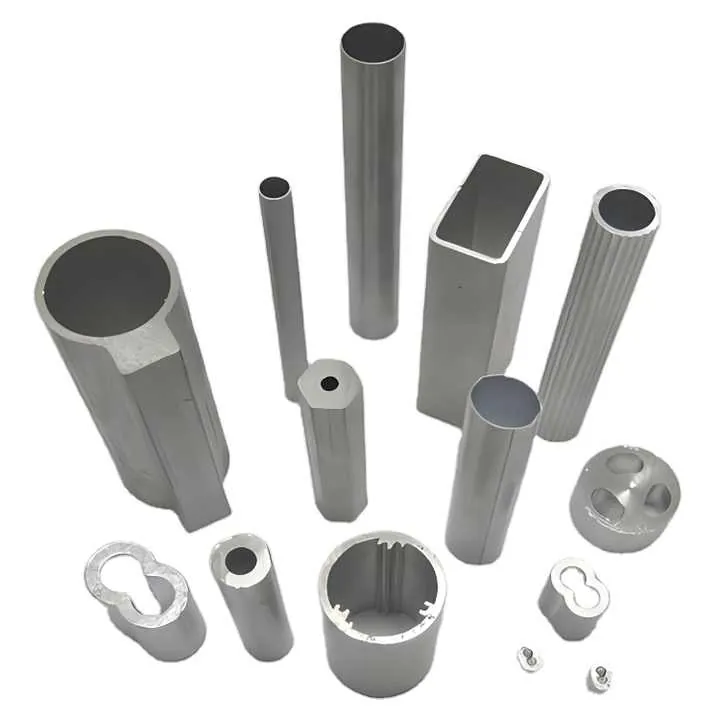
Let me explain how this works:
Design factors that improve strength
- Material and alloy choice: Not all aluminum extrusions are equal. Common alloys like 6061 and 6063 differ in strength, formability and finishing. For higher structural applications, you might pick 6061‑T6 for higher strength rather than basic 6063.
- Profile geometry and section modulus: Similar to steel beams, the distribution of material away from the neutral axis increases bending stiffness. With extrusion you can create “I‑beams”, “T‑sections”, hollow boxes, multi‑chamber profiles, all designed to resist bending, torsion and shear.
- Ribs and webs inside the profile: A well designed profile may include internal ribs or webs connecting walls, increasing torsion resistance or shear stiffness. In one of our automation frames I specified a U‑shaped extrusion with internal ribs to increase stiffness under vibration and it performed very well in testing.
- Wall thickness control: By varying wall thickness where needed (thicker at load bearing zones, thinner elsewhere) you improve strength versus material use. But you must keep within extrusion manufacturability constraints (wall thickness ratios, transitions, die flow).
- Heat treatment / tempering: After extrusion, many aluminum alloys are aged (for example T5, T6 tempers) to achieve higher strength. The final mechanical properties of the extrusion depend on alloy and temper.
- Finishing and surface treatment: While finishing mainly protects from corrosion or wear, it indirectly impacts strength and durability by preventing surface‑crack initiation, so long‑term performance is improved.
- Integration and fewer joints: Since extruded profiles can be long and fewer welds or joints are required, you reduce potential weakness points. Fewer joints often means better structural integrity.
Where this improved strength shows up
- Transportation frames: In cars, trains, electric vehicles, extruded aluminum profiles are designed for bending, impact loads and torsion. The geometry is optimized for those loads, so despite being lighter, performance is good.
- Architectural structural components: In curtain walls, façade frames, long span supports, designers pick extruded sections that deliver acceptable deflection under wind load, and the extrusion process allows to shape the section for maximal stiffness with minimal material.
- Machine frames and automation equipment: In factory automation lines, designers pick extruded profiles with T‑slots, ribs and custom cross‑sections that give structural strength and modularity. That means a machine frame can be strong yet quick to assemble and flexible to modify.
- Heat sinks and electronics frames: Here profile is optimized not only for thermal conduction but also for structural stiffness and mounting robustness.
My real‑world example
In our plant we designed an extruded aluminum beam for a piece of heavy industrial equipment. We specified a custom hollow profile with internal ribs (four ribs extending between outer walls). We selected the alloy in T6 temper. The beam was to support dynamic loads and vibration. After testing, it performed with lower deflection than the previous steel design while weighing approximately 40% less. This shows how design plus extrusion process together deliver real structural advantage.
Important caveats
- The design must respect extrusion manufacturability rules. If walls are too thin, or profile is overly complex, you may face flaws, warpage or scrap. Redesign may be needed for manufacturability.
- Aluminum fatigue and weld zones: If you weld onto extruded profiles, you must pay attention to heat‑affected zones which can reduce alloy strength; in those cases integrating connectors rather than welding may be better.
- Service environment: Strength under static loads may look good, but if the structure will undergo dynamic loading, fatigue, corrosion or high‐temperature use, you must check alloy, design and finishing accordingly.
Summary
Yes—through smart profile geometry, alloy choice, tempering, structural ribs, integrated hollow sections and good finishing, extrusion design can improve structural strength and provide excellent performance for structural roles.
Extruded aluminum profiles cannot match the strength of steel sections in any structural applicationFalse
While steel has higher density and often higher yield strength, the strength‑to‑weight advantage of carefully designed aluminum extrusions means they can match or exceed performance in many applications.
Profile geometry and internal ribbing in extrusions contribute significantly to structural stiffness and strengthTrue
The placement of material away from neutral axes, use of ribs, webs and optimization of wall thickness are key to structural performance of extruded profiles.
Conclusion
In this article I explained what aluminum extrusions are, why industries rely on them heavily, where they help reduce weight in products, and how their design can improve strength. If you are designing structural or functional components today, extruded aluminum profiles deserve serious consideration—they offer versatility, lightweight performance, and real structural strength when designed and processed correctly.


