


How straight are aluminum extrusions?

I recently faced a big problem: an aluminium extrusion that looked great but bowed on installation. I felt the pain of surprise costs, wasted time and rework.
In most standard extrusions, the straightness deviation is about 0.012 inches (≈0.30 mm) per foot of length — though tighter tolerances can be achieved for critical parts.
To make good use of that figure, we need to dig into what affects straightness, how it is measured, and what we can do to improve it. I’ll walk through each key factor below.
What affects aluminum extrusion straightness?
Imagine a long aluminium profile bending slightly while you’re loading it — that unexpected curve hits your cost and schedule. The frustration is real.
Straightness of an extruded profile is influenced by alloy selection, die and tooling design, extrusion speed and temperature, cooling uniformity, and handling/storage after extrusion.
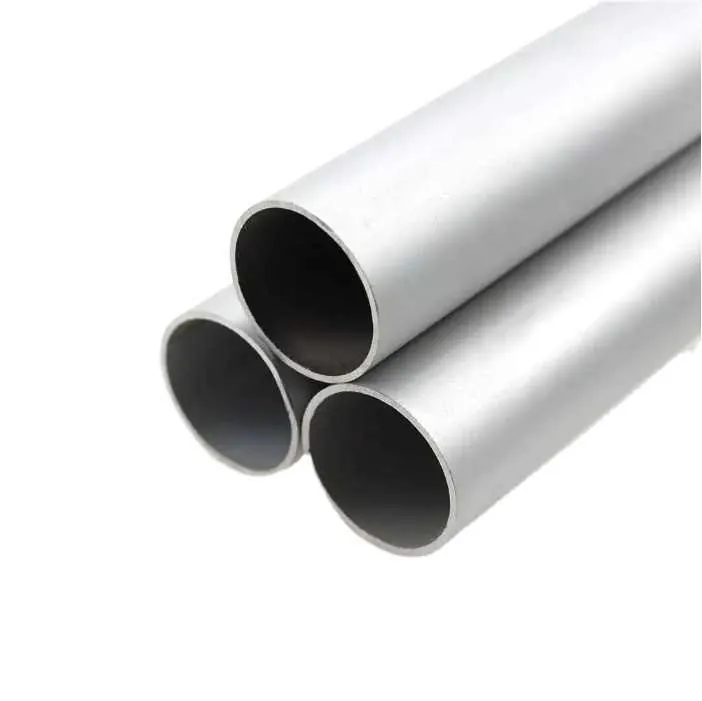
I’ll unpack these factors one by one so you can see how each plays a role in straightness.
1. Alloy and temper
Different aluminium alloys (e.g., 6063‑T5 vs 6061‐T6) respond differently to extrusion and cooling. Some alloys have higher internal stresses after extrusion which can cause bowing or curvature when they cool or are stretched. In my work, choosing the “right alloy for minimal warp” has been a key discussion with the production team.
2. Die design and tooling
If the tool design causes uneven metal flow, or if the extrusion press parameters are sub‑optimal, then uneven material distribution or internal stress concentration can occur. This can cause non‑uniform shrinkage and bending. Good machining of the die, correct feed design, and consistent extrusion speed help reduce this risk.
3. Extrusion temperature and speed
If the aluminium is too hot or flows too fast/slow, the profile may exit the die with variable internal stress. That stress shows up as distortion later. I remember a project where a faster “rush run” created subtle curvature that showed up downstream during assembly.
4. Cooling and quenching
After the profile exits the die, the cooling must be uniform. If one side cools faster than another, one side contracts more and the part bends. Uneven quench or air‑cool zones cause curvature. This is particularly true in long, heavy extrusions — the length gives more opportunity for deflection.
5. Stretching and straightening
Many extrusion shops apply a post‑extrusion stretch operation to relieve internal stresses and improve straightness. If the stretching is insufficient, uneven, or omitted, the final part may bend. From my hands‑on experience I know that skip this step and you run a risk.
6. Handling, support and storage
Even after extrusion and straightening, how you handle, transport, stack and store the profiles matters. Supports that allow sag, or stacking that puts uneven load, can introduce curvature. I had a shipment where stacking too many long lengths without support caused sagging in mid‐span before delivery.
7. Profile geometry and wall thickness
Complex cross‑sections or very thin walls are more prone to bend or twist. The higher the aspect ratio (long span relative to thickness), the higher the risk of straightness issues. Design consultation should examine how the geometry influences post‑extrusion behaviour.
Summary table of key factors
| Factor | How it affects straightness |
|---|---|
| Alloy / temper | Determines internal stress and shrinkage |
| Die / tooling | Affects material flow and stress distribution |
| Extrusion speed / temp | Impacts uniformity of metal and stress |
| Cooling / quench | Uneven cooling causes bending |
| Stretching / straightening | Relieves stress, corrects curvature |
| Handling / storage | Sag or uneven stack loads can introduce bow |
| Geometry / wall thickness | Thin or long spans increase susceptibility |
Alloy selection cannot affect the straightness of the extrusionFalse
Alloy properties influence internal stress and shrinkage, which affect bending.
Uneven cooling after extrusion can cause bowing of the profileTrue
Uneven contraction leads to one side pulling more, causing curvature.
Why does extrusion cooling impact straightness?
When I first learned about cooling, I pictured just “let it sit and cool”. But I found out how critical the cooling path is, and how many brands skip the detail.
Cooling‑rate differences across a profile’s cross‑section cause differential shrinkage and internal stress, which frequently lead to bowing, twisting or warping of aluminium extrusions.
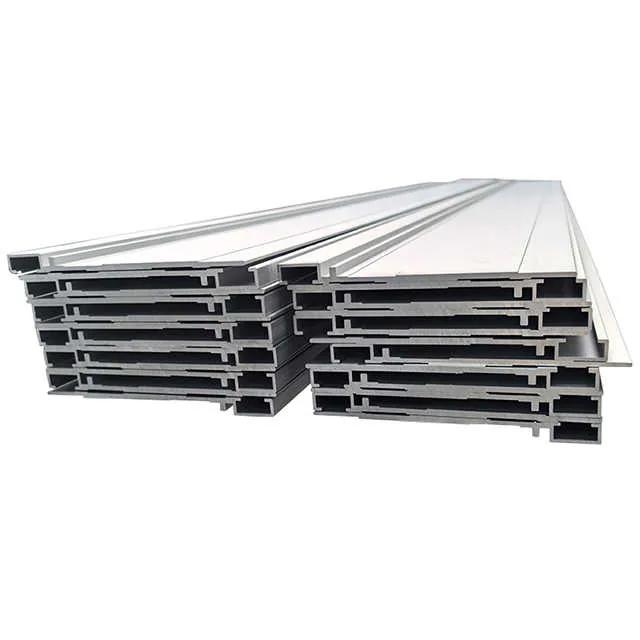
Let’s dig into how cooling works and why it matters so much for straightness.
Thermal contraction and stress development
Once the hot aluminium exits the die, it starts cooling. The surface cools faster than the core. If one side of the profile is exposed to cooler air or water quicker than the other side, that side contracts sooner. That contraction pulls the profile toward that side, causing a bow or curve. Internal stresses “lock in” if the part is restrained or supported improperly during cooling.
Controlled vs uncontrolled cooling zones
In a good extrusion line, the cooling path is carefully engineered. Air fans or water baths are placed to give uniform cooling from all sides. Some lines use conveyor systems to allow consistent drag while the part cools. If a part is left unsupported or exposed to uneven ambient temperature (e.g., one side in shade, one in sun), straightness is compromised.
Case: long versus short profiles
The longer the profile, the more chance the cooling differential has to magnify curvature. A 6 m beam cools across its length, and any bending from uneven contraction can accumulate. That’s why longer parts often have looser tolerances or require special handling. According to one reference, for lengths over 6 m straightness tolerance might be ±1.0 mm per meter.
Influence of cross‑section shape
Hollow sections or thick wall solid sections respond differently. In hollow sections, the interior may hold heat longer; in thick sections the thermal gradient is more severe. These internal differences create stress differentials that manifest in bowing. In thin walls, the effect might be less dramatic but still present, especially if cooling is very rapid.
Best practice I adopt
From my own work I insist that the extruder specify cooling method and support during cooling. I make sure the profile is supported along its length — using racks or conveyors that allow uniform support, not point support that creates ‘hang‑on’ sag. I ask for cooling logs or process data if straightness is critical for the customer’s application (especially construction or long spans).
Table: Cooling impact summary
| Cooling condition | Potential straightness effect |
|---|---|
| Uniform cooling all sides | Minimal bowing, stress relieved |
| Faster cooling one side | Bow toward the faster‑cooled side |
| Hanging unsupported | Sag under own weight during cooling |
| Uneven ambient (heat/sun) | Warping after storage or later processing |
Support during cooling is irrelevant to straightness of an extrusionFalse
Improper support allows sag and accentuates bowing during cooling.
Long extrusions are more susceptible to straightness issues due to cooling differentialsTrue
Greater length gives more chance for uneven cooling, sag, or contraction to accumulate.
How to measure extrusion straightness accurately?
I once saw debate among quality teams: manually measuring vs laser scanning. I found the method you choose matters a lot in reliability and cost.
Accurate straightness measurement uses straightedges, dial indicators, laser scanning, or CMM systems — and must follow defined tolerance tables such as 0.012 inches per foot for many standard profiles.

Here are the key measurement methods, plus pros, cons, and how I apply them in practice.
Methods of measurement
- Straightedge and feeler gauges
- Dial indicator measurement
- Laser scanning / optical measurement
- CMM (Coordinate Measuring Machine)
Specifying the tolerance
Tolerances come from standards. I always specify straightness tolerance in contract drawings (e.g., “Deviation from straightness shall not exceed ±0.012″ / ft.”) and confirm with vendor.
Inspection protocol I follow
- Ensure supporting surface is level and stable
- Use rests at ends, check mid-span
- Divide long parts into segments
- Record data, compare to spec
Table of measurement techniques
| Technique | Accuracy | Cost / Complexity | Best for |
|---|---|---|---|
| Straightedge/feelers | Moderate | Low | General shop checks |
| Dial indicators | Higher | Medium | Medium precision long parts |
| Laser/optical scanning | Very high | High | Precision parts, complex profiles |
| CMM | Very high | Very high | High‑precision engineering needs |
Using a simple straightedge check is always sufficient for any straightness requirementFalse
For critical applications and tight tolerances, more advanced measurement like laser scanning may be needed.
Standards for straightness provide maximum allowable deviation per length segment, e.g., per footTrue
Standards like 0.012\
Can post‑processing improve extrusion straightness?
After many years in extrusion work I learned: yes, you can improve straightness after extrusion — but you must plan for it, budget for it, and understand its limits.
Post‑processing steps such as controlled stretching, roller straightening, hydraulic press straightening and heat‐treatment can improve the straightness of an extrusion — though they add cost, time and may have limits based on profile geometry.

Here’s how I see the post‑processing route in real projects.
Straightening via stretching
Roller straightening
Press straightening / heat straightening
Heat treatment / age hardening
When post‑processing has limits
- Complex geometry
- Poor alloy/cooling
- Long unsupported spans
Table of post‑processing techniques
| Technique | Improvement Potential | Typical Use Case |
|---|---|---|
| Stretching | Moderate to high | Long beams, structural frames |
| Roller straightening | High (for linear profiles) | Architectural extrusions, solar frames |
| Press/heat straightening | Very high (select parts) | High‑precision, expensive profiles |
| Heat treatment | Medium | Profiles requiring tight tolerances |
Post‑processing straightening can always correct any bow in an extruded profile regardless of severityFalse
There are practical and geometric limits; severe distortion or bad alloy/cooling may not be fully corrected.
Including a straightening process adds cost and lead‑time, so it should be included only when required by applicationTrue
Yes — it is a premium step and should be specified when needed.
Conclusion
I hope this gives you a clearer view of how straight aluminium extrusions need to be, what influences that straightness, how to measure it, and how you can improve it if needed. If you set clear specifications up front and include the right processing steps, you can reduce surprises and deliver straight, reliable profiles.


