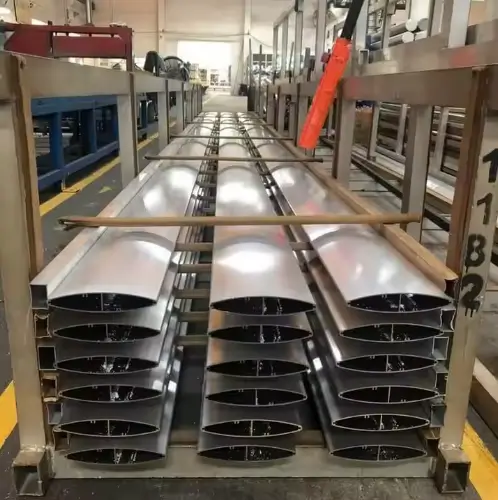
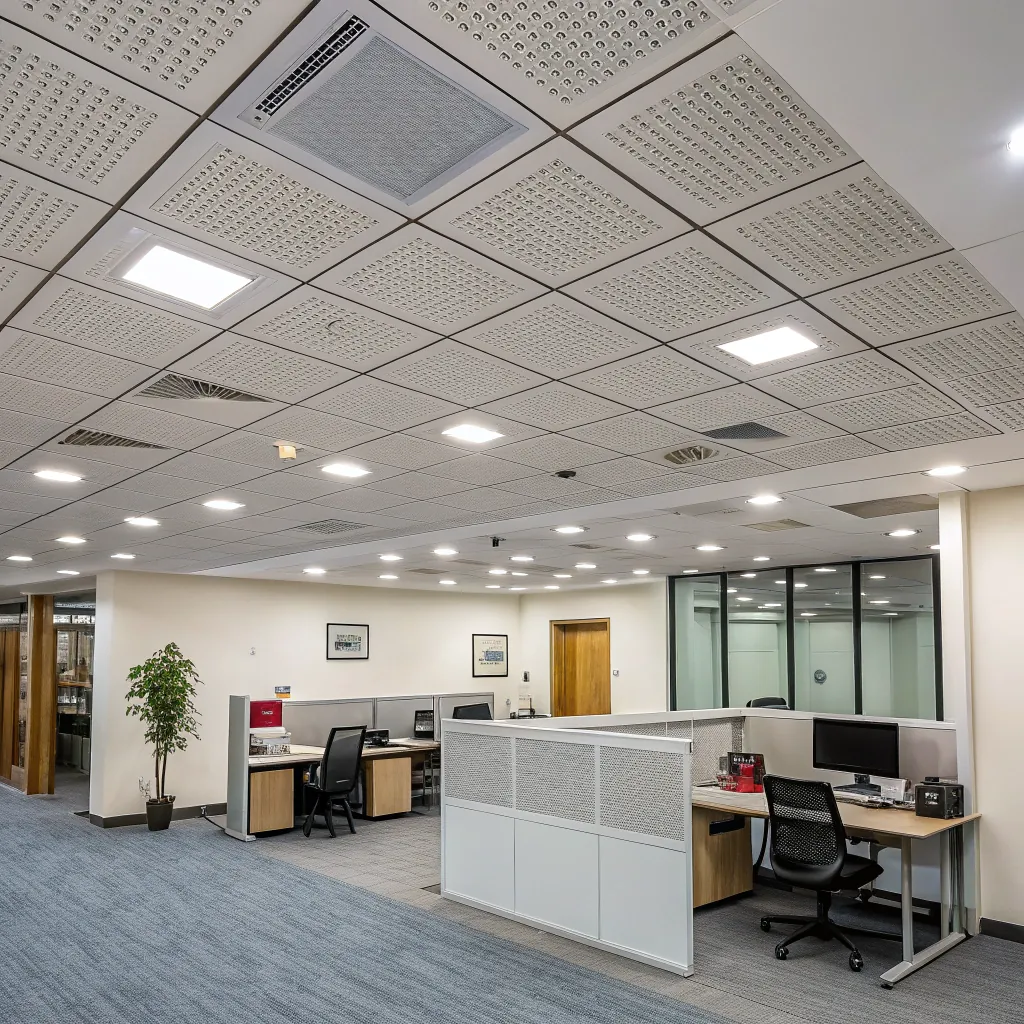
What is aluminum extrusion process?
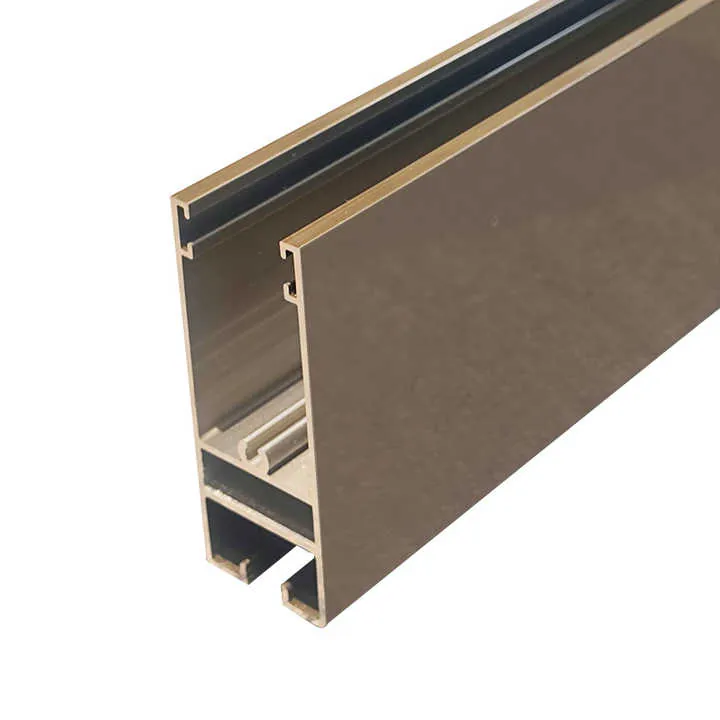
The aluminum extrusion process lets me turn solid metal into complex shapes by forcing it through a die while controlling heat and pressure.
In simple terms, aluminum extrusion is heating a metal billet, pushing it through a shaped opening (die) under pressure, then cooling and finishing the profile.
I’ll walk you through the steps, explain why pressure is effective, describe where cooling happens, and show how good process control lifts results.
Quelles sont les étapes du processus d'extrusion ?
I once watched a billet of aluminum go through the whole flow—seeing each step gave me a much clearer view of what it takes.
The extrusion process follows a series of steps: die preparation, billet heating, loading, pressing, die shaping, cooling/quenching, stretching, cutting, finishing.
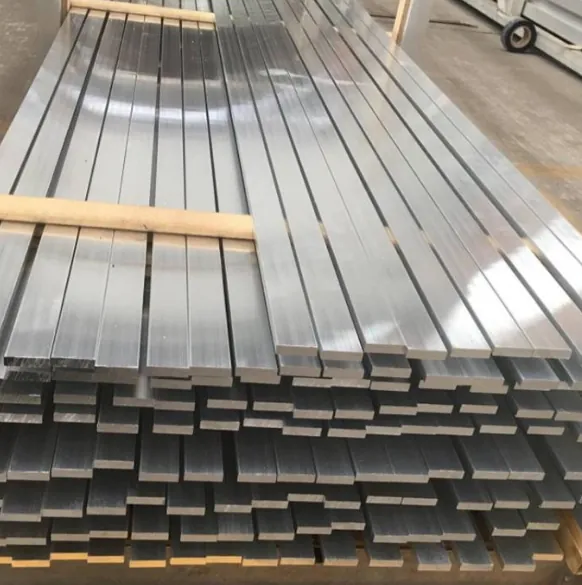
Here is a breakdown of key steps I use when managing an extrusion line:
1. Préparation des matrices
The die is shaped to the desired profile and pre-heated. This helps ensure the metal flows evenly and accurately fills the die opening.
2. Billet heating
The aluminum billet is heated to a soft but solid state, usually between 400°C and 500°C. This softens the metal to make it easier to push through the die.
3. Chargement et lubrification
The billet is loaded into the container. Lubricants or release agents are applied to prevent sticking and help smooth the metal flow.
4. Pressing / Extrusion
A hydraulic press pushes the billet through the die using tons of pressure. As the aluminum flows through the die, it takes on the die’s shape and forms a continuous profile.
5. Emergence and quenching
As the shaped aluminum exits the die, it is cooled rapidly using air or water. This locks in the shape and stabilizes the profile’s structure.
6. Cooling to ambient, straightening and cutting
Once initially quenched, the extrusion continues to cool until it reaches room temperature. It is then straightened to remove any twists and cut into required lengths.
7. Finishing and heat treatment
Depending on requirements, the profiles can be aged, anodized, painted, or further machined.
Here’s a summary in table form:
| Step No. | Description | Objectif |
|---|---|---|
| 1 | Préparation des moules | Shape control, stable die temperature |
| 2 | Chauffage des billettes | Softens metal without melting |
| 3 | Chargement et lubrification | Prevents sticking, ensures smooth motion |
| 4 | Pressing/extrusion | Forms metal into profile shape |
| 5 | Trempe | Stabilizes shape and internal structure |
| 6 | Cooling, straightening, cutting | Ensures accuracy and prepares for next steps |
| 7 | Finishing & treatment | Enhances performance, appearance, durability |
From my own projects, skipping or mismanaging any step caused warping, inconsistent dimensions, or weak mechanical properties.
Why does pressure shape aluminum effectively?
One time I tried to extrude a complex profile and realized without enough pressure the metal wouldn’t fill all corners of the die—and the part was weak and flawed.
Pressure is the key because it forces the softened aluminum billet to flow into the die’s opening and take its shape while overcoming friction and resistance.
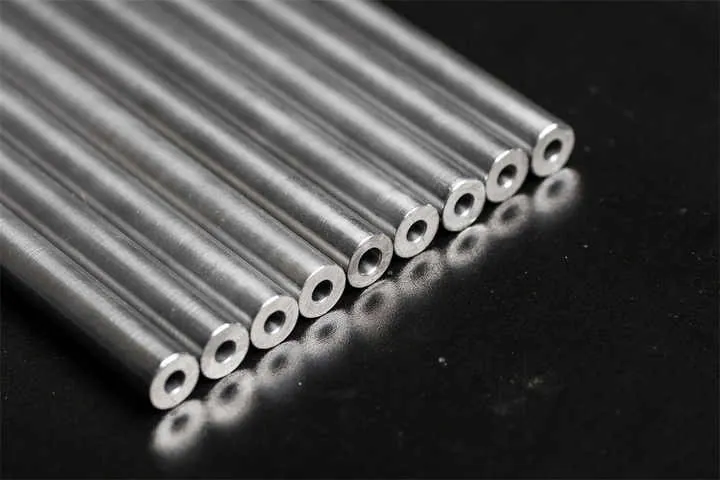
Here’s how I understand the role of pressure in the extrusion process:
How pressure works
When the billet is heated, its internal structure becomes more ductile. A hydraulic ram then pushes it through the container and into the die. The pressure squeezes the aluminum through the shaped die opening.
In direct extrusion, the die stays still while the billet moves. In indirect extrusion, the die moves towards a static billet. Either way, pressure forces the transformation.
Why pressure matters
- Ensures the billet fills the die completely
- Forces aluminum into thin areas or tight corners
- Maintains the continuous flow needed for long sections
- Helps retain consistent grain structure during forming
Important factors
- The press’s tonnage determines what profiles can be made.
- Low pressure may cause incomplete filling or surface voids.
- Excessive pressure without temperature control may lead to tearing or premature die failure.
On one line, we used a press that wasn’t strong enough. We adjusted by preheating the billet slightly more and slowing the extrusion rate. This allowed the metal to flow better without cracking the die or the profile.
Where does extrusion cooling occur?
When I looked at the extrusion line, the cooling stages stood out—first rapid cooling right after die exit, then slower cooling to room temperature. Both matter a lot.
Cooling occurs firstly immediately on exit (quenching) on a run‑out table via water or air, then on a cooling table until ambient temperature is reached, before stretching and finishing.

Here’s how the process cools aluminum effectively:
Immediate cooling (quenching)
As the extruded aluminum exits the die, it’s still extremely hot. Fans or water sprays cool it quickly on the run-out table. This “quenching” locks in the profile’s mechanical properties and shape.
Too slow cooling can allow the grains inside to grow too large, affecting strength. Too fast cooling can introduce stress or warp.
Final cooling to ambient
After quenching, the profile rests on a cooling table until it reaches room temperature. Once fully cooled, it is stretched to correct any twist or bend. Then it is cut into usable lengths.
Pourquoi c'est important
- Correct quenching ensures correct hardness and strength
- Even cooling prevents profile bending or warping
- Slow ambient cooling completes the stabilization of the profile
From my own trials, uneven cooling almost always led to poor straightness or edge cracking, especially on profiles with thin walls or asymmetrical shapes.
Can process control improve results?
In my experience, when process variables weren’t tracked—temperature, pressure, speed—the result was inconsistent profiles, higher scrap rates, and more time spent re‑working.
Yes—strong process control (including temperature, pressure, speed, tooling design, real‑time monitoring) dramatically improves extrusion quality, consistency, yield, and mechanical properties.

Here’s what I monitor closely to ensure better extrusion outcomes:
Key control variables
- Température du billette: Impacts metal flow and surface quality.
- Ram speed and pressure: Affects how smoothly and fully the aluminum fills the die.
- Température de la matrice: Needs to be warm to avoid cold spots and flow issues.
- Vitesse de refroidissement: Quenching and cooling must match alloy and target properties.
- Tooling condition: Worn or dirty dies cause inconsistent shapes.
Avantages
- More consistent profile dimensions and tolerances
- Better grain structure and mechanical performance
- Lower scrap and rework rates
- Reduced wear on machines and dies
Real-world result
On one project, billet temperature varied too much, so we added a monitoring sensor. That alone reduced profile twisting and improved hardness uniformity by more than 15%.
Here’s a control reference table:
| Variable | Poor control issue | Good control result |
|---|---|---|
| Température du billette | Poor flow, inconsistent hardness | Smooth flow, consistent properties |
| Ram speed/pressure | Voids, warping, tearing | Clean shape, reduced defects |
| Vitesse de refroidissement | Cracks, stress buildup | Stable structure, right temper |
| Température de la matrice | Incomplete fill, poor surface | Proper flow and surface finish |
| Tool condition | Burrs, uneven edges | Clean, sharp, accurate profiles |
Without process control, I’ve seen jobs fail even with good materials. With it, even complex shapes can be repeated reliably at scale.
Conclusion
I’ve taken you step by step through the aluminum extrusion process—how the steps flow, why pressure matters, where cooling happens, and how process control improves outcomes. When we manage each of these well, the extrusion runs smoothly and the profiles meet quality, cost, and delivery goals.