who makes aluminum curtain wall extrusions?

Curtain wall systems often fail because extrusion quality is wrong. That causes air and water leaks, delays, and extra cost. Good extrusions fix these problems fast.
Many big and small aluminum extrusion makers supply curtain‑wall profiles worldwide — from global alloy suppliers to local custom mills.
Read on for top companies, why precision matters, how to check compatibility, and whether custom extrusions can boost facade performance.
What companies supply curtain-wall profiles?
Profile supply comes from global giants and regional specialists. Both supply standard and custom curtain‑wall aluminum extrusions.

Different suppliers meet different needs. Some provide broad alloy ranges and global delivery. Others focus on custom shapes or regional markets.
Major Suppliers and Typical Strengths
Here is a table of several well-known extrusion providers and what they often supply for curtain‑wall systems:
| Company / Region | Typical Supply Strength | Common Markets |
|---|---|---|
| Global large mills (e.g. major European or US extruders) | Offer standard curtain‑wall alloy profiles (6063‑T5 / 6061‑T6), global delivery, big volume | High‑rise construction firms worldwide |
| Regional extrusion mills (Asia, Middle East, Africa) | Local alloy availability, lower transport cost, custom runs | Local construction, mid‑size projects |
| Specialist custom shops | Custom shapes, small batch, fast turnaround, additional services (CNC, drilling, cut‑to‑length) | Boutique or custom curtain‑wall work, renovation, bespoke designs |
| Integrated facade system suppliers | Provide both profiles and matching spacer/thermal break/external glazing frames | Contractors needing full curtain‑wall packages |
| OEM supply chain extruders | Provide extrusion only, for contractors or facade fabricators | Fabricators assembling curtain‑wall systems |
For large volume projects with standard profiles, global mills are often best. For local work, regional mills reduce cost and lead time. Specialists are ideal for unique designs or custom facade shapes.
Why Suppliers Vary
- Production capacity: Big mills can output tons per day. Regional mills may run smaller batches.
- Alloy availability: Some regions may have limited alloy supply — affecting strength and finish.
- Customization services: Drill holes, add slots, CNC cut‑outs — these services matter when curtain‑wall needs integrate with windows, vents, lighting.
- Delivery logistics: Shipping heavy aluminum profiles globally adds cost and time. Local mills reduce those burdens.
When selecting a supplier, match project size, alloy standard, finish needs, and logistics.
Global large mills usually supply standard alloy profiles like 6063‑T5 for curtain wall systems.True
Large extrusion mills often stock common alloys such as 6063‑T5 or 6061‑T6 and supply curtain-wall profiles globally.
Only specialist custom shops can supply curtain‑wall extrusions.False
Both large mills and regional extrusion mills can supply standard curtain‑wall profiles; specialist custom shops are optional.
Why curtain walls need precision extrusions?
Poor extrusions cause misfit, leaks, structural weak spots, wasted labour and cost. Precision extrusions avoid those problems before they start.
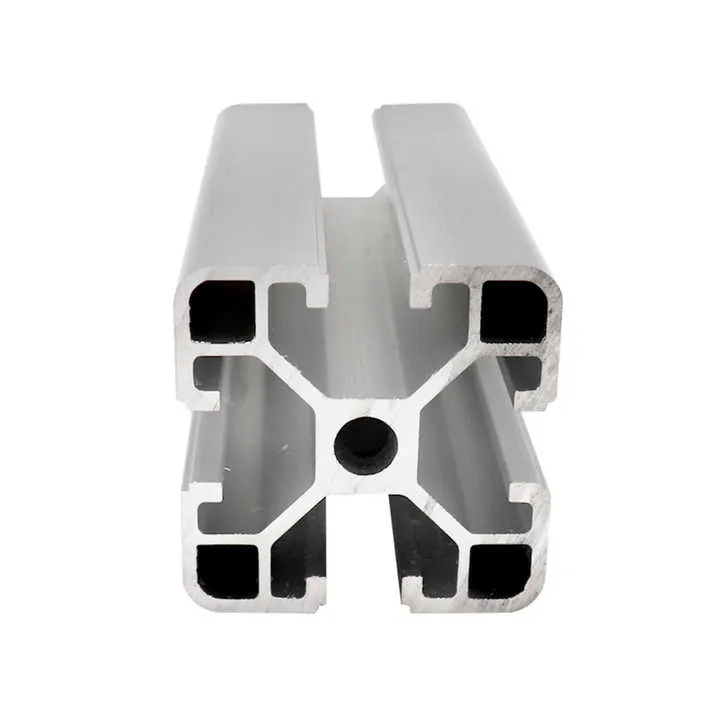
Accurate curtain‑wall extrusions deliver tight tolerances. That ensures frames assemble correctly and facade seals stay tight — crucial for safety, insulation, and design.
Key Reasons for High Precision
Structural Integrity and Dimensional Accuracy
Curtain walls must carry weight of glass, resist wind loads, and maintain shape under stress. If extrusion walls or profiles vary in thickness or shape, the structural strength may weaken or fail. Accurate tolerances ensure the load distributes as designed.
Seal and Water/Thermal Tightness
Profiles often include recesses for gaskets, rubber seals, and thermal breaks. If extrusion dimensions deviate, seals may not seat properly. That leads to water leakage, air infiltration, or thermal bridging. Proper precision ensures seals work well.
Fit and Assembly Efficiency
On-site assembly benefits when parts fit exactly. Profiles aligned properly save labour. Misaligned parts waste time and require adjustment. Time lost on site increases cost and delays.
Finish Consistency and Aesthetics
Surface treatment — anodizing, powder‑coating, wood‑grain finish — expects uniform metal surfaces. Extrusion defects (waviness, inconsistent wall thickness) show after finishing. Precision extrusions yield clean surfaces for finishing.
Quality Checks and Tolerance Controls
Good extrusion producers follow quality standards. Here is a typical checklist before shipping curtain‑wall profiles:
| Quality Factor | Acceptable Range / Criteria |
|---|---|
| Wall thickness variance | ± 0.10 mm (or per project spec) |
| Profile straightness | No visible bow over full length; max deflection defined (e.g. 0–2 mm over 6 m) |
| Dimensional accuracy of grooves / slots | Within ± 0.15 mm of drawing dimensions |
| Surface finish before coating | Smooth, no excessive burrs or cracks |
| Alloy composition | Confirm 6063‑T5 or 6061‑T6 standard via certification |
Producers often supply a mill test certificate (MTC) that documents alloy batch, mechanical tests, and extrusion records.
In many projects I saw water leaks, uneven seal compression, or frame warping. Later those problems traced to poor extrusion quality. After switching to high‑precision extruders, facade issues dropped sharply. Precise extrusion prevents future failures.
Therefore using precise extrusion matters as much as glass quality or sealant choice.
Dimensional accuracy in extrusion affects seal and water-tightness of curtain walls.True
If groove or slot dimensions deviate beyond tolerance, seals may not seat properly, causing leaks or air infiltration.
Curtain-wall performance only depends on glass and sealant, not extrusion precision.False
Extrusion precision affects frame alignment and seal fit, which directly influence performance; so profiles matter too.
How to verify facade system compatibility?
Selecting extrusion profiles is only first step. Need to verify overall facade system compatibility — with glass, thermal break, sealant, anchoring, and site conditions.

Compatibility check means matching extrusion specs with glazing, anchor points, and structural loads. Doing that early avoids failure or costly rework.
Steps to Confirm System Compatibility
Here is a typical verification checklist when considering a facade system:
- Check profile dimensions vs. design drawings — Ensure groove sizes, glass pocket depth, mullion width match specifications.
- Confirm alloy and strength ratings — Load-bearing calculations depend on profile section modulus; confirm alloy grade.
- Match thermal break and gaskets — Thermal break inserts and seals must fit extrusion slots precisely.
- Review anchoring details — Anchors embedded to concrete or structure must align with mullion holes or anchors in profile.
- Check finish and corrosion protection — Depending on environment (coastal, industrial), select anodizing or coating level.
- Mock‑up and test assembly — Dry‑fit curtain‑wall segments on ground or in controlled environment before full installation.
Example: Verification Table
Below is a simplified table for verifying a new curtain‑wall system:
| Verification Item | Status | Notes |
|---|---|---|
| Profile cross‑section matches drawing | ✔ / ✘ | Check with vernier calipers or profile gauge |
| Alloy certificate received | ✔ / ✘ | Mill Test Certificate provided? |
| Groove width & depth correct | ✔ / ✘ | Use slot gauge test |
| Thermal break fits snugly | ✔ / ✘ | Insert break, test for gaps |
| Anchor holes align to site plan | ✔ / ✘ | Dry‑fit anchor plate or embedment |
| Finish type per spec | ✔ / ✘ | Powder‑coat / anodizing as required |
If any item shows ✘, do not proceed with full installation. Correct issues first.
Why Early Mock‑up and Testing Matters
Real facade loads and tolerances vary. On‑site conditions differ from design. Thermal expansion, wind pressure, building movement add strain. A mock‑up verifies the real behavior. It reveals if gaskets compress too much or if glass pressure points misalign. It helps avoid water infiltration, structural squeaks, or failure.
In one project that went wrong, extrusion profiles came from a low‑cost overseas mill. Dimensions were out by 0.3 mm, and gaskets did not seat properly in mock‑up. The result was multiple leaks and rework — costing extra materials, labor, and time.
Proper compatibility verification saves far more than the cost of careful checks and testing.
Mock‑up assembly can reveal misfit issues between extrusion, glass, and gaskets before site installation.True
Mock‑up lets fabricator test fit, alignment, and seal compression under no‑load conditions before full facade installation.
Only drawing review is enough to ensure facade system will fit in real life.False
Drawings do not always reflect real site tolerances and assembly variation; physical mock‑up often reveals hidden issues.
Can custom extrusions improve façade performance?
Using custom extrusions can significantly improve a building facade. Custom profiles let designers and engineers meet unique demands: aesthetic, structural, thermal, acoustic, or functional.

Custom aluminum extrusions allow unique shapes, integrated thermal breaks, built‑in drainage, or concealed fixings. That can raise facade quality beyond standard systems.
When Custom Extrusions Make Sense
Custom extrusions help in these situations:
- Unique facade designs with non‑standard shapes or curves.
- High performance demands (thermal insulation, acoustic insulation, complex geometry).
- Integration of accessories (lighting, blinds, sun‑shades) into the frame.
- Projects distant from major suppliers — local custom mills shorten lead time and shipping cost.
- Upgrades to existing buildings with non‑standard opening sizes or unusual load limits.
Benefits of Custom Extrusions
Improved Thermal and Energy Performance
Standard profiles may not optimize thermal break placement or gasket recess design. Custom extrusions can include deeper thermal break chambers, multiple gasket slots, or built‑in drainage channels. That reduces heat loss, minimizes condensation risk, and improves energy efficiency.
Enhanced Architectural Aesthetics
Architects can design minimalist or sweeping facades that standard profiles cannot achieve. Custom extrusions allow slim profiles, hidden fixings, or unique shapes for modern designs.
Integrated Functionality
Custom profiles can combine multiple functions: structural support, drainage, insulation, mounting points for blinds or shades, or attachment for interior finishes. That simplifies installation and reduces need for extra parts.
Better Adaptation to Local Conditions
In regions with extreme climate, salt air, heavy rain or seismic activity, custom extrusions can meet stricter local codes. Custom alloys, thicker walls, or specialized coatings help resist corrosion, wind load, or seismic stress.
Costs and Risks of Custom Extrusions
Custom extrusions cost more per kilogram and often have higher minimum order quantity (MOQ). Lead time may be longer because design, die creation, testing are required. Also, risk of manufacturing errors is higher if the extrusion house lacks experienced quality control.
A table below compares standard vs custom extrusion choices:
| Factor | Standard Extrusion | Custom Extrusion |
|---|---|---|
| Cost per kg | Lower | Higher (die cost + design + small batch) |
| Lead time | Short (stock) or moderate | Longer (die making + testing) |
| Design flexibility | Limited to stock shapes | High — tailored to project needs |
| Performance options (thermal / acoustic) | Basic | Advanced, optimized |
| Suitability for atypical designs | Poor | Excellent |
| Risk (fit, quality) | Lower (proven profile) | Slightly higher (if QC weak) |
When Custom Works Best
Custom extrusion pays off for projects where standard systems won’t meet design or performance needs. For example: a luxury hotel facade needs curved sections, integrated sun shading, and high acoustic insulation. Standard profiles do not meet these demands. Custom extrusion allows a unique, high‑end result.
In another case, a coastal tower in a salt‑air climate required thicker walls and specialized coating for corrosion resistance. A custom extruder provided required alloy and coating test, ensuring long‑term durability.
Therefore custom extrusions add real value — but only when the project scope justifies extra cost. For generic office buildings or basic curtain walls, standard profiles often suffice.
Custom extrusions allow better thermal break design and improved energy efficiency of curtain walls.True
Custom profiles can accommodate deeper thermal‑break recesses and more gasket slots than standard profiles, improving insulation performance.
Standard extrusions are always better than custom because they cost less.False
Standard extrusions cost less but may not meet design, structural or performance needs for certain projects; custom extrusions can offer key performance benefits.
Conclusion
Aluminum curtain‑wall extrusions come from global mills, regional companies, or specialist shops. Precision matters for structural, seal, and finish quality. Always verify facade compatibility before installation. Custom extrusions can raise performance and aesthetics — worth them when project demands go beyond standard needs.