What is CNC aluminum extrusion?
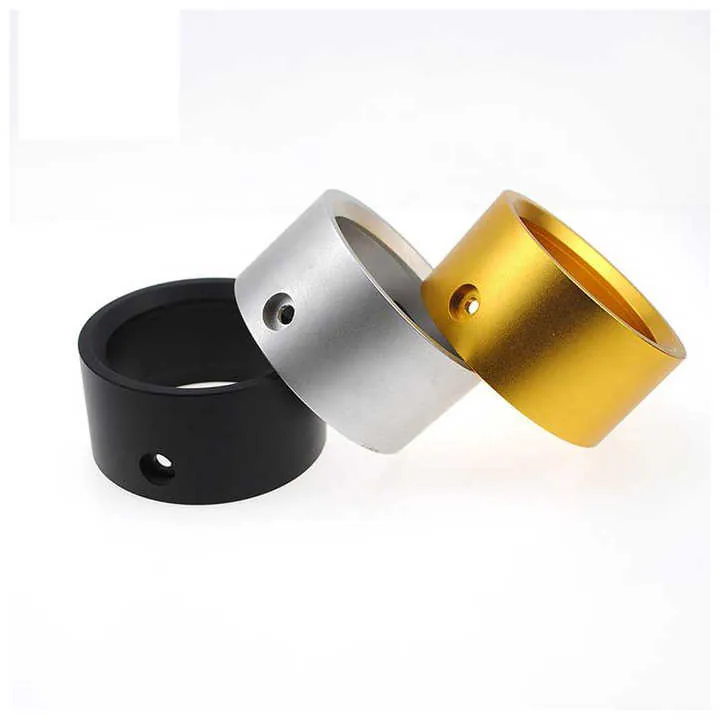
I know it’s confusing to learn about CNC aluminum extrusion. You need a simple guide showing what it is and how it works.
You will learn what CNC aluminum extrusion means, how it uses both extrusion and milling, tolerance limits, and ideal uses.
Let me take you from basics to applications.
How does CNC machining differ from aluminum extrusion?
I start by explaining each process. Extrusion shapes long profiles. CNC adds precision and features.
Extrusion creates constant cross-section shapes; CNC machining adds complex detail and precise holes or cuts.

Dive deeper
Aluminum extrusion pushes heated aluminum billet through a die. That creates long profiles with consistent shapes like channels, fins, or tubes. Extrusion is efficient for long runs of standard shapes.
CNC machining starts with solid stock or extruded profiles. A CNC mill or lathe then cuts, drills, and refines shapes to final design. CNC adds holes, pockets, threads, and angled surfaces.
So extrusion gives the general form. CNC adds function and detail. This combination is often called “CNC aluminum extrusion.”
Extrusion is fast and low-cost per length once you have a die. CNC adds cost per part but gives flexibility and precision.
Extrusion alone limits you to 2D profile shapes. CNC allows 3D features anywhere on the part – like tapped holes, flat mounting surfaces, cutouts, and chamfers.
Here is a comparison:
| Feature | Extrusion Only | CNC Machining |
|---|---|---|
| Shape | Constant cross-section | Variable 3D features |
| Cost per meter | Low after die setup | Moderate per part |
| Setup time | Die fabrication time | CAM programming + machining setup |
| Feature addition | Limited (cut ends) | Full holes, threads, pockets |
| Flexibility | Limited to profiled shape | Very high flexibility |
Extrusion followed by CNC gives both efficiency and detail. Many parts like LED heat sinks or structural frames use this route.
Extrusion alone can add tapped holes.False
Tapped holes need CNC machining or secondary processes; extrusion only provides basic shape.
CNC machining adds 3D features to extruded parts.True
CNC mills holes, pockets, and precise details into extrusion shapes.
Can extrusion and CNC be combined in aluminum fabrication?
I explain combined workflow: design profile, extrude, machine features. It offers speed and customization.
Yes. You can extrude profiles and then CNC them for features, tight tolerances, and complex shapes.

Dive deeper
First, I work with CAD to design both the extrusion profile and the post-machine features. The profile might be a T-slot frame or channel shape.
Next, I order an extrusion die to create the raw profile in desired alloy like 6063-T5 or 6061-T6. We extrude long bars — tens or hundreds of meters.
Once extruded and cooled, we cut them to CNC-ready lengths. In CNC setup, we secure each piece using fixtures to hold profile orientation.
Then CNC milling is used to add necessary holes, slots, bosses, cutouts, or milled faces for mounting. We may also machine end faces to length and square them.
We also do secondary machining: tapping holes, countersinking, threading, drilling, and surface chamfers. This is cleaner and repeatable thanks to CNC control.
This combined process saves cost. The extrusion gives most shape. CNC adds only needed details. It is faster and cheaper than full machining from billet.
Typical workflow:
- CAD design showing extrusion profile + parts features
- Extrusion of profile to required length
- Cutting to blanks
- CNC machining for holes, slots, tapped bosses
- Deburring and inspection
- Finishing (anodize/powder)
- Final quality check and packing
Using this method, we build parts like modular framing, heat sink modules, housing sections, and structural components for machines, electronics, or panels.
You need to machine every part on CNC after extrusion.False
You only machine features that extrusion cannot provide; the rest is already in profile.
Combining extrusion and CNC saves cost compared to full CNC from billet.True
Extrusion forms the basic shape quickly and CNC adds minimal detail, reducing material and machining time.
What are typical tolerances for CNC aluminum extrusions?
I discuss tolerances from extrusion alone and after CNC. Extrusion has broader tolerances (±0.15?mm), CNC refines them to ±0.01?mm.
Extrusion tolerances are about ±0.1–0.2?mm; CNC-machined features can achieve ±0.01–0.05?mm.

Dive deeper
When extrusion is first made, profile dimensions vary slightly. The industry calls these "standard tolerances." Typical specs:
- Width, depth, wall thickness: ±0.15?mm
- Straightness and twist: ±0.5?mm per meter
- Surface finish: 3–6?μm
For precision work, we use CNC machining after extrusion. CNC can hold:
- Hole position: ±0.01?mm
- Hole diameter: ±0.02?mm
- Flatness or face squareness: ±0.02?mm
- Surface finish: Ra?0.8?μm typical
This combination ensures a part that has both profile form and accurate features. We often use CNC to add holes, tapped threads, and datum surfaces that require tight fit.
Here is a tolerance comparison:
| Feature | After Extrusion | After CNC |
|---|---|---|
| Hole position | Not controlled | ±?0.01?mm |
| Wall thickness | ±?0.15?mm | ±?0.05?mm |
| Face flatness | ±?0.5?mm | ±?0.02?mm |
| Surface finish (Ra) | 3–6?μm | 0.8?μm |
To hit tight tolerances, we use precision tooling, hardened cutters, and stable workholding fixtures. We also perform in-process probing or post-inspection on CMM.
This workflow ensures each extruded CNC part meets tight print requirements.
Extrusions are precise enough without CNC.False
Standard extrudes have tolerances around ±0.15?mm; CNC is needed for tighter dimensions.
CNC can refine hole positions to ±0.01?mm.True
Modern CNC machines with proper fixturing achieve single-digit micron positional accuracy.
What applications benefit from CNC aluminum extrusions?
I describe uses like LED heat sink modules, structural frames, enclosures, medical devices, and automation parts.
Applications include electronics cooling, machine frames, lighting, medical equipment, and custom enclosures.

Dive deeper
1. LED lighting heat sinks
We extrude finned profiles and then CNC mill mounting holes and cutouts for drivers or connectors. This gives efficient cooling and sleek look.
2. Machine frames & workstations
T-slot extrusions are used to build frames. CNC adds mounting holes, end machining, tapped bosses for secure assembly.
3. Electronics & sensor enclosures
Extruded shell used as housing. CNC creates vent slots, cable cutouts, precise mounting surfaces for PCBs or components.
4. Medical & laboratory equipment
We make trays, racks, stands using extruded profiles. CNC ensures precise ports, feed-through holes, and angled interfaces.
5. Automation & robotics components
Parts like linear slides, bracket mounts, sensor supports are extruded and CNC-refined to precise fits and alignment surfaces.
6. Optical systems & camera rigs
Precision rails and mounts use extruded profiles with CNC-machined bearing seats, threaded mounting patterns, and slots.
This hybrid process is powerful: extrusion brings form and rigidity, CNC adds exact detail. It works well where shape, strength, and accuracy all matter.
Here is application summary:
| Application | Uses | Why CNC & Extrusion? |
|---|---|---|
| LED heat sinks | Cooling & mounting holes | Profile for fins + CNC for mounting and wiring |
| Machine frames | T-slot assembly structures | Long extrusions + CNC for custom dimensions |
| Custom enclosures | Housings, cutouts, vents | Extrude shell + CNC for precise feature integration |
| Medical racks | Ports, cable runs, brackets | Clean profile + accurate CNC ports or fittings |
| Automation components | Rail guides, sensor blocks | Structural extrusion + CNC surfaces for alignment |
| Optical and camera gear | Rails, mounts | Extrusion forms rails + CNC adds mating precision |
CNC aluminum extrusions let manufacturers produce parts that are both efficient and customized. They are popular for small to medium runs where cost and speed matter.
Only small prototypes use CNC extruded parts.False
Many production parts use extruded shapes refined by CNC for moderate volumes.
LED heatsinks often use CNC extruded profiles.True
Extrusion forms fin geometry while CNC adds mounting features and terminations.
Conclusion
We covered what CNC aluminum extrusion means, how machining differs, tolerances, and where it applies. Now you know why combining extrusion with CNC gives efficient and precise parts.
If you need help designing extruded profiles, defining CNC features, or managing production volume, I can guide you from prototype to completion.