What Is Aluminum Vacuum Brazing?
Joining aluminum is tricky. It forms oxide layers quickly, has a low melting point, and reacts differently under heat—leading to weak bonds or warped components.
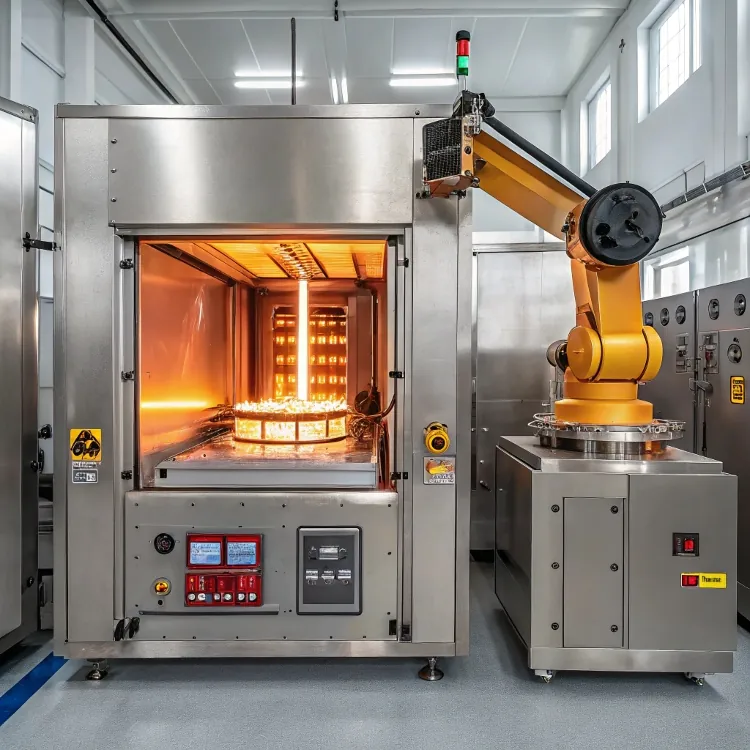
Aluminum vacuum brazing is a precise method for joining aluminum components using aluminum-based filler alloys inside a vacuum furnace, ensuring strong, clean joints without oxidation or flux.
This article explores what aluminum vacuum brazing is, how it differs from steel brazing, what fillers it uses, the challenges involved, and what quality controls are essential for success.
What is aluminum vacuum brazing?
Aluminum is lightweight and strong, but it oxidizes quickly and has a narrow melting range. This makes traditional brazing methods difficult.
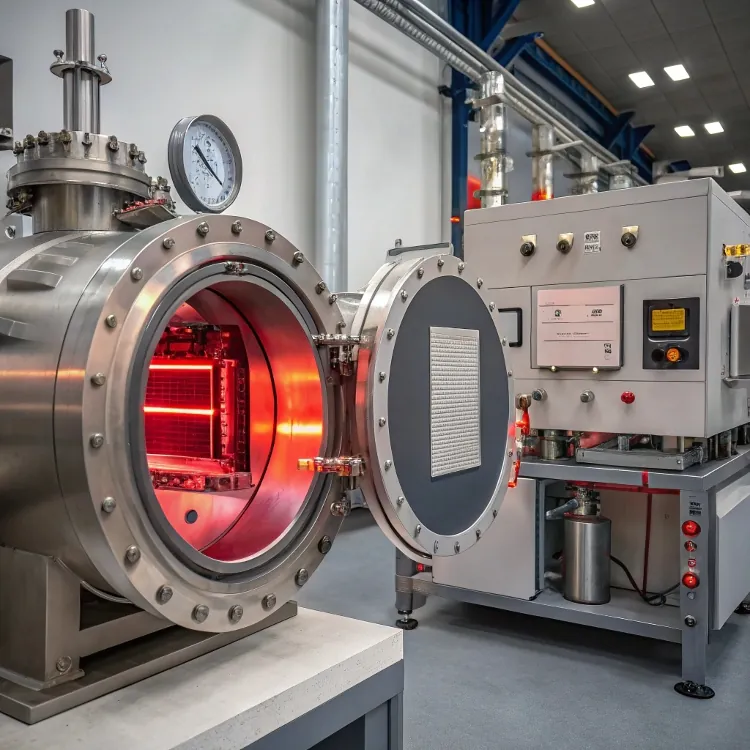
Aluminum vacuum brazing is a flux-free, high-vacuum joining method that bonds aluminum parts using aluminum-silicon filler alloys in a controlled, oxygen-free environment.
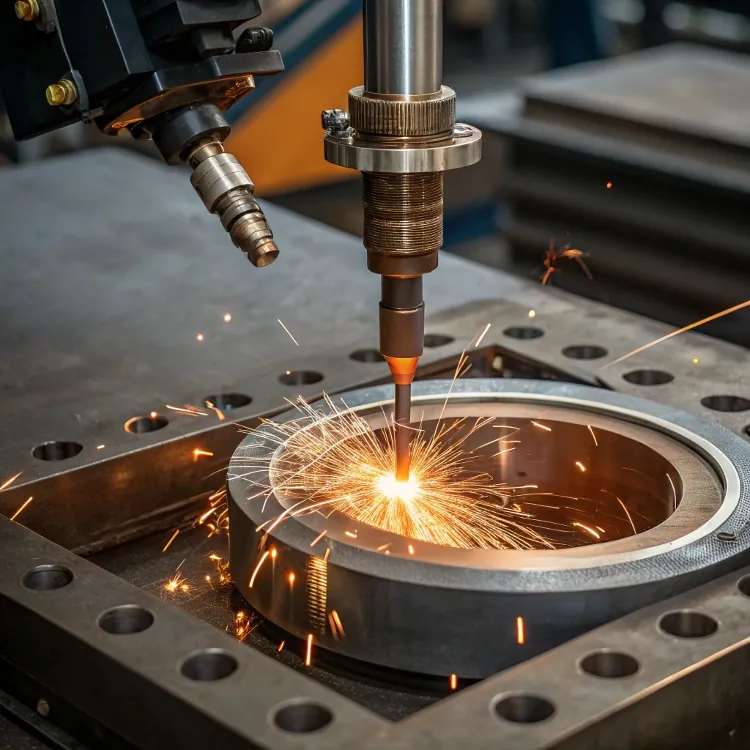
Key facts about aluminum vacuum brazing
This process works at lower temperatures than steel brazing. It avoids flux to eliminate contamination. And it uses precise thermal cycles to protect the base metal.
| Parameter | Aluminum Vacuum Brazing |
|---|---|
| Typical Temp Range | 570–610°C |
| Filler Alloys | Aluminum-silicon (e.g., Al-12Si) |
| Atmosphere | High vacuum (<10?? Torr) |
| Applications | Heat exchangers, battery trays, radiators |
Aluminum vacuum brazing is common in the automotive, electronics, and aerospace industries—especially where clean joints and thermal performance are vital.
Aluminum vacuum brazing uses flux to remove oxides during the heating process.False
Flux is not used; the vacuum removes oxygen and prevents oxidation.
Aluminum vacuum brazing is ideal for heat-sensitive assemblies due to lower process temperatures.True
It uses lower temperatures than steel brazing, making it suitable for delicate parts.
How does aluminum vacuum brazing differ from vacuum brazing of steel?
People often assume brazing methods are the same for all metals—but aluminum and steel behave very differently during heating.
Aluminum vacuum brazing operates at lower temperatures, uses different filler alloys, and requires tighter thermal control than steel brazing to avoid melting or distortion.
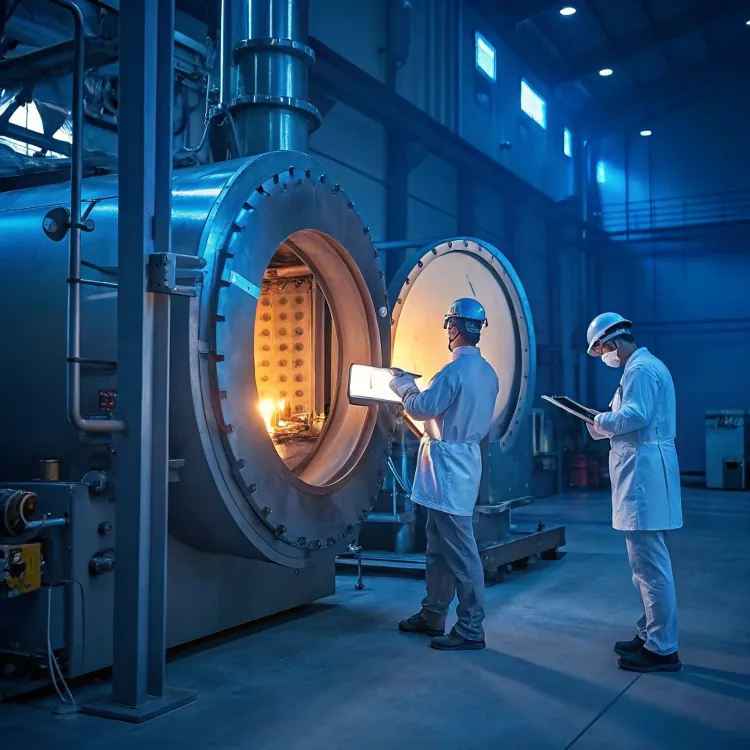
Comparison between aluminum and steel brazing
Let’s break down the key differences:
| Factor | Aluminum Brazing | Steel Brazing |
|---|---|---|
| Base Metal Melting Point | ~660°C | ~1400°C |
| Brazing Temp | 570–610°C | 950–1200°C |
| Filler Alloy | Al-Si (Al-12Si, Al-7Si) | Ni or Ag-based |
| Oxide Removal | Vacuum only | Usually no flux or pre-cleaning |
| Oxide Layer Behavior | Forms quickly, hard to remove | Forms slower, easier to remove |
| Sensitivity to Overheat | Very high | Moderate |
Aluminum requires very precise heating. Just a few degrees above its melting point can destroy the part. Steel offers more thermal forgiveness, which makes steel brazing somewhat easier to control.
Steel vacuum brazing typically requires lower temperatures than aluminum brazing.False
Steel brazing uses much higher temperatures compared to aluminum.
Aluminum is more sensitive to overheating than steel in vacuum brazing.True
Aluminum melts easily, so tight temperature control is essential.
What filler alloys are used in aluminum vacuum brazing?
Not all filler metals work for aluminum. Some are too reactive, while others don’t wet the surface properly.
Aluminum vacuum brazing uses aluminum-silicon filler alloys, typically with 7–12% silicon, to reduce melting point and improve wetting of the aluminum base metal.

Common filler materials and their properties
| Filler Alloy | Composition | Brazing Temp (°C) | Comments |
|---|---|---|---|
| Al-12Si | 88% Al, 12% Si | ~577°C | Most common, good fluidity |
| Al-7Si | 93% Al, 7% Si | ~615°C | Higher melting range, better strength |
| Al-Cu | Al with Cu | ~548–593°C | Less common, used in niche cases |
Silicon lowers the melting point of aluminum, making it possible to braze below the melting point of the base aluminum. This is critical because aluminum has a narrow solidus–liquidus range.
Filler is typically pre-placed as a foil, paste, or clad layer on the base material.
Aluminum-silicon filler alloys are preferred in aluminum vacuum brazing due to their low melting points.True
Silicon reduces melting temperature and improves flow without melting the base metal.
Copper-based fillers are commonly used in aluminum vacuum brazing.False
Copper-based fillers are not suitable for aluminum vacuum brazing due to poor wetting.
What challenges exist in aluminum vacuum brazing?
Aluminum may look easy to work with, but vacuum brazing it brings unique challenges that must be solved carefully.
Major challenges in aluminum vacuum brazing include oxide formation, narrow melting range, joint gap control, and temperature sensitivity, all of which require strict process discipline.
Specific issues to manage
Here are the main difficulties and how they affect the process:
| Challenge | Description | Risk |
|---|---|---|
| Oxide Film | Forms instantly on exposed aluminum | Prevents wetting and filler flow |
| Temperature Sensitivity | Melting point close to brazing temp | Can overheat and deform part |
| Joint Gap Sensitivity | Must be tightly controlled (~0.05–0.2 mm) | Too wide = voids, too tight = poor flow |
| Poor Filler Distribution | Uneven spread leads to weak joints | Causes cracks, leaks |
| Thermal Expansion Mismatch | Parts expand differently | Can misalign or crack on cooling |
Extra care must be taken in part design, filler selection, cleaning, and vacuum furnace programming to prevent these issues.
Aluminum oxide films easily dissolve during vacuum brazing.False
Aluminum oxides are stable and require vacuum or chemical removal—they don’t dissolve easily.
Controlling joint gap size is critical in aluminum vacuum brazing.True
If the gap is too big or too small, filler won’t flow properly, weakening the joint.
What quality controls are essential for aluminum vacuum brazing?
Quality in aluminum brazing doesn’t come by chance. Small process variations can lead to major failures.
Critical quality controls include surface preparation, temperature profiling, gap control, and post-braze inspection to ensure joint integrity and consistent results.
Quality control measures in aluminum brazing
| Control Step | Description | Purpose |
|---|---|---|
| Pre-cleaning | Degreasing, brushing, chemical etching | Remove oxide and contaminants |
| Fixturing and Assembly | Maintain tight, consistent joint gaps | Prevent distortion and movement |
| Temperature Profiling | Use thermocouples, sensors, and ramping curves | Avoid overheating and ensure uniformity |
| Vacuum Level Monitoring | Must stay below critical Torr value | Prevent oxidation |
| Visual and X-ray Inspection | Check for voids, cracks, and poor fill | Detect internal defects |
Some manufacturers also use helium leak tests, mechanical pull tests, and metallographic cross-section analysis to validate joint strength.
Visual inspection alone is sufficient for quality control in aluminum vacuum brazing.False
Many defects are internal; X-ray or other NDT methods are often required.
Maintaining a consistent temperature profile during aluminum brazing ensures uniform filler flow and joint strength.True
Uniform heating is critical to achieve complete and consistent joints.
Conclusion
Aluminum vacuum brazing is a powerful method for clean, strong, and reliable joints—especially for lightweight and high-performance assemblies. While the process is more sensitive than steel brazing, it offers exceptional results when tightly controlled.