


Hoe maak je een aluminium extrusie?
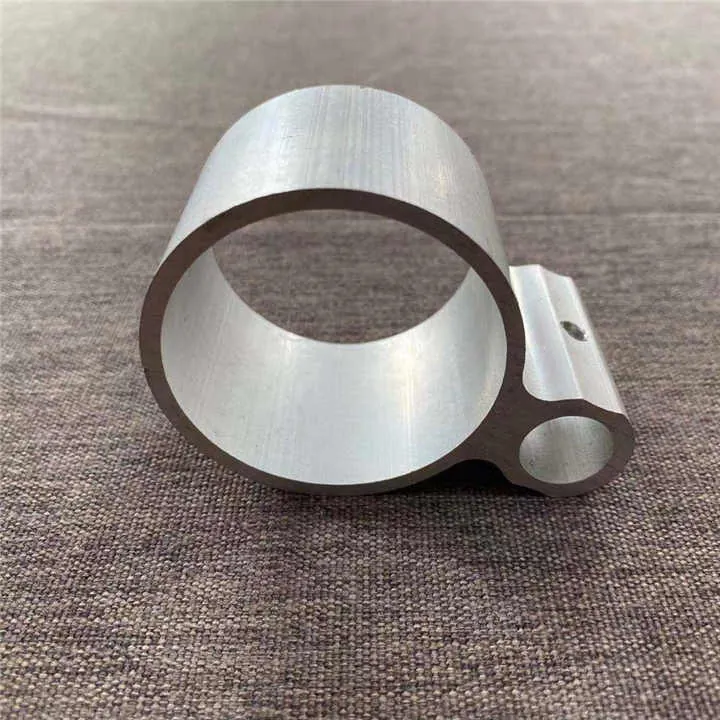
Imagine you have a solid aluminum log stuck in a cold room and you need a long, intricate shape — that stress builds fast until you find the solution: extrusion.
You make an aluminum extrusion by heating a billet, pressing it through a shaped die, then cooling, stretching and cutting it — that transforms raw metal into a finished profile.
Now that you know the high-level answer, let’s go deeper into each critical question so you understand the full process from start to finish.
What steps create aluminum extrusions?
If you skip a step, the extrusion can warp or crack — so let’s walk through the process step by step to avoid surprises.
The main steps are: die preparation, billet pre‐heating, loading and pressing through the die, cooling, stretching, and finishing (cutting, heat‐treating).

Step by Step Breakdown
- Voorbereiding van de matrijs – The tooling that shapes the profile is made (usually tool steel) and pre‐heated (often ~450‑500 °C) to ensure even metal flow and prolong die life.
- Billet voorverwarmen – A cylindrical block of aluminium alloy (a “billet”) is heated (commonly ~400‑500 °C) to make it malleable without melting it.
- Loading into the press – The billet is transferred into the extrusion press container, often with a lubricant or release agent to prevent sticking.
- Extrusion (ram pushes billet through the die) – A hydraulic ram applies huge pressure (industrial presses may use thousands of tons) forcing the softened aluminium through the shaped opening in the die.
- Cooling/quenching – After extrusion the profile exits the die and is rapidly cooled (via fans or water) to stabilize it.
- Stretching & straightening – The extruded lengths may twist or bend slightly, so a mechanical stretcher pulls them to straighten and relieve internal stresses.
- Cutting to length & finishing – Finally the profiles are sheared to table length, cooled to ambient, then cut to final lengths and often heat treated if required.
Why each step matters
- If the billet is not heated enough, extra force is needed, risk of die wear or billet cracking increases.
- If the die is cold or poorly matched, metal flow can be uneven, causing defects or wrong dimensions.
- Rapid cooling helps lock in the shape, avoid warpage, and ensure mechanical properties.
- Straightening avoids twist and ensures the profile meets dimensional tolerances.
Table: Typical process parameters
| Stap | Typical Parameter | Doel |
|---|---|---|
| Die preheat | ~450‑500 °C | Uniform flow, longer die life |
| Temperatuur van het staafje | ~400‑500 °C | Makes alloy malleable |
| Ram pressure | Thousands of tons | Force metal through die |
| Cooling/quench | Water or fan cooling | Stabilize profile |
| Straightening | Mechanical pull/stretch | Remove twist / straighten |
Extruding aluminium only requires pushing a cold billet through a die.Vals
The billet must be heated and the die prepared; the process is hot or warm, not simply cold pressing.
Cooling immediately after the die exit is essential for dimensional stability.Echt
The quench or controlled cooling helps lock in geometry and properties after extrusion.
Why die design determines final profile?
You can have the best alloy and equipment, but if the die doesn’t shape the flow well, the profile will be off — so die design is critical.
The die defines the profile’s cross‐section, dimensional accuracy, surface quality, and even production efficiency — so a poor die design leads to defects or cost overruns.

What makes good die design?
- Shape matching: The opening in the die must match the desired profile cross‐section. Complex shapes make the die design significantly more tricky.
- Uitgebalanceerde stroom: The metal must flow evenly through the die. If one leg of a hollow profile fills slower, you get weld lines or uneven properties.
- Thermal and wear considerations: The die operates at high temperature and pressure. Pre‐heating and tool steel quality are essential.
- Bearing length and inlet geometry: These define pressure drop, flow speed, and friction — all affecting quality.
- Profile geometry effect: Asymmetrical or thin sections are harder to extrude; die design compensates via feed‐zone design or adding fillets.
Why it matters to your business
- Poor die design causes warpage, surface defects, scrap.
- Good die design improves production speed, repeatability.
- Ask suppliers about tooling setup, flow balance methods.
- For large/custom profiles, die cost becomes critical — design early and simulate if possible.
Table: Die design factors vs impact
| Ontwerpfactor | Invloed op extrusie |
|---|---|
| Bearing length/inlet design | Affects filling speed, pressure & die life |
| Flow balance (voids/hollow) | Determines void quality, flow uniformity |
| Tool material & heating | Wear resistance, life cost, dimensional accuracy |
| Geometry complexity | Costs, risk of defects, slower production |
| Symmetry / wall thickness | Easier moulding, better tolerances |
The die only affects the outer shape of the extrusion, nothing else.Vals
The die also affects metal flow, pressure, surface finish, accuracy and tool wear.
Complex profile geometry (thin walls, asymmetry) increases the challenge for die design and extrusion.Echt
Complex shapes raise stress, flow imbalance and increase tooling and production difficulties.
How to ensure consistent flow through the die?
You might get one good piece, but you need dozens or hundreds of consistent parts — controlling flow is the key to repeatable quality.
To ensure consistent flow, you must control billet preheat, die temperature, lubrication, extrusion speed/ram pressure, profile geometry, and cooling conditions — all of which affect how metal fills the die and emerges.

Key parameters for consistent flow
- Billet temperature uniformity: Avoid uneven flow and defects.
- Die temperature & lubrication: Prevent stick-ins, reduce pressure needed.
- Ram speed / press velocity: Must be optimized — too fast causes surface flaws.
- Profile geometry and die design: Simplify where possible.
- Cooling after die exit: Use controlled quenching to stabilize shape.
- Monitoring systems: Use sensors to track temp, pressure, puller tension etc.
Table: Causes of inconsistent flow vs mitigation
| Cause of inconsistent flow | Mitigation |
|---|---|
| Billet not uniformly heated | Use calibrated ovens, stagger billets |
| Die too cold or worn | Preheat die, regular maintenance |
| Ram speed too high / too low | Optimize press profile, adjust speed |
| Profile geometry too complex | Simplify design, ensure symmetry |
| Uneven cooling after die exit | Use fan or water quench, consistent puller |
| Lubrication missing / friction high | Apply release agents, check contact points |
Increasing the ram speed always improves throughput without affecting quality.Vals
Higher speed can cause uneven flow, surface defects, or cooling problems, so throughput must be balanced with quality.
Monitoring billet and die temperatures is essential to maintaining consistent extrusion flow.Echt
Temperature affects plasticity, flow rate and dimensional accuracy, so monitoring is key.
Can advanced alloys improve extrusion performance?
Beyond the process and tooling, the choice of alloy determines how easily you can extrude, how strong the final profile is, and what finish you can apply — so yes, advanced alloys matter a lot.
Choosing the right alloy (for example from the 6xxx or 7xxx series) can improve strength, surface finish and extrudability — but more alloying often means harder to extrude and more careful process control required.
Alloy influence factors
- Uitdrijfbaarheid: Easier with low-alloy, harder with high-strength metals.
- Mechanische eigenschappen: 6063 has smooth finish; 6061 has more strength.
- Cost and speed: Softer = faster extrusion, lower tooling wear.
- Afwerking oppervlak: Sommige legeringen anodiseren beter dan andere.
Table: Common alloys and trade‐offs
| Gelegeerde serie | Extrusiegemak | Typisch gebruik | Trade‐off |
|---|---|---|---|
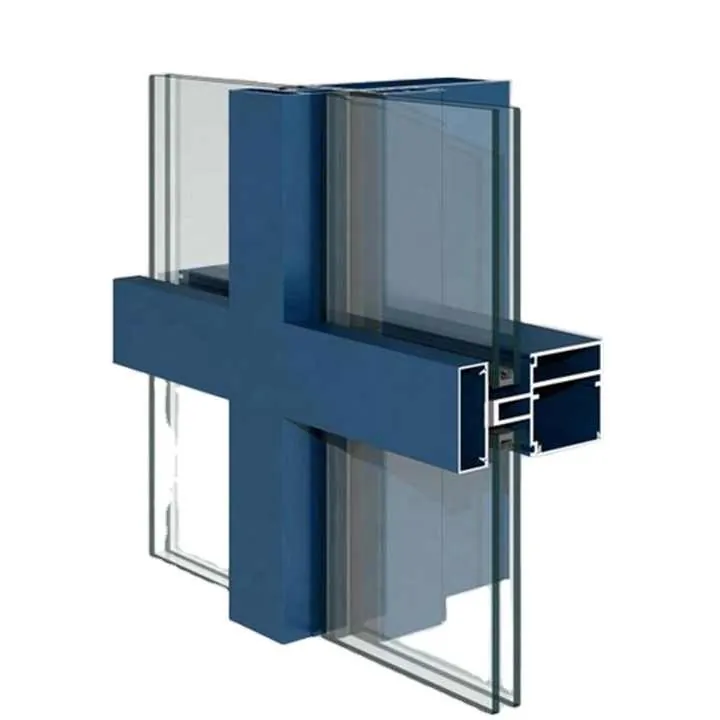
| 6xxx (e.g., 6063) | High (easier) | Architecturale profielen, ramen | Matige sterkte |
| 6xxx (e.g., 6061) | Medium‐hard | Structural parts, mechanical use | Higher cost, more difficult to extrude |
| 2xxx / 7xxx | Low (harder) | Aerospace, high‐performance | Difficult to extrude, slower speed |
Using a higher strength alloy always reduces cost by making smaller profiles possible.Vals
While you might reduce material size, the higher strength alloy often costs more, is harder to extrude, may slow production and increase tooling cost.
Alloy choice affects both extrusion ease and final profile performance (strength, finish).Echt
The alloy controls extrudability, mechanical properties, and how well the profile meets application needs.
Conclusie
In this article I walked you through how the aluminium extrusion process works, why die design and flow control matter, and how advanced alloys impact production and performance. Understanding each of these parts helps you make better decisions: from tooling and process up to material choice and final application.


