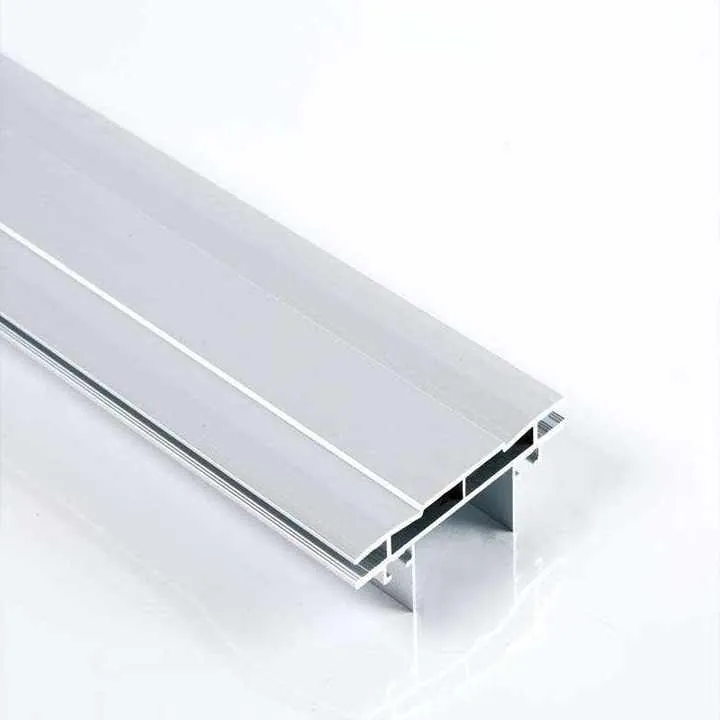
Richtlijnen voor de vlakheidstolerantie van aluminium extrusies?

At times manufacturers get parts that warp or bend after extrusion. Flatness issues cause trouble for assembly lines. Flatness tolerance guidelines help avoid those problems.
Flatness tolerance describes how flat an extruded aluminum part must be. Good tolerance ensures parts fit together and perform well. These guidelines help designers, engineers, and fabricators keep parts straight and reliable.
Read on to learn what defines acceptable flatness, how size affects tolerance, whether large profiles need tighter specs, and what causes flatness deviations.
What defines acceptable flatness in extruded parts?
Flatness tolerance refers to how much deviation from a perfectly flat surface is allowed in an extruded part. It sets limits on warping or bowing in either the length or width direction. Acceptable flatness ensures that parts stay within a certain “flatness band,” often measured in millimeters per meter (or inches per foot).
Flatness is usually defined by maximum allowable deflection over a given length. For example, ± 1.0 mm per meter or ± 0.004 inch per foot. These standards vary based on part use, profile complexity, and customer requirements.
Flatness tolerance depends on:
- the material (alloy and temper)
- the profile shape and wall thickness
- the required length and width
- any downstream processing (cutting, machining, bending)
Good flatness specification protects quality and fit of final products. Poorly defined flatness can cause gaps, misalignments, or poor assembly.
Duik dieper
Flatness is more than a vague idea of “not bent.” It needs numerical definition. In practice, flatness is measured either by placing the extruded profile on a flat surface and checking for gaps or by measuring deflection under small loads. Many fabricators use a flatness measurement tool or a straight edge and feeler gauges.
When designers set flatness tolerance, they must balance cost, manufacturability, and function. A very tight flatness requirement might raise scrap rate or increase time — because extruded parts often warp during cooling. On the other hand, too loose a tolerance may cause parts to misfit or fail in assembly.
Temper of the alloy matters. For example, 6063‑T5 aluminum tends to be softer and more prone to bending than 6061‑T6. If a soft temper part is long and thin, it may bow under its own weight. Thus, tolerance must consider material behavior.
Profile shape adds complexity. Simple square or rectangular tubes are easier to keep flat than asymmetrical or heavy profiles with varying wall thickness. Profiles with long thin fins or ribs might warp differently across sections.
Length is critical. A 3-meter profile may bow more than a 0.5-meter piece. Fabricators sometimes specify flatness per unit length (e.g. mm per meter) to make the requirement scalable. Often, they require that no point along the profile exceeds the deflection limit relative to a straight edge.
Surface finish and downstream operations can change flatness too. Machining, punching, or bending can introduce stresses that distort the part. Therefore, baseline flatness must include allowance for further work. In some cases, a supplier and customer agree flatness must hold after downstream operations.
The context of use also defines what “acceptable” means. For structural applications — like framing, tracks, or supports — flatness must be tight. For decorative or less critical uses — like trim or non‑load bearing panels — a looser tolerance may suffice.
When flatness is defined carefully, it becomes a clear contract between buyer and supplier. It helps reduce disputes and rejects. Without it, quality becomes subjective: “looks ok” becomes ground for complaints. Good practice is to specify flatness in the drawing and order documents.
To conclude: acceptable flatness is defined by a numeric limit on deflection over a specified length and measured under defined conditions. It depends on alloy, temper, profile shape, size, and downstream use.
Flatness tolerance is often specified by maximum deflection value over a specified length.Echt
Flatness specs usually define allowable deviation (e.g. mm per meter), not just a visual 'straightness'.
Flatness tolerance does not depend on alloy temper or profile shape.Vals
Flatness depends on alloy temper, profile shape, wall thickness, and other factors.
How do dimensions influence flatness tolerances?
Short answer: Larger and thinner parts tend to deform more. Smaller or thicker parts resist bending. Thus, dimension plays a big role. Wider profiles may need tighter flatness per width, while thin, long profiles may need looser flatness per length but stricter control overall.
Dimension matters because bending or warping increases with length, and decreases with thickness or cross‑section stiffness. Thin walls yield easily. Wide profiles with heavy walls are more rigid. Designers often use a table or chart to link part dimensions with flatness limits.
Here is a sample guideline table:
| Profile Width / Wall Thickness | Typical Flatness Tolerance (per meter) |
|---|---|
| Width < 50 mm, wall ≥ 2 mm | ± 0.5 mm/m |
| Width 50–100 mm, wall ≥ 3 mm | ± 0.7 mm/m |
| Width 100–200 mm, wall ≥ 4 mm | ± 1.0 mm/m |
| Width > 200 mm or complex shape | ± 1.2 mm/m or as agreed |
This table helps both buyer and supplier start negotiation. It is not a fixed rule. It shifts with alloy, temper, and part use.
Duik dieper
Dimensions change how easily a part can bend or warp. Think of a ruler: a thin plastic ruler bends under its own weight. A heavy wood ruler might stay straight. In aluminum extrusion, the wall thickness and cross‑section shape act like the thickness of that ruler.
When wall thickness is low, even a modest length can cause noticeable bowing. For example, a 3‑meter long tube with 1.5 mm walls might bend slightly under its own weight. That bend could be beyond what a customer accepts.
Wider profiles add stiffness across the width, but they also add surface area. That means during cooling, uneven stress distribution could warp one side more than the other. For wide profiles with thin walls, flatness along the width may be worse than along the length. Buyers may ask for flatness in both directions — lengthwise and crosswise — especially if profile is wide enough.
Parts with complex cross‑sections amplify this effect. Mullions, channels, or profiles with multiple cavities might cool unevenly. Thin webs and thick flanges cool at different rates. That difference in cooling speed creates internal stress. That stress may lead to twisting, bowing, or other distortions.
Length and thickness together influence what is practical. At long lengths and thin walls, flatness tolerance must be more forgiving. If the customer demands tight tolerance, the supplier may need to increase wall thickness or limit part length. Otherwise scrap rate gets high.
Producers sometimes agree on “flatness per foot (or meter)” instead of absolute flatness. This approach scales with part length. The buyer and supplier can derive tolerance per meter then apply to the total part length. This method is more fair and predictable than a fixed absolute value for all lengths.
Also, downstream processes like cutting, machining, and bending depend on part dimensions. For large wide profiles, small flatness deviations may not matter in aesthetic trims but can matter for structural frames. In those cases, tolerance must align with functional needs. Designers must understand the final use — structural or cosmetic — before defining flatness.
In reality, “acceptable flatness” is a negotiation. The buyer defines what is needed. The supplier replies what is feasible given dimensions and material. They may adjust thickness, temper, or even suggest profile redesign. Sometimes they add supporting ribs or reinforcements to improve rigidity. This negotiation ensures parts can be extruded economically while meeting design function.
Thin‑walled, long extruded parts are more prone to flatness deviation.Echt
Thin walls and long length reduce rigidity, increasing bending risk.
Wider profiles always make flatness tolerance easier to meet, without trade‑offs.Vals
Geen verklaring beschikbaar.
Are flatness specs stricter for large profiles?
At first thought, one may think larger profiles need stricter specs. But often, large profiles end up with looser flatness tolerance compared to small, precise parts. The need for stricter specs depends on application, not just size. For large structural parts, flatness tolerances may not be extremely tight. For smaller precision parts, tolerance may be tighter.
When profiles are large, wall thickness and cross‑section geometry often give stiffness. That reduces bending risk. But cooling stress and weight can cause sagging. So tolerances for large profiles may allow more deflection over long lengths, but still expect flatness within reason. The spec should reflect actual functional needs.
Large profiles used in construction or framing often need flatness good enough to ensure alignment, but not perfect cosmetic flatness. In contrast, small extrusions used in machine parts or assemblies may require a very tight flatness to ensure proper fit. So flatness specs are not strictly tighter for large profiles; they depend on part use and final function.
Duik dieper
Large profiles often look heavy and rigid. In many cases they are. That gives an advantage in resisting bend. For example, a 150 mm wide profile with 6 mm thick walls might stay straight easily over a 6‑meter length. In that case, the supplier and buyer may agree to a moderate flatness tolerance like ± 1.5 mm per meter. That level is enough for structural framing or building support where slight variation won’t break assembly.
However, large profiles introduce some unique issues. First, their own weight can cause sagging during handling or storage. If profiles are stacked or supported at few points, sag can build up over time. That means even if extrusion is straight, storage or transport may bend the part. A tight flatness spec before packing may not hold after delivery if handling is poor. To avoid that, packaging and support methods must be part of the specification.
Second, cooling is uneven in wide or heavy profiles. Different areas cool at different rates. That difference causes internal stress. Stress can warp the profile after cooling or after machining. For large profiles with differing cross‑sections, one side may shrink earlier than another. That effect may twist or bow the profile slightly. So flatness spec must account for these distortions or specify post‑cooling straightening.
Third, downstream use matters. If the profile will be used as a beam or structural support, some flatness deviation may be acceptable because beams resist bending during use anyway. But if the profile will be part of a frame needing precise alignment or will attach to other parts, then flatness becomes more important. Sometimes buyers just specify a “flatness band” rather than a strict value — e.g. “no deviation more than 2 mm along entire length, and no local bow over 0.5 mm per meter”.
Thus, big size does not always mean stricter spec. The need for tighter flatness depends on function, assembly tolerance, and end use. Suppliers must discuss with customers. Occasionally customer may even ask for straightening after extrusion or after machining. That is common when large parts must meet tight alignment in structures.
In short, flatness specification for large profiles is not automatically stricter. It should be based on how the part will be used. Rigid design, handling, cooling, and end use all influence what tolerance makes sense.
Large, heavy profiles always require stricter flatness tolerances.Vals
Flatness spec for large profiles depends on function and handling, not simply size.
Large profiles are less likely to bend under their own weight than thin, small profiles.Echt
Greater cross‑section thickness and size give more rigidity thus resist bending.
What causes flatness deviation during extrusion?
Many factors cause extruded parts to become non‑flat. Some relate to the extrusion process itself. Others come from cooling, handling, or downstream processing. Key causes include uneven cooling, internal stress, alloy and temper, profile design, wall thickness variations, and post‑extrusion handling.
Common causes:
- Uneven cooling across cross‑section
- Internal stress from nonuniform cross‑section or wall thickness
- Soft alloy temper that bends under weight or pressure
- Improper die design or extrusion speed
- Poor handling, storage, or stacking
Here is a table summarizing causes and their effects:
| Oorzaak | Effect on Flatness |
|---|---|
| Ongelijkmatige koeling | Warping, twist, or bow along length |
| Nonuniform wall thickness | Uneven stress → bending or camber |
| Soft alloy temper (e.g., T5) | Sagging under gravity or load |
| Fast extrusion or poor die | Distortion from mechanical stress |
| Poor handling or storage | Bending or sagging over time |

Duik dieper
Extrusion is not a perfect process. When molten aluminum exits the die, it enters cooling. Cooling often uses air or water. If part geometry is simple and uniform, cooling is more even. However, complex profiles with thick flanges and thin webs cool at different rates. The thick areas hold heat longer, thin areas cool faster. When hot and cold parts cool at different speeds, internal stress appears. That stress pulls part out of flatness. The result may be warping, twisting, or local bowing.
Material temper makes a big difference. Alloys like 6063‑T5 are common because they are easy to extrude and machine. But 6063‑T5 is softer. If a long part rests on supports with wide spacing, gravity causes sag. Over time, that sag may become permanent. Using a harder temper like 6061‑T6 reduces sag. But harder temper might make extrusion harder or increase scrap. Designers must pick temper knowing trade‑offs.
Profile design and wall thickness also matter. If a profile has uneven thickness, one side is heavier. Heavy side shrinks slower; light side cools faster. That makes uneven stress. Also, thin walls have less stiffness. They bend more easily. If profile has long, thin fins or ribs, these can bend or distort even if main body stays flat.
Extrusion speed and die design control stress too. If the die forces metal unevenly, it creates stress. Fast extrusion may cause extrudate to exit with uneven flow. That uneven flow can twist part. Die must be properly designed for even flow. Then metal flows evenly and reduces internal stress.
Downstream operations add risk. Cutting, machining, bending, or welding introduce heat or mechanical force. That force adds stress to material. The stress may bend part or create local distortion. Sometimes a part is flat on exit from extrusion but warps during machining. That is why flatness spec should define whether flatness is measured pre‑ or post‑processing.
Finally handling, storage, and transport matter. If long profiles are stored on supports with wide spacing, gravity causes sag. If parts bump against each other during transport, they may bend. Many suppliers add support blocks for long parts or wrap parts with protective materials. Good packaging helps maintain flatness before delivery.
To reduce flatness issues, both sides — supplier and customer — must agree on alloy, temper, profile design, cooling method, extrusion speed, die design, and handling. Sometimes supplier adds extra straightening after extrusion, or orders parts in shorter lengths then weld or splice them. Straightening is a common fix when cooling warps parts beyond tolerance. It costs time and money though.
In summary, flatness deviation comes from process stress, cooling, material choice, profile design, and handling. Each factor adds risk. Good communication and careful planning help manage those risks.
Uneven cooling during extrusion can cause internal stress leading to warping.Echt
Differences in cooling rates across the cross‑section produce stress, which can distort the part.
Packaging and handling after extrusion do not affect flatness once extrusion is finished.Vals
Improper support or storage can cause sagging or bending even after extrusion.
Conclusie
Flatness tolerance for extruded aluminum depends on many factors including material, profile design, dimension, cooling, and handling. Good specification and careful process can ensure parts stay straight and meet function. Clear agreement between customer and supplier helps avoid problems.