What industry is aluminum extrusion?
Struggling to place where aluminum extrusion really fits in the global industrial map? Let’s explore the sectors, benefits, structural role and emerging trends.
Aluminum extrusion serves major sectors including construction, transportation, energy, manufacturing and electronics. It enables custom profiles, lightweight strength and cost‑effective structural solutions.
We will break down four key questions that clarify the role of aluminum extrusion in industry.
Which sectors rely heavily on extrusions?
Feeling left behind if you don’t know who uses aluminum extrusions? Many core industries depend on them.
The top sectors using aluminum extrusion include automotive & transportation, building & construction, electrical & electronics and renewable energy.

When I look across the industrial landscape, I see several sectors that lean heavily on aluminum extrusions — meaning the profiles of aluminum shaped via extrusion are vital to their supply chains.
Automotive & Transportation
The push for lighter vehicles, better fuel efficiency, and greener mobility means that extruded aluminum profiles are used for body structures, battery enclosures in EVs, frames and rails. For example, industry commentary shows that extrusions in EVs will hit around 80 kg per vehicle by 2030.
Because aluminum has a high strength‑to‑weight ratio, it helps auto makers replace heavier steel parts and reduce overall vehicle mass. Also corrosion resistance and recyclability add value.
Bouw
Globally, building & construction is the largest application segment for aluminum extrusion by value — reports show over 60% share in some markets.
Extruded aluminum is used for window‑frames, curtain walls, door/roof systems, facade elements. In architecture, the versatility of extrusion allows complex cross‑sections that integrate channels, slots, grooves for installation.
The advantage: long lengths, custom shapes, ease of fabrication, plus outdoor durability.
Electrical & Electronics
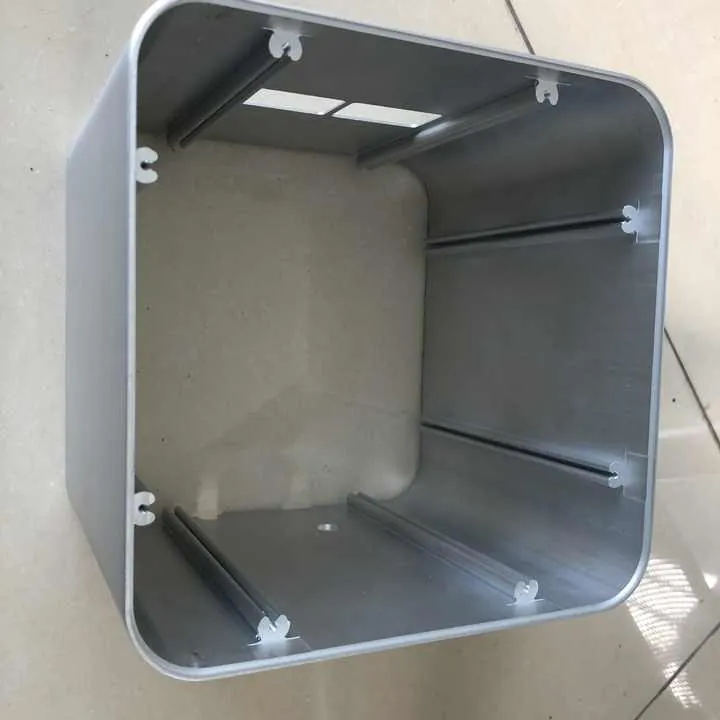
In this sector the roles vary: extrusions serve as heat‑sinks, enclosures, structural frames, rails and supports for equipment. The fact that aluminum has good thermal and electrical conductivity plus structural strength makes it attractive.
For electronics and devices, the ability to extrude custom profiles, integrate mounting features, reduce machining, and finish surfaces is important.
Renewable Energy / Infrastructure / Heavy Industry
Renewables like solar and wind increasingly adopt extruded aluminum for mounting frames, support structures, rails, and large structural profiles.
Further, heavy infrastructure like transport, industrial machinery, modular construction also use extruded profiles for structural framing and large assemblies.
Overzichtstabel
| Sector | Key Use‑Cases of Aluminum Extrusion |
|---|---|
| Automotive & Transportation | Lightweight chassis, battery housing, rails, structural members |
| Bouw | Window frames, curtain walls, façade panels, modules |
| Electrical & Electronics | Heat sinks, enclosures, structural frames, rails |
| Renewable Energy / Infrastructure | Solar frames, wind turbine supports, modular structures |
| Manufacturing & Machinery | Frameworks, machine guards, structural profiles |
Building & Construction is the largest application segment for aluminum extrusions by value.Echt
Market data shows building & construction accounted for over 60% of global aluminum extrusion application value in recent years.
Aluminum extrusions are rarely used in transportation equipment.Vals
Transportation including automotive and rail is a major user of extruded aluminum profiles, especially for lightweighting.
Why manufacturing benefits from aluminum profiles?
Worried that switching to aluminum extrusion might complicate your manufacturing? It actually simplifies many things.
Manufacturers get benefits like lightweight strength, corrosion resistance, design flexibility, lower waste and better recyclability when using extruded aluminum profiles.

In manufacturing environments—whether producing machinery, modular units, automation lines or assembly stations—aluminum extrusions offer several clear advantages. I’ll detail a few and how they apply.
Lichtgewicht maar sterk
Aluminum extrusions offer a high strength‑to‑weight ratio. Compared to steel, aluminum weighs about one‑third and in many structures this weight saving translates into lower handling costs, easier installation, reduced transportation, and lower structural load.
For manufacturing frames and supports, that means easier repositioning, less robust foundations, faster assembly.
Corrosion resistance and durability
Aluminum naturally forms an oxide layer and so resists rust and environmental degradation. For manufacturing facility frames, machine supports, or outdoor structures this means lower maintenance and longer life.
This helps in humid, coastal or corrosive atmospheres where steel would demand regular painting and upkeep.
Design flexibility and custom profiles
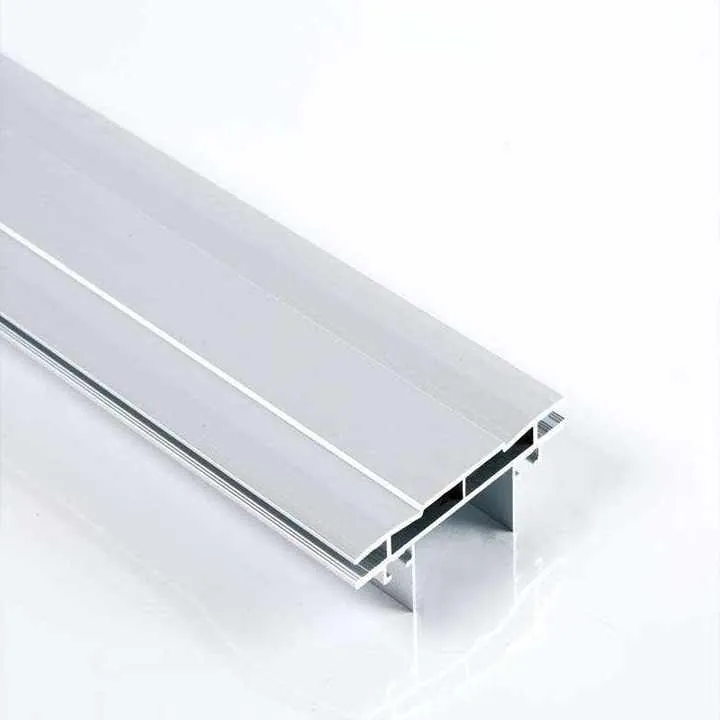
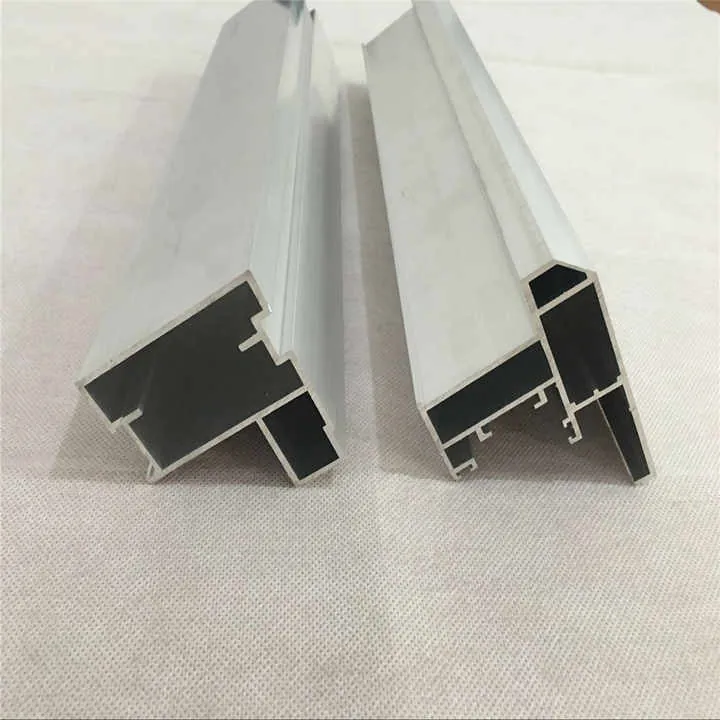
With extrusion you can design very complex cross‑sections: hollow, semi‑hollow, multi‑chamber, integrated mounting slots, cooling fins. That means fewer parts, fewer joins, reduced machining.
In manufacturing you can embed features—like slots for fasteners, channels for wiring, mounting lips—direct into the profile. That reduces assembly time, cost and improves precision.
Cost savings, resource efficiency and sustainability
Because extrusion can yield near‑net shape profiles, you avoid over‑machining, reduce material waste, and reduce labour.
Also, aluminum is highly recyclable—using recycled aluminum consumes only a small fraction of energy vs. primary production.
In manufacturing supply chains increasingly under ESG pressure, using recycled aluminum extrusions supports sustainability goals.
Modular, scalable frameworks
Manufacturing often demands frameworks, machine guards, conveyors, workstations that can be reconfigured over time. Extruded aluminum profiles with T‑slots or modular systems allow assembly, disassembly and reconfiguration more easily than welded steel. They support lean manufacturing and reconfiguration without heavy rework.
Overzichtstabel
| Voordeel | Why it matters in manufacturing |
|---|---|
| Lightweight & strong | Less structural support, easier handling |
| Corrosion‑resistant | Lower maintenance, longer life |
| Aangepast profielontwerp | Reduced parts, higher integration, faster assembly |
| Recycling & sustainability | Lower material cost, meets ESG requirements |
| Modular framing | Flexible layout, reconfigurable production lines |
Aluminum extrusions always cost more than steel structures.Vals
While raw aluminum may cost more, the total cost considering weight savings, assembly ease, lower waste and recyclability can make extrusions more cost‑effective than steel structures.
Extruded aluminum profiles offer better design flexibility than welded steel sections.Echt
Extrusion allows custom complex cross‑sections and integrated features, which welded steel may not easily provide without multiple operations.
Where extrusions dominate structural design?
You might ask: “Is aluminum extrusion really used for structural design, or just decorative?” The answer: yes, it’s used structurally, and sometimes dominates.
In structural applications like architectural framing, modular systems, machine bases and large span modules, aluminum extrusions provide high strength, design flexibility and lighter weight—thus they dominate in many use‑cases.

When I analyse structural design‑use of aluminum extrusions, several patterns show up: where weight matters, where modular or adjustable framing is required, and where aesthetics and durability combine.
Architectural & structural building systems
For curtain walls, façade systems and structural glazing, aluminum extrusions are heavily used. Because the outer skins don’t always bear primary structural loads but must resist wind, weather, dead loads and connect to structural frames, extruded profiles are ideal.
Even for structural sub‑systems (e.g., prefab modules, lightweight frames) extrusions allow long lengths, custom section shapes, integrated channels for anchors or insulation.
Industrial machine‑frames & modular systems
In manufacturing plants, automation lines, test rigs, workstations, using extruded aluminum structural framing has become standard. The profiles can carry moderate loads, resist vibration, and permit attachments through T‑slots or grooves.
For example, a factory fixture originally built with steel might be replaced by an aluminum profile frame to reduce weight, ease reconfiguration, reduce installation cost and allow faster changes if production needs shift.
Infrastructure & heavy modules
In larger structural modules—transit vehicle frames, platforms, elevated enclosures—aluminum extrusions are being used more often when the weight reduction is critical or corrosion environment harsh. For heavy industry infrastructure extrusions can dominate structural design especially when bolted modular assembly is sought.
Here, the ability to extrude large cross‑sections, integrate hollow chambers for wiring or hydraulics, and reduce welding/manufacturing steps becomes a differentiator.
Design implications and constraints
- Designers must consider that aluminum has lower modulus (stiffness) than steel, so cross‑sections may need increasing to meet deflection criteria.
- The profile design must account for manufacturability: extrusion dies have limits on wall thickness, voids, radii.
- Joining and fabrication: while aluminum offers welding, bolting, mechanical joining, design must ensure proper isolation due to possible galvanic corrosion in multi‑metal assemblies.
- Cost trade‑offs: for very heavy load‑bearing structures steel still dominates; extrusions shine when weight, finish, modularity or corrosion are key.
Aluminum extrusions cannot be used for structural load‑bearing applications.Vals
They are used frequently for structural framing, machine bases and building systems; the limitation is that designers must account for material properties but usage is proven.
When weight reduction and modular assembly matter, aluminum extrusions are often preferred over welded steel frames.Echt
Because of the combination of strength‑to‑weight, custom profiles and ease of assembly/reconfiguration, extrusions are preferred in those contexts.
Can emerging industries increase usage?
Wondering whether new industries will adopt extruded aluminum profiles more? Yes—they already are.
Emerging industries such as electric vehicles, renewable energy systems, aerospace & space applications, smart infrastructure and modular construction are driving increased usage of aluminum extrusion.

The landscape of industry is shifting, and several emerging domains are opening up significant growth opportunities for aluminum extrusion. Let’s examine where and why.
Electric vehicles (EVs) and advanced mobility
As the automotive industry moves toward EVs, lightweighting becomes even more critical to maximize battery range and efficiency. Aluminum extrusions help provide structural frames, battery enclosures, crash structures and rails. Reports show that EVs increasing aluminum extrusion content per vehicle will grow, boosting demand.
Beyond cars, e‑mobility includes buses, trains, light rail, e‑boats: all areas where aluminum extruded profiles can reduce weight and improve performance.
Renewable energy and sustainable infrastructure
Solar farms and wind turbines require frames, mounts, rails and supports that are corrosion resistant, durable and often lightweight. Aluminum extrusions fit these needs well.
In addition, green building trends and modular construction push for recyclable materials, quick assembly and integrated profiles—extrusions deliver. The global trend toward infrastructure renewal also supports this.
Aerospace, defense and space applications
These sectors have always pursued lightweight, strong materials. Aluminum extrusions are being used for aircraft frames, satellites, launch structures and modular platforms. Advanced alloys and extrusion techniques enable complex cross‑sections and high performance.
As new launch vehicles, reusable rockets and space habitats develop, aluminum extrusion platforms may see increasing role.
Smart manufacturing, robotics and automation
Industry 4.0, smart factories, automation lines create demand for modular machine framing, quick change‑out systems and reconfigurable structures. Aluminum extrusions provide modularity, adjustability and integration (slots, attachment, wiring channels).
Also, smaller scale consumer devices, electronics and lightweight systems often rely on custom extruded profiles for structural or enclosure purposes.
Global market growth and forecast
The global aluminum extrusion market size was estimated at USD 91.38 billion in 2024, projected to reach USD 146.82 billion by 2030 (CAGR ~8.4%).
Another forecast estimates USD 138.6 billion in 2025 growing to USD 217.3 billion by 2035.
These numbers reflect not only traditional sectors but the rise of new applications and higher complexity profiles.
Key drivers & hurdles
Drivers include: demand for lightweighting, sustainability/regulations, complex geometry profiles, modular systems, near‑net manufacturing, global infrastructure build‑out.
Hurdles include: raw material price fluctuations, competing materials (composites, high‑strength steel), tooling/press cost for large sections, design constraints for extrusion (wall thickness, voids, complexity).
Manufacturers and suppliers who anticipate emerging industry needs (e.g., EV battery housing, solar racking systems, modular manufacturing frames) will gain.
Emerging industries like EVs and renewable energy will shrink demand for aluminum extrusion.Vals
On the contrary, EVs and renewable energy are key growth drivers for aluminum extrusion usage, as lightweight, corrosion resistance and custom profiles become more important.
The global aluminum extrusion market is forecast to grow at around 8% annually between 2025 and 2030.Echt
Market data estimates a CAGR of about 8.4% for the period 2025‑2030 in the aluminum extrusion market.
Conclusie
Aluminum extrusion spans many industries—from construction and transport to manufacturing and emerging green sectors—because it offers lightweight strength, design flexibility, fast assembly, and sustainability. As new industries grow, its role will only expand.