Wat is het aluminium extrusieproces?

Met het aluminium extrusieproces kan ik massief metaal omzetten in complexe vormen door het door een matrijs te persen terwijl ik de warmte en druk controleer.
Eenvoudig gezegd is aluminiumextrusie het verhitten van een metalen staaf, deze onder druk door een gevormde opening (matrijs) duwen en vervolgens afkoelen en het profiel afwerken.
Ik loop met je door de stappen, leg uit waarom druk effectief is, beschrijf waar koeling plaatsvindt en laat zien hoe goede procesbeheersing de resultaten verhoogt.
Welke stappen vormen het extrusieproces?
Ik heb ooit een staaf aluminium door het hele proces zien gaan-door elke stap te zien kreeg ik een veel duidelijker beeld van wat er allemaal voor nodig is.
Het extrusieproces verloopt in een reeks stappen: voorbereiding van de matrijs, verwarmen van de billet, laden, persen, vormgeven van de matrijs, afkoelen/quenchen, strekken, snijden, afwerken.

Hier volgt een overzicht van de belangrijkste stappen die ik gebruik bij het beheren van een extrusielijn:
1. Voorbereiding van de matrijs
The die is shaped to the desired profile and pre‑heated. This helps ensure the metal flows evenly and accurately fills the die opening.
2. Verwarming van knuppels
The aluminum billet is heated to a soft but solid state, usually between 400 °C and 500 °C. This softens the metal to make it easier to push through the die.
3. Belading en smering
De staaf wordt in de container geladen. Er worden smeermiddelen of lossingsmiddelen aangebracht om plakken te voorkomen en de metaalstroom soepeler te laten verlopen.
4. Persen / Extruderen
Een hydraulische pers duwt de billet met tonnen druk door de matrijs. Terwijl het aluminium door de matrijs stroomt, neemt het de vorm van de matrijs aan en vormt het een doorlopend profiel.
5. Emergence & quenching
Als het gevormde aluminium de matrijs verlaat, wordt het snel gekoeld met lucht of water. Dit vergrendelt de vorm en stabiliseert de structuur van het profiel.
6. Afkoelen tot omgevingstemperatuur, richten en snijden
Na het blussen koelt de extrusie af tot kamertemperatuur. Daarna wordt het rechtgetrokken om eventuele kronkels te verwijderen en in de gewenste lengtes gesneden.
7. Finishing & heat treatment
Afhankelijk van de vereisten kunnen de profielen worden verouderd, geanodiseerd, geverfd of verder bewerkt.
Hier is een samenvatting in tabelvorm:
| Stap nr. | Beschrijving | Doel |
|---|---|---|
| 1 | Voorbereiding van de matrijs | Vormcontrole, stabiele matrijstemperatuur |
| 2 | Billetverwarming | Verzacht metaal zonder te smelten |
| 3 | Laden en smeren | Voorkomt kleven, zorgt voor soepele beweging |
| 4 | Persen/extruderen | Vormt metaal in profielvorm |
| 5 | Doven | Stabiliseert vorm en interne structuur |
| 6 | Koelen, richten, snijden | Zorgt voor nauwkeurigheid en bereidt de volgende stappen voor |
| 7 | Afwerking & behandeling | Verbetert prestaties, uiterlijk en duurzaamheid |
From my own projects, skipping or mis‑managing any step caused warping, inconsistent dimensions, or weak mechanical properties.
Waarom vormt druk aluminium effectief?
Op een keer probeerde ik een complex profiel te extruderen en realiseerde ik me dat zonder voldoende druk het metaal niet alle hoeken van de matrijs zou vullen en dat het onderdeel zwak en gebrekkig was.
Druk is de sleutel omdat het de verweekte aluminium billet dwingt om in de opening van de matrijs te stromen en zijn vorm aan te nemen terwijl wrijving en weerstand worden overwonnen.
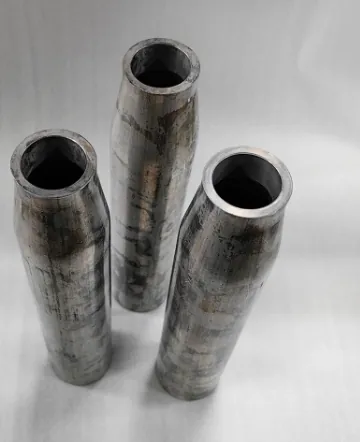
Here’s how I understand the role of pressure in the extrusion process, broken down into critical points:
Hoe druk werkt
Wanneer de billet wordt verhit, wordt zijn interne structuur kneedbaarder. Een hydraulische ram duwt het dan door de container en in de matrijs. De druk perst het aluminium door de gevormde matrijsopening.
Bij directe extrusie blijft de matrijs stilstaan terwijl de staaf beweegt. Bij indirecte extrusie beweegt de matrijs naar een stilstaand staafje. In beide gevallen dwingt de druk de transformatie af.
Why it is effective
- The pressure ensures full contact between the billet and die, so the metal fills thin walls, hollows, ribs, and complex shapes.
- High pressure accelerates deformation so the metal flows consistently, especially in alloys with higher strength.
- Because the material is still solid but softened, pressure allows the extrusion to maintain integrity rather than pouring molten metal (thus keeping better grain structure).
Important considerations
- The press capacity (tons of force) determines how big or complex a profile can be extruded.
- If pressure is too low for the shape and alloy, incomplete filling occurs, or the profile may twist or have voids.
- If pressure is too high without adequate temperature or lubrication, you may get metal tearing, die wear, or excessive heat.
On one line, we used a press that wasn’t strong enough. We adjusted by pre‑heating the billet slightly more and slowing the extrusion rate. This allowed the metal to flow better without cracking the die or the profile.
Waar vindt extrusiekoeling plaats?
Toen ik naar de extrusielijn keek, vielen de koelfasen op - eerst snelle koeling direct na het verlaten van de matrijs, daarna langzamere koeling tot kamertemperatuur. Beide maken veel uit.
Het koelen gebeurt eerst onmiddellijk na het uitlopen (quenchen) op een uitlooptafel via water of lucht, daarna op een koeltafel tot de omgevingstemperatuur is bereikt, voor het strekken en afwerken.
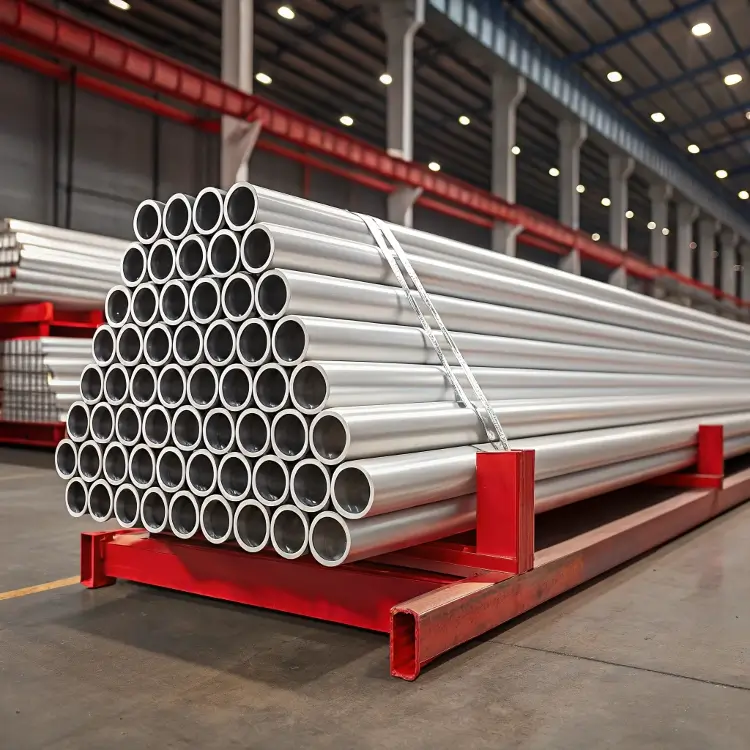
Here are the details I’ve gathered about cooling locations and purpose:
Onmiddellijke koeling (afschrikken)
The profile leaving the die is very hot and still malleable. A puller guides it along the run‑out table and cooling is applied—water bath, spray, air fans—to quickly reduce temperature. This rapid cooling helps maintain dimensional accuracy and proper grain structure.
Rapid cooling also prevents excessive micro‑structural changes (e.g., over‑aging, large grain growth) which would reduce mechanical strength.
Cooling to ambient / straightening
After the initial quench, the profiles are moved to a cooling table where they rest until they reach near room temperature. Then stretching is done to remove any twist or curve. Then they are cut into usable lengths.
Why cooling location matters
- Quenching too aggressively may cause warping or induce residual stresses; cooling too slowly could allow unwanted micro‑structure changes or distortions.
- Cooling must be controlled because some alloys (especially 6000‑series) depend on a specific quench and cooling rate to reach the desired temper.
- The tooling and line layout must allow the profile to cool without interference, and avoid areas where profiles might twist or sag under heat before straightening.
From my operations, I always monitor exit temperature, quench uniformity, and ensure the cooling table length is sufficient for ambient cooling before final handling. A mis‑managed cooling stage will always show up as flatness issues or inconsistent mechanical performance.
Kan procesbeheersing de resultaten verbeteren?
Mijn ervaring is dat wanneer procesvariabelen niet werden bijgehouden - temperatuur, druk, snelheid - dit resulteerde in inconsistente profielen, hogere uitvalpercentages en meer tijd voor herbewerking.
Ja - een sterke procesbeheersing (inclusief temperatuur, druk, snelheid, gereedschapontwerp, real-time bewaking) verbetert de extrusiekwaliteit, consistentie, opbrengst en mechanische eigenschappen aanzienlijk.
Here are how I like to think about process control and how it improves results:
Belangrijkste controlevariabelen
- Temperatuur van het staafje: If the billet is too cold, extrusion is slow and dimensionally less accurate; too hot—surface quality suffers and tolerance exits widen.
- Ram speed / press rate: If speed is too high, the metal may not flow uniformly and quality issues arise; if too slow, productivity suffers.
- Matrijstemperatuur: Pre‑heating the die ensures stable flow and consistent dimensions.
- Koelsnelheid: Quench and ambient cooling must match alloy and profile requirements to meet mechanical specs.
- Tooling condition and design: A well‑designed die, correct container dimension, good lubrication are critical to avoid defects.
Benefits of tight control
- Consistent profile dimensions along the entire length and across batches.
- Lower scrap rate (fewer defects like surface cracks, warping, distortions).
- Improved mechanical properties (accurate tempering, correct grain structure).
- Better surface finish and less post‑processing.
- Optimised productivity with less downtime for adjustments.
My real‑world improvement example
On one line I inherited, billet temperature was erratic by ±20 °C. I introduced inline infrared temperature sensors, a standard target temperature, and logging for each run. After control was in place, scrap dropped 12 % and profile straightness improved significantly. Inline alerts also prevented overheating which had been causing porosity in the surface.
Hier is een controle referentietabel:
| Variabele | Poor control consequence | Goed controleresultaat |
|---|---|---|
| Temperatuur van het staafje | Slechte doorstroming, inconsistente hardheid | Soepele stroom, consistente eigenschappen |
| Ram speed / pressure | Surface collapse, tearing, die wear | Balanced flow, good surface, die longevity |
| Koelsnelheid | Warping, residual stress, wrong temper | Straight parts, correct micro‑structure |
| Tooling design/condition | Mis‑shapes, burrs, dimensional errors | Accurate profiles, repeatable results |
In short, I believe that process control is not just an add‑on — for high‑quality extrusion, it’s core to the operation. Without it, you are operating in “hope mode”.
Conclusie
Ik heb je stap voor stap meegenomen door het aluminium extrusieproces: hoe de stappen verlopen, waarom druk belangrijk is, waar koeling plaatsvindt en hoe procesbeheersing de resultaten verbetert. Als we al deze zaken goed beheren, verloopt de extrusie soepel en voldoen de profielen aan de doelstellingen voor kwaliteit, kosten en levering.