


How to stiffen aluminum extrusions?

Ever seen an aluminium extrusion bend when you expected it to stand firm? That’s the problem. Then you explore ways to reinforce it — the agitation. And now you’re looking for practical ways to solve it with design and processing.
Yes — you can stiffen aluminium extrusions significantly by applying reinforcements, increasing wall thickness, bracing long spans correctly and using internal inserts.
Let’s walk through each method step by step. We’ll dig into how each approach works, when to apply it, and what the trade‑offs are.
What reinforcements increase rigidity?
When an aluminium extrusion flexes more than you’d like, reinforcement acts like scaffolding—supporting and stiffening the structure.
Adding ribs, flanges or external supporting members to the extrusion boosts rigidity by increasing the section modulus and moment of inertia.

In my work with extruded aluminium profiles, I’ve found that simply selecting a bigger profile isn’t always enough. You need to reinforce the profile. For example: designing ribs or flanges on the extrusion can help. One source says: “the addition of reinforcing ribs or flanges to the extrusion contributes to stiffness.”
What kinds of reinforcement can we add?
- Ribs: horizontal or vertical protrusions on the wall of the profile that increase bending resistance.
- Flanges: extending parts of the profile outward, effectively increasing the cross-section size and moment of inertia.
- External supporting elements: steel or other harder material inserts adjacent to, or bonded with, the aluminium profile.
Why do these work?
Because stiffness (in bending) is directly related to the moment of inertia (I) of the cross section. Increasing the size of the section, adding material further from the neutral axis, or adding features that resist deformation will raise I and thus reduce deflection.
What to watch out for:
- Adding ribs or flanges adds material, cost, perhaps weight.
- The reinforcement must be well integrated.
- Material compatibility matters.
Practical tip:
If you’re specifying extrusions for high-stiffness applications, ask your manufacturer or supplier about profiles with built-in ribs/flanges, or plan for external stiffeners.
Adding external ribs or flanges to an aluminium extrusion increases its rigidity.True
Ribs and flanges add material away from the neutral axis, increasing moment of inertia and thus bending stiffness.
Inserting a small steel rod inside a hollow aluminium extrusion will always double its stiffness.False
While inserting a rod may increase stiffness somewhat, the effect depends on geometry, materials and how much of the cross‑section is filled; it may not double stiffness.
Why thicker walls improve stiffness?
Thin-walled extrusions may look sleek, but under load they can flex or buckle — and that’s the pain point. You want more rigidity — the solution is thicker walls or more robust cross sections.
Thicker walls (or larger cross-section) increase bending stiffness and decrease deflection because the material farther from the neutral axis carries more load.
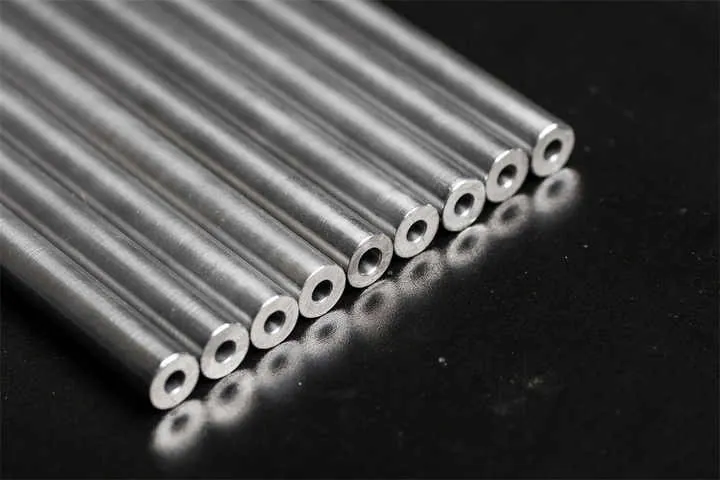
One of the most straightforward ways to make an aluminium extrusion stiffer is simply to make the walls thicker or use a larger cross-section. This may seem obvious, but the mechanics behind it bear repeating.
Key aspects:
1. Wall thickness:
Thicker walls reduce local buckling risk and increase the cross-section’s moment of inertia since more material is placed further from the centre.
2. Geometry of the profile:
It’s not just thickness; how the shape is configured matters. Hollow profiles, multi-chamber designs, or I-beam-type extrusions are better at resisting bending and torsion.
3. Material and alloy choice:
We assume aluminium, but the alloy and temper matter. For example, 6061-T6 or 6063 elect-treated profiles have good mechanical properties.
Trade-offs:
- Weight increases with wall thickness.
- Cost rises: more material, possibly more machining or finishing.
- If you simply increase thickness but keep the same unsupported span, deflection may still be too high.
When to apply:
- Use thicker walls or larger cross-section when load is high, spans are long, or deflection tolerance is low.
- Specify early in the design phase.
Using a larger cross-section aluminium extrusion significantly increases its bending stiffness.True
A larger section has a higher moment of inertia, which reduces bending deflection under load.
Thicker walls always solve torsional stiffness issues completely in aluminium extrusions.False
Thicker walls help bending stiffness but torsional stiffness also depends on overall geometry (shape, enclosed area, wall placement) and may require other design adjustments.
How to brace long spans effectively?
You have a long span aluminium frame and it’s sagging or wobbling — that’s the worry. You need bracing — that’s the key.
Effective bracing (diagonal supports, cross-members, intermediate support points) reduces unsupported span length and increases overall stiffness of the structure.
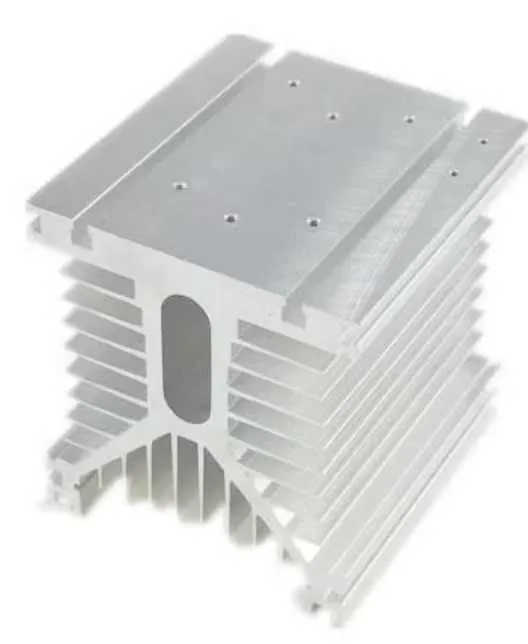
Long spans are a major challenge because even a stiff extrusion will sag or deflect if the span is large enough. So your best strategy: reduce the effective span by bracing.
Methods of bracing:
- Intermediate supports: placing extra posts or supports along the span to break it into shorter lengths.
- Cross-bracing or diagonal members: these convert what would be bending loads into tension/compression loads.
- Stiffening plates/joiners at key points: for example at joints or corners use three-way corner brackets or rigid connections.
- Enclosed or box-section framing: making the span part of a closed box or frame increases torsional and lateral rigidity.
Why this matters:
If you leave a long unsupported span, deflection will accumulate. Even if your extrusion is thick and strong, the span acts like a beam, and you are subject to bending and sag.
Practical tips:
- Measure the longest unsupported span and estimate deflection under load.
- Insert supports or cross-members at regular intervals.
- At joints, use rigid brackets.
- Convert horizontal members into box-sections or add diagonals to act like trusses.
Bracing a long aluminium extrusion span with diagonal cross members decreases deflection significantly.True
Diagonal cross members convert bending loads into axial forces in the bracing members, which is more efficient and reduces deflection.
Using the same unsupported span length has no effect on stiffness if the extrusion profile is very thick.False
Even if the profile is thick, a long unsupported span will still lead to significant deflection; reducing span or adding bracing remains necessary.
Can internal inserts add strength?
You wonder: can I fill or insert something inside the hollow aluminium profile to make it stiffer? That’s the question many of us have asked.
Yes — internal inserts (steel rods, aluminium cores, filling materials) can increase stiffness, especially torsional stiffness and local buckling resistance, but they must be designed carefully for benefit.

Internal inserts are an interesting way to boost stiffness of extrusions without increasing outer dimensions. You might insert a steel or aluminium rod, a composite core, or fill the hollow section with material.
How and when this works:
- Core insertion: increases the second moment of area and reduces local buckling.
- Filling: increases mass, may reduce vibration but doesn’t necessarily increase stiffness much.
- Composite inserts: offer advanced performance but add cost and complexity.
Considerations:
- Insert must be bonded or mechanically fastened.
- Inserting steel might reduce aluminium’s weight advantage.
- Manufacturing complexity and tolerance matter.
- Consider cost vs performance benefit.
Practical advice:
- Design the extrusion with a channel or cavity for the insert.
- Choose insert material and diameter that contribute structurally.
- Ensure bonding or fastening for combined action.
- Validate with deflection tests or simulation.
Inserting a bonded steel rod inside a hollow aluminium extrusion increases the combined section’s moment of inertia and thus its stiffness.True
A bonded insert placed away from the neutral axis contributes to the section modulus and moment of inertia and increases stiffness.
Filling the hollow cavity of an aluminium extrusion with unconsolidated sand always significantly improves stiffness.False
Unconsolidated sand does not bond to the aluminium and does not contribute structurally; any stiffness improvement is limited and the weight may increase without benefit.
Conclusion
If you want to stiffen aluminium extrusions you have four key levers: adding reinforcements (ribs/flanges), increasing wall thickness or section size, bracing long spans effectively, and using internal inserts where appropriate. Use these together, tailor to your load and span, and you’ll get a strong, rigid structure.


