Wie schneidet man Aluminiumprofile mit einer Kreissäge?

Cutting aluminum extrusions can be tricky when finish, safety and accuracy all matter.
Yes — you can use a circular saw to cut aluminum extrusions, but you must pick the right blade, control speed and secure the workpiece to get a clean cut and avoid hazards.
Let’s dive into each key question so you understand what matters with blade tooth count, speed, kickback and guides.
What tooth count works best for aluminum?
If you use the wrong blade teeth, the cut will tear or gum up — and you’ll waste time and material.
A high‑tooth‑count carbide blade (for example 80‑100 teeth on a 10‑12″ blade) is best for clean cuts in aluminum extrusions.

When cutting aluminum extrusions, the blade’s tooth count and geometry matter a lot. First, higher tooth count means more teeth engage the material per revolution, which produces smaller chips, less chatter and smoother edges. As one forum post puts it: “For blade selection the higher tooth count makes for smaller chips which is a good thing…”
Also, blades designed for non‑ferrous metals like aluminum often have a negative (or very low) hook angle (the angle of the tooth face) to reduce the risk of grabbing the material and kickback.
In practical terms: for a common portable circular saw (say 7½″ to 10″ diameter) cutting aluminum profiles like those your company might supply, you might select a carbide‑tipped blade specified for non‑ferrous metals, with say 80‑100 teeth if cross‑cutting extrusions. For fewer cuts or thicker extrusions you might drop the tooth count slightly, but for high quality finish you want more.
One nuance: If the material is very thick or you are making large cuts, you might need fewer teeth so each tooth removes more material and prevents overheating or clogging, but that comes at the expense of finish quality.
In sum: pick a blade rated for aluminum, high tooth count, negative or zero hook angle, carbide tips. That yields cleaner cuts, less burrs, better surface — important when our business is about delivering high‑quality aluminum extrusions.
A blade with 80‑100 teeth is ideal for cutting aluminum extrusions for a clean finish.Wahr
High tooth count leads to smaller chips and smoother finish when cutting aluminum, as referenced in multiple sources.
Using a standard wood‑cutting blade with low tooth count produces the same clean edge on aluminum extrusions.Falsch
Standard wood blades aren’t optimized for non‑ferrous metals; they may chatter, grab, overheat and give rough edges.
Why cutting speed affects finish?
Feed too fast or high RPM, and you’ll melt, burr or mar the aluminum surface — that hurts both aesthetics and fit.
Slower feed rate and appropriate blade speed let the blade cut cleanly through aluminum extrusions with minimal burrs and less heat.
Finish quality when cutting aluminum extrusions is heavily influenced by both feed rate (how fast you push the material) and blade speed (RPM or surface speed). If you push too fast, the blade will dig in, raise heat quickly, cause melting or tearing along the edges, and leave large burrs that require deburring.
Also, aluminum is softer than many ferrous metals, and it tends to stick, gum or build up on the teeth if the parameters aren’t correct. Choosing a blade with good gullet size (chip space), proper tooth geometry and maintaining moderate speed helps avoid that.
From a practical viewpoint: when using a circular saw for aluminum extrusions, you’ll want to:
- Ensure the blade RPM is appropriate for the material thickness and blade diameter.
- Feed the extrusion slowly and steadily. Don’t force the cut. If you feel resistance, slow down.
- Use lubricant or cutting fluid if possible. The buildup of heat and friction worsens finish and blade life.
- Clamp the extrusion firmly so it doesn’t vibrate; vibration interferes with the finish and can increase feed resistance.
In our manufacturing context (custom aluminum extrusions, sometimes large cross‑sections), achieving a smooth finish at the cut face helps reduce post‑cut work (deburring, filing) and improves assembly accuracy. That aligns with our value of giving high‑precision products.
Slowing the feed rate when cutting aluminum extrusions improves edge finish and reduces burrs.Wahr
Slower feed allows the blade to do its work cleanly and reduces melting and tearing of the material.
Pushing the extrusion very fast through the circular saw always saves time without any negative effect on finish.Falsch
Pushing too fast often causes rough edges, heat buildup, and poor finish when cutting aluminum.
How to avoid kickback when sawing?
Kickback is violent, dangerous and enough to ruin a part or injure someone — avoid it with proper setup and technique.
To avoid kickback when cutting aluminum extrusions you must secure the material, use the correct blade geometry, control feed, and keep the saw stable and supported.
Kickback occurs when the saw blade grabs or grips the workpiece and throws it or forces it back toward the operator. With aluminum extrusions and circular saws, this is a real hazard if the blade is not correct, the material isn’t secured, or the feed is irregular.
Here are key factors and prevention measures:
1. Secure the extrusion properly
Use clamps or jigs to hold the extrusion firmly. Ensure the cut‑off end is supported so it doesn’t drop or shift mid‑cut.
2. Use blade with negative or low hook angle & good tooth geometry
Blades designed for aluminum often have geometry that reduces grabbing. A positive hook angle is more aggressive and can pull the workpiece into the blade.
3. Maintain consistent, gentle feed
Slow, steady pressure is safer. If you hit resistance, stop, clear chips, check setup, then continue.
4. Use stable fence and support
Use straight fence, support off‑cuts so they don’t drop and bind blade, and ensure the saw is stable.
5. Keep blade clean and sharp
Aluminum chips can melt or gum onto the blade, increasing grabbing risk.
6. Use correct blade depth
Set blade depth so only the required amount is exposed. Too deep a cut can raise risk of bind.
In our B2B manufacturing context, delivering clean precision cuts means we also reduce scrap and rework due to deformed or damaged extrusions caused by kickback or rough cutting.
Using a blade with a positive (aggressive) hook angle increases the risk of kickback when cutting aluminum extrusions.Wahr
Positive hook angle tends to pull material into the blade, increasing kickback risk especially with non‑ferrous workpieces.
It is safe to hold aluminum extrusion by hand while cutting with a handheld circular saw, as long as you cut slowly.Falsch
Hand‑holding is unsafe because material can shift unexpectedly, leading to unpredictable movement or kickback.
Can guides improve cut accuracy?
Even with the right blade and speed, if the cut path wanders the parts won’t assemble well — guides help lock in accuracy.
Yes — using guides, fences, jigs or miter stands significantly improves cut accuracy of aluminum extrusions and reduces error and waste.
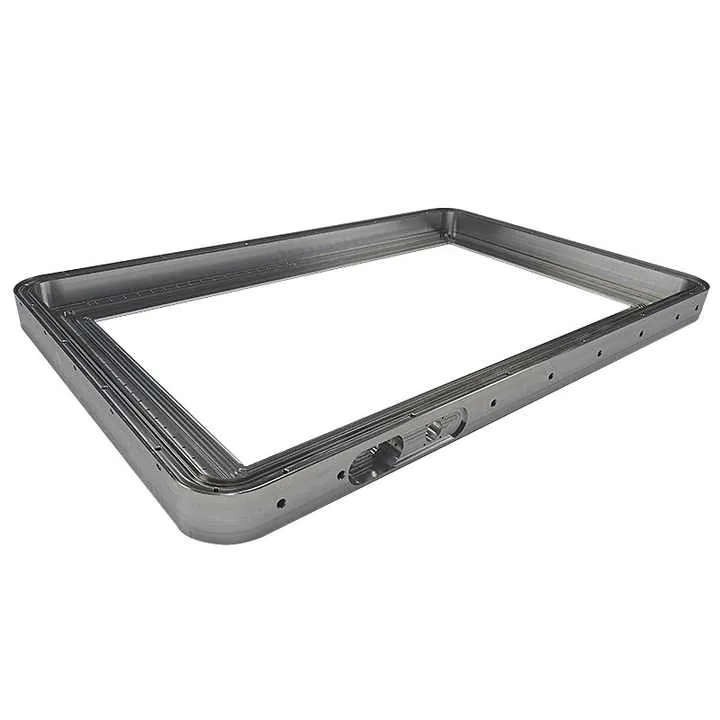
When cutting aluminum extrusions, accuracy matters: the cut face may need to fit with other parts, butt up to frames, or slide into assemblies with minimal clearance. Without proper alignment, you risk angled cuts, mismatched lengths, burrs or part mis‑fit. Using guides or fences dramatically increases repeatability and accuracy.
Why guides matter
- They hold the workpiece in a fixed orientation, reducing movement, twist or lateral shift.
- They allow you to reference from a fixed stop or fence, giving consistent lengths and square faces.
- They reduce reliance on free‑hand cutting, which introduces human error or drift of the saw.
Types of guides you might use
| Guide type | Vorteile | Typische Verwendung |
|---|---|---|
| Fence on saw base | Keeps extrusion pressed against base | Straight cross‑cuts |
| Cross‑cut sled / support | Enhances alignment for long extrusions | Repeated square cuts |
| Adjustable stop block | Ensures repeatable lengths | Batch length consistency |
| Roller or slide table | Prevents sag and improves stability | Long, heavy profiles |
Tipps zur Umsetzung
- Ensure the guide is square to blade.
- Clamp the extrusion firmly.
- Support the off‑cut side to prevent dropping.
- Use stop blocks for repeat lengths.
- Angle guides for miters or bevels, and brace extrusion to avoid twist.
Using guides matches our manufacturing aim of precision: when our clients expect custom‑extruded parts that fit seamlessly into assemblies, the cut quality and length accuracy are non‑negotiable.
Using a fixed fence or stop block when cutting aluminum extrusions helps achieve consistent lengths and square cut faces.Wahr
Guides prevent drift, ensure repeatability and improve accuracy of cuts.
Free‑hand cutting aluminum extrusions without any guide is just as accurate for batch production as using a guide.Falsch
Free‑hand cutting introduces variability in path, alignment and repeat length, which reduces accuracy and increases scrap.
Schlussfolgerung
Cutting aluminum extrusions with a circular saw succeeds when you use the right blade (high tooth count, carbide, designed for non‑ferrous), manage speed/feed and heat, avoid kickback with secure setup, and apply guides for accuracy. When those elements align you’ll deliver clean, precise cuts ready for assembly.