Wie verkleidet man Aluminiumprofile mit Holzverkleidung?

I once oversaw a project where lightweight aluminum frames were dressed in real wood planks—but they delaminated after a few seasons. What went wrong?
Successful wood cladding of aluminum extrusions relies on the right adhesive, controlling moisture, proper surface prep, and mechanical support to ensure durability.
Let’s walk through four key questions.
What adhesives bond wood to aluminum?
When you attach wood (solid, laminated or engineered) to an aluminum profile, the adhesive is the glue that must take shear, expansion, contraction, and environmental shifts.
Recommended adhesive families include epoxy, polyurethane, and high‑performance construction adhesives rated for wood‑to‑metal bonding.

Key adhesive types and features
- Two‑part epoxy adhesive: Offers strong bond strength and chemical resistance. Good when you need structural adhesion between aluminum and wood. It handles metal surfaces well.
- Polyurethane construction adhesives: More flexible than rigid epoxies, better for accommodating movement (wood expands with moisture, aluminum with temperature).
- High‑grip construction adhesive (single component): Some modern adhesives offer “metal + wood” compatibility, good for large panels and cladding tasks.
- Contact adhesives: Sometimes used (especially for thin veneers), though less preferred for full structural wood cladding because they may be too rigid or brittle for long‑term movement.
Selection factors
- Adhesive must wet both substrates: aluminum (non‑porous) and wood (porous). Good wetting ensures adhesion.
- Movement compatibility: Wood and aluminum move differently (thermal expansion vs moisture induced swell/shrink). The adhesive must tolerate that differential.
- Environment: Outdoor exposure, UV, moisture, temperature cycling. Choose accordingly.
- Gap filling: If the surfaces aren’t perfectly flush, an adhesive that can fill small voids helps ensure even contact.
Praktische Anleitung
In my manufacturing context, I select a polyurethane or flexible epoxy rated for “wood‑to‑metal” for standard cladding. If the assembly will face high loads or an exterior façade, I might go to a structural epoxy. If budget/geometry allow, I may pair adhesive with mechanical fasteners (see later).
Epoxy and polyurethane adhesives are effective for bonding wood to aluminum extrusions in cladding applicationsWahr
Literature on wood‑to‑metal bonding lists these adhesive types as strong candidates for reliability.
Using any generic wood glue will suffice for wood to aluminum claddingFalsch
Generic wood glues are designed for wood‑to‑wood; bonding to aluminum requires adhesives rated for metal surfaces and accounting for differential movement.
Why moisture control is important?
Wood and aluminum behave very differently with respect to moisture, temperature and dimensional stability. If moisture control is ignored, the bond and cladding can fail.
Controlling moisture ensures that wood doesn’t swell or shrink unpredictably, and that you avoid trapped moisture between wood cladding and aluminum extrusion which can lead to corrosion, delamination, or warping.

What moisture issues occur
- Wood swelling/shrinkage: Wood absorbs or loses moisture with ambient humidity. That expansion/contraction can stress the adhesive bond.
- Trapped moisture behind cladding: If the wood cladding is applied directly to aluminum with no ventilation or drainage, moisture can accumulate. That may cause wood decay or aluminum corrosion (if alloy or finish is compromised).
- Differential movement: Aluminum doesn’t swell like wood but expands with heat; wood responds to moisture. If you don’t accommodate both, you’ll see warping, gaps or adhesive failure.
- Corrosion & finish degradation: When moisture is trapped and oxygen and contaminants are present, aluminum alloys or coatings can degrade, reducing durability of the system.
How to incorporate moisture control
- Design a drainage or ventilation gap behind the wood cladding so any moisture can escape or evaporate. Many rainscreen systems use an air gap behind cladding to manage moisture.
- Pre‑treat the wood (seal or finish) so its moisture movement is reduced. Choose stable species or engineered wood.
- Ensure the aluminum extrusion finish is appropriate (anodised or powder coated) and its surface is free of oxidation or contamination.
- At the junctions/ends, provide flashing or drip‐edge to direct water away from the interface, prevent capillary action, and avoid pooling.
- Monitor the long‐term moisture content of wood; avoid installing when wood is overly wet or when ambient humidity changes will cause large dimensional change.
Example context
In a façade system using aluminum extrusion frames clad with wood slats, the manufacturer specified a 10 mm ventilation gap behind the slats, sealed ends and drip edge termination. The system avoided delamination after four years of exposure because moisture movement was managed.
Proper moisture management is essential when cladding wood onto aluminum extrusions to prevent delamination and degradationWahr
Unmanaged moisture leads to wood movement, adhesive stress and possible bond failure.
Moisture control is irrelevant if you use a high‑strength adhesiveFalsch
Even strong adhesives cannot compensate for wood swelling/shrinkage or corrosion from trapped moisture over time.
How to prepare surfaces before cladding?
Surface preparation is one of the most critical stages. Even the best adhesive will fail if either substrate is contaminated, irregular or unstable.
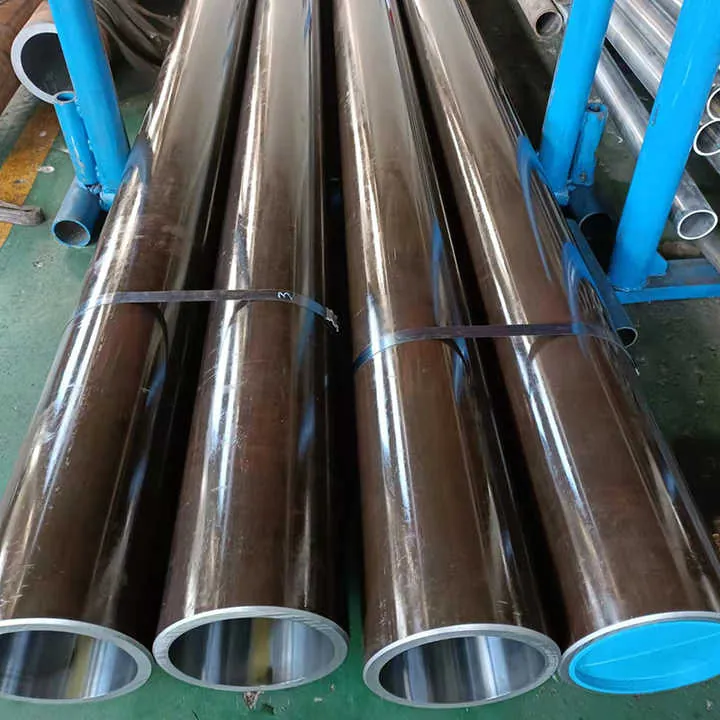
To achieve a reliable bond between wood and aluminum extrusions, you must clean, degrease, roughen (if required) and stabilise both surfaces before applying adhesive or fasteners.
Steps for surface preparation
1 – Aluminum surface
- Degrease: Remove oils, machining residuals, fingerprints, coatings. Use suitable solvent (e.g., isopropyl alcohol or a low‑residue cleaner).
- Oxide removal: If aluminum has been exposed, mild mechanical abrasion or chemical etch may help ensure adhesion.
- Finish check: If the aluminum extrusion has an anodised, powder coated, or painted finish, ensure it is compatible with the adhesive. Some finishes inhibit bonding.
- Roughen (optional): Light sanding or scuffing will increase mechanical adhesion by increasing surface area.
- Clean again: After roughening, clean to remove particles or residue.
2 – Wood cladding panel
- Ensure wood moisture content is within specification (e.g., ~8‑12 % for indoor use or as per local climate).
- Surface finish: If pre‑finished or coated, ensure the coating is compatible with adhesive bonding. Remove incompatible coatings or mask off.
- Edge sealing: Consider sealing end grains to reduce moisture uptake and shrinkage.
- Clean: Remove dust and debris before applying adhesive; dust inhibits wetting of adhesive.
Table: Surface prep checklist
| Substrate | Aufgabe | Warum das wichtig ist |
|---|---|---|
| Aluminium | Degrease, oxide removal, roughen | Ensures adhesive wets and bonds properly |
| Wood cladding | Moisture check, clean, seal ends | Stabilises wood and ensures fit |
| Joint area | Dry, aligned, clamps ready | Prevents misalignment and uneven bond |
My practical advice
In our extrusion business, before applying wood cladding I always move to a staging area: clamps and alignment jigs ready, both materials prepped. I apply adhesive in a consistent bead, apply wood panel, then clamp with even pressure until adhesive sets. Inspection after cure shows zero gaps or bubbles at the interface.
Proper surface preparation of both aluminum extrusion and wood cladding is essential for reliable adhesionWahr
Contaminated or improperly prepared surfaces result in weak bonds and possible failure.
You can skip surface cleaning if you use a structural adhesiveFalsch
Even structural adhesives require clean, compatible surfaces to achieve designed bond strength.
Can mechanical fasteners add strength?
Yes — while adhesive alone may suffice in some cladding scenarios, combining mechanical fasteners with adhesive offers redundancy, improved shear strength, and long‑term reliability, especially for exterior or heavy wood panels.
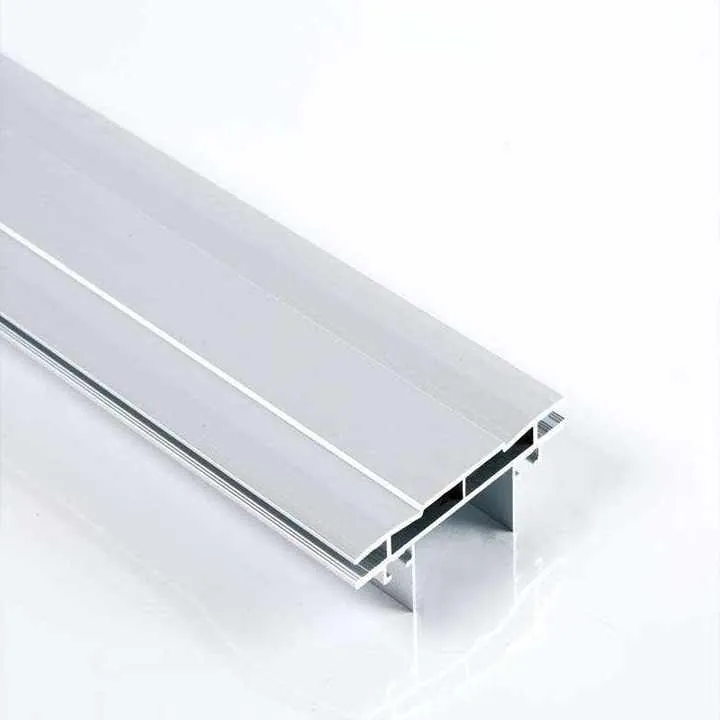
Mechanical fasteners (screws, bolts, rivets) engage wood and aluminum extrusion directly, helping support the weight of panels, resist wind loads, and maintain alignment while adhesive cures or if adhesive degrades over time.
How to integrate mechanical fasteners
- Use countersunk or flush‑mounted screws/bolts through aluminum extrusion into wood panels or into backing support. Ensure you don’t over‑tighten and deform either material.
- Use stainless or corrosion‑resistant fasteners to avoid galvanic corrosion between wood‑fasteners‑aluminum.
- Maintain proper spacing: Fasteners every defined interval to distribute load and prevent panel sag or rotational stresses.
- Use structural adhesive in joint combined with fasteners: Adhesive handles shear and distributes load across the entire interface; fasteners carry localized loads and hold alignment during cure.
- Allow for differential movement: Fastener slots or oversized holes let wood expand/shrink without transferring huge loads into aluminum or adhesive.
Benefits and trade‑offs
- Vorteile: Added reliability, support for heavy panels, improved wind/impact resistance, helps maintain alignment and prevents peel/lift.
- Trade‑offs: Adds cost, introduces penetration and potential moisture path if not sealed properly, may require pre‐drilling or inserts, could reduce aesthetic if fastener heads are visible.
Table: Fasteners in adhesive + mechanical cladding system
| Komponente | Rolle | Wichtige Überlegung |
|---|---|---|
| Adhesive bead | Continuous bond across full area | Must be properly applied & cured |
| Mechanische Befestigungen | Load bearing, alignment, redundancy | Corrosion resistance & spacing |
| Pre‐drilled holes | Proper size to allow movement | Avoids stress on materials |
| Sealant around fasteners | Prevent moisture ingress | Protects interface and wood behind |
Implementation in industrial setting
In a tall exterior façade application of wood cladding on aluminum extrusions, I specified: adhesive with 12 mm beads along full panel back, stainless steel countersunk screws every 300 mm along edges and 600 mm field, oversized 6 mm holes to allow wood expansion, sealant washers around screws to prevent moisture ingress. After installation, panels remained flat and true for multiple seasons with no delamination.
Combining mechanical fasteners with adhesive improves the structural reliability of wood cladding on aluminum extrusionsWahr
Fasteners carry loads and hold panels while adhesive cures and over time; adhesive distributes loads and seals interface.
Adhesive alone is always sufficient for all wood‑to‑aluminum cladding situationsFalsch
In many exterior or heavy‑panel situations, fasteners are needed for safety, movement control, and redundancy.
Schlussfolgerung
Cladding aluminum extrusions with wood cladding is a refined process: you need the right adhesive, rigorous moisture control, excellent surface preparation, and mechanical reinforcement for durability. When you combine all four, you deliver a high‑quality result that maintains integrity and aesthetics for industrial B2B clients.