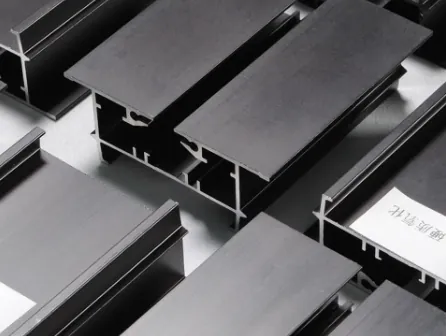
Aluminum 6063 vs 6060 for Extrusion Profiles?
I face this choice often. I compare 6063 against 6060 to decide what fits best for our extrusions.
6063 and 6060 differ in chemistry and strength. I will explain both alloys clearly.
Let’s explore side by side. I’ll show you facts, numbers, and tables. You can pick the best alloy for your case.
What are the main composition differences?
I once chose 6063 but later switched to 6060 for better formability. They differ by small alloy percentages.
6063 has slightly more magnesium than 6060. This gives it better strength, while 6060 is better for formability.
Composition comparison
| Element | 6063 Typical (%) | 6060 Typical (%) |
|---|---|---|
| Aluminum | Balance | Balance |
| Magnesium | 0.45 – 0.9 | 0.35 – 0.5 |
| Silicon | 0.2 – 0.6 | 0.2 – 0.6 |
| Iron | ≤0.35 | ≤0.35 |
| Copper | ≤0.1 | ≤0.1 |
| Manganese | ≤0.1 | ≤0.1 |
| Zinc | ≤0.1 | ≤0.1 |
| Chromium | ≤0.1 | ≤0.1 |
| Titanium | ≤0.1 | ≤0.1 |
| Residuals | ≤0.15 | ≤0.15 |
6063 has higher magnesium. This boosts strength slightly. The silicon range is the same. Everything else is nearly identical.
The extra magnesium in 6063 gives better mechanical properties. 6060 is often more formable. You may prefer 6060 for tighter shapes or thin walls.
6063 has significantly more copper than 6060.False
Both 6063 and 6060 allow only up to 0.1?% copper.
6063 typically has higher magnesium content than 6060.True
6063 range is 0.45–0.9?%, while 6060 is 0.35–0.5?%.
How do their mechanical properties differ?
I once chose 6063 T6 when I needed better tensile strength for a railing extrusion.
6063 T6 is stronger than 6060 T6. But 6060 is more formable.

Mechanical properties
| Property | 6063 T6 | 6060 T6 |
|---|---|---|
| Tensile strength (Rm) | 190–240 MPa | 160–210 MPa |
| Yield strength (Rp0.2) | 145–185 MPa | 130–165 MPa |
| Elongation (A5) | ≥8?% | ≥7?% |
| Hardness (Brinell) | ~60 HB | ~55 HB |
| Elastic modulus | ~69 GPa | ~69 GPa |
6063 has about 10–20?% higher tensile strength. This helps when structural strength matters. The yield difference is also in that range.
6060 tends to be a bit more ductile. This makes it a good choice for complex shapes or small radii extrusion. I use 6060 for tight, detailed designs.
6063 is stronger. When load capacity matters, I pick it. For gentle decorative pieces, 6060 works well.
6063 T6 generally has higher yield strength than 6060 T6.True
Yield for 6063 T6 is about 145–185?MPa, higher than 6060 T6’s 130–165?MPa.
6060 T6 has significantly higher stiffness (elastic modulus) than 6063 T6.False
Both alloys share elastic modulus around 69?GPa.
Which alloy is more cost-effective?
I always check price per kg when ordering. 6060 is usually a bit cheaper if volume is high.
6060 is usually cheaper per kg. But 6063 may allow thinner design, saving total material.
Cost factors
- Base alloy pricing
6060 is often slightly cheaper—maybe 2–5?%. - Processing costs
6063 may cost more to extrude due to higher strength. - Surface finish premiums
Both take same anodizing or painting cost. - Ordering quantity
Price gap narrows at large volume.
To decide cost-effectiveness, I use:
[
\text{Cost per part} = \frac{\text{Alloy cost} + \text{Processing cost}}{\text{Number of parts}}
]
Usually, for simple profiles, 6060 saves a bit. If extra strength avoids needing thicker walls, 6063 may reduce total material cost.
6060 is always more cost-effective than 6063.False
6060 raw cost may be lower, but 6063 may allow thinner profiles, reducing total cost.
Which is better for corrosion resistance?
I often use both outdoors. The corrosion behavior is very similar. Each alloy reacts to surface treatment the same way.
Both 6063 and 6060 offer excellent corrosion resistance with anodizing or coating.
Corrosion factors
- Base alloy difference
Slight extra magnesium in 6063 doesn’t change corrosion behavior much. - Surface finish
Anodizing or powder coating helps both equally. - Environment
In marine or salty air, surface treatment matters more than alloy choice. - Maintenance need
Same cleaning and inspection apply to both.
6063 offers much better corrosion resistance than 6060.False
The small composition difference does not affect corrosion resistance significantly.
I installed 6060 frames in a coastal city with salt spray. With anodizing, they have lasted years with little wear. I also used 6063 in a desert climate. Both looked unchanged after 5 years.
Summary table of key differences
| Aspect | 6063 | 6060 |
|---|---|---|
| Magnesium content | 0.45–0.9?% | 0.35–0.5?% |
| Tensile strength | 190–240?MPa | 160–210?MPa |
| Yield strength | 145–185?MPa | 130–165?MPa |
| Cost | Slightly higher base price | Slightly lower base price |
| Formability | Good, requires more force | Better, for intricate shapes |
| Corrosion resistance | Excellent with treatment | Same as 6063 |
| Best use cases | Load?bearing, structural | Decorative, detailed parts |
Conclusion
6063 and 6060 differ in magnesium content and mechanical strength. 6063 is stronger but slightly costlier. Corrosion resistance is the same. For heavy?load parts choose 6063. For detailed profiles and cost?saving choose 6060.