Aluminum Extrusion Performance Test Methods?

Many buyers receive aluminum extrusions that look perfect on the surface. Yet hidden weaknesses can lead to failures, customer complaints, and expensive project delays.
Aluminum extrusion performance test methods measure strength, durability, impact resistance, hardness, and material quality. These tests help manufacturers verify that extruded aluminum profiles meet design requirements, industry standards, and customer specifications before shipment.
Testing is not simply a quality control step. It is one of the most important ways to confirm that an aluminum extrusion can perform safely in its intended application. Mechanical testing provides measurable data that engineers and buyers can trust when making purchasing decisions.
What Tests Evaluate Extrusion Mechanical Properties?
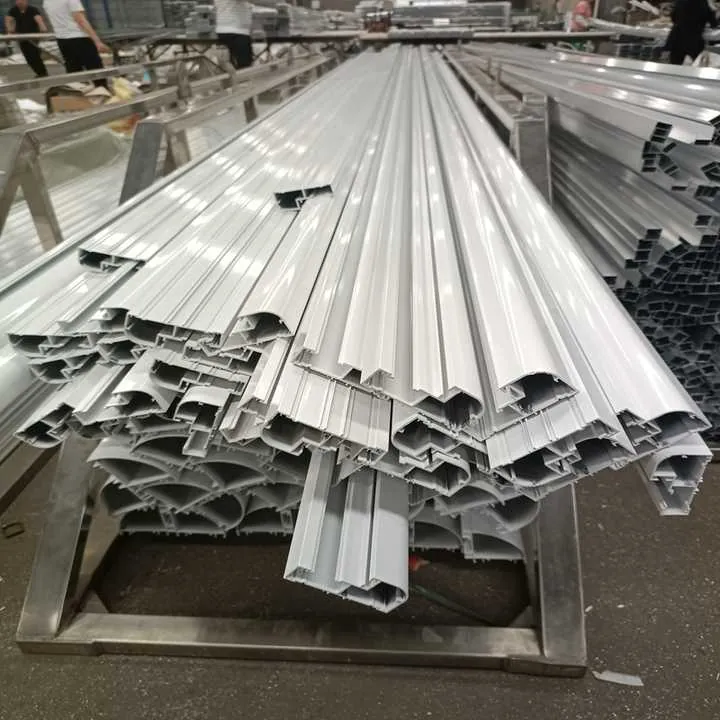
Many aluminum profiles appear identical. However, their actual performance can vary greatly depending on alloy composition, extrusion conditions, heat treatment, and manufacturing control.
Mechanical property testing evaluates aluminum extrusion strength, ductility, hardness, elongation, and load-bearing capability through standardized laboratory procedures that provide measurable and repeatable performance data.
Mechanical properties determine how an aluminum extrusion behaves under real-world loading conditions. These tests help manufacturers verify that products meet engineering requirements before entering service.
Common Mechanical Property Tests
Several laboratory methods are commonly used to evaluate aluminum extrusions:
- Tensile testing
- Hardness testing
- Yield strength testing
- Elongation testing
- Compression testing
- Fatigue testing
- Bend testing
Each test measures a different aspect of material behavior.
Tensile Testing
Tensile testing is the most widely used mechanical evaluation method. A specimen is pulled until deformation or fracture occurs.
The test provides valuable information such as:
- Ultimate tensile strength
- Yield strength
- Elongation percentage
- Elastic behavior
Engineers often use these values when designing structures and mechanical components.
Hardness Testing
Hardness testing measures a material’s resistance to indentation. It provides a quick indication of heat treatment effectiveness and material condition.
Common hardness methods include:
- Brinell hardness
- Rockwell hardness
- Webster hardness
- Vickers hardness
Bend Testing
Bend testing evaluates ductility and crack resistance. The sample is bent to a specified angle while inspectors check for surface fractures or structural damage.
Common Mechanical Tests and Their Purpose
| Test Method | Property Evaluated | Typical Application |
|---|---|---|
| Tensile Test | Strength and elongation | Structural design |
| Hardness Test | Surface resistance | Quality verification |
| Bend Test | Ductility | Fabrication assessment |
| Compression Test | Load-bearing capacity | Industrial components |
| Fatigue Test | Cyclic durability | Transportation systems |
Why Mechanical Testing Matters
Many customers focus on dimensional accuracy and appearance during incoming inspection. These factors are important, but mechanical performance often determines long-term success.
Several years ago, a customer experienced premature deformation in a structural assembly. Dimensional inspection showed no problems. After additional laboratory testing, the issue was traced to insufficient mechanical properties caused by improper heat treatment. The problem could have been identified earlier through routine verification testing.
Mechanical Testing Supports Better Decisions
Mechanical testing helps manufacturers and buyers:
- Verify alloy performance
- Confirm heat treatment results
- Compare suppliers
- Validate product quality
- Meet engineering specifications
For demanding applications such as construction, transportation, and industrial equipment, reliable mechanical property data is often as important as the extrusion itself.
Tensile testing is one of the most common methods used to evaluate aluminum extrusion mechanical properties.True
Tensile testing measures strength, yield behavior, and elongation.
Mechanical property testing only measures the visual appearance of aluminum extrusions.False
Mechanical tests evaluate strength, hardness, ductility, and other performance characteristics rather than appearance.
Which Machines Are Used In Tensile Testing?
Many buyers review tensile test reports without understanding how the data is generated. The accuracy of the testing equipment directly affects the reliability of the results.
Tensile testing uses universal testing machines, extensometers, load cells, specimen grips, and computerized data acquisition systems to accurately measure aluminum extrusion strength and deformation characteristics.
The universal testing machine is the primary equipment used for tensile testing. It applies a controlled pulling force to a prepared specimen while recording material behavior throughout the test.
Universal Testing Machine
The universal testing machine, often called a UTM, is designed to apply tension or compression loads.
The machine typically consists of:
- Load frame
- Crosshead system
- Hydraulic or electromechanical drive
- Force measurement sensors
- Data acquisition software
The machine gradually increases force until the sample yields and eventually fractures.
Load Cells
Load cells measure the applied force during testing.
Their role is critical because:
- Strength calculations depend on force accuracy
- Calibration affects test reliability
- Standards require traceable verification
Extensometers
An extensometer measures specimen elongation during testing.
This instrument provides precise strain measurements used to calculate:
- Yield strength
- Modulus of elasticity
- Elongation percentage
Without accurate strain measurement, important mechanical properties may be difficult to determine correctly.
Typical Tensile Testing Equipment
| Equipment | Function |
|---|---|
| Universal Testing Machine | Applies tensile load |
| Load Cell | Measures force |
| Extensometer | Measures strain |
| Computer Software | Records data |
| Specimen Grips | Hold test sample |
Sample Preparation Equipment
Before testing begins, specimens must be prepared according to standard requirements.
Common preparation equipment includes:
- CNC machining systems
- Precision saws
- Milling machines
- Surface finishing tools
Proper specimen preparation helps prevent inaccurate results.
Digital Data Collection
Modern testing laboratories rely heavily on software systems.
The software records:
- Load curves
- Stress-strain graphs
- Yield points
- Fracture data
- Test reports
Digital systems reduce human calculation errors and improve traceability.
Calibration Is Essential
Even advanced testing equipment requires regular calibration.
Calibration helps ensure:
- Accurate force measurement
- Reliable strain data
- Standard compliance
- Repeatable results
A customer once requested comparison testing from multiple suppliers. The reported tensile strengths varied unexpectedly. Further investigation showed that one laboratory had overdue calibration records. Once testing was repeated with properly calibrated equipment, the results became much more consistent.
Why Equipment Quality Matters
Reliable testing equipment supports:
- Product certification
- Engineering validation
- Supplier qualification
- Regulatory compliance
When evaluating test reports, buyers should consider not only the reported values but also the quality of the testing process and equipment used to generate the data.
Universal testing machines are the primary equipment used for tensile testing aluminum extrusions.True
UTMs apply controlled loads and measure material behavior during testing.
Tensile testing can be accurately performed without measuring force or elongation.False
Both force and elongation measurements are necessary to calculate key mechanical properties.
Can Impact Resistance Be Tested In Lab Settings?

Some aluminum products experience sudden impacts during transportation, installation, or service. Static strength alone may not predict how a material reacts under these conditions.
Impact resistance can be tested in laboratory environments using standardized impact testing methods that measure the energy absorbed by aluminum specimens during sudden loading events.
Impact testing evaluates material toughness rather than simple strength.
A material may possess high tensile strength but still perform poorly under sudden impact loads.
What Is Impact Resistance?
Impact resistance describes a material’s ability to absorb energy without catastrophic failure.
This property is important for:
- Transportation equipment
- Industrial machinery
- Safety structures
- Architectural components
Charpy Impact Test
The Charpy impact test is one of the most widely used methods.
The process involves:
- Preparing a standardized specimen.
- Creating a notch in the sample.
- Striking the specimen with a pendulum hammer.
- Measuring absorbed energy.
Higher absorbed energy generally indicates greater toughness.
Izod Impact Test
The Izod method follows a similar principle but uses a different specimen orientation and support arrangement.
Both methods provide useful comparative information.
Laboratory Impact Testing Process
| Step | Purpose |
|---|---|
| Specimen Preparation | Standardized geometry |
| Notch Creation | Controlled stress concentration |
| Impact Loading | Simulated sudden force |
| Energy Measurement | Toughness evaluation |
| Result Analysis | Material comparison |
Factors Affecting Impact Performance
Several variables influence impact resistance:
- Alloy selection
- Temper condition
- Heat treatment
- Extrusion quality
- Temperature
For example, some materials become less ductile at lower temperatures.
Additional Dynamic Testing Methods
Beyond Charpy and Izod testing, laboratories may perform:
- Drop weight testing
- Instrumented impact testing
- Crash simulation testing
- Dynamic fracture analysis
These methods provide deeper understanding of material behavior under extreme conditions.
Real-World Importance
Impact resistance becomes especially important in applications exposed to accidental loading.
Examples include:
- Vehicle structures
- Solar mounting systems
- Industrial platforms
- Transportation frames
In one project, a customer required aluminum profiles for equipment exposed to repeated handling impacts. Tensile strength met specifications, but impact testing revealed meaningful differences between candidate materials. The final alloy selection was based on toughness performance rather than tensile strength alone.
Impact Testing Supports Product Reliability
Impact testing helps manufacturers:
- Evaluate toughness
- Compare alloys
- Improve product design
- Reduce failure risk
When product safety and durability are priorities, impact testing provides valuable insight that cannot be obtained from tensile testing alone.
Impact testing measures a material's ability to absorb energy during sudden loading.True
Impact tests evaluate toughness and resistance to abrupt forces.
Tensile strength alone completely predicts impact performance.False
Materials with similar tensile strengths can exhibit very different impact resistance characteristics.
What Test Standards Ensure Data Reliability?

Testing data only becomes useful when it is consistent, repeatable, and accepted by customers. Without recognized standards, results from different laboratories may not be comparable.
International test standards ensure data reliability by defining specimen preparation, testing procedures, equipment requirements, calibration methods, and reporting practices that create consistent and repeatable results.
Standards create a common language between manufacturers, laboratories, engineers, and buyers.
Why Standards Matter
Without standardized methods:
- Results may vary significantly
- Supplier comparisons become difficult
- Certification may be impossible
- Product approval may be delayed
Standards reduce uncertainty throughout the supply chain.
Common Aluminum Testing Standards
Several organizations publish widely recognized testing standards.
ASTM Standards
ASTM standards are among the most commonly used worldwide.
Examples include:
- ASTM E8 for tensile testing
- ASTM E18 for Rockwell hardness
- ASTM E23 for Charpy impact testing
These standards define detailed testing requirements.
ISO Standards
ISO standards provide internationally recognized procedures.
Common examples include:
- ISO 6892 for tensile testing
- ISO 6508 for Rockwell hardness
- ISO 148 for impact testing
Many global buyers request ISO-compliant testing.
EN Standards
European markets frequently reference EN standards.
These standards help harmonize testing requirements across multiple countries.
Common Standards Overview
| Standard Organization | Typical Focus |
|---|---|
| ASTM | Mechanical testing |
| ISO | International testing methods |
| EN | European requirements |
| DIN | German technical standards |
| JIS | Japanese industrial standards |
Laboratory Accreditation
Reliable data depends on more than following standards.
Accredited laboratories typically maintain:
- Documented procedures
- Equipment calibration records
- Operator training programs
- Quality management systems
These controls improve confidence in reported results.
Repeatability And Reproducibility
Two important concepts define testing reliability:
Repeatability
Repeatability refers to obtaining similar results under the same testing conditions.
Reproducibility
Reproducibility refers to obtaining comparable results across different laboratories.
Strong standards support both goals.
Traceability Requirements
Modern quality systems require traceability throughout the testing process.
Important records often include:
- Material identification
- Sample preparation history
- Calibration certificates
- Test conditions
- Final reports
This documentation allows future verification if questions arise.
Building Customer Confidence
Many international customers evaluate suppliers based on documented testing capability. Reliable data demonstrates manufacturing control and commitment to quality.
From my experience, buyers often focus first on the numerical values in a test report. Yet the credibility of those numbers depends heavily on the standards behind them. A well-documented test performed according to recognized international standards usually carries much greater value than an isolated result without supporting procedures.
For aluminum extrusion manufacturers, standardized testing helps establish trust, reduce disputes, and support long-term customer relationships across global markets.
International standards help ensure testing data is consistent and repeatable.True
Standards define procedures, equipment requirements, and reporting methods.
Testing standards are unnecessary if a laboratory has modern equipment.False
Even advanced equipment requires standardized procedures to ensure reliable and comparable results.
Conclusion
Aluminum extrusion performance testing provides critical information about strength, toughness, hardness, and durability. By using proper equipment and internationally recognized standards, manufacturers can generate reliable data that supports quality assurance, engineering decisions, and long-term product performance.