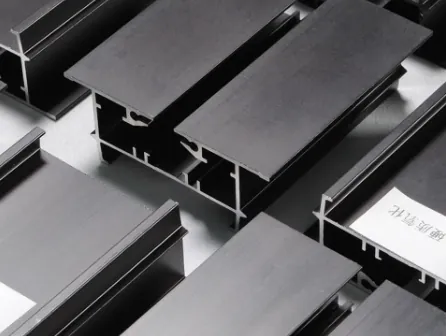
Aluminum extrusion typical MOQ for custom orders?

Opening question might feel urgent for many buyers: how much material do I need to order before a custom extrusion run makes sense?
The typical minimum order quantity (MOQ) for a new aluminum extrusion design often starts around 500 kg to 1000 kg. Below that, costs rise sharply.
Good to know this baseline. But real world MOQ depends on many factors. Read on to see what affects the number — and when lower quantities might work.
What is the standard MOQ for new extrusion designs?
When you ask for a new profile, extra cost comes from tooling and setup. Usually the minimum order balances these costs with material volume.
New profiles generally require about 500 kg to 1000 kg to reach a reasonable cost per kilogram.
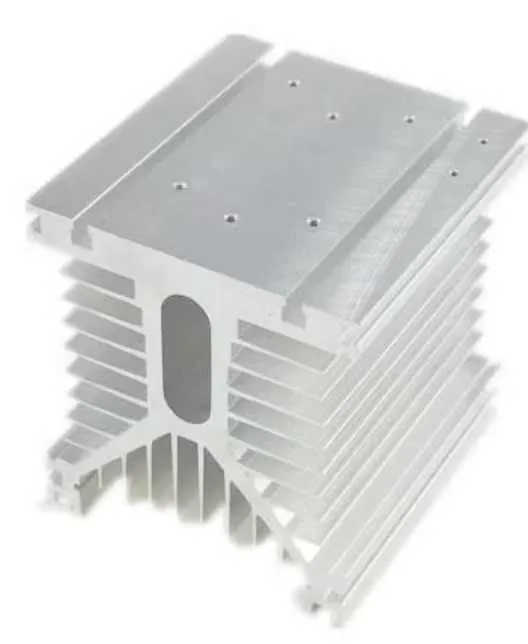
Manufacturers must build a unique extrusion die when you supply a new shape. That die has cost: design time, machining, testing. To cover that cost, they spread it over the volume produced. If you order too little, the cost per kilogram skyrockets. Then order price becomes too high. Most factories set a threshold where price stays fair only if the total volume is at least 500 kg. In many typical cases, 800 kg to 1200 kg is the preferred entry MOQ.
If a customer orders 600 kg only, some makers accept but add a “small‑lot surcharge”. The surcharge reflects die amortization and machine setup overhead. In other cases, makers say the order is too small and ask to combine orders with others or wait until more volume builds up.
Also, lead time plays a role. Small orders may wait longer while the factory batches multiple small jobs together before running extrusion. That delays delivery. For buyers needing regular supply, low MOQ can mean unpredictable lead‑time. High volume orders (e.g. >2000 kg) usually get priority scheduling, better pricing, stable lead‑time.
Some factories advertise “low MOQ” but often they mean for standard shapes (not new custom designs). In practice, standard shapes and small orders are possible. For brand‑new profiles, the 500–1000 kg threshold is the realistic baseline.
Take‑away table: Typical MOQ range for new designs
| Scenario | Typical MOQ (kg) | Notes |
|---|---|---|
| New custom profile, standard complexity | 500 – 1000 | Entry‑level MOQ to cover die cost |
| New profile, complex shape or tight tolerances | 800 – 1200 | Extra complexity increases required volume |
| Discounted volume orders or long‑term buyers | 1000 + | Better pricing and stable supply |
| Very small trial orders | ~500 + surcharge | May carry extra cost or longer lead time |
Standard MOQ for custom aluminum extrusion starts around 500 kg.True
Most factories amortize tooling and setup costs over this volume, making per‑kg price acceptable.
Any custom extrusion can be done with 100 kg order and still be cost‑effective.False
Order that small will force extreme surcharge or rejection because tooling cost cannot spread over small volume.
How do profile sizes affect order minimums?
Plastic rod is simple. But aluminum profiles vary a lot. A thin, small profile differs from a thick, wide one. Does that change MOQ? Yes.
Thicker or larger cross‑section profiles often raise the effective MOQ in weight terms, even if piece count stays low.
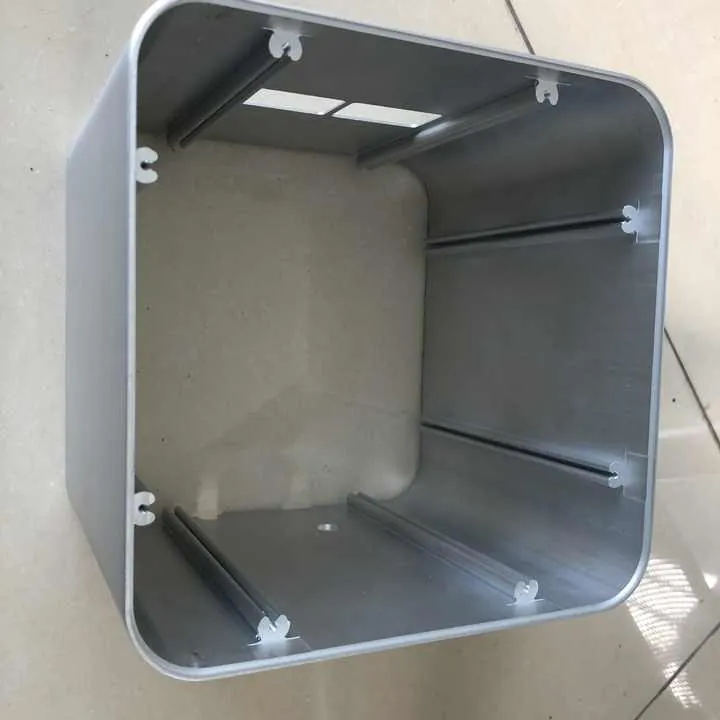
Size affects material volume per meter. If a profile has heavy cross‑section (e.g. a large frame, structural beam, or a dense industrial profile), each meter is heavy. Suppose a small profile weighs 1.5 kg per meter. To make 500 kg, you need ~333 meters. But if it weighs 5 kg per meter, then 500 kg is just 100 meters. That means fewer pieces produced — maybe too few for good yield on finishing, transport, or handling.
Factories often set a minimum number of pieces as well as a minimum weight. If piece count is too small, operations like cutting, anodizing, packaging may not be efficient. For small‑piece heavy profiles, makers may raise the weight MOQ to 800–1200 kg to ensure sufficient total length and enough units to justify finishing and packaging.
On the other hand, for very thin or lightweight profiles (like a small channel or trim), a 500 kg MOQ might mean thousands of meters — maybe too many for prototype or small projects. Some factories allow length-based MOQ — for example, 1000 meters or 2000 meters — whichever weighs less or meets both criteria.
Also, thick or wide profiles need longer extrusion press time. Big shapes often run slower, use more heat, and handle more waste scrap. That increases cost per kg. So to make the job efficient, factory prefers larger batch size.
In practice, buyers should check both weight per meter and expected total length. Many factories define MOQ as the larger of (weight threshold) or (length threshold).
Here is an example table showing how profile size affects MOQ:
| Profile type | Weight per meter | Implied MOQ (kg) | Meters produced at MOQ |
|---|---|---|---|
| Lightweight channel | 1.2 kg/m | 500 | ~417 m |
| Medium frame profile | 3.0 kg/m | 600 | ~200 m |
| Thick structural beam | 5.0 kg/m | 1000 | ~200 m |
| Very heavy industrial profile | 7.5 kg/m | 1200 | ~160 m |
Thus heavy profiles lead to higher total weight MOQ to get enough useful length and economic production.
Beyond just size, complexity matters too. Profiles with many cavities, thin webs, tight tolerances, or internal voids can slow down extrusion and cooling. That extra complexity can push MOQ upward. Factories need to fill press time, space, cooling frames, and then finishing blocks. If run too little, this can be inefficient.
From buyer perspective, one should consider both weight per meter and total length needed. For example, a small number of long heavy beams may hit MOQ easily. But many short pieces of light profile may be inefficient.
Heavier or larger profile shapes tend to require higher MOQ in kilogram.True
Because per‑meter weight increases, and factories need enough total volume and piece count to justify setup and finishing.
Profile size does not affect MOQ; every profile can meet same minimum kilograms.False
Large profiles may need more weight or length to ensure enough pieces and to cover higher setup and processing cost.
Are lower MOQs available for prototyping runs?
Often buyers do not need full production volume immediately. They may want a small batch for fit check, testing, or demonstration. Is there a way to get a smaller run?
Some factories accept lower MOQ for prototype or sample runs, often with extra cost or premium price per kilogram.

Smaller orders pose risk to the factory. Setup takes time; die creation still costs. Running just a few hundred kilograms offers little economy of scale. To offset the cost, factory may apply a surcharge or special fee. That means cost per kilogram or per piece might double or more.
Another option is splitting your order: some producers combine prototype runs of multiple customers. That spreads tooling cost over several jobs. But waiting time can increase. For urgent prototyping, this may not fit.
Sometimes producers offer sample orders under a different contract. For example, a 100 kg to 200 kg lot for testing. They charge higher price, and label the result “prototype” or “pre‑production sample.” That is fine when you only need a few meters for checks, or to verify surface treatment, tolerances, and assembly fit.
The trade‐off: prototypes cost more per unit, but you avoid committing to large volume ahead of design validation. That is helpful especially when shape or application is uncertain.
One must also ask if exact same profile and die will be used later. If yes, the sample run’s cost sometimes can count toward full volume order later — some factories subtract earlier extra fee when production order begins. Good practice to discuss that in advance.
Prototyping runs often face extra risk of scrap as well. If profile is complex, first pieces might have defects. For small sample orders, scrap waste hurts more. That further increases effective cost.
Therefore, if you want prototypes, plan for an MOQ around 100 – 300 kg. Expect a price premium. Use sample run to test design and finish. Once confirmed, proceed to full MOQ.
Factories sometimes accept prototype runs with lower MOQ like 100–300 kg.True
For sample orders or test batches factories can allow small lots with higher price per kg.
No factory will accept any order below standard MOQ even for prototypes.False
Many firms offer small sample runs or prototypes under special pricing to help customers test profiles.
Do surface treatments require separate MOQ levels?
After extrusion, profiles often get more work. Surface treatments like anodizing, powder coating, wood‑grain finish, or painting can change how MOQ is calculated.
Surface treatments often need a separate minimum order before finishing plants will process them. That MOQ is often higher than extrusion MOQ.

When finishing a batch, the finishing line also has setup and handling cost. For example, anodizing baths, powder coating ovens, or wood‑grain transfer lines need a certain load to be efficient. If you send only 200 kg of profile, finishing provider may refuse, or charge a hefty extra fee. That moves total MOQ higher.
Some common patterns: finishing houses may ask for at least 1000 kg or 500 meters of profile, or a minimum area coverage. That ensures the line is loaded adequately. If profile pieces are small, you may need more kilograms. If profile cross‑section is large, maybe fewer meters but still minimum weight or area applies.
Factories sometimes list separate MOQ: one for extrusion (e.g. 600 kg) and one for finishing (e.g. 1000 kg). If finishing MOQ is higher, the order must meet the larger one to get treated parts. Otherwise you might get plain extrusions only.
Here is a sample table of how treatment affects MOQ:
| Treatment type | Typical finishing MOQ (kg) | Notes |
|---|---|---|
| Anodizing or dyed anodize | 1000 | Needs full bath load and stable chemical balance |
| Powder coating | 800 – 1200 | Oven size and powder setup cost drive MOQ |
| Wood‑grain transfer or specialty finish | 1200 + | More complex process needs bigger batch |
| No finish / raw extrusion | As extrusion MOQ | Skips finishing steps |
Often finishing MOQ is not negotiable, because lines run on tight schedules. Sometimes finishing plants ask to combine multiple orders. That adds delay and may mix colors or specs — risky.
Buyers should ask finishing provider early. They must confirm that the final order meets both extrusion and surface treatment MOQ. Otherwise buyer might get raw profiles lacking finish.
When planning a custom order, the final MOQ is the higher of extrusion MOQ and finishing MOQ.
Surface treatment often requires higher MOQ than extrusion alone.True
Finishing lines need enough load to run efficiently, so finishing MOQ tends to be 800–1200 kg or more.
Surface treatment has no effect on required MOQ; finishing will accept any extrusion lot.False
Finishing processes often refuse small lots or apply surcharges, making finishing MOQ higher than extrusion MOQ.
Conclusion
Custom aluminum extrusion orders usually need 500–1000 kg to make sense. Heavy profiles, surface finishing, or prototype runs can raise that number. Plan both extrusion MOQ and finishing MOQ. Then work with supplier to find best option.