What is an aluminum extrusions?

Have you ever seen a long, uniform metal piece in a machine frame or window system and wondered how it was made?
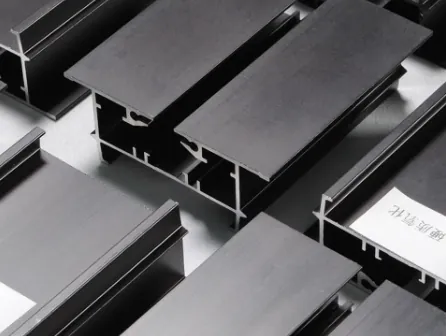
Aluminum extrusions are long-length profiles of aluminum that are formed by forcing a heated aluminum billet through a shaped die so that the material takes a defined cross-section.
Now I’ll walk you through: what characterizes aluminum extrusions, why industries use them, where they save weight, and how easily profiles can be tailored.
What characterizes aluminum extrusions?
Imagine squeezing soft metal through a shaped opening so that it comes out with a specific profile that stays the same along its length.
The key characteristic of aluminum extrusions is that they are continuous profiles with a fixed cross-section, created by pushing aluminum through a die, which allows very high precision, repeatability and a wide variety of shapes.

When one considers aluminum extrusions, several features stand out:
Consistent cross-section
The extrusion process produces profiles that maintain the same cross-section from start to finish (within practical tolerances). That makes design, machining and assembly much easier.
Variety of shapes
The extrusion press and die can produce simple shapes (angles, channels, tubes) or very complex multi-void shapes. You can have hollow cavities, semi-hollow cavities, multiple ribs, or T-slot tracks.
Material advantages
Aluminum has inherent benefits: light weight (about one-third the weight of steel for a given volume) and good corrosion resistance. Because of that, extrusions often become the structural backbone in many systems.
Process advantages
The extrusion process can be efficient for long lengths, and can yield “near-net” shapes (so less waste compared to machining a block). Also, the surface finish can be good, allowing further finishing steps like anodizing or powder-coating.
Design and production flexibility
Since the die determines the cross-section, changing shape is possible (with new tooling). Also, many finishes and tempers can be applied post-extrusion.
In sum: if you need a structural component that is long, lightweight, shaped exactly for your assembly, and you want to reduce waste and machining, then an aluminum extrusion is a good choice.
Why industries use extruded shapes?
When industries pick materials and manufacturing methods, they think about cost, performance, speed, and how easy it is to integrate. Aluminum extrusions deliver a strong proposition on many fronts.
Extruded aluminum shapes are used because they allow the designer to get custom profiles with strong structural performance, efficient manufacturing, reduced post-processing, and broad material benefits in one package.

Let’s break that down:
Structural and material performance
Because aluminum has high strength-to-weight and good stiffness for its weight, and the extrusion process allows optimized geometry (for example hollow ribs, multi-chamber sections), you can build efficient structures.
In industries like automotive, aerospace, construction, and electronics, reducing weight and volume while maintaining performance is critical.
Custom geometry for integration
Extrusions allow profiles to be tailored so that they integrate mounting slots, assembly features, cable channels, or interlocking frames. That means fewer welds, fewer parts, simpler assemblies. This reduces cost and time.
Efficiency in manufacturing
Since extrusions come out of the press already in the desired shape, you often save on machining from solid. Also, many finishing options (anodizing, powder-coating) work well on aluminum extrusions. Saves time and cost.
Sustainability and recyclability
Aluminum is infinitely recyclable and maintains properties well. When industries aim for sustainability, this matters.
Versatility across industries
You’ll find extrusions in window and door frames, machine guards, solar panel racks, vehicle components, electronics housings, etc. The process and material adapt to many end-uses.
Because of these benefits, many industries standardize parts around extrusions, sometimes designing whole systems of interlocking profiles.
Where extrusions provide weight savings?
One of the strongest arguments for using aluminum extrusions is weight savings. In many applications, every kilogram (or pound) matters. The geometry afforded by extrusion makes it possible to remove unnecessary mass while retaining strength and function.
Extrusions provide weight savings by enabling hollow or ribbed sections, optimized cross-sections, and using aluminum instead of heavier metals, thus reducing material weight while maintaining structural performance.

Let’s discuss how that works:
Hollow and ribbed geometry
In an extrusion, you can incorporate internal voids (hollow sections) or ribs to provide stiffness without full solid mass. For example, a square tube extruded shape is lighter than a solid bar but gives good bending stiffness.
By tailoring the geometry (thin walls where possible, thicker walls where needed) you optimize material usage.
High strength-to-weight material
Aluminum itself is lighter than steel. For the same volume, weight is lower. If you design the geometry properly, you can achieve required performance with less mass.
In transportation (cars, rail, aerospace) every bit of weight reduction brings fuel or energy savings.
Less waste and “near-net” manufacturing
Since extrusion yields shapes close to final shape, you avoid heavy machining and removal of material. That too reduces wasted mass and reduces the footprint of extruded parts.
Application examples
- Solar panel frames: roof mounts need to be light to reduce structural load but strong enough to resist wind. Extruded aluminum fits well.
- Machine-frames in factories: Using extruded aluminum profiles means lighter structures, easier to move or reconfigure.
- Transportation rails or components: Using extruded aluminum allows hollow profiles to replace solid steel parts, reducing weight.
So when weight is a concern, and you also require custom cross-section, aluminum extrusions are often the go-to solution.
Can profiles be tailored easily?
When designing parts and systems, flexibility is key. One major benefit of aluminum extrusions is the ability to tailor the profile shape, finish, length, and alloy to the specific application.
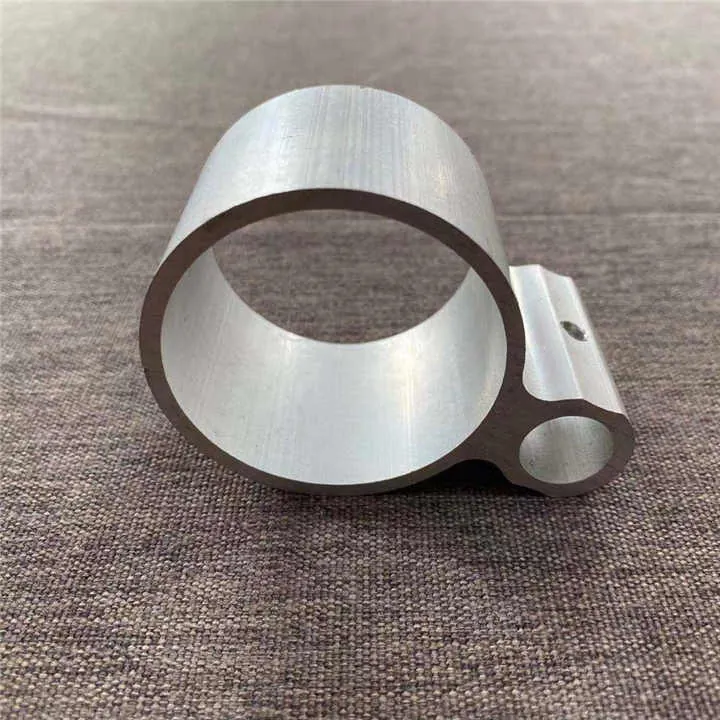
Yes — aluminum extruded profiles can be tailored quite easily in terms of cross-section shape, alloy, surface finish, length and secondary operations, making them highly adaptable to specific design requirements.
Here are the ways tailoring happens:
Custom die tooling for shape
The die used in extrusion is where the profile shape is defined. Manufacturers can produce custom dies to create a specific cross-section as required.
The tooling cost is there, but once the die is made, many parts can be produced economically.
Alloy and temper selection
You can choose the alloy (for example 6063, 6061, etc) and the temper (T-temper, H-temper) to match strength, formability, finish requirements. This gives flexibility in performance.
Tailoring alloy and temper means you can pick trade-offs between strength, ductility, machinability, and cost.
Surface finishes and treatments
After extrusion, you can apply finishing operations: anodizing, powder coating, painting, machining, drilling, welding. If you need a specific aesthetic or functional surface property, you can get it.
Length, cut-to-length, secondary operations
Extruded profiles can be produced in long runs, then cut to the needed length. They can also be machined, bent, joined with connectors, welded, etc. This customizes the part for each application.
Integration into systems
Because the profile is customized, you can integrate slots, channels, and mounting features directly in the shape. That means fewer separate parts and simpler assembly.
Practical considerations
| Tailoring Option | Customizable? | Notes |
|---|---|---|
| Shape (cross-section) | Yes | Requires new tooling/die |
| Length | Yes | Extrusions can be cut to size |
| Alloy & Temper | Yes | Choose based on performance |
| Surface Finish | Yes | Anodizing, powder coating, etc |
| Post-Machining | Yes | CNC, punching, drilling possible |
So yes, profiles can be tailored easily compared to many manufacturing processes. For a B2B manufacturer of extrusions, the challenge is simply aligning the design requirements with the right alloy, temper, tooling and finishing process.
Conclusion
Aluminum extrusions are custom-shaped profiles made by forcing heated aluminum through a shaped die, resulting in consistent cross-section, efficient manufacturing and strong material performance. They are widely used because they deliver structural strength, design flexibility and weight savings. With the right tooling, alloy and finishing, profiles can be tailored to meet specific applications—making extruded aluminum a powerful option for many industries.