What aluminum for extrusion?
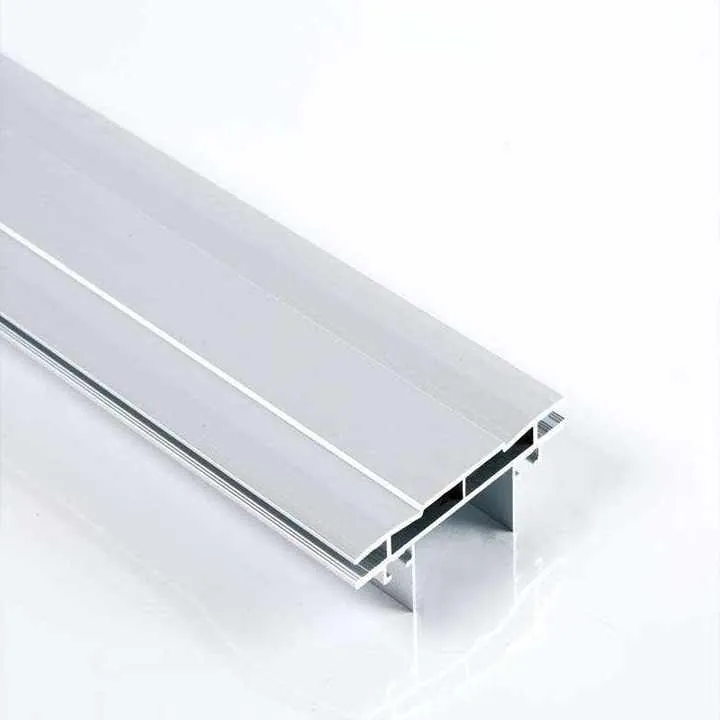
Choosing the wrong aluminum alloy for extrusion can lead to slow production, poor surface finish, or mechanical failures. The right alloy makes extrusion easier and improves both strength and cost control.
The best aluminum for extrusion depends on its extrudability, strength, finishing ability and cost — most suitable options come from the 6xxx series.
You will understand each factor clearly after reading the sections below.
Which alloys are best for extrusion?
Without choosing the right alloy, even a perfect die will produce defects and wasted material.
The most common alloys for extrusion are from the 6xxx series because they balance strength, cost, finishing quality and ease of extrusion.

In extrusion, the alloy determines how the metal will flow, cool, take shape and respond to finishing. The 6xxx series, made of aluminum mixed with magnesium and silicon, is most popular because it flows smoothly through dies and offers good final properties. Other series can also be used, but they often bring limitations in either extrudability, cost, or finishing.
Main Alloy Choices for Extrusion
| Alloy Series | Typical Alloys | Key Advantages | Main Considerations |
|---|---|---|---|
| 6xxx | 6063, 6061, 6005 | Good extrusion performance, heat treatable, good surface finish | Cost slightly higher than pure alloys |
| 5xxx | 5052, 5005 | Strong corrosion resistance | Harder to extrude complex profiles |
| 3xxx | 3003 | Good formability and corrosion resistance | Lower strength, limited structural use |
| 1xxx | 1100 | Very pure aluminum, soft, good conductivity | Very low strength |
| 7xxx | 7075 etc. | High strength applications | Difficult to extrude, high cost |
The 6xxx series remains the primary choice for architectural, industrial, automotive and consumer product profiles. It allows complex shapes and clean finishes such as anodizing or powder coating. The 5xxx and 3xxx series can be useful for special needs, but you may face process challenges if doing complex or large extrusions.
Only the 6xxx series alloys can be used for extrusion.False
Other series such as 5xxx and 3xxx can be extruded but have lower extrudability or strength limits.
The 6xxx series is preferred because it provides a strong balance between extrusion performance and final usability.True
It combines good flow through the die with solid mechanical and finishing properties.
Why 6063 is widely used for profiles?
If you want smooth surface finish or complex profile shapes, 6063 is often the first answer.
6063 aluminum is popular because it extrudes easily, produces excellent surface quality and suits many architectural and decorative applications.

6063 is often called the “architectural alloy” because it delivers smooth, refined surfaces after extrusion. It performs very well in anodizing and powder coating, and the metal flows through dies easily. It supports fine shapes like narrow slots, thin walls, and complex curves.
Key Advantages of 6063
- High extrudability, making it easy to achieve consistent shapes
- Good corrosion resistance for outdoor use
- Excellent finishing ability for visible surfaces
- Suitable strength for many light and medium duty applications
However, 6063 is not the strongest alloy. It offers moderate strength and is less suited for structural or heavy mechanical applications. In those cases, 6061 may be used because it has greater strength but slightly lower extrudability.
When to Use 6063
| Application Type | Why 6063 Works Well |
|---|---|
| Window and door frames | Clean finish and moderate strength |
| LED lighting profiles | Thin walls and curved shapes possible |
| Architectural trim | Surface finish is easily achieved |
| Solar frames | Corrosion resistance and decoration good |
If appearance is important, 6063 is the ideal choice. If strength is the priority, other alloys should be considered. For global supply and B2B manufacturing, 6063 remains the most economical way to produce fine-shaped parts.
6063 is mainly used when aesthetics and complex shapes are required.True
Its high extrudability and finish quality suit visible or decorative profiles.
6063 has greater strength than 6061 and is preferred for heavy structural components.False
6061 offers higher strength but is slightly harder to extrude.
How alloy composition affects extrudability?
If the alloy composition is not well understood, extrusion may fail even when equipment and dies are correct.
The elements inside an alloy decide how easily it flows during extrusion, how it cools, and how strong it becomes — higher alloy content usually makes extrusion harder.

Extrudability means how smoothly the metal moves through the die without cracking, tearing, or overheating. This depends on alloy composition, billet temperature, surface condition and die design. In general, alloys with simple compositions and lower alloying elements extrude more easily.
What Alloying Elements Do
| Alloying Element | Effect During Extrusion |
|---|---|
| Magnesium + Silicon | Increase strength after aging but resist flow if too high |
| Copper | Improves strength but may impact corrosion resistance |
| Zinc | Used in high-strength alloys, often reduces extrudability |
| Chromium/Manganese | Can increase wear resistance and change grain structure |
More alloying elements typically create more resistance during extrusion, causing higher pressure, slower speed, and more die wear. This affects cost and production time, especially in complex shapes.
What You Should Consider
- Select alloy based on application requirements rather than maximum strength
- Choose simpler alloys for thin walls, multiple slots or asymmetrical shapes
- Discuss composition with the extruder early, as alloy type affects die design
- Understand that high alloy content often needs slower speeds and careful cooling
- Balance performance, finish, cost and production speed for best results
For export and large batch manufacturing, using an alloy that strikes a good balance is often the most practical strategy. This supports stable production, predictable finishing and lower risk of defects.
A more complex alloy composition always makes extrusion easier.False
Complex alloys usually resist flow and may need slower speeds or stronger equipment.
Extrudability depends on alloy composition but also on temperature and die design.True
Composition is important, yet process variables also influence extrusion quality.
Can high-strength alloys be extruded?
Needing high strength does not mean extrusion becomes impossible — but challenges increase.
High-strength alloys can be extruded, but they usually require slower speeds, stronger tooling, more cooling control and higher cost.

High-strength alloys such as some 6xxx variants, and certain 7xxx alloys, can be used when mechanical performance is vital. These alloys are often required in automotive, machinery, aerospace or structural profiles. However, those benefits come with trade-offs.
Challenges with High-Strength Alloys
- Harder to push through dies, requiring greater pressure
- Higher risk of crack or distortion after cooling
- Need for slower production speeds
- Greater wear on tools and dies
- More difficult bending, machining and forming
- Potentially less surface smoothness
When High-Strength Extrusion Is Justified
- When weight reduction and strength are critical
- When structural or load-bearing parts are needed
- When space is limited and walls must be strong but thin
- When downstream machining requires rigid profile geometry
Steps to Use High-Strength Grades
- Run prototype trials to test deformation and cooling behavior
- Validate die design under lower speeds
- Ensure billet pre-heating is even and tightly controlled
- Consider CNC or post-machining requirements
- Keep inspection records to track stress-related deviations
Using high-strength alloys adds complexity. But when strength is essential, careful planning allows success. The key is aligning expectations between performance, cost and production timing.
High-strength aluminum alloys cannot be extruded under any conditions.False
They can be extruded, but with slower speeds and more demanding process control.
If strength requirement is low or moderate, using a standard 6xxx alloy usually saves time and cost.True
Standard alloys allow faster production, easier finishing and lower risk of defects.
Conclusion
Choosing aluminum for extrusion is not about picking the strongest or cheapest option. It is about balancing extrudability, strength, surface finish and cost. The 6xxx series is the best starting point. If complex shapes and clean finish matter, 6063 is ideal. When strength is needed, 6061 or specialty alloys may be used — but only with careful process planning.