


how much does 80 20 aluminum extrusion weigh?

I once faced a surprise when a lightweight-looking frame turned out to be much heavier than expected. The culprit? Misjudging the weight of the 80/20 aluminum extrusions we used.
Yes — aluminum extrusions from 80/20 have widely varying weights depending on the cross-section, alloy, and machining.
Let me walk you through what affects extrusion weight, how alloy and design make a difference, and how to properly estimate it.
What factors affect 80/20 profile weight?
Have you ever bought two “same series” extrusions and noticed one felt heavier? It’s not your imagination.
The weight of a profile from 80/20 depends on its cross-sectional area, wall thickness, number of T-slots, machining (holes, cut-outs), and length.
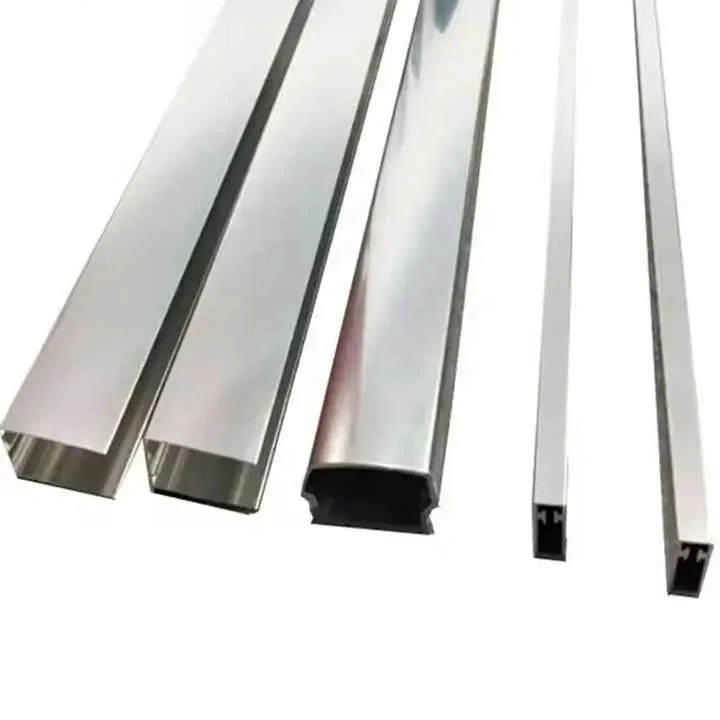
When quoting B2B orders, I always ask about more than just dimensions. That’s because the following factors affect the weight directly:
Cross-sectional area & wall thickness
The larger the cross-section and thicker the walls, the more material is used, and the heavier it becomes. A standard 1”×1” profile can weigh around 0.51 lbs per foot, while a 1”×2” profile might weigh close to 0.92 lbs per foot. The difference grows with every size up.
Profile series and slot count
80/20 profiles are available in different series like 10, 15, 20, and metric types. Profiles with more T-slots or heavy-duty walls naturally weigh more. For instance, a four-slot profile will weigh more than a two-slot version of the same outer dimensions.
Machining and customization
Adding holes, cut-outs, or slots removes material, reducing the total weight. If a profile is heavily machined or partially hollowed, the resulting weight can be significantly lower than the standard profile.
Alloy density
Most 80/20 extrusions use aluminum 6063-T6 or 6105-T5, both with similar densities (about 2.70 g/cm³). However, slight differences in alloy or finish have minimal impact compared to geometry.
| Factor | Impact on Weight |
|---|---|
| Cross-section size | Directly increases weight |
| Wall thickness | More material per inch |
| T-slot count | Adds surface area and mass |
| Custom machining | May remove material |
| Finish | Minimal effect |
Wall thickness and number of slots in a profile significantly affect its weightTrue
Profiles with thicker walls or more slots contain more material and therefore weigh more.
The same series profile size (e.g., 10 Series) will always weigh the same per inch regardless of machining or cut-outsFalse
Machining and cut-outs remove material and change the weight per inch.
Why alloy choice changes extrusion weight?
You might assume all aluminum weighs the same. But alloy choice can indirectly affect profile weight.
Because different alloys have different strength and formability, the extrusion may require thicker walls or reinforcements; thus alloy choice indirectly changes the weight of the profile.

Here’s how it works in real production settings.
Different mechanical properties
Stronger alloys like 6061-T6 can carry higher loads than 6063-T5. That means you may use thinner profiles while maintaining strength, reducing total weight. Softer alloys often require more material to meet the same performance.
Forming and surface requirements
Some alloys are better for finishing, anodizing, or forming. If a specific alloy can’t bend easily, designers may compensate by thickening the profile walls, which adds weight.
Density differences are minor
The difference in actual mass per volume across aluminum alloys is very small. A stronger alloy doesn’t necessarily weigh more per cubic inch. It’s the profile geometry that changes due to mechanical requirements.
| Alloy | Relative Strength | Typical Wall Thickness | Weight Impact |
|---|---|---|---|
| 6061-T6 | High | Thin | Light |
| 6063-T5 | Medium | Medium | Moderate |
| 6105-T5 | Medium-High | Medium | Moderate |
Switching from alloy 6063-T6 to 6061-T6 while keeping identical cross-section will not change weight significantlyTrue
Density difference is minimal and for identical geometry the change in weight is negligible.
Using a lower-strength alloy will always reduce the weight of the extrusionFalse
Lower strength alloys often require thicker designs, which increases total material and weight.
How to calculate weight per foot of 80/20?
Estimating aluminum extrusion weight is simple with the right data.
You can calculate weight per foot by knowing the weight per inch from the supplier (or deriving from cross-section), then multiplying by 12.

Here’s how we calculate it for client quotes:
Step-by-step process
- Get the weight per inch from the profile’s datasheet or technical drawing.
- Multiply by 12 to get pounds per foot.
- Adjust for any machining, such as holes or cut-outs, if needed.
- Use total length to find overall weight.
For example:
- A 1010 profile weighs about 0.0424 lbs/inch → 0.509 lbs/foot.
- A 1020 profile weighs 0.0768 lbs/inch → 0.922 lbs/foot.
Use basic math with area and density
If the profile’s cross-sectional area is known:
[
\text{Weight (lbs)} = \text{Area (in²)} \times \text{Length (in)} \times 0.0975
]
This uses the typical density of aluminum in lb/in³.
| Profile | Weight per inch | Weight per foot |
|---|---|---|
| 1010 | 0.0424 lbs | 0.509 lbs |
| 1020 | 0.0768 lbs | 0.922 lbs |
| 2020 (metric) | 0.0247 lbs | 0.297 lbs |
Always multiply by the number of pieces and total length to get shipment weight. For example, 10 pieces of 6-foot 1020 profiles weigh about 55.3 lbs in total.
You can estimate weight per foot from supplier’s weight per inch multiplied by 12True
That is the standard and accurate method used for extrusion weight calculation.
If you only know the part series but not the exact part number you can accurately compute weight per footFalse
Different profiles within a series can vary widely in thickness, slots, and geometry, affecting weight.
Can profile design reduce overall weight?
Sometimes the challenge isn’t strength — it’s keeping things light. Design matters more than most people realize.
Yes — clever profile design (choosing lighter series, hollow sections, fewer slots, optimized wall thickness) can reduce overall weight, while still delivering necessary strength.
I’ve seen many projects where re-selecting a different 80/20 profile saved up to 30% in weight, simply by adjusting design choices.
Common methods to reduce weight:
- Switch to a smaller profile: Go from 2”×2” to 1”×2” or even 1”×1” if the load allows.
- Use fewer T-slots: Not all applications need four-way mounting. A two-slot profile can cut down mass.
- Hollow or cut-out profiles: Some designs remove center material or add channels inside the extrusion.
- Adjust wall thickness: Thinner walls save weight if they still meet structural needs.
But beware of trade-offs
Lighter profiles may:
- Deflect more under load
- Offer fewer mounting surfaces
- Have limited accessory options
| Design Choice | Weight Reduction | Trade-Off |
|---|---|---|
| Smaller series | High | Lower load capacity |
| Fewer slots | Medium | Fewer mounting faces |
| Hollow sections | High | Reduced torsional stiffness |
| Thin walls | Medium | More flexible, may deform easier |
We often run basic strength and deflection checks to be sure light profiles still perform well. Most weight can be optimized by choosing the exact strength needed — not overdesigning.
Choosing a smaller profile series with fewer open T-slots can reduce weight without compromising strength if loads allowTrue
This strategy works as long as structural limits aren't exceeded.
Once the profile cross-section is chosen, there is no further opportunity to reduce weight for the same external dimensionsFalse
You can still reduce internal walls, slot count, or machining to save weight.
Conclusion
In short: the weight of 80/20 aluminium extrusion varies significantly depending on profile size, geometry, alloy and design. By understanding cross-sectional area, wall thickness and machining, you can estimate weight per foot reliably. Also, smart design choices allow you to reduce overall assembly weight without compromising function. For accurate quoting and logistics, always get the exact profile part number, length, alloy and machining details.


