


How Aluminum Extrusions Are Made?

In the extrusion plant I visited, I saw solid aluminum billets, glowing furnaces, high‑tonnage presses and cooling tables. The process is more than just pushing metal through a die—it’s a sequence of material preparation, forming, cooling and finishing.
In summary: aluminum extrusions are made by selecting the right alloy billet, homogenising it if needed, heating, extruding through a shaped die, cooling, cutting and treating for final strength and finish.
What materials feed the extrusion process?
You begin not with a random piece of metal but with a carefully chosen aluminum alloy and billet form.
The feed material for extrusion is typically cast aluminum billets of extrusion‑grade alloys (for example 6000‑series alloys like 6063, 6061), which are then prepared by heating and cleaning before being loaded into the extrusion press.
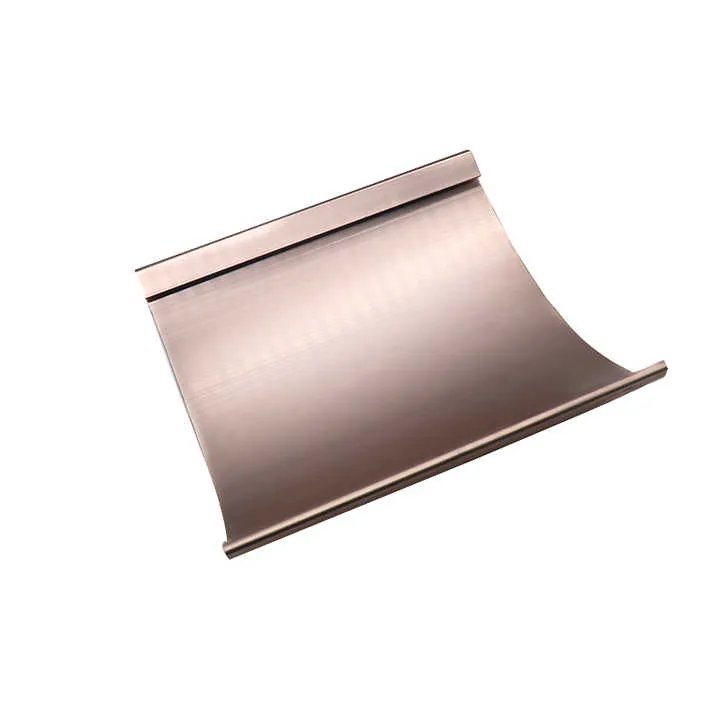
Key aspects of the feed material
- The alloy choice determines mechanical properties, finish capability, corrosion resistance and machinability. For example, 6063 is very common for profiles; 6061 is stronger but harder to extrude.
- Billets are cast and then often undergo surface cleaning, inspection and may be homogenised to even out composition and structure (more on that next).
- The size, shape and condition of the billet matter: uniform temperature, minimal defects, correct length and diameter consistent with the press and container used.
- For your business (supplying 10 mm–400 mm profiles), using the right alloy and high‑quality billet means fewer defects, better finish and consistent dimensions.
The extrusion feed material is always molten aluminum.False
In extrusion the billet is solid (though heated) and pushed through a die; it is not in molten form during extrusion.
Choosing an extrusion‑grade aluminum alloy ensures better finish, strength and consistency in the extruded profiles.True
Alloy specification impacts flow, finish, heat treatment behaviour and overall quality.
Why is homogenization used before extrusion?
Once the billet is cast, it may not have uniform composition or internal structure. That’s where homogenization comes in.
Homogenisation is used before extrusion to even out the chemical composition, soften or eliminate casting stress, refine intermetallic phases and ensure the billet will flow consistently through the die.
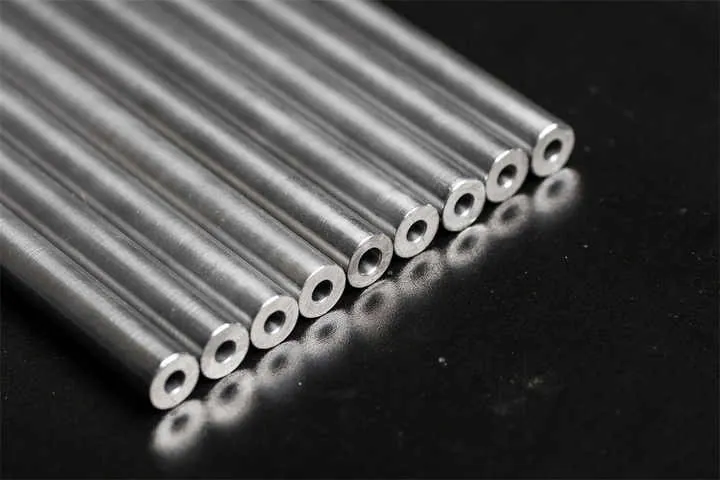
What homogenization addresses
- After casting, the billet can have segregation (areas richer in Mg, Si, Fe, etc.), large intermetallics, variable grain structure. Homogenising at high temperature for a period allows diffusion to reduce segregation and refine phases.
- For example, one aluminium extrusion industry article states that homogenisation “refines the iron‑bearing intermetallics and redistributes magnesium and silicon” which improves extrusion speed, reduces defects and improves mechanical properties.
- Without proper homogenisation, billets may require more force to extrude, may show surface defects (for instance streaks after anodising), and may have weaker mechanical properties.
Why this step matters for your profiles
Since you provide custom aluminium profiles with finish treatments and export globally, you need profiles that come out consistent, with minimal surface defects and reliable mechanical specs. If the billet is poorly homogenised, finish quality declines and downstream costs increase.
Homogenization of the billet improves the uniformity of alloying elements and improves extrusion performance.True
Better homogenised billets flow more uniformly, reduce die wear, and produce better quality extrusions.
Homogenization is optional and has little effect on extrusion quality for standard profiles.False
Skipping homogenisation often leads to higher defects, uneven flow and inconsistent material properties.
Where do quality checks occur in production?
Quality control is built into multiple stages of the extrusion manufacturing process. Without checks, even a well‑designed profile may fail downstream.
Quality checks occur at the billet/pre‑heat stage, during die setup and extrusion, after cooling/stretching, at the cut‑to‑length stage, and again after finishing or tempering.

Where and what is checked
- Billet inspection: verifying alloy composition, verifying surface and internal soundness of the billet (no cracks, porosity or large internal defects).
- Die and press setup inspection: confirming die geometry matches specification, ensuring container alignment, checking press force/tonnage and temperature controls.
- During extrusion: monitoring extrusion speed, surface finish of the emerging profile, temperature of the exit, profile dimensions (wall thickness, section shape).
- After cooling/stretching: measuring straightness, checking for warpage or bow, verifying dimensional accuracy and removing any twists or deviations.
- Cut and final inspection: after cut‑to‑length, inspect end‑squareness, surface finish, correct length, burrs. After heat‑treatment or surface finish, inspect for corrosion resistance, anodise quality, powder coat adhesion.
- Finishing/packaging: final check for packaging integrity, protection of surfaces, correct labeling for export.
Why this matters for your business
As a supplier of customized extrusions, offering certificates of inspection, documentation of finishing check and traceability adds value to your customers. It reduces their risk in downstream assembly or installation, whether for solar frames, architectural profiles or industrial modules.
Quality inspections in extrusion only occur after cutting to length.False
Inspections must occur throughout the process, including billet, tooling, extrusion, cooling, trimming and finishing.
Measuring profile straightness after stretching and cooling helps ensure parts meet assembly‑ready specifications.True
Checking straightness at that stage ensures the profile will fit in downstream applications without costly adjustments.
Can thermal treatment strengthen extrusions?
After the profile is extruded and cooled, there are heat‑treatments that improve strength, dimensional stability and final performance.
Yes — thermal treatment (such as solution heat‑treatment, quenching and ageing) can significantly strengthen extruded aluminum profiles, improve mechanical properties, and enable premium applications.

How thermal treatment works
- For alloys like 6000‑series, after extrusion the profile may be quenched and then artificially aged (T5, T6 temper) to precipitate strengthening phases (for example Mg₂Si) and improve tensile strength.
- The correct schedule (temperature, time) influences final strength, elongation and surface finish quality.
- Thermal treatment also helps relieve residual stresses from extrusion, enhancing straightness and reducing distortion in long profiles.
- For high‑performance parts, fully heat‑treated profiles deliver much better mechanical performance than as‑extruded only.
What this means for your offerings
Given your product range (10 mm to 400 mm profiles, various surface finishes), offering heat‑treated extrusions means you can supply to more demanding sectors (automotive, aerospace, structural) and premium markets. You can state strength levels, temper conditions and guarantee performance for critical applications.
Heat‑treating extruded aluminum always doubles its strength compared to as‑extruded condition.False
While heat treatment significantly increases strength in some alloys, the exact increase depends on alloy, cross‑section, temper and process.
Proper ageing and tempering of aluminum extrusions enhance mechanical performance and suitability for structural applications.True
Artificial ageing precipitates strengthening phases and improves performance for structural use.
Conclusion
From preparing the right alloy and billet to homogenising, controlling quality checks throughout production, and applying thermal treatments for strength, the making of aluminum extrusions is a multi‑stage process. Knowing each step helps you as a supplier ensure high quality, competitive performance and global readiness for your custom extruded profiles.


