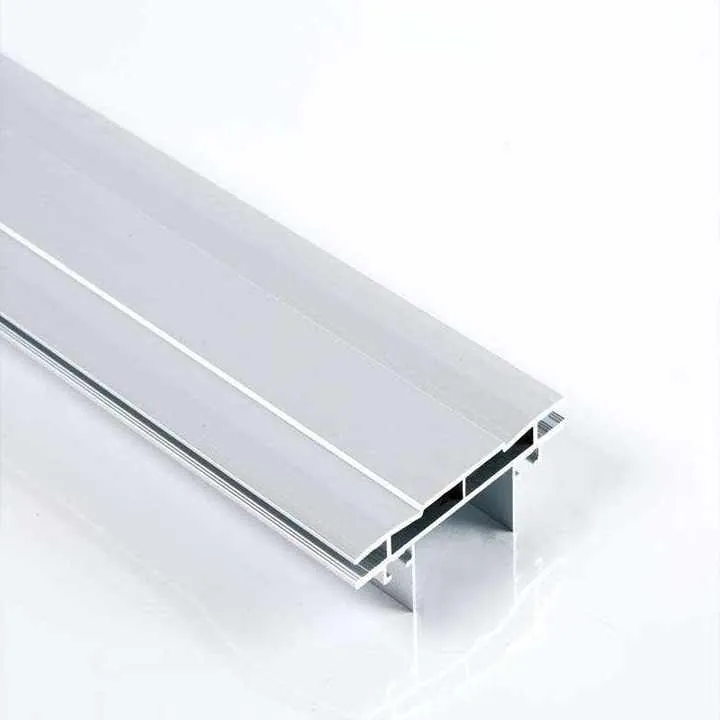
what is extrusion aluminum profile?
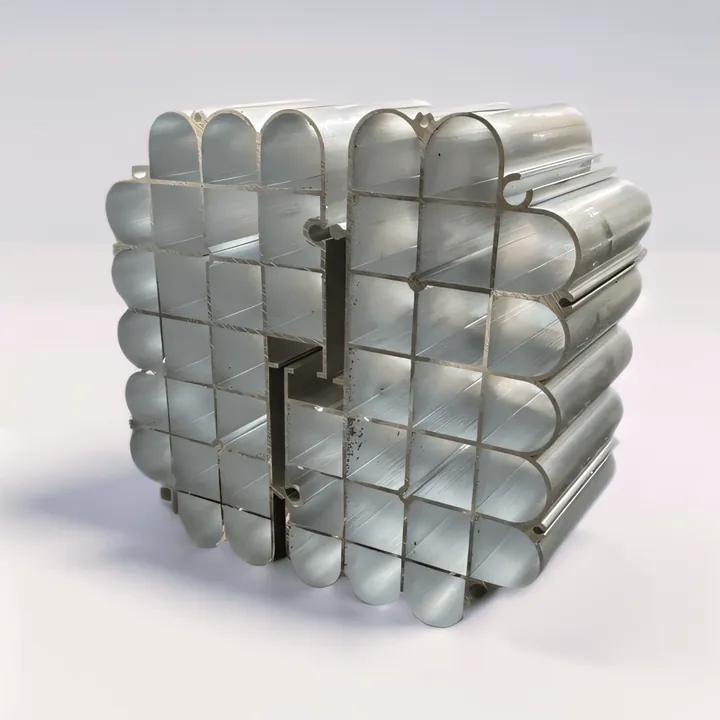
Ever seen an aluminum frame and wondered how it’s made? An extrusion aluminum profile is that shaped metal component, crafted to specific cross‑sections through a precise process.
An extrusion aluminum profile is a long piece of aluminium that has been forced through a shaped die to create a constant cross‑section form, used widely in construction, industrial framing and custom assemblies.
We will explore how these profiles are manufactured, why their geometry matters, where they serve structural roles, and how they integrate accessories to add value.
How are aluminum profiles manufactured?
Picture hot aluminium being squeezed through a mould to come out as the shape you want—this is extrusion manufacturing.
Aluminum profiles are manufactured by heating a billet, forcing it through a shaped die or tooling, then cooling, stretching and finishing the profile to meet dimension, strength and surface requirements.
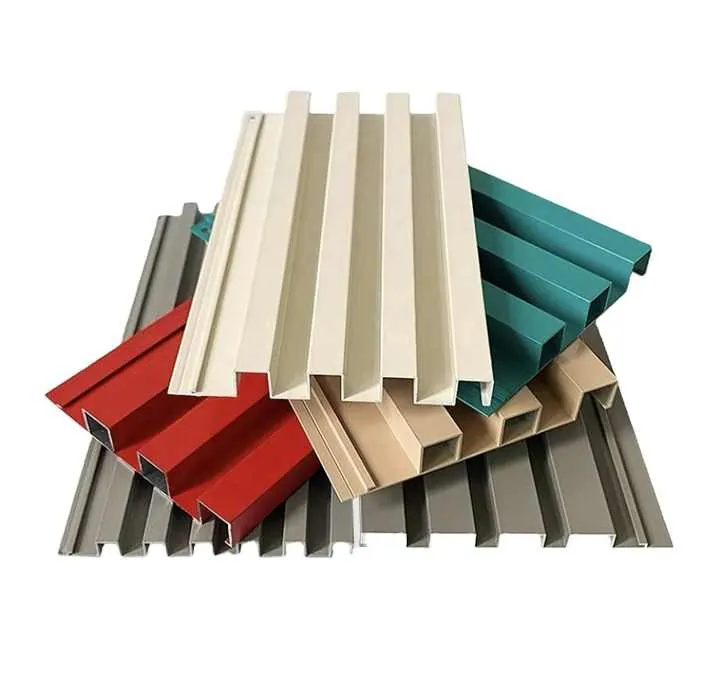
The manufacturing of extrusion aluminium profiles begins with choosing the correct aluminium alloy and preparing the billet. The billet is heated to a malleable temperature (for example around 750‑900°F per some sources). Once the billet is ready, it is forced through a precision‑machined steel die. The shape of the die directly determines the cross‑section of the profile. After the metal emerges from the die, it is cooled—either air cooled or water quenched—to solidify the shape and help retain properties. The profile is then stretched to straighten and relieve internal stresses, ensuring dimensional accuracy. Next it is cut to length. At this stage any secondary operations—like machining, punching, drilling—may be applied. Finally, finishing steps like anodizing, powder coating, or other surface treatments improve aesthetics and durability.
In practice, the manufacturing process needs to match several parameters: billet quality, die design, extrusion speed, cooling rate, and finishing. Each of these can influence the final properties. For example, poor billet quality can introduce internal defects; a complex die shape may make flow and cooling more difficult; improper cooling might change mechanical properties. As a manufacturer, I have seen that careful process planning and tooling maintenance are critical to ensure consistent extrusion profiles.
| Manufacturing Step | Key Control Factors | Why It Matters |
|---|---|---|
| Billet selection & heating | Alloy choice, temperature uniformity | Affects flow, strength, internal defects |
| Extrusion through die | Die shape, ram speed, pressure | Determines profile geometry and internal flow |
| Cooling & stretching | Cooling rate, straightening | Affects dimensional accuracy and mechanical state |
| Secondary machining | Cutting, punching, CNC operations | Adds value, but must preserve integrity |
| Surface finish | Anodize, powder coat, mechanical finish | Affects appearance, corrosion resistance |
The die shape alone fully determines the quality of the aluminium extrusion profile.False
While die shape is critical, quality also depends on billet, temperature, flow, cooling and finishing.
After extrusion, the aluminium profile must be stretched or straightened to guarantee dimensional accuracy.True
Stretching corrects distortion and aligns the profile to required dimensions.
Why profile geometry impacts performance?
The shape of an aluminium profile might look simple, but the geometry deeply affects how it behaves under load or when assembled.
Profile geometry — including wall thickness, web structure, hollows, ribs and overall cross‑section shape — strongly impacts the structural, thermal and assembly performance of aluminum extrusions.

When designing an extrusion aluminium profile, geometry is more than aesthetics. The cross‑section determines how the profile resists bending, torsion, compression and shear. For example, a hollow section with internal webs reduces weight while maintaining stiffness, but if the wall thickness is too thin or the geometry leads to stress concentrations, performance suffers.
Profiles with more complex shapes allow for weight savings, integrated channels, or multi‑void designs—but these also challenge manufacturing (flow and weld lines) and assembly (fitment, finishing). In the industrial framing world (e.g., T‑slot aluminium framing systems) this is well known: length, slot dimension, web thickness all affect how components join and load share.
Geometry also affects thermal and acoustic behaviour. For building applications, thicker sections or those with internal fins may serve as thermal break or stiffeners. The external aesthetics and final finish can also depend on geometry – thin fins may get distorted during finishing.
From a practical perspective, when I work with clients who need load‑bearing structural aluminium profiles (for example in solar mounting systems, machine frames, or architectural façade systems), I stress that early geometry decisions matter: areas of high stress must be supported, webs must be sized for flow and weld during extrusion, internal hollows must allow for joining or fasteners later. Poor geometry may lead to deflection, vibration, fatigue or difficulty in machining or finishing later.
Key geometry factors
- Wall thickness and uniformity: Thicker and uniform walls improve strength; thin walls may warp or deflect.
- Internal hollows and webs: These reduce weight and allow internal channels for fasteners but must maintain integrity.
- Ribbing and stiffeners: Add stiffness and control deflection but add complexity to extrusion.
- Shape symmetry and load path: Asymmetry may lead to uneven deflection or torsion under load.
- Slot/channels for accessories: T‑slots or grooves must be dimensionally accurate for assembly compatibility.
| Geometry Feature | Performance Benefit | Drawbacks / Considerations |
|---|---|---|
| Thick walls & simple shape | High strength, easy manufacturing | Higher weight, more material cost |
| Hollow sections & webs | Weight reduction, internal channels | Harder to extrude, risk of voids or weld lines |
| T‑slots/grooves for accessories | Modular assembly, versatile connections | Tight tolerances required, may reduce wall thickness |
| Complex ribs/stiffeners | Enhanced stiffness and stability | Increased die cost, manufacturing complexity |
A thicker aluminium profile always ensures better structural performance.False
While thickness helps, geometry, material quality, finishing and joining all affect performance.
Including internal hollows and ribs in a profile improves strength‑to‑weight ratio and supports assembly functionality.True
Internal hollows reduce weight, ribs add stiffness and allow for integration of channels or fasteners.
Where profiles serve structural roles?
Profiles aren’t just decorative—they often form the backbone of structures, from buildings to machinery frames.
Aluminium profiles find structural roles in applications such as building façades and curtain walls, machine and automation frames, solar mounting systems, window and door systems, and industrial frameworks where lightweight, corrosion‑resistant strength is required.

The structural roles of extrusion aluminium profiles span multiple industries and scales. In architecture and construction, profiles serve as window frames, curtain wall mullions, railings and façade systems. In industrial & manufacturing settings, aluminium profiles form machine bases, guarding systems, modular workstations, robot frames, and automation structures. The modular T‑slot framing systems are a good example where profiles provide both structural integrity and assembly flexibility.
Solar mounting systems are another structural role. The profile must support panels, resist wind and snow loads, connect to roof or ground structures, and provide durability in outdoor conditions. In such use cases, the alloy, temper, finish, design geometry and joining method matter.
As part of a supplier perspective, when I engage with clients in the field of architectural or structural aluminium systems, I emphasise the following:
- Load and service conditions: Are the profiles supporting dead loads, live loads, dynamic loads (vibration), or a combination? The design must match.
- Jointing and connection details: Structural profiles may be bolted, welded or riveted. The profile geometry must accommodate fasteners, slots or insertion channels.
- Durability: For exterior applications, finish and corrosion resistance (anodizing, powder coating) matter. The profile must maintain integrity under weather, UV, temperature changes.
- Certification and building codes: Structural profiles often must meet standards (e.g., building load codes). Ensuring the profile design and alloy selection meet mechanical properties is crucial.
| Application Area | Role of the Profile | Key Design Considerations |
|---|---|---|
| Building & Façade systems | Support panels/windows, façade loads | Alloy strength, corrosion resistance, finish |
| Machine framing & automation | Frame, support, guide equipment | Precision, modularity, load path, vibration control |
| Solar mounting systems | Mount panels, resist environmental loads | Geometry for rails, fastening, environmental durability |
| Window & door systems | Frame and support sashes, structural glazing frames | Thermal break, weather sealing, structural support |
Aluminium extrusion profiles are rarely used in structural applications because they lack strength compared to steel.False
Aluminium profiles are widely used in structural roles due to good strength‑to‑weight ratio, corrosion resistance and versatility.
Machine frames using aluminium T‑slot profiles rely on the profile geometry and assembly features to provide structural integrity.True
T‑slot profiles combine structural aluminium geometry with modular assembly features to support machine framing roles.
Can profiles integrate accessories?
Yes — aluminium profiles often come with slots, grooves, channels or modular systems to integrate accessories like fasteners, covers, connectors and even electronics.
Extruded aluminium profiles can integrate accessories by design: T‑slots and grooves enable insertion of nuts, bolts, connectors; channels allow wiring or lighting modules; custom features enable joining, snap‑fit, covers and modular attachments.
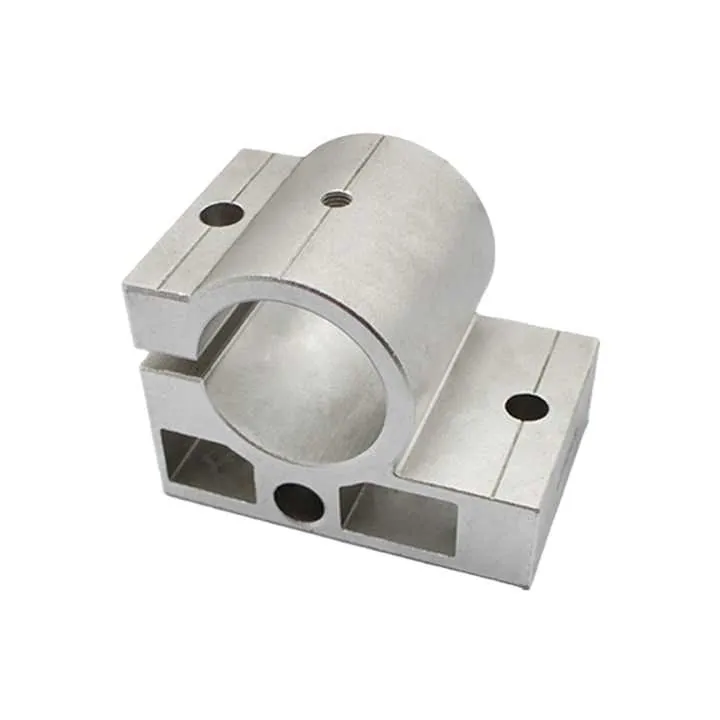
One of the great advantages of extrusion aluminium profiles is their ability to incorporate functional features during the die design. For example, T‑slot profiles allow slide‑in nuts and bolts, making assembly fast and modular. Channels or grooves can house wiring, LED strips or thermal management components. Profiles can include cavities for insulation or thermal break in façade applications. In industrial contexts, profiles can come pre‑punched, cut to length, with machined mounting holes to accept joining hardware. The secondary operations can be completed after extrusion: drilling, tapping, bending, welding etc.
From a practical manufacturing standpoint, when a client wants a profile that “integrates accessories”, I advise:
- Design features must be part of die design: if you need a groove for wiring or clip‑in fastener, it must be included ahead and tolerated for finishing.
- Tolerances matter: accessory fit (e.g., nuts, connectors) requires tight dimension control; machining post‑extrusion may be required.
- Finishing compatibility: if accessories slide into the profile, the surface finish, burrs, and anodizing must permit smooth fitment.
- Modular systems: In the framing systems market, aluminium profiles plus accessories (brackets, panels, connectors) create a system rather than a single part. This increases value and flexibility.
| Feature Type | Purpose | Considerations |
|---|---|---|
| T‑slot / groove | Modular assembly, sliding fasteners | Die complexity, slot tolerances |
| Wiring or cable channel | Hide wiring, LED strips, internal components | Size of channel, finish access |
| Mounting holes/pre‑punching | Ready for connectors, brackets, panels | Secondary operations cost, hole tolerances |
| Snap‑in or clip channels | Covers, glazing beads, decorative panels | Fit of clip, finishing surface |
Aluminum profiles cannot integrate wiring or LED modules because extrusion only handles basic shapes.False
Extruded profiles commonly include channels or grooves designed for wiring or LED modules, allowing integration.
Including T‑slots and grooves in a profile enhances its versatility for accessories and assembly.True
T‑slots and grooves support modular attachments, connectors and accessories, improving flexibility and value.
Conclusion
In short, extrusion aluminium profiles are versatile, shaped metal components produced by forcing heated aluminium through dies, with geometry that directly affects performance, used widely in structural applications, and capable of integrating accessories to enable modular, value‑added solutions.