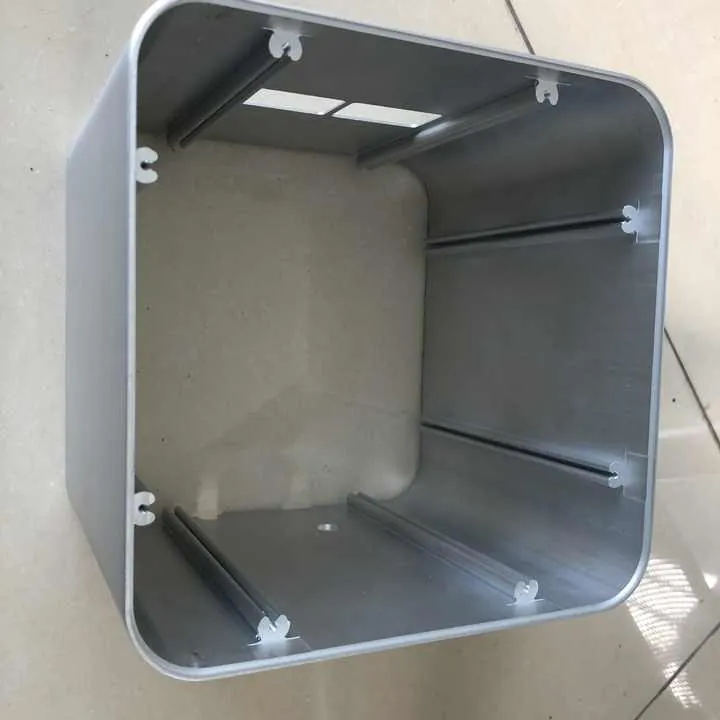
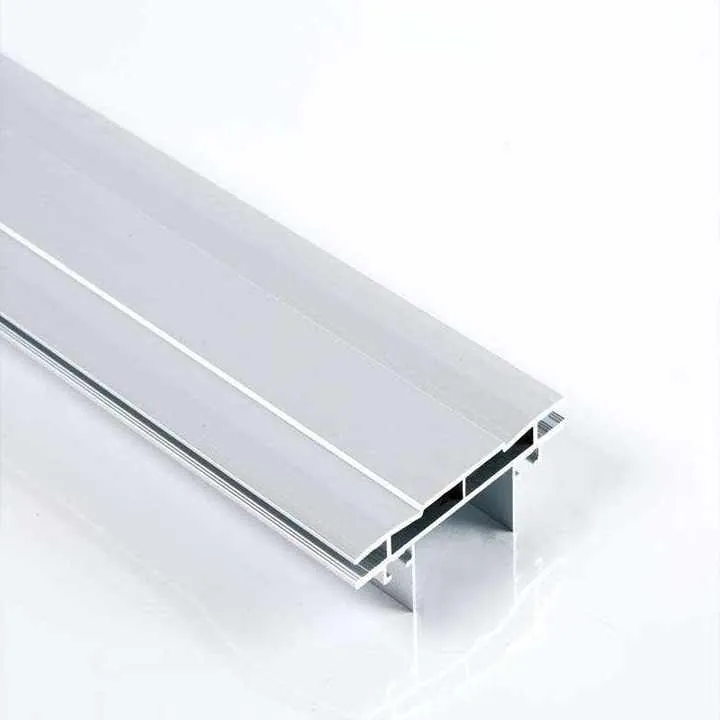
What is aluminum extrusion manufacturing?

Struggling with complex shapes and high precision? Aluminum extrusion manufacturing solves that by forcing heated aluminum through a die to get custom profiles.
Aluminum extrusion manufacturing is the process of taking a heated but solid aluminum billet, then applying pressure to push it through a shaped die to form continuous profiles with a specific cross‑section.
Now that you know the basic idea, let’s dig into how the process actually works step by step, why heating the billet matters, where the shaping happens during pressing, and how automation can improve production quality.
What steps form the extrusion process?
Imagine dough being squeezed through a shaped opening — that is essentially how extrusion works. The aluminium is prepared, pushed, then finished.
The extrusion process typically includes die preparation, billet heating, loading into the press, pressing through the die, quenching, stretching, cutting and finishing.
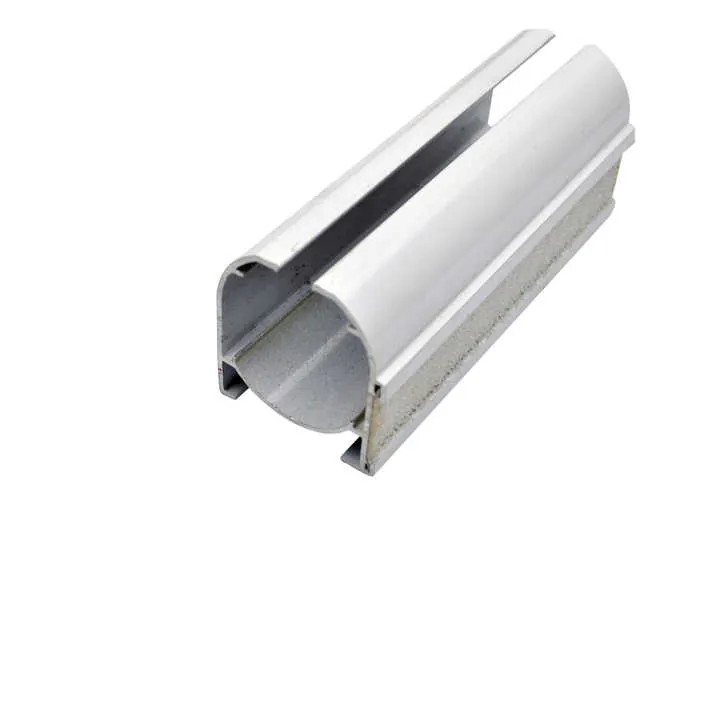
To understand the full manufacturing chain of aluminum extrusion, let’s break down each major step, and what each one contributes to final product quality.
1. Die preparation
First, the die is machined to match the desired profile of the extrusion. The design might include solid, hollow or semi‑hollow shapes. The die itself must be heated in many cases, to ensure aluminium flows well and to extend die life. Tooling around the die (such as supporting rings, backers, bolsters) is also critical: under the high pressures of extrusion they must hold shape and alignment.
2. Billet heating and preparation
A billet is a solid aluminium block (often cast and homogenised) that is cut to size for extrusion. It is heated to a high but non‑melting temperature (for aluminium alloys this is often 400‑500 °C or more) so the material becomes malleable but still solid. Heating helps reduce the force required to extrude and ensures good flow and quality in the final product.
3. Loading and lubrication
The heated billet is transferred into the container of the extrusion press (often with a dummy block between the ram and billet). Lubrication or release agents may be applied to reduce friction between the billet, stem/ram and container.
4. Pressing through the die (extrusion)
Here the hydraulic (or mechanical) ram pushes the softened billet through the die opening with very high pressure. For aluminium, typical billet pre‑heat might be over 375 °C and presses can exert thousands of tons of force. As the material flows through the die, it takes the exact cross‑section of the die.
5. Quenching / cooling
Immediately after exit from the die the profile is cooled (quenched) to fix its shape, refine microstructure, reduce warping, and improve mechanical properties. Rapid cooling helps prevent undesirable deformation while still hot.
6. Stretching and straightening
Even with quenching, the extruded profiles may twist or warp due to internal stresses. Thus stretching machines pull the profile to straighten it and ensure dimensional consistency.
7. Cutting and finishing
The profile is cut to the required length, aged or heat treated if needed (to achieve T5, T6 tempers etc), and surface treatments or downstream operations may follow (anodising, machining, packaging).
Table: Summary of steps
| Step # | Description | Purpose |
|---|---|---|
| 1 | Die preparation | Shape design & tooling readiness |
| 2 | Billet heating & prep | Make aluminium malleable, reduce force |
| 3 | Loading & lubrication | Ensure smooth transfer & extrusion start |
| 4 | Pressing through die | Form final cross‑section profile |
| 5 | Quenching / cooling | Stabilise shape & properties |
| 6 | Stretching / straightening | Remove distortions, ensure tolerance |
| 7 | Cutting & finishing | Final part length + surface/heat treatment |
The extrusion process starts with die preparation and ends with finishing operations like cutting and treatment.True
Yes, a typical aluminium extrusion manufacturing chain proceeds from tooling (die) preparation, billet heating, extrusion, cooling, stretching, cutting and finishing, as described above.
If the billet is heated to melting point, the extrusion process will produce high quality profiles.False
Billets are heated to soften them but must remain solid; melting the billet would destroy extrusion integrity and is not how standard aluminium extrusion is done.
Why billet heating is required?
If you try to squeeze cold aluminium through a die, you’d need enormous force and likely get defects. Heating the billet solves that.
Billet heating is required to soften the aluminium alloy so it can flow through the die under high pressure, reduce required force, minimise defects and ensure consistent extrusion.

Let’s unpack in more depth why heating the billet is a crucial part of the extrusion manufacturing process, and what the key considerations are.
Material science perspective
Aluminium alloys have a certain temperature‑dependent plasticity. At lower temperatures the metal shows more strength and less ductility, making it harder to deform. By heating the billet to a temperature well above ambient – typically several hundred degrees Celsius – the internal structure becomes more malleable, reducing resistance to flow. However, the billet must remain solid — you are not melting it. Alloy integrity is maintained and solid‑state deformation is used.
Why force reduction matters
Because extrusion involves applying enormous pressure (hundreds to thousands of tonnes) to push the metal through the die, anything that reduces required force is beneficial. Heating the billet reduces yield strength, helps the aluminium deform more uniformly, improves flow through the die, reduces wear on the tooling and container, and lowers energy cost.
Flow and surface quality
When the billet is properly heated, the aluminium flows smoothly around die features (especially complex shapes, hollow sections, ribs etc). Poor heating can cause uneven flow, surface defects, tearing, or internal voids. The die may experience higher friction or wear. Good heating ensures that the extrusion emerges in the right shape, with good surface finish and free from internal defects.
Controlling heating is key
It is not simply “heat as much as possible”. Over‑heating may cause grain growth, reduce mechanical properties, or cause oxidation/skin issues. Also, heating must be uniform across the billet to avoid hot/cold zones, which can lead to uneven flow or surface problems. The container and billet often need to be at matched/controlled temperatures; tooling may also be preheated.
Operational and cost implications
From a manufacturing perspective, proper billet heating means shorter extrusion times, less scrap, fewer rework operations (straightening, cutting) and better overall equipment efficiency. It ties into downstream processes (cooling, stretching) since less residual stress means easier straightening and better dimensional accuracy.
Table: Heating considerations
| Factor | Effect of proper control |
|---|---|
| Billet temperature | Affects flow resistance, tool wear |
| Uniformity | Reduces defects, ensures even extrusion |
| Heating cost & time | Impacts cycle time and energy consumption |
| Tooling match | Die and container temperature must align |
| Alloy type | Higher strength alloys often need higher temp |
Billet heating is unnecessary if the aluminium alloy has been cast and aged before extrusion.False
Even if cast and aged, the billet must still be heated to the appropriate temperature for extrusion so that it becomes malleable enough to flow; skipping heating would lead to high forces and defects.
Proper billet heating reduces tooling wear and helps achieve better surface quality of extrusions.True
Yes — proper heating reduces extrusion force, friction and uneven flow, which in turn reduces tool wear and improves surface finish and profile quality.
Where shaping occurs during pressing?
The “magic” of extrusion happens when the aluminium is forced through the die — that’s where the cross‑section is formed and the material takes its final shape.
Shaping occurs inside the die (and associated tooling) during the pressing phase: the billet is forced through the die opening and container, and emerges as the extruded profile that matches the die geometry.

Let’s explore in more detail how and where the shaping of the aluminium profile takes place within the extrusion press, the tooling involved, and what factors affect final geometry.
Tooling components in the shaping zone
When the billet is loaded into the container and the ram begins to apply pressure, the aluminium starts to fill the walls of the container and to press forward towards the die. The tooling includes:
- Container
- Dummy block / stem
- Die (die cap/plate and mandrel if hollow)
- Support tooling
Flow of aluminium and shape formation
As pressure builds, the softened billet expands to press against the container walls, and eventually flows through the die opening(s). The die geometry determines the cross‑section of the extruded profile.
Inside the die, flow must be uniform so that all sections of the profile exit at the same speed and with consistent shape. Uneven flow causes defects, warping or dimensional inaccuracies. Designers consider die bearing length, flow channels, feeder geometry, and material velocity profiles.
Pressure, temperature and deformation
The extrusion press must apply sufficient pressure to force material through the die. The aluminium is still solid but softened by heating; the deformation occurs under high pressure (solid‐state flow). The billet does not melt. The deformation causes grains to reshape and align, and correct cooling ensures final mechanical properties.
After exiting the die: the profile
Once the aluminium exits the die it is essentially in final shape (cross section). But it still may be hot, workable and under internal stress. So the next steps (quenching, stretching, cutting) are needed to preserve the shape, stability and dimensions.
Table: Key shaping factors and their effects
| Factor | Effect on shaping |
|---|---|
| Die geometry (openings) | Determines profile cross‑section |
| Bearing length | Affects material velocity & uniformity |
| Flow channels/feeders | Impacts how metal fills die & avoids dead zones |
| Mandrel/support tooling | Required for hollows/complex profiles |
| Press tonnage | Determines maximum size and complexity |
Shaping of the extrusion profile takes place only after the cooling and stretching operations.False
No — the primary shaping occurs when the aluminium is pressed through the die; cooling and stretching follow to stabilise and refine shape but do not form the cross‑section.
The die and tooling design are critical to achieving accurate profile cross‑sections and avoiding defects.True
Yes — correct die geometry, support tooling, flow channels etc directly influence final shape accuracy and quality of the extrusion.
Can automation improve production quality?
In today’s manufacturing, manual operations often introduce variability. Adding automation brings consistency, speed and better traceability to aluminium extrusion production.
Yes — automation (including robotics, sensors, AI/IIoT, closed‑loop controls) can significantly improve production quality in aluminum extrusion by reducing human error, improving repeatability, enabling real‑time monitoring, lowering scrap and ensuring tighter tolerances.

Let’s explore how automation can elevate extrusion manufacturing, what benefits it brings specifically in the context of aluminium extrusion, and what challenges might need to be managed.
What automation means for extrusion manufacturing
Automation in the aluminium extrusion industry can involve:
- Robotic billet handling
- Automated transfer of profiles
- Inline sensors
- Real‑time control systems
- Data logging and analytics
Benefits to quality
- Repeatability and consistency
- Reduced scrap and defects
- Tighter tolerances
- Improved traceability
- Efficiency and throughput gains
- Tooling and maintenance optimisation
Challenges and considerations
- Initial investment
- Process integration
- Data management and skillsets
- Flexibility vs. standardisation
- Quality focus beyond automation
Table: Automation features vs. production quality impact
| Automation Feature | Quality Impact |
|---|---|
| Robotic billet loading/unloading | Fewer handling errors, consistent billet condition |
| Inline temperature/pressure sensors | Real‑time stability, fewer defects, better material flow |
| Closed‑loop control of press | Maintains optimal settings, less variability |
| Data analytics & traceability | Quick root‑cause of quality issues, better QA |
| Automated cooling/stretching/cutting | Reduced human error in downstream operations |
Automation in aluminium extrusion helps reduce scrap rates and improve dimensional consistency.True
Yes — automation enables more precise, consistent operations and real‑time monitoring, which helps reduce scrap and improve consistency of dimensions.
Automation can eliminate the need for skilled operators in extrusion manufacturing.False
No — while automation reduces manual tasks and errors, skilled operators/engineers are still needed for process setup, analysis, tool design, maintenance and quality control.
Conclusion
In aluminium extrusion manufacturing we push prepared aluminium billets through shaped dies to produce customised profiles. Heating the billet is essential to enable smooth flow, correct shaping, and quality output. The core shaping occurs in the press tooling where the die defines the profile. Automation further amplifies production quality by bringing stability, repeatability and data‑driven control to the production chain. By understanding each of these elements you can better specify, evaluate and collaborate with your extrusion supplier for optimal results.