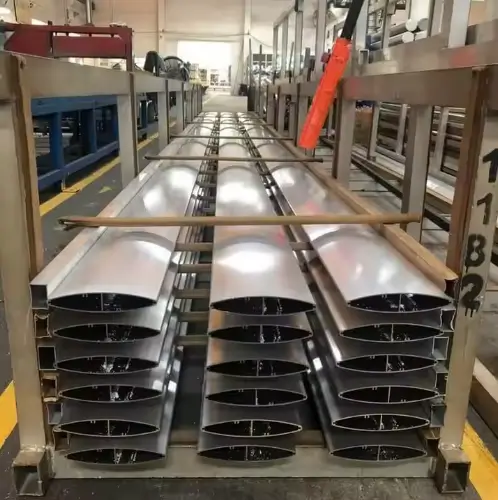
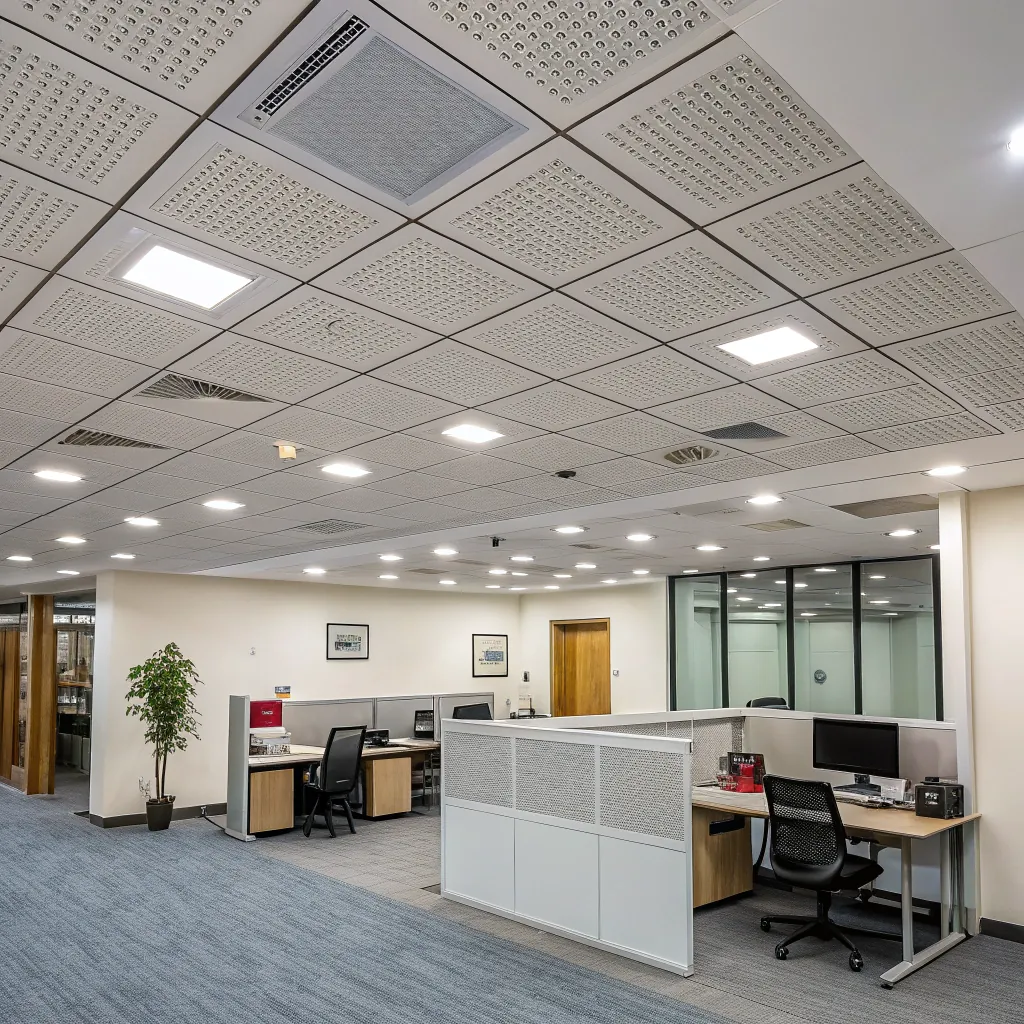
Обмеження легкої конструкції алюмінієвого профілю?

Many projects push for lighter aluminum profiles to cut cost and improve efficiency. But weight reduction often goes too far and creates hidden risks. Designers face failure, rework, and safety concerns when limits are ignored.
Aluminum extrusion lightweight design has clear limits defined by strength, stability, process control, and real application loads. Ignoring these limits leads to bending, cracking, and early product failure.
Lightweight design is not about removing as much material as possible. It is about finding the safe balance between weight, strength, and long-term performance.
What limits apply when reducing profile weight?
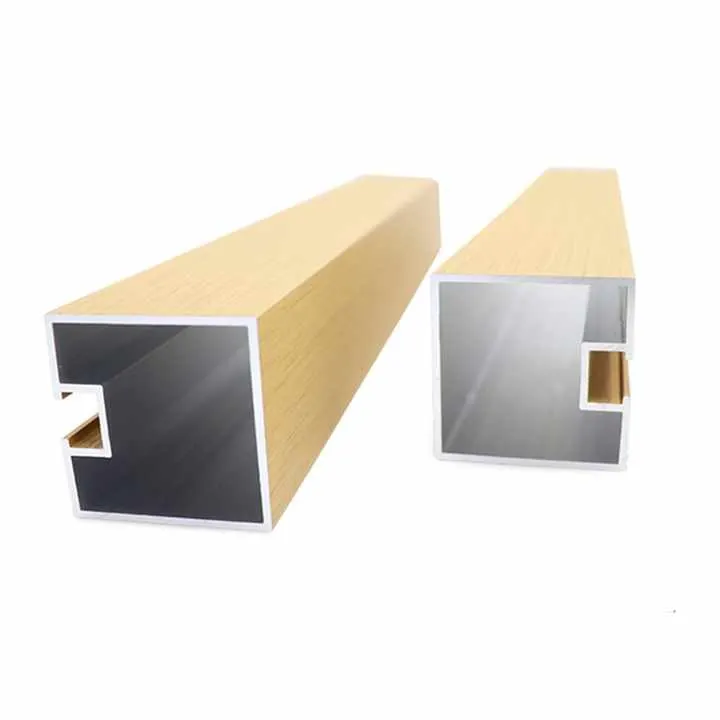
Weight reduction feels simple at the drawing stage. But real limits appear once profiles enter production and use.
Profile weight reduction is limited by wall thickness, extrusion flow, dimensional stability, and defect risk. These limits protect basic manufacturability and safety.
Reducing weight always changes how aluminum flows and cools during extrusion. When limits are crossed, quality becomes unstable.
Wall thickness limitations
Wall thickness is the first hard limit. Very thin walls increase extrusion difficulty and scrap rate. During extrusion, aluminum must flow evenly through the die. If walls are too thin, flow becomes uneven.
Thin walls also cool faster. This causes internal stress and distortion. After aging, profiles may twist or bow. These defects increase straightening cost and reduce yield.
In real production, minimum wall thickness depends on profile width, alloy, and press size. Designs that ignore this reality often fail mass production.
Extrusion flow balance
Lightweight designs often remove internal ribs or reduce cross section. This changes metal flow paths. Uneven flow creates surface lines, die marks, and size variation.
Balanced flow requires material in the right places. Removing too much material breaks this balance. Even strong alloys cannot fix flow imbalance.
Стабільність розмірів
As weight drops, stiffness drops faster. Profiles with thin walls lose shape under their own weight. During cutting, packing, and transport, deformation increases.
Dimensional instability causes assembly problems later. Profiles may not fit fixtures or connectors.
Production yield impact
Lightweight designs often increase scrap. More rejects mean higher real cost, even if material weight is lower.
| Limitation Area | Impact When Exceeded |
|---|---|
| Товщина стінок | Cracking, distortion |
| Баланс потоку | Дефекти поверхні |
| Жорсткість | Bending, warping |
| Yield | Higher scrap rate |
Profile weight reduction is limited by wall thickness, metal flow balance, and dimensional stability.Правда.
These factors control manufacturability and shape control.
Profile weight can always be reduced as long as alloy strength is high.Неправда.
Even strong alloys fail if walls are too thin or flow is unstable.
How does design affect load-bearing ability?
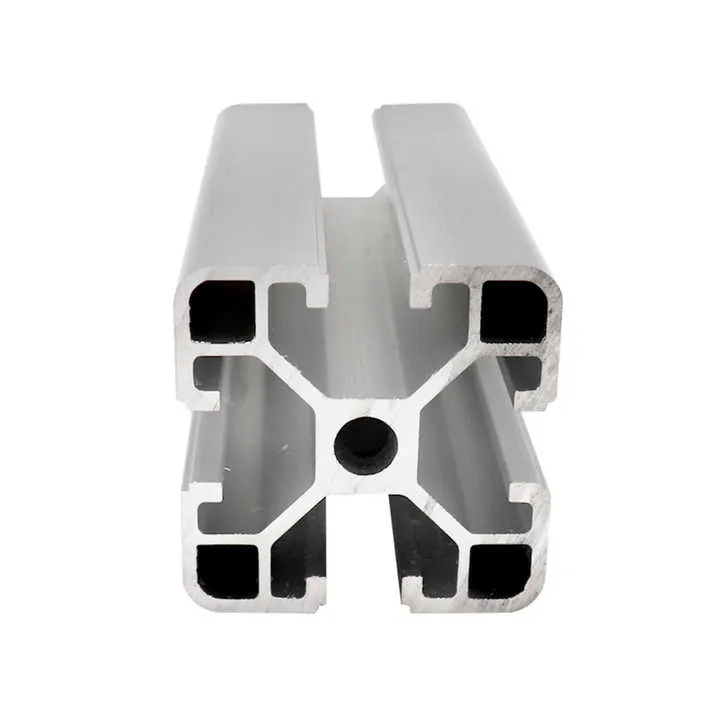
Many lightweight designs pass visual checks but fail under real loads. Load-bearing ability depends more on shape than total weight.
Design geometry directly controls bending resistance, buckling risk, and load distribution. Poor geometry weakens profiles even if material strength stays the same.
Weight reduction must respect structural mechanics.
Section modulus matters
Load-bearing ability depends on section modulus. Removing material near the outer edges reduces stiffness sharply. Removing material near the center has less impact.
Designs that thin outer walls to save weight often lose bending strength first. This leads to visible sagging under load.
Buckling risk increases
Thin walls increase buckling risk under compression. Profiles used in frames, racks, or supports face axial loads. Lightweight designs with long unsupported spans buckle easily.
Buckling often happens suddenly. There is little warning before failure.
Load path disruption
Good designs guide load through continuous paths. Lightweight designs sometimes remove ribs or webs that support load transfer.
This creates stress concentration. Cracks often start at these points, especially under cyclic load.
Real-world loading conditions
Design calculations often assume ideal loads. In real use, loads shift, vibrate, and impact. Lightweight designs have less margin to absorb these changes.
Profiles that barely meet static load limits may fail early in dynamic use.
| Вибір дизайну | Effect on Load |
|---|---|
| Thin outer walls | Sharp stiffness loss |
| Removed ribs | Stress concentration |
| Long spans | Buckling risk |
| Гострі кути | Crack initiation |
Profile geometry has a greater effect on load-bearing ability than total weight alone.Правда.
Shape controls stiffness and stress distribution.
If a profile meets static load calculation, dynamic loads are not a concern.Неправда.
Dynamic loads often exceed static assumptions.
Can lightweight profiles meet industry strength needs?

Many buyers worry that lightweight profiles are weak. This is not always true. But meeting industry needs requires careful limits.
Lightweight aluminum profiles can meet industry strength needs when design, alloy, and application are aligned. Problems appear when weight reduction ignores real use cases.
Lightweight does not mean fragile. It means optimized.
Role of alloy selection
Stronger alloys allow thinner sections. But alloy choice affects extrusion difficulty, surface quality, and cost.
High-strength alloys often reduce corrosion resistance or extrusion speed. Designers must balance these trade-offs.
Application-specific strength needs
Different industries define strength differently. Construction focuses on safety margin and long-term load. Automation focuses on stiffness and precision. Transport focuses on fatigue resistance.
A lightweight profile that works in one industry may fail in another.
Safety factors cannot disappear
Lightweight design often reduces safety margin. But safety factors exist for a reason. Temperature changes, misuse, and wear reduce real strength over time.
Designs that remove safety margin often fail after years, not weeks. These failures are costly and hard to trace.
Testing and validation
Lightweight designs need testing, not assumptions. Load tests, fatigue tests, and assembly trials reveal weaknesses early.
Skipping testing saves time short term but creates long-term risk.
| Промисловість | Key Strength Concern |
|---|---|
| Будівництво | Запас міцності |
| Автоматизація | Жорсткість |
| Транспорт | Втома |
| Електроніка | Vibration control |
Lightweight aluminum profiles can meet industry strength needs with proper design and testing.Правда.
Alignment of alloy, geometry, and application is key.
Industry strength standards can be ignored if weight savings are large enough.Неправда.
Standards exist to prevent failure and liability.
Which factors prevent excessive weight reduction?

Many teams want extreme lightweight designs. But several real factors stop this from being safe or economical.
Excessive weight reduction is limited by manufacturing reality, cost stability, quality risk, and long-term reliability. These factors define the true boundary.
Ignoring these limits often increases total project cost.
Виробничі обмеження
Extrusion presses, dies, and cooling systems have limits. Thin designs slow production and raise scrap. This increases price per kilogram.
At some point, lighter profiles cost more, not less.
Cost versus benefit balance
Weight reduction saves material cost. But it increases tooling cost, testing cost, and quality control cost.
Smart design stops where total cost is lowest, not where weight is lowest.
Assembly and handling issues
Lightweight profiles deform easily during assembly. Workers may overtighten fasteners or misalign parts.
These issues increase assembly time and rework.
Long-term reliability
Thin designs age poorly. Creep, fatigue, and corrosion reduce remaining strength. Heavy designs fail slowly. Ultra-light designs fail suddenly.
Reliability matters more than theoretical efficiency.
| Limiting Factor | Результат |
|---|---|
| Виробництво | Вищий лом |
| Cost balance | Hidden expense |
| Збірка | Deformation |
| Надійність | Early failure |
Manufacturing and reliability factors define the real limit of lightweight design.Правда.
Beyond these limits, risk rises faster than benefit.
The lightest possible profile is always the most cost-efficient solution.Неправда.
Extreme lightweight often increases total cost and risk.
Висновок
Aluminum extrusion lightweight design has clear limits. These limits come from physics, manufacturing, and real-world use. Smart design balances weight, strength, cost, and reliability instead of chasing minimum mass.