A part identified as an extrusion may be aluminum?
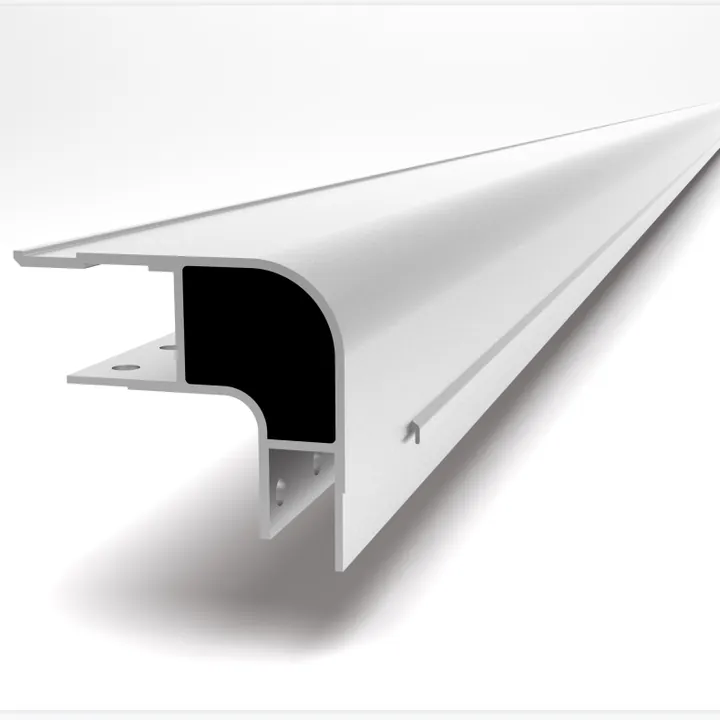
I once received a shipment of parts labeled only as “extrusions.” The supplier did not confirm the metal used, and I needed to know if they were aluminum or something else. That simple question led me to create a detailed checklist to determine whether a part really is an aluminum extrusion.
A part with a constant cross-section, no weld seam along its length, low weight, and possibly anodized or machined surfaces is very likely an aluminum extrusion.
I will show how to identify it, why aluminum is the most common extrusion material, how to verify it, and how coatings can sometimes hide its true nature.
What indicates a part is aluminum extrusion?
When I inspect a profile, I first check for a constant cross‑section. If the shape remains the same along its entire length, that strongly suggests extrusion. I also look for subtle flow lines that run in the extrusion direction. These lines can be faint, but they are common signs of the extrusion process.
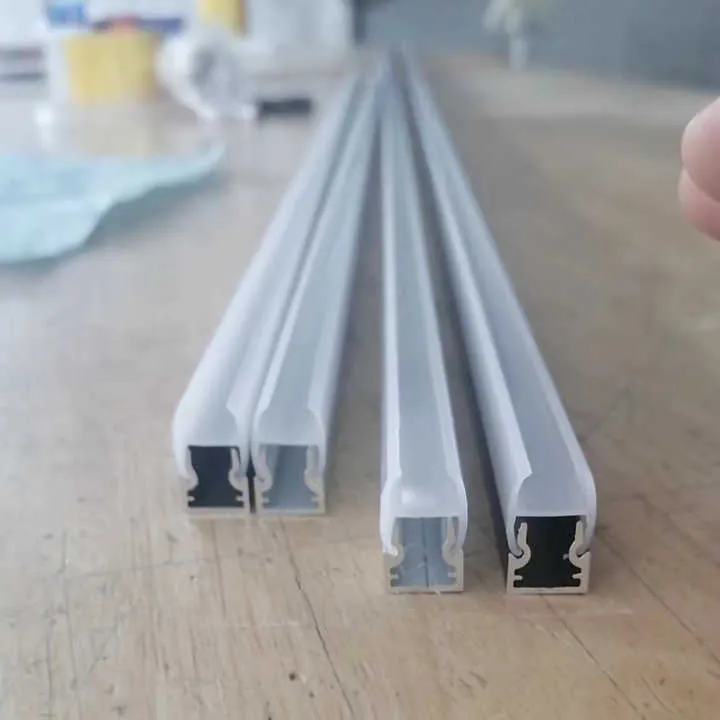
Aluminum extrusions are typically lightweight compared to steel or iron. When I pick them up, I often notice the difference instantly. The ends often show a clean metallic cut surface, and sometimes the alloy code such as 6063-T5 або 6061-T6 is printed or etched on the profile. Good machinability is another clue. Aluminum extrusions machine easily and often have smooth drilled or tapped holes that match industry standards.
Common signs of aluminum extrusion
Visual signs
- Constant cross-section throughout its length
- No longitudinal weld seam
- Light surface flow lines
- Anodized or powder-coated surface
- Cuts and holes appear clean and uniform
Physical signs
- Lightweight for its size
- Non-magnetic
- Easy to drill or tap
- Minimal rust or corrosion if protected
Table: Quick physical comparison
| Власність | Екструзія алюмінію | Steel Profile |
|---|---|---|
| Вага | Світло | Важко. |
| Magnet response | Ні. | Так. |
| Weld seam visible | Typically none | Often present |
| Common finish | Anodized or raw silver | Painted or oiled |
| Оброблюваність | Легко. | Сильніше. |
When multiple signs match, I begin to confidently assume the part is aluminum extrusion. To be fully sure, I test and verify the material using the methods described later.
If a profile keeps the same cross-section along its length, it could be an extrusionПравда.
Extrusion produces continuous, constant shapes.
A visible welded seam along the entire length confirms the part is an aluminum extrusionНеправда.
Most extrusions have no longitudinal welds. A long weld seam often indicates tube forming or other process.
Why are extrusions commonly made of aluminum?
Aluminum is the most common extrusion metal because it combines strength, low weight, and shape flexibility. When heated and pressed through a die, it flows smoothly, retains shape, and can cool into strong usable forms. That makes it ideal for window frames, solar brackets, machine frames, automotive parts, furniture joints and more.

Aluminum also accepts anodizing, powder coating, and surface finishing easily. It offers corrosion resistance naturally, and it is highly recyclable without losing properties. Many industries choose it for its strength-to-weight ratio. I have seen aluminum extrusion replace steel in many designs because it reduces overall weight without losing rigidity when used correctly.
Reasons aluminum is preferred
Mechanical reasons
- Хороше співвідношення міцності до ваги
- Easy to form under pressure
- Ideal for complex cross-sections
Economic reasons
- Affordable for mass production
- Fast to machine or tap
- Available worldwide
Environmental reasons
- Придатний для вторинної переробки
- Low density means lower shipping cost
Table: Why aluminum works well in extrusion
| Категорія | Вигода | Result in practice |
|---|---|---|
| Сила | Високе співвідношення міцності до ваги | Good load capacity with low weight |
| Вартість | Efficient manufacturing | Lower production cost |
| Здатність до формування | Flows well under extrusion pressure | Complex shapes possible |
| Поверхня | Accepts coatings and anodizing | Durable and aesthetic finishes |
In my projects, engineers often choose aluminum extrusion when weight, modularity and assembly speed matter more than absolute tensile strength. That is why factories that work with extrusion often mostly stock 6061 and 6063 aluminum alloys.
Aluminum is commonly extruded because it flows well under pressure and keeps strong propertiesПравда.
This makes it ideal for the extrusion process.
Aluminum cannot be shaped into complex profiles using extrusionНеправда.
Extrusion is often chosen specifically because it allows complex shapes.
How to verify extrusion material type?
Sometimes visual inspection is not enough. Powder coating or anodizing may hide signs of aluminum. In those cases, I use tests. The simplest test is using a magnet. If it strongly attracts, the material is probably steel. If it does not attract, it could be aluminum—but also could be copper or stainless steel, so more testing is needed.

Weight comparison is a good second test. If a 1-meter profile is easy to lift with one hand, it’s likely aluminum. Steel feels heavy, even in short pieces. A quick scratch test in a hidden area can also help. Aluminum scratches easily; steel resist scratches more.
For critical parts, I sometimes request a spectrometer report or chemical analysis. Many suppliers provide certificates confirming alloy grade and temper. When this information is missing, it may signal poor traceability—which can affect safety and compliance.
Material verification methods
| Метод | Складність | Точність | Typical usage |
|---|---|---|---|
| Magnet test | Легко. | Середній | Quick check |
| Weight/density estimate | Легко. | Середній | Compare to known volume |
| Scratch test | Легко. | Низький | Rough assessment |
| Alloy stamp or marking | Легко. | Середній | Check code e.g. 6063-T5 |
| Спектрометричний аналіз | Жорстко. | Високий | Critical parts |
| Supplier documentation | Помірний | Високий | Best for manufacturing |
I recommend starting with physical inspection and only escalating to lab tests when required. For general industrial use, basic checks are typically enough. For aerospace or medical industries, a full material certificate is standard.
Using a magnet alone is enough to confirm aluminum in every caseНеправда.
Other non-magnetic metals exist; magnet test only rules out ferrous metal.
Spectrometer testing is ideal when full alloy confirmation is neededПравда.
It can accurately determine metal composition.
Can coating hide aluminum extrusion surfaces?

Yes. Coating may hide extrusion lines, surface texture and even alloy markings. Powder coating, anodizing, and painting all create a visual layer that blocks direct inspection of the metal below. This does not change the identity of the extrusion, but it can mislead a quick inspection.
I always inspect the cut ends of the extrusion when coating is present. Those areas often reveal the base metal. I sometimes check a hidden spot where coating may be thinner. If necessary, a small portion of coating can be removed for testing, but that should be needed only in critical cases.
Ways coating can complicate identification
- Flow lines become invisible
- Alloy stamp may be covered
- Surface finish no longer looks metallic
- Colour can imitate other metals
If you are unsure whether a coated part is aluminum extrusion, ask for documentation. Most manufacturers provide drawings that clarify whether the part is extruded and what alloy was used.
Coating does not invalidate a part as extrusion—it only hides visual cues. That means you need stronger verification methods, such as weighting, testing magnetism, or asking the vendor directly.
Powder coating prevents any chance to identify aluminum extrusionНеправда.
Other tests such as weight or magnet test still work after coating.
Coating can hide surface clues so it’s important to inspect ends or request documentationПравда.
Reliable identification can still be made if done correctly.
Висновок
A part identified as an extrusion may indeed be aluminum—but not always. I look for consistent cross-section, low weight, presence of machining, lack of weld seam, and sometimes anodizing. I test material using magnets, weight estimate or even spectrometer analysis if needed. Coatings may hide clues but do not change the underlying extrusion. By following simple steps, it becomes easy to confirm whether a part is truly an aluminum extrusion and suitable for use.