Из чего изготавливаются алюминиевые профили?

Aluminum extrusion may sound complex. Many wonder how simple aluminum turns into precise profiles.
Aluminum extrusion uses specialized equipment, heat, and shaped dies to form profiles from aluminum billets. This process depends on presses, heated metal, and precise tooling.
In this article I explain how extrusion works step by step. I show what machines do the work. I show why we heat aluminum. I show how dies shape the metal. I show how modern presses add consistency.
What equipment produces extrusions?
Extrusion starts with heavy machines. These machines shape hot aluminum.
Extrusion equipment includes a furnace, a billet heater, a powerful press, and a die container to drive aluminum through a shaped die.
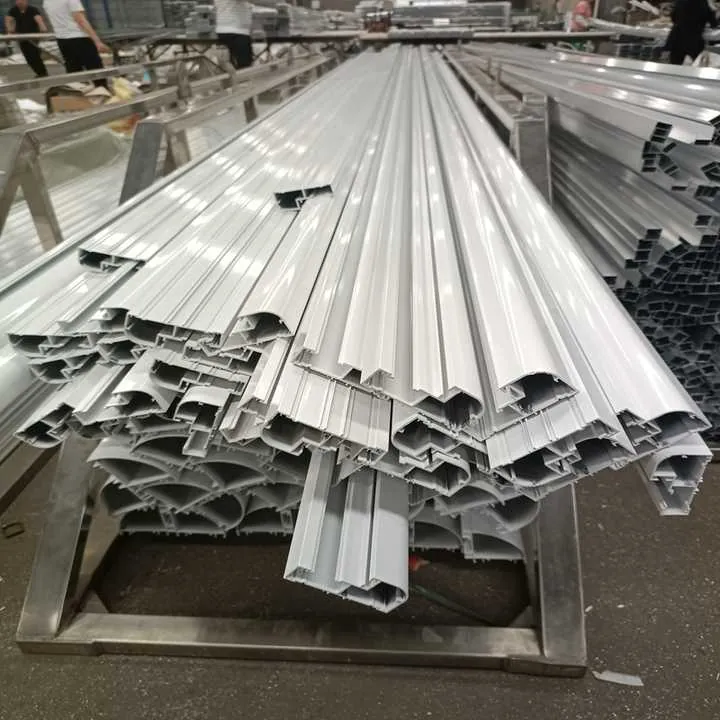
In the extrusion process, the first key piece is the furnace or billet heater. Aluminum alloys come in solid bars called billets. The billets must heat evenly to become soft enough for shaping. A furnace or heater warms the billet to the right temperature. Without heat, the aluminum stays too hard.
After heating, a large hydraulic or mechanical press applies pressure. The press sits above a die container. The container holds a die — a steel block with a shaped opening. The press ram forces the hot billet through the die. The pressure pushes the metal out in a continuous profile.
Other machines play supporting roles. Some equip pre‑extrusion equipment for cleaning or coating the billet. Some include equipment for cooling and stretching the finished profile. After extrusion, the metal often passes through water or air cooling and then through stretcher machines. These machines straighten the profile. Then saws cut it to length.
Typical equipment list
| Оборудование | Назначение |
|---|---|
| Billet furnace or heater | Heat solid aluminum billet to extrusion temperature |
| Extrusion press (hydraulic or mechanical) | Apply pressure to push heated billet through die |
| Die container and die setup | Hold die and guide metal flow |
| Cooling lines (water or air) | Cool extruded profile quickly to preserve shape |
| Stretchers and pullers | Straighten and align profile after extrusion |
| Cut‑off saws | Cut extruded profiles to designated lengths |
This equipment works as a system. Each part must work well. If heater fails, billet stays too hard. If press is weak, profile can deform. If cooling is uneven, shape can warp. If stretcher fails, profile stays bent. Only a full line produces high quality extrusion.
I think of equipment as a team. Each plays a role. The furnace prepares. The press shapes. The cooling preserves. The stretcher aligns. The saw finishes. Without any of them, final product suffers.
Aluminum must be heated before pressing to avoid crackingПравда
Heating softens the billet so metal flows smoothly through the die. Pressing cold aluminum often causes cracks.
The press alone can shape aluminum without heating the billetЛожь
Without heating, aluminum is too hard to be extruded; the press would not force it through the die.
Why heated billets form profiles?
Metal does not behave well when it is cold. Aluminum must soften. Heat makes extrusion possible.
Heating the aluminum billet reduces strength and increases ductility, allowing it to flow through the die into the desired shape under press pressure.

When aluminum rolls out cold, it resists change. The metal resists the pressure. It may crack or the press may fail. Heat changes behavior. At the right temperature, aluminum becomes soft. It becomes more like clay than rock.
Typical extrusion temperature varies by alloy. For common alloys like 6063 or 6061, factories heat billets to roughly 400–500 degrees Celsius. At that heat, aluminum grains can shift. The metal yields under pressure. It can flow through narrow die openings. The press can push it without excessive force.
If heat is too low, the metal stays brittle. The extrusion may crack. If heat is too high, the metal becomes too fluid. That can cause die marks or uneven walls. Sometimes metal sticks to the die or flows unevenly. The control of temperature is vital. Many plants use precise billet heaters with thermocouples and controllers. They hold temperature to narrow range.
Heating also reduces the energy needed for pressing. It reduces wear on the die and press. It lowers the chance of defects. It gives smoother finish. Heating helps produce consistent quality.
Even after extrusion, temperature remains an issue. Fresh profile is hot. It must cool uniformly. Uneven cooling may warp shape. So cooling equipment must follow. Some lines use water quench. Others use air fans. Then stretching helps straighten profile before cutting.
In short, heating is not optional. It is a core step. It changes the metal. It makes extrusion possible.
Heating a billet improves ductility and allows smooth extrusionПравда
Heat softens aluminum so it can flow under pressure without cracking.
Heating makes no difference; extrusion can occur at room temperatureЛожь
At room temperature aluminum is too hard and brittle; pressing would likely crack or fail.
How dies shape final geometry?
Dies determine profile shape. They create final cross‑section. Each shape needs a custom die.
Dies serve as molds. They shape molten-like aluminum flow into precise cross-sections. The die design controls wall thickness, channels, and profile detail.

A die is a heavy steel block. It has a hole cut to match the desired profile cross‑section. For a simple square tube, the hole looks like the tube shape. For complex shapes, the hole may have many curves, slots, recesses. The die must handle the pressure. It must survive heat and abrasion. Die material is often hardened tool steel.
Designing a die is a skill. Engineers must consider flow of metal. They avoid sharp corners that trap metal. They add fillets to ease flow. They design uniform wall thickness when possible. They predict flow stress. The die must cool water or air to avoid overheating.
As metal flows through the die, it touches die surfaces. This defines outer and inner walls. The pressure forces metal into every detail. After exit, metal keeps shape. Cooling locks geometry. Then stretching and cooling preserve straightness.
Die design factors
| Die attribute | Effect on extrusion |
|---|---|
| Shape and size of opening | Determines profile cross-section and wall thickness |
| Entry angle and approach | Helps metal flow evenly, reduces stress |
| Material hardness and finish | Affects die life and surface quality of profile |
| Cooling channels | Prevent overheating and metal sticking |
| Die alignment in container | Ensures symmetry and reduces distortion |
If die design is poor, profiles may distort or show defects. Walls may be uneven. Corners may bulge. Internal cavities may collapse. Surface may be rough or scratched. Also die wear may shorten life. Then quality falls.
Once die is made, it also needs maintenance. After many extrusions, die surfaces become rough. They need polishing. Cracks may develop. They need repair. Each die must be inspected regularly.
Profile range depends on die design. Simple shapes like rods or square tubes are easy. Complex shapes like window frames or multi‑chamber sections require advanced die design. Also alloy type affects flow. Some alloys flow easier. Others need slower extrusion speed to avoid tearing.
Die design links shape and process. It must match equipment strength and billet material. It must allow smooth metal flow. It must resist wear. Good design leads to good product. Bad design leads to scrap.
Die opening directly defines the shape of the extruded profileПравда
Metal flows through die opening and takes its cross‑section exactly.
Die design does not affect wall thickness uniformityЛожь
Poor die design can cause uneven flow and uneven wall thickness or distortion.
Can modern presses improve consistency?
Old presses still work. But modern presses bring big improvements. They raise quality and repeatability.
Modern presses with better controls, automation, and hydraulics improve consistency, speed, and reduce defects compared to older mechanical presses.

Modern extrusion presses use hydraulic systems or advanced mechanical linkages. They offer precise pressure control. They also integrate computerized controls to monitor speed, pressure, temperature, and die alignment. These systems adjust pressure in real time. They respond to sensor feedback. That reduces human error. That helps avoid defects.
Many modern plants also use automation. Robots or automated handlers move billets, load dies, and remove finished profiles. Automation lowers variation from manual handling. It reduces contamination and misalignment. It cuts labor error. It speeds up the overall line.
Another improvement is better container and die cooling systems. Older presses may overheat die or container. Modern presses often use regulated cooling and monitoring. That keeps metal temperature stable. That helps maintain consistent extrusion conditions across batches.
Also modern presses support higher tonnage and longer containers. They can extrude larger profiles or longer runs with uniform quality. Larger containers hold more metal. They reduce need to reload often. That reduces stops and restarts. That saves time and avoids defects tied to changeovers.
Key benefits of modern presses
- Consistent pressure and speed control
- Real‑time monitoring of temperature and die condition
- Automation reduces manual error and variation
- Better cooling and die maintenance reduce defects
- Support for larger billets and longer runs increases output
Because of these advances, extruders produce more uniform products. They reduce scrap. They meet tighter tolerances. They produce smoother surface finish. They handle complex shapes better.
Modern presses also support tighter specification control. For example, wall thickness can stay within narrow tolerance, maybe ±0.2 mm, rather than ±0.5 mm in older lines. Surface finish can be smoother. Straightness is better after cooling and stretching.
Overall, modern presses make production more reliable. They help scale production without sacrificing quality. They reduce waste and cut cost in long run.
Modern hydraulic presses improve extrusion consistency and reduce defectsПравда
Precise controls and monitoring yield stable pressure and temperature, reducing variation.
Older mechanical presses perform as consistently as modern hydraulic pressesЛожь
Older presses lack real‑time control and automation, leading to larger variation and more defects.
Заключение
Aluminum extrusion relies on the right mix of heat, force, tooling, and control. Equipment heats and presses aluminum. Dies shape the flow. Modern presses ensure repeatable quality and efficiency. Taken together, these elements make high‑quality extrusion possible.