Требования к термообработке алюминиевых экструзионных профилей?
Many aluminum extrusion failures come from wrong heat treatment. Parts bend, crack, or lose strength in service. Buyers often focus on alloy and shape. Heat treatment is discussed too late.
Aluminum extrusion heat treatment controls strength, hardness, and stability by managing temperature, time, and cooling during and after extrusion.
In real production, heat treatment is not optional. It defines final performance. This article explains which heat treatments apply, how aging changes properties, which alloys respond to heat treatment, and how T5 and T6 differ in practice.
What heat treatments apply to aluminum extrusions?
Heat treatment sounds complex, but the goal is simple. It changes the internal structure of aluminum to reach usable strength. Not all treatments do the same job.
Aluminum extrusions commonly use solution heat treatment, quenching, and aging to achieve required mechanical properties.
Why heat treatment is required
After extrusion, aluminum is soft. The metal structure is not stable. Without heat treatment, most profiles cannot meet load or tolerance requirements.
Heat treatment helps to:
- Increase strength
- Improve hardness
- Control dimensional stability
- Reduce residual stress
This is critical for structural and industrial profiles.
Main heat treatment steps
Heat treatment for extrusions usually includes several steps.
Термическая обработка раствором
The extrusion is heated to a high temperature. This dissolves alloying elements into the aluminum matrix. The temperature depends on alloy type.
Закаливание
After heating, the profile is cooled rapidly. Water or air is used. Fast cooling locks alloying elements in place.
Старение
The profile is held at room or elevated temperature. This allows controlled precipitation. Strength increases during this step.
Common treatment routes
| Heat Treatment Step | Назначение |
|---|---|
| Solution heating | Dissolve alloy elements |
| Закаливание | Retain solid solution |
| Искусственное старение | Increase strength |
| Natural aging | Stabilize properties |
Not every extrusion uses all steps. The route depends on alloy and end use.
Производственная реальность
In real factories, extrusion speed and press temperature already add heat. Some alloys use this heat directly. Others need separate furnaces.
Buyers should ask:
- Is aging natural or artificial
- Is quenching controlled
- Are temperatures recorded
These details affect consistency across batches.
Heat treatment increases strength and stability of aluminum extrusions.Правда
Controlled heating and cooling change internal structure and properties.
Heat treatment has no effect on aluminum extrusion performance.Ложь
Mechanical properties depend heavily on heat treatment.
How does aging process affect mechanical properties?
Aging is often misunderstood. It sounds passive, but it defines final strength. Aging mistakes cause soft or brittle parts.
The aging process controls strength, hardness, and ductility by managing how alloying elements precipitate inside aluminum.

What aging really does
During aging, small particles form inside the metal. These particles block dislocation movement. This increases strength.
There are two main aging types:
- Natural aging at room temperature
- Artificial aging at elevated temperature
Both change properties over time.
Natural aging effects
Natural aging happens after quenching. It can take days or weeks.
Эффекты включают:
- Gradual strength increase
- Property change over time
- Lower final strength than artificial aging
This is common for simple profiles with low strength demand.
Artificial aging effects
Artificial aging uses ovens. Time and temperature are controlled.
Преимущества включают:
- Faster property development
- Higher and more stable strength
- Better batch consistency
This is preferred for industrial and structural extrusions.
Property changes during aging
| Недвижимость | Before Aging | After Proper Aging |
|---|---|---|
| Предел текучести | Низкий | Высокий |
| Твердость | Низкий | От среднего до высокого |
| Пластичность | Высокий | Reduced but controlled |
Over aging can reduce strength. Under aging leaves the part too soft.
Common aging problems
In practice, aging problems often come from:
- Incorrect oven temperature
- Uneven profile thickness
- Poor air circulation
These issues cause strength variation within one profile.
Good suppliers monitor:
- Time at temperature
- Load spacing in ovens
- Cooling after aging
This keeps properties within specification.
Artificial aging allows better control of aluminum extrusion strength.Правда
Temperature and time are precisely managed.
Aging has no impact on hardness or strength.Ложь
Aging directly controls mechanical properties.
Are all extrusion alloys heat-treatable?
Many buyers assume all aluminum alloys can be heat treated. This is incorrect. Alloy family determines response.
Only certain aluminum extrusion alloys are heat-treatable, mainly those containing magnesium and silicon or zinc.

Heat-treatable versus non-heat-treatable alloys
Aluminum alloys fall into two broad groups.
Heat-treatable alloys gain strength through aging. Non-heat-treatable alloys rely on cold work and composition.
Common extrusion alloy families
| Серия сплавов | Термообработанный | Типичное использование |
|---|---|---|
| 1xxx | Нет | Electrical, decorative |
| 3xxx | Нет | Low strength profiles |
| 5xxx | Нет | Marine, corrosion resistant |
| 6xxx | Да | Строительная, промышленная |
| 7xxx | Да | High strength applications |
This table shows why 6xxx dominates extrusion markets.
Why 6xxx series is popular
6xxx alloys balance extrusion ease and heat treatment response.
They offer:
- Good surface finish
- Medium to high strength
- Хорошая коррозионная стойкость
- Flexible heat treatment options
This makes them suitable for many industries.
Design consequences
Using a non-heat-treatable alloy limits strength options. Designers must use thicker sections. This increases weight and cost.
Heat-treatable alloys allow:
- Более тонкие стены
- Higher load capacity
- Better dimensional control
Understanding this early avoids redesign later.
Not all aluminum extrusion alloys respond to heat treatment.Правда
Only specific alloy families are heat-treatable.
All aluminum alloys can be strengthened by aging.Ложь
Non-heat-treatable alloys do not age harden.
What is the difference between T5 and T6 treatments?
T5 and T6 are common terms in drawings. Many buyers use them interchangeably. They are not the same.
The main difference between T5 and T6 treatments is whether solution heat treatment is applied before aging.
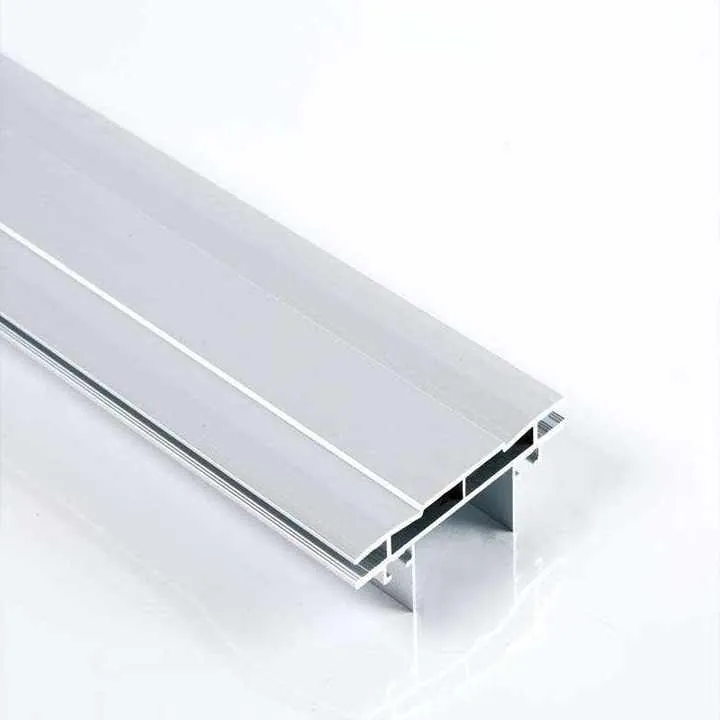
Definition of T5 treatment
T5 means the extrusion is cooled from the extrusion temperature and then artificially aged.
Ключевые моменты:
- No separate solution heat treatment
- Uses heat from extrusion
- Lower energy cost
- Slightly lower strength
This is common for simple profiles.
Definition of T6 treatment
T6 includes full solution heat treatment, quenching, and artificial aging.
Ключевые моменты:
- Separate heating step
- Controlled quenching
- Более высокая прочность
- Better property consistency
This is used for demanding applications.
Strength comparison
| Темпер | Относительная сила | Process Complexity |
|---|---|---|
| T5 | Средний | Низкий |
| T6 | Высокий | Высокий |
The difference matters for load and safety.
Selection considerations
Choosing between T5 and T6 depends on:
- Required strength
- Толщина профиля
- Tolerance requirements
- Cost targets
T6 costs more but reduces risk. T5 saves energy but limits performance.
Real production lessons
In practice, some profiles cannot achieve T6 uniformly due to thickness. Others do not need full T6 strength.
Clear communication at RFQ stage helps suppliers choose the correct route. Late temper changes often require requalification.
T6 treatment includes solution heat treatment before aging.Правда
This step allows higher strength development.
T5 and T6 treatments always provide the same mechanical properties.Ложь
T6 generally provides higher and more consistent strength.
Заключение
Aluminum extrusion heat treatment defines final performance. Correct treatment selection depends on alloy, aging control, and temper choice. Clear heat treatment requirements prevent strength loss, distortion, and costly rework.