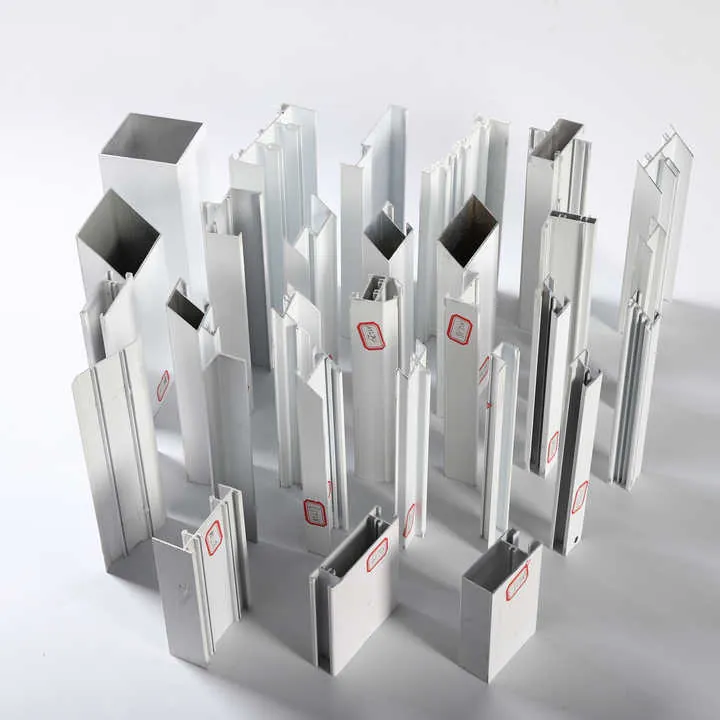
알루미늄 압출 제품이란 무엇인가요?

Aluminum extrusions are long profiles made by forcing a heated aluminum billet through a shaped die so that the metal flows and takes the cross‑section of the die. They are used across many industries for frames, structural members, enclosures and custom profiles.
How do aluminum extrusions differ from cast parts?
When you compare extruded aluminum profiles with cast aluminum parts, there are major differences.
Extrusions are formed by pushing heated but solid aluminum through a shaped die, while cast parts are formed by pouring molten aluminum into a mold.

주요 차이점
- In extrusion, the metal remains solid (though heated) and flows under pressure through the die; in casting, the metal is molten and poured.
- Extruded profiles tend to have more consistent grain flow and often better mechanical properties along the length of the profile, because the material flows in one direction and is worked.
- Cast parts can be great for complex three‑dimensional shapes, internal cavities, and large volumes, but they may suffer from porosity, shrinkage, and less aligned grain structure.
- Extruded shapes are ideal for constant cross‑sections (you push a die, get a long piece of uniform profile). Cast parts allow full 3D geometry variations but may need more machining or finishing.
- Surface finish and tolerances: extrusions often offer better finish and tighter tolerances for things like frame rails, slots, and architectural shapes because the process is continuous and controlled.
- Cost structure: for extrusions, tooling dies drive the cost and are amortised over long runs; for casting, molds and gating systems plus finishing must be considered.
Why this matters for your business
Since you are supplying custom aluminum profiles for industries like construction, solar frames, lighting and industrial machinery, choosing extrusion over cast parts (or understanding the trade‑off) is important. If your profiles need long lengths, uniform cross‑section, consistent mechanical properties and finishing, extrusions are typically superior. If you used casting instead, you might face more finishing, higher warpage, and weaker properties.
Extruded aluminum profiles always have superior structural strength compared with cast parts of the same alloy.False
While extrusions often have better grain alignment and flow, the strength also depends on alloy, heat treatment, geometry and finishing.
Extruded aluminum parts are well‑suited for long, linear profiles with constant cross‑section.True
The extrusion process excels at producing continuous lengths of uniform cross‑section efficiently.
Why are extrusions used in many industries?
Extruded aluminum profiles are very versatile, and many industries choose them for a variety of reasons.
Extrusions are used because they allow complex cross‑sections, good strength‑to‑weight ratio, efficient production for long runs, and are compatible with finishing and machining.
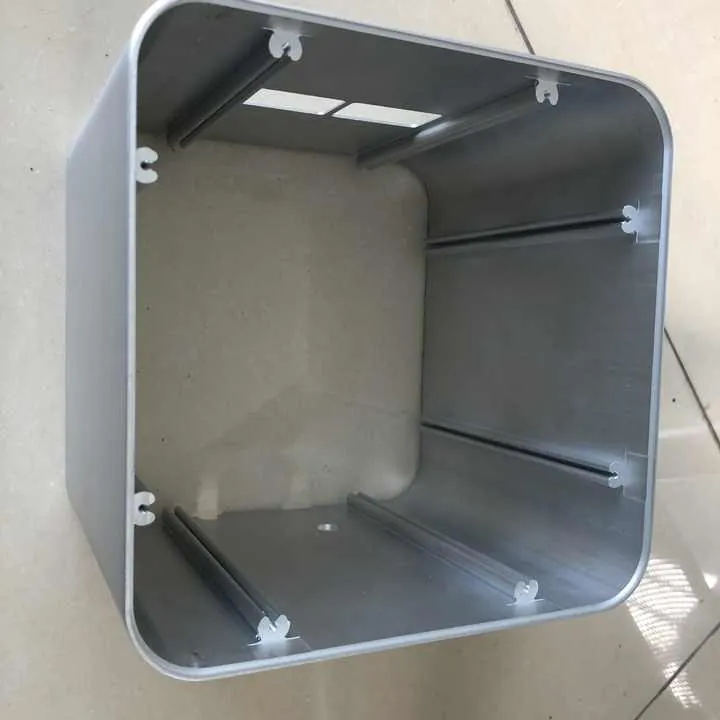
Major reasons
- 디자인 유연성: You can extrude custom shapes, internal cavities, thin walls, flanges, slots, etc. That makes extrusions highly adaptable for industrial frames, lighting housings, solar panel mounts, architectural elements.
- Lightweight‑strength: Aluminum itself has a low density, and extruded parts can be engineered to deliver the required strength or stiffness for lighter structures.
- Finish compatibility: Extrusions are often processed with anodizing, powder coating, or mechanical finishing, which makes them suitable for visible architectural use or corrosion‑resistant parts.
- Manufacturing efficiency: For long lengths or large quantities, extrusions are more cost‑effective than machining from solid, or casting plus heavy finishing.
- Supply chain advantage: Because extrusion tooling is reusable and the process is continuous, suppliers can respond to volume orders and provide consistent part geometry.
- Industrial integration: Many industries (construction, automotive, aerospace, marine, electronics) use extrusions because they can integrate with assembly systems, provide structural elements, channels, slots and mounts.
예제
- Architectural frames for windows, doors, façades.
- Solar panel mounting rails and frames.
- Machine frames, conveyor supports, industrial enclosures.
- Automotive roof rails, chassis components, crash‑structures (where extruded aluminum fits due to design flexibility and light weight).
- Consumer product housings and heat‑sinks (extruded profiles with fins for cooling, for example).
Extruded aluminum profiles are rarely used in automotive or architectural applications.False
On the contrary, they are widely used in automotive and architectural sectors because of their advantages in design flexibility and light weight.
Extrusion allows making complex cross‑sections which are difficult for casting or machining alone.True
The extrusion process can produce continuous profiles with complex cross‑sections, thin walls, and slots which are harder or more costly with casting or machining.
Where are extruded shapes typically installed?
Extruded aluminum profiles are used in many installations across sectors, and understanding the typical end‑use helps you position your products.
Extruded shapes are typically installed in structural systems, architectural elements, industrial frames, transport components, electronic housings, solar mount systems, and more.
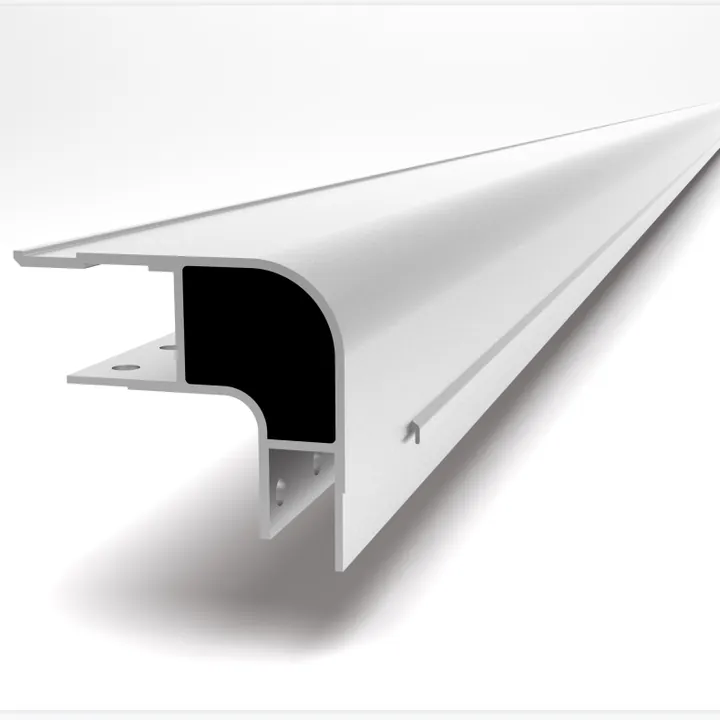
Typical installation sites
- Building & construction: Window and door frames, curtain wall systems, mullions, handrails, columns, structural glazing frames, façade supports.
- Solar & renewable energy: Mounting rails for solar panels, frames for photovoltaic modules, trackers, support structures in both residential and commercial installations.
- Industrial automation & machinery: Machine frames, guarding systems, safety enclosures, conveyor supports, extrusion‑based modular frames where quik‑connect assemblies are used.
- 교통편: Profiles in train cars, buses, automotive roof rails, structural members in truckboxes.
- Consumer & electronics: Heat sinks, LED lighting housings, extruded chassis for electronics, furniture frames.
- Retail & display systems: Store fixtures, shelving, signage systems using T‑slot extruded aluminum profiles for modular flexibility.
Why installation context matters for you
Since your business focuses on B2B manufacturing and wholesale supply of aluminum extrusions, know where your profiles end up: this helps in design, finish specification, dimensional tolerances and surface quality. For example, architectural use often demands anodize or wood‑grain finish, plus very straight lengths; solar frames require corrosion resistance, dimensional precision and ease of mounting. Recognizing the installation environment helps tailor your product offering.
Extruded aluminum profiles are only used in small‑scale consumer applications.False
They are used across large structural, industrial and architectural installations as well as consumer products.
Extruded aluminum profiles are often used for frameworks, supports, mounting systems and structural members.True
Due to their geometry, strength‑to‑weight ratio and design flexibility, they serve well in structural or support roles.
Can extrusion alloys change performance?
Yes — the choice of alloy and temper in extruded aluminum profiles significantly affects mechanical properties, finishability, corrosion resistance, machinability and post‑processing options.
Different extrusion alloys and tempers change performance in terms of strength, ductility, surface treatment compatibility and cost.

How alloy choice affects performance
- Common extruded aluminum alloys include the 6000‑series (like 6063, 6061) which are good for extrusion because of formability and finishability.
- A higher‑strength alloy may allow thinner walls or lighter weight but may cost more or be harder to extrude.
- Some alloys are more compatible with anodizing or powder coating; some resist corrosion better (important for outdoor or marine applications).
- The temper (T5, T6, etc) changes the mechanical strength and therefore design capability.
- For applications like solar mounting or architectural façade, you may choose an alloy with better corrosion resistance (e.g., 6005A, 6082) rather than just lowest cost.
What this means for your manufacturing offering
Since your company offers aluminum extrusions from 10 mm–400 mm and multiple surface treatments (oxidation, electrocolour, spraying, wood‑grain), specifying the right alloy is key:
- If your customer needs a structural profile for a solar tracker, pick an alloy and temper with enough strength and fatigue life.
- If your customer needs decorative architectural trim with anodize finish, pick an alloy that extrudes cleanly and anodizes evenly (e.g., 6063‑T5).
- If cost is a key driver and the part is non‑structural, a more economical alloy may suffice.
- Make sure you declare the alloy and temper in your quotation, so customers understand performance, finishing options and downstream machining behavior.
All aluminum extrusion alloys offer the same strength and finish compatibility.False
Different alloys and tempers have significantly different strength, corrosion resistance and finish‑ability.
Selecting a higher‑grade alloy for extrusion can improve performance especially in demanding structural or environmental applications.True
설명이 없습니다.
결론
Aluminum extrusions are highly versatile profiles made by forcing aluminum through shaped dies. They differ from cast parts in their process, mechanical properties and finish potential. They are widely used across industries because they offer design flexibility, strength‑to‑weight advantages, and efficient production. They are typically installed in structural frameworks, solar mount systems, transport and industrial applications. And the alloy you choose changes how the profile performs, finishes and fits into the end application. For your B2B manufacturing and wholesale supply business, understanding these aspects helps you deliver higher value, meet customer requirements and stand out in the market.