How strong is aluminum extrusion?

Have you ever worried whether aluminum extrusions are strong enough for real industrial use?
Properly designed aluminum extrusions can support heavy loads, resist bending and twisting, and deliver excellent strength-to-weight performance in demanding applications.
To fully understand the strength of aluminum extrusions, we need to explore what controls it—materials, shape, design, and testing. Keep reading to learn how all these parts come together.
What determines aluminum extrusion strength?
Not knowing what affects extrusion strength can lead to overdesign or dangerous failure in real use.
The strength of an aluminum extrusion depends mainly on alloy and temper, section shape, wall thickness, and the kind of load applied to it.

When I assess an aluminum extrusion, the first things I look at are the material, the shape, and the loading direction. Not all aluminum is equal. For example, 6061-T6 alloy has a typical yield strength of 40,000 psi and tensile strength up to 45,000 psi, while 6063-T5 is much lower. That difference comes from the chemical composition and heat treatment applied after extrusion.
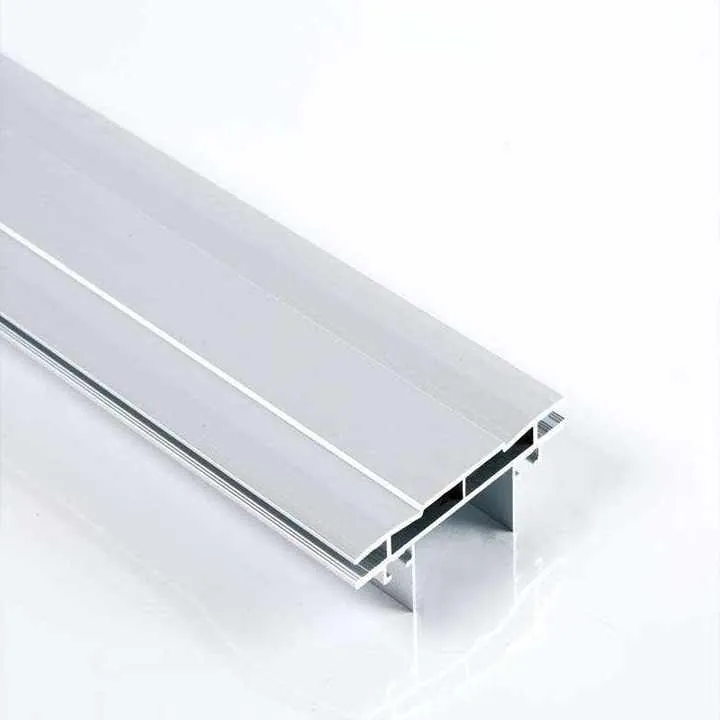
The cross-section design is just as important. If a profile has more material further from the center, it will resist bending better. That’s why hollow rectangular or I-beam-like profiles are stronger than flat strips when resisting flexing. Wall thickness also matters—thin walls may buckle or twist, especially if they cool unevenly during production.
Type of load plays a key role. Aluminum extrusions can perform very well under compression or tension along their length. But when facing bending or torsion, shape becomes critical. Profiles need higher section modulus to prevent failure.
Finally, don’t forget the effect of temperature, vibration, or corrosion. A profile exposed to salty air or repeated impact might degrade faster, reducing its effective strength.
Here’s a table that shows the range of strength values for common alloys:
| 합금 / 열처리 | 항복 강도(psi) | Tensile Strength (psi) |
|---|---|---|
| 6061-T6 | ~40,000 | ~45,000 |
| 6063-T6 | ~31,000 | ~35,000 |
| 6005-T5 | ~34,800 | ~37,700 |
The tensile strength of an aluminum extrusion depends mostly on its cross-section shapeFalse
Tensile strength is a material property, mostly set by alloy and temper, not shape.
For bending loads the geometry of the extrusion section is just as important as the alloy strengthTrue
Bending resistance depends on both the material and the section's moment of inertia.
Why do alloys change extrusion strength?
It can be confusing when two aluminum parts look the same but perform very differently.
Alloys determine the internal structure of aluminum and control its yield, tensile, and fatigue strength, which directly affect the strength of extruded products.
The term “aluminum” is misleading because there are many types. Different series, like 6000 or 7000, contain other elements like magnesium, silicon, or zinc. These additions—and the way they are heat-treated—define strength, flexibility, corrosion resistance, and extrusion behavior.
6061 and 6063 are among the most common for extrusions. 6061 offers higher strength and better mechanical properties, while 6063 is easier to extrude into complex shapes. Heat treatment increases strength significantly. For example, the T6 temper indicates the material was solution heat-treated and artificially aged to increase hardness and resistance.
The 7000 series can be even stronger, but they are harder to extrude and more expensive. Non-heat-treatable alloys like 1000 or 3000 series are softer and used for non-structural applications.
Alloy choice also affects the extrusion process itself. Some alloys extrude faster and with cleaner surfaces. Others require slower speeds or higher die pressure.
Here’s a summary table of common alloy series:
| 합금 시리즈 | 강도 수준 | 일반적인 사용 |
|---|---|---|
| 1000 / 3000 | 낮음 | Decorative, signage |
| 6000 | 중간-높음 | Construction, machinery, structural |
| 7000 | 매우 높음 | 항공우주, 방위 |
Alloys with more silicon and magnesium (6000 series) are used because they combine strength and extrudabilityTrue
Silicon and magnesium allow heat treatment and formability, making 6000 series ideal for extrusion.
Using a 7000 series alloy always guarantees the best extrusion for structural useFalse
7000 series is stronger but not always better—it’s harder to extrude and more costly.
How to test load capacity of extrusions?
You can’t rely on guesswork when safety or high performance is required.
To test aluminum extrusion strength, engineers perform tensile tests, full-scale structural loading, and sometimes fatigue or environmental testing for demanding applications.

When I design or purchase aluminum profiles, I insist on validation. That means starting with material testing—pulling a test coupon in a tensile machine to verify yield and tensile strength.
Then I move to real-world testing. If a profile will carry a compressive load, I check its buckling strength. For beams, we mount the profile and apply loads to simulate bending. In twisting applications, torsion tests measure resistance to rotational forces.
But that’s not enough for dynamic systems. When extrusions face vibration or cycles of repeated stress—like in factory machinery—we run fatigue tests. Aluminum behaves differently under cycles than under single loads. A part that handles 500 kg once may fail after 10,000 cycles of 300 kg.
Environmental conditions are often overlooked. For example, salt air or chemical exposure can corrode aluminum. Testing for corrosion resistance or strength at high temperatures helps ensure long-term reliability.
I usually create a testing checklist:
- Confirm alloy/temper through tensile test
- Simulate real load paths with installed geometry
- Run cycle tests if load repeats
- Test for corrosion or temperature effects if relevant
Testing only coupon tensile strength is sufficient to know the load capacity of an aluminum extrusion in its installed conditionFalse
Installed conditions include joints, mounting, and loading type, which a tensile coupon does not reflect.
Fatigue testing is important when the extrusion is used in cyclic loading environmentsTrue
Repeated load cycles can cause failure even if the part passes static strength tests.
Can design enhancements increase strength?
You don’t always need to change materials to make your extrusion stronger.
Yes—smart changes to geometry, wall thickness, internal ribs, joint design, and load path can greatly increase the strength of aluminum extrusion assemblies.

Many times, I’ve improved extrusion strength just by tweaking the design. One key area is geometry. If a profile has more material placed further from the center, it resists bending better. For example, adding flanges or making a box-section greatly boosts strength.
Wall thickness is another big factor. Uniform thickness prevents warping, but thicker walls at high-stress points help a lot. I always try to avoid sudden transitions between thick and thin areas—they cause stress risers and cooling issues.
Ribs or internal webs can stiffen hollow sections. Even small reinforcements inside the profile can reduce deflection and twisting.
Connections matter too. I’ve seen strong profiles fail because they were bolted poorly. Using better fasteners, avoiding misalignment, and designing smooth load paths increases assembly strength.
If you can switch to a stronger alloy or a harder temper (like T6), you get another level of boost. But that may affect extrusion speed, die wear, or surface finish.
Here’s a table comparing a basic design versus an enhanced one:
| 기능 | Basic Design | Enhanced Design |
|---|---|---|
| 벽 두께 | Thin and uniform | Strategic thick zones for stress |
| Cross Section | Simple box or L-shape | Box with ribs, gussets, or flanges |
| 패스너 | Standard bolts | Reinforced joints with mechanical locks |
| 합금 / 열처리 | 6063-T5 | 6061-T6 or higher |
| Lifecycle Design | Not optimized | Includes fatigue and corrosion design |
Increasing wall thickness in critical zones of an extrusion always increases strength without drawbacksFalse
Thicker walls can increase cost, weight, and affect cooling, so design must be balanced.
Improving connection design (fasteners, alignment) can increase the effective strength of an extrusion assembly even if the profile material remains unchangedTrue
Better connections allow the material to perform closer to its full capacity.
결론
Aluminum extrusions can be surprisingly strong. When you match the right alloy, geometry, design features, and testing, they become ideal for many structural uses—even under tough conditions. You don’t just buy strength—you design for it.