How aluminum extrusion works?

Aluminum extrusions are everywhere—but how do we turn solid metal into precise, hollow, or complex profiles?
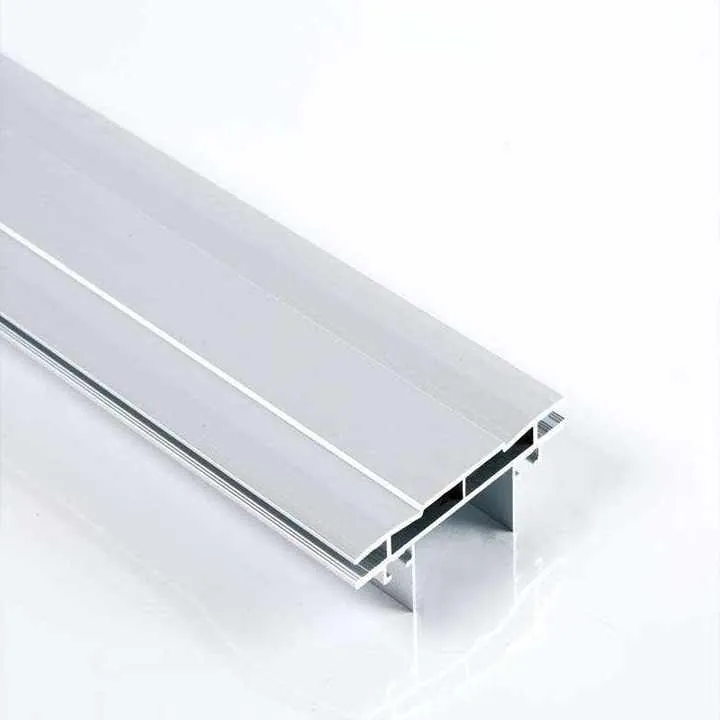
Aluminum extrusion works by heating a solid billet and forcing it through a shaped die using high pressure, resulting in continuous profiles with uniform cross-sections.
The process looks simple at first glance, but inside the press, there’s a lot happening—heat, pressure, and perfectly timed movement. Let me break it down from what I’ve learned visiting extrusion factories and working with aluminum profiles for over a decade.
What drives the extrusion forming process?
Aluminum doesn’t flow like honey—it needs real force to move through a mold. That’s where the extrusion press comes in.
The extrusion process is driven by a hydraulic press that pushes heated aluminum billets through a precision die, creating profiles with specific shapes.

In a typical extrusion plant, the heart of the line is the press. It comes in different tonnages—from 500 tons to 4500 tons or more. At Sinoextrud, for example, we run 43 presses across this range.
Key steps in the extrusion forming process:
- Billet loading: A pre-cut aluminum billet is loaded into the container.
- Heating: The billet is heated to around 450–500°C.
- Pressing: A ram pushes the billet through the die.
- Emerging profile: The profile comes out in the shape of the die’s cross-section.
- Puller system: The profile is guided along a cooling table.
Components of an extrusion press:
| Part | 기능 |
|---|---|
| Ram (Plunger) | Applies pressure to push the billet |
| 컨테이너 | Holds the billet in place |
| 죽다 | Shapes the profile cross-section |
| Dummy block | Separates the billet from the ram |
| 보강재 | Holds the die tightly |
The speed and force must be carefully calibrated. Too much force, and the profile will crack or bend. Too little, and the metal won’t flow evenly.
The aluminum extrusion process is powered by a hydraulic press that pushes metal through a die.True
The press provides the pressure needed to form aluminum into specific shapes.
Extrusion is driven by melting aluminum and letting it drip into a mold.False
Aluminum is heated, not melted, and forced through a die under pressure, not poured.
Why billet heating is essential?
Without the right temperature, aluminum won’t flow—it will crack, jam, or damage the die.
Billet heating is essential because it softens the aluminum to the right plasticity, allowing it to be extruded through the die without fracturing.

In my experience, heating is where the magic begins. Too cold, and the billet resists the press. Too hot, and the surface oxidizes or becomes too soft.
Optimal billet temperature:
| 합금 유형 | Ideal Temperature Range |
|---|---|
| 6063-T5 | 430–500°C |
| 6061-T6 | 450–510°C |
| Other alloys | Depends on composition |
Why exact temperature control matters:
- Ensures uniform metal flow
- Reduces surface defects
- Protects die life
- Maintains profile strength and tolerances
We use induction or gas ovens to preheat billets. Infrared sensors monitor the temperature closely to stay within a narrow tolerance.
Problems from poor billet heating:
| 문제 | 원인 | 결과 |
|---|---|---|
| Cracked profiles | Billet too cold | Weak or broken profiles |
| Flow inconsistency | Uneven billet temperature | Variable dimensions |
| Oxidation marks | Billet overheated | Surface discoloration |
Heating is not optional—it’s a core part of getting high-quality extrusions.
Billet heating is crucial in extrusion to soften aluminum for shaping.True
It ensures the metal flows smoothly through the die without cracking.
Aluminum billets are extruded cold to retain strength.False
Cold billets won't flow; they must be heated to plastic formability for extrusion.
Where does metal flow through the die?
The die isn’t just a hole in a metal plate. It’s a carefully machined tool with specific paths for the aluminum to follow.
The metal flows through a shaped cavity in the die, which defines the final cross-sectional geometry of the aluminum extrusion.

When the press pushes the heated billet, it fills the die cavity from back to front. Think of it like toothpaste coming out of a shaped nozzle—but under hundreds of tons of pressure.
How a die works:
- 그리고 die face contains the profile shape.
- Behind it, port holes and bridges help guide the flow, especially for hollow shapes.
- 그리고 bearing area controls final sizing and surface smoothness.
Types of dies:
| 다이 유형 | 사용 용도 |
|---|---|
| Solid die | Simple profiles (rods, angles) |
| Hollow die | Tubes, frames, channels |
| Semi-hollow die | Partially enclosed shapes |
The design of the die affects not only shape, but also the flow speed, material distribution, and cooling pattern. Precision is everything. A small imperfection leads to warping or surface defects.
Metal flow issues and solutions:
| 이슈 | 원인 | Fix |
|---|---|---|
| 벽 두께 불균일 | Poor die flow design | Redesign bearing zones |
| 표면 라인 | Dirty or worn die | Clean or replace die |
| Twisting profiles | Asymmetric die or billet loading | Realign billet entry |
Aluminum flows through a precisely shaped die cavity that defines the extrusion's profile.True
The die's shape controls the cross-section and quality of the final profile.
Extrusion dies are open channels where aluminum falls through freely.False
Aluminum is forced, not dropped, through complex die shapes under pressure.
Can automation improve extrusion consistency?
Manual adjustments slow down production and lead to variability. This is where automation makes a real impact.
Yes, automation improves extrusion consistency by controlling billet temperature, press speed, cooling rate, and cut lengths with high precision.
I’ve seen extrusion lines where operators used to manually check dimensions every 10 minutes. Now, sensors and PLCs track it continuously, and alerts go off when something drifts.
Where automation adds value:
| Process Area | Automation Feature |
|---|---|
| Billet preheating | Infrared sensors, auto ovens |
| 프레스 제어 | Servo-controlled ram speed |
| Profile cooling | Automated air/water cooling systems |
| Puller system | Synchronizes with extrusion rate |
| Sawing/cutting | Laser-guided auto saws |
Benefits of automation:
- Less human error
- Tighter dimensional tolerances
- Faster changeovers between dies
- Real-time quality monitoring
Automated systems also help reduce scrap and energy consumption. A well-tuned automated line can run 24/7 with minimal stops.
Automation improves the quality and consistency of aluminum extrusion.True
Automated controls ensure stable temperature, pressure, and cutting accuracy.
Extrusion consistency is best controlled manually by experienced operators.False
Manual control lacks the precision and speed of modern automation systems.
결론
Aluminum extrusion is a powerful process that combines heat, pressure, and precise dies to form complex shapes. With automation and tight control, manufacturers can produce strong, accurate, and consistent profiles at scale.