열교환기용 알루미늄 압출 옵션?

When engineers pick parts for heat exchangers they often start with the wrong metal. They worry heat flow or flow channels might fail. Fortunately, aluminum extrusion can solve many of those worries fast and efficiently.
Extruded aluminum offers configurable cross‑sections, consistent material quality, and built‑in channels — ideal for heat exchanger designs needing reliable thermal flow and structural integrity.
Let us explore which extrusion profiles matter, how extrusion helps heat transfer, when multi‑channel shapes shine, and how surface finish can boost performance.
Which profiles are most used in heat exchangers?
When designers plan heat exchangers they need shapes that let coolant flow well or maximize surface area. Choosing wrong profile leads to poor cooling or high cost.
Extrusion profiles with multiple fins, hollow tubes, or flat plates dominate because they enable efficient fluid flow and good heat exchange geometry.

Common Profiles for Heat Exchangers
The most used extrusion profiles in heat exchangers fall into a few main types:
- Finned plates: Plates with many thin fins or ridges to boost surface area exposed to fluid or air.
- Hollow tubes / multi‑tube bundles: Circular or oval tubes that carry coolant or refrigerant.
- Multi‑channel block profiles: Solid blocks with internal channels for fluid routing.
- Flat‑plate sandwiches: Two plates with channel gaps between them, sometimes assembled or extruded as one piece.
Here is a table summarizing typical profile types and their typical use:
| 프로필 유형 | 설명 | 일반적인 사용 사례 |
|---|---|---|
| Finned plate | Plate with many thin fins or ridges | Air‑to‑air or air‑to‑fluid exchangers |
| Hollow tube bundle | Multiple tubes running parallel | Liquid‑to‑liquid or liquid‑to‑air systems |
| Multi‑channel block | Solid block with internal channels | Compact compact heat exchangers |
| Flat‑plate sandwich | Plates separated by gap or channels | Radiator‑style exchangers, chillers |
Finned plates are common in automotive radiators or HVAC condensers. Hollow tubes work in liquid coolant systems like industrial chillers. Multi‑channel blocks appear in compact heat exchangers where space is tight. Flat‑plate designs suit refrigeration or water‑to‑air units.
Profiles often use aluminum alloys like 6063 or 6061 due to their balance of strength, machinability, and corrosion resistance. Extrusion lets manufacturers produce long runs with consistent geometry. That consistency helps when building many identical units.
Finned plate extrusion profiles are popular because they maximize surface area and thus improve heat exchange efficiencyTrue
Thin fins increase the contact area with fluid or air, boosting heat transfer per volume.
Hollow tube bundles are rarely used in aluminum heat exchangersFalse
Hollow tubes are common because they provide efficient coolant flow and are easy to extrude consistently.
How does extrusion enhance thermal conductivity?
Some worry that extrusion does nothing for thermal transfer. They think only material type matters. In fact extrusion helps more than they expect.
Extrusion ensures uniform aluminum microstructure and continuous metal paths, which support effective conduction and consistent heat flow — essential for reliable heat exchanger performance.
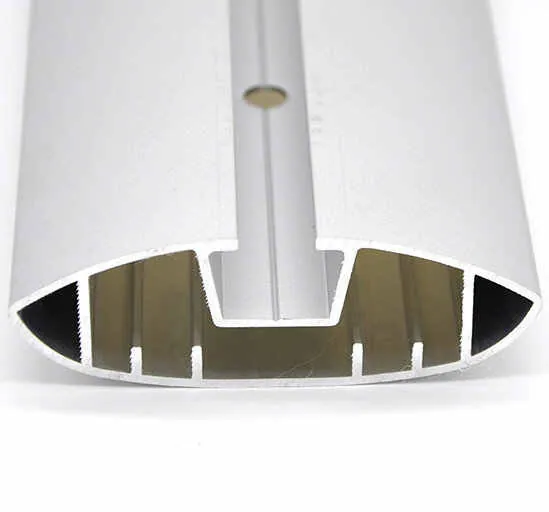
Uniform Metal Structure Supports Heat Flow
When aluminum is extruded, the metal flows under pressure and heat. This flow aligns grains and reduces voids or internal defects. As a result the thermal conductivity becomes consistent along the profile. That consistency helps heat move smoothly along walls, fins, or tubes.
Poor casting or welded assemblies can have inconsistencies. They may trap air or have variable density. That can slow down heat transfer or create hotspots. Extruded profiles avoid those problems.
Continuous Metal Path for Conduction
In finned or plate‑based exchangers, heat moves from core fluid through the wall into fins, then into surrounding air or another fluid. When the metal is continuous and uniform, conduction losses drop. That improves overall thermal performance.
Long Lengths and Consistent Sections
Extrusion enables long, continuous parts with identical cross‑sections. That helps in modular heat exchanger design. Modules stack or line up with minimal gaps. That uniformity avoids thermal bridges or uneven flow.
Moreover, extruded aluminum often uses alloys with good conductivity (like 6063). Combined with the aligned grain structure, this yields reliable conduction.
Impact on Thermal Performance
Good extrusion helps:
- Even heat distribution along fins or tubes, avoiding hot spots.
- Efficient transfer between fluid inside tubes and ambient fluid outside.
- Scalability: long, identical units for large heat exchangers.
Thus extrusion does more than define shape. It ensures the metal actually performs thermally.
Extruded aluminum profiles have more uniform thermal conductivity than poorly cast metal partsTrue
Aligned grain flow and minimal internal defects from extrusion support consistent heat conduction across the part.
Extrusion only affects shape and not the thermal performance of aluminumFalse
Extrusion affects microstructure and continuity of metal, both of which influence conduction efficiency.
Are multi‑channel extrusions effective in cooling?
Designers sometimes wonder if having many small channels in one extrusion is worth it. The worry: will flow be good? Will machining or manufacturing be complicated? Reality: multi‑channel extrusions perform very well when designed right.
Multi‑channel extruded profiles allow compact, efficient fluid paths that maximize surface contact and cooling per volume — often outperforming simpler single‑tube designs in heat transfer density.

Why Multi‑Channel Works
Multi‑channel extrusions pack many parallel fluid paths into a single part. That yields high ratio of surface area to volume. More surface area means more places for heat exchange. Also, flow splits across many channels. This reduces fluid velocity per channel but increases total contact surfaces.
Trade‑offs in Channel Size, Number, and Flow
Designers must balance channel width, wall thickness, and number of channels. If channels are too narrow, flow resistance climbs. Pressure drop becomes high. That requires stronger pumps. If channel count is low, surface area drops. If walls between channels are too thin, structural strength suffers under pressure or vibration.
Here is a sample design comparison:
| Design Option | Channel Count | 벽 두께 | Expected Cooling Efficiency | Flow Pressure Drop |
|---|---|---|---|---|
| Few wide channels | 2 | 두꺼운 | 보통 | 낮음 |
| Many narrow channels | 20 | Thin‑moderate | 높음 | Moderate‑High |
| Medium channels | 6 | 보통 | Good balance | 보통 |
When designers pick many narrow channels, cooling per volume spikes. That suits compact radiators or tight‑space exchangers. When pressure drop is a concern, fewer channels with moderate size give balance.
Manufacturing Advantages
Because all channels are extruded in one go, there is no need for welding of tubes or assembly of separate parts. That reduces leak points. It also lowers labor and cost. The extrusion ensures perfect alignment and uniform wall thickness.
Real‑world Use Cases
Multi‑channel extruded cores appear in car radiators, industrial water‑to‑air heat exchangers, and heat sinks for electronics. They deliver compact designs with high heat flux. The uniform channels help coolant flow evenly and avoid hotspots.
Still, such designs need careful fluid dynamic analysis. Engineers must test flow rate, pressure drop, and structural integrity. Well‑designed multi‑channel extrusions often meet or exceed performance of traditional fins‑plus‑tubes designs.
Multi‑channel extruded aluminum profiles can achieve higher heat exchange density per volume than single tube designsTrue
Many parallel channels increase internal surface area and distribute fluid flow, thus improving cooling per unit volume.
Multi‑channel extrusion designs always result in low flow resistanceFalse
If channels are narrow or walls are too thin, flow resistance and pressure drop can become high.
What surface finishes improve heat transfer?
Sometimes people ignore surface finish on extruded parts. They think finish matters only for looks or corrosion. In fact finish can change heat transfer performance significantly.
Surface finishes that increase surface roughness, add coatings with high emissivity, or protect against corrosion can improve heat exchange and long‑term reliability.

Role of Surface Finish in Thermal Performance
When heat moves from metal to fluid (air or liquid), the interface matters. A clean, smooth surface offers less turbulence. Rough surfaces or textured fins create micro‑turbulence. Micro‑turbulence improves convection, especially in air or low‑velocity fluid.
Also, finishes like anodizing or black oxide can raise surface emissivity. That helps radiative heat transfer and may improve performance in thermal exchanger environments where radiation or ambient cooling matter.
Common Finishes and Their Effects
| 마감 유형 | 표면 상태 | Benefit for Heat Transfer |
|---|---|---|
| 밀 마감 | Smooth, minimal texture | Lower convection, good for high‑velocity fluid |
| Brushed or textured | Slight roughness | Increased turbulence for air cooling or low flow |
| Anodized (clear) | Slight oxide layer | Corrosion resistance, stable thermal conduction |
| Anodized (colored/black) | Dark, higher emissivity | Better radiative and convective cooling in air |
| 파우더 코팅 | Uniform coating layer | Corrosion protection; may reduce direct conduction but helps durability |
For air‑to‑air or air‑to‑fluid heat exchangers, textured, black anodized fins often outperform bare aluminum. The rough surface encourages air disturbance and better heat exchange. The dark color helps radiation if ambient allows.
For liquid coolers or sealed systems, anodizing (clear) provides corrosion resistance without hurting conduction too much. That ensures long life under coolant flow.
When Finish Choice Matters Most
- In systems with air on one side: rough or anodized dark finish improves convection.
- In humid or corrosive environments: corrosion‑resistant finish protects longevity without major performance loss.
- In sealed liquid systems: smooth mill finish may suffice because fluid contact ensures good conduction.
Choosing finish depends on fluid type, flow velocity, and environment. A wrong finish may reduce efficiency or cause corrosion over time.
Textured or anodized dark‑colored aluminum fins improve heat dissipation in air‑cooled exchangersTrue
Rough texture boosts convection and dark color increases emissivity, enhancing radiative cooling.
A mill‑finish smooth extruded surface always provides the best heat transfer in all kinds of exchangersFalse
Smooth surfaces reduce convection in air‑cooling; textured or treated surfaces often transfer heat better when air is involved.
결론
Extruded aluminum gives many profile choices for heat exchangers. Proper alloy, profile shape, channel design, and surface finish together define thermal performance. Choosing right options early helps build efficient, durable exchangers.