
알루미늄 압출 표면 거칠기 규격?
Rough or inconsistent surfaces on aluminum extrusions can lead to serious problems — coating failure, poor fits, or rejections in quality checks.
Aluminum extrusion surface roughness, often measured by Ra value, affects appearance, assembly tolerance, and finish quality. Controlling Ra is essential for both technical and cosmetic performance.
In this article, I’ll explain common Ra specifications, how surface texture affects fit, the requirements before anodizing, and which tools are used for roughness measurement.
What is the standard Ra value for extruded surfaces?
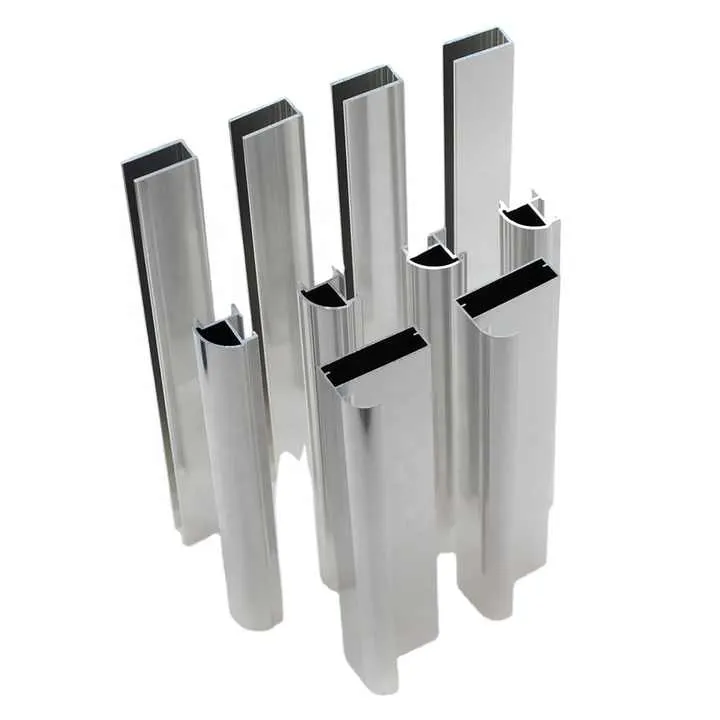
Most aluminum extrusions, as they exit the die, have a rough surface compared to machined parts. This texture varies depending on alloy, die condition, extrusion speed, and cooling method.
The standard Ra value for as-extruded aluminum profiles generally ranges between 1.6 µm to 3.2 µm, depending on application requirements and finishing processes.
For industrial components, an Ra around 3.2 µm is often acceptable. For visible or coated parts, manufacturers may target Ra values of 1.6 µm or lower to improve visual appearance and coating adhesion.
Surface smoothing methods, like brushing, polishing, or light machining, are used if lower Ra values are required before further treatment.
| Ra Level (µm) | Surface Quality Description |
|---|---|
| >3.2 µm | Rough as-extruded surface |
| 1.6–3.2 µm | Standard extrusion finish |
| <1.6 µm | Fine, smoothed or polished finish |
| <0.8 µm | Precision-machined or buffed |
As-extruded aluminum profiles typically have surface roughness values between 1.6 µm and 3.2 µm.True
This range is common for industrial and structural profiles without secondary surface processing.
An aluminum extrusion with Ra below 0.4 µm is common without any additional surface treatment.False
Ra below 0.4 µm is extremely smooth and generally not achieved with standard extrusion alone.
How does surface finish impact component fit?
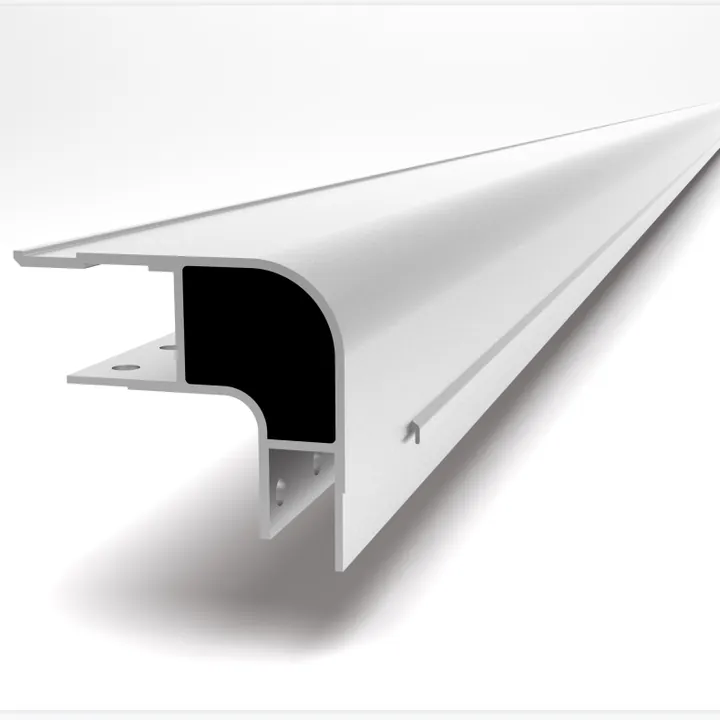
When two aluminum components must slide together, or when seals and fasteners are involved, surface roughness starts to matter. Too rough — and parts won’t fit. Too smooth — and they may slide or leak.
Surface roughness influences how precisely parts fit, how easily they assemble, and how stable they are under load or movement.
If one part has a rough surface with high peaks, it may not slide smoothly into another part. The peaks may catch, deform, or interfere with other surfaces. This creates noise, friction, or assembly failures.
In tightly toleranced assemblies, high roughness may push overall part dimensions out of spec — even if the nominal dimensions are correct. That’s because Ra affects how the material fills space between mating surfaces.
| 애플리케이션 | Preferred Ra (µm) |
|---|---|
| Loose structural fit | ≤ 3.2 µm |
| 슬라이딩 메커니즘 | ≤ 1.6 µm |
| O-ring or gasket interfaces | ≤ 0.8–1.6 µm |
| Decorative surface | ≤ 0.8 µm |
Smooth surfaces also reduce friction and wear. This becomes important in moving parts or in assemblies that must remain stable for years without adjustment.
Rougher aluminum surfaces can lead to poor fit and tolerance issues in assemblies.True
High Ra values add micro-dimensional error and increase friction or misalignment.
Surface roughness has no effect on the mechanical fit between aluminum components.False
Roughness changes how parts make contact and can interfere with precision fitting.
Are there roughness limits for anodizing preparation?

Anodizing aluminum creates a protective oxide layer. But if the base metal is too rough, the final anodized finish looks cloudy, uneven, or even defective.
Yes — before anodizing, aluminum extrusions are usually required to have a surface roughness of Ra ≤ 1.6 µm to ensure even oxide growth and smooth final appearance.
If the aluminum is too rough, anodizing enhances those imperfections. The oxide builds unevenly around peaks and valleys, creating color variation, gloss inconsistency, or visual defects.
To meet these requirements, manufacturers may use surface treatments before anodizing:
- Light brushing or polishing
- Acid etching
- Mechanical grinding or belt finishing
These steps reduce roughness, remove surface debris, and prepare the surface for anodizing without compromising shape or dimensions.
In applications like architectural frames or consumer electronics, controlling roughness before anodizing is critical to achieving a premium appearance.
Anodizing on rough aluminum surfaces can result in uneven coating thickness and poor appearance.True
Surface texture affects oxide growth and can lead to inconsistent finishes if not controlled.
Aluminum surfaces should be as rough as possible before anodizing to help the oxide layer bond better.False
Excessive roughness leads to uneven coating and aesthetic problems.
Which tools are used to measure surface roughness?
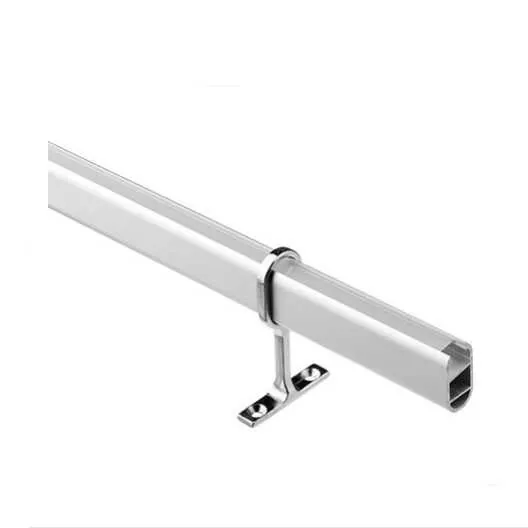
Measuring Ra is not just visual — it’s done using specific instruments designed to detect and quantify microscopic surface irregularities.
Surface roughness on aluminum extrusions is typically measured using contact profilometers or non-contact laser/optical devices, depending on precision and production speed.
Common measurement tools:
| 도구 유형 | 작동 방식 | 참고 |
|---|---|---|
| Stylus profilometer | A fine needle traces surface and calculates Ra | Widely used in QC labs |
| Optical profilometer | Uses light or laser to map surface | Good for delicate or soft surfaces |
| Tactile roughness tester | Handheld tool for quick field checks | Less accurate, used for inspection |
| 3D surface scanners | Captures roughness over complex shapes | Used for parts with contours |
The Ra value is usually measured in micrometers (µm), and readings may vary across different zones of the same part. Some quality systems measure Ra at multiple points to ensure consistency.
A stylus profilometer is a common tool for measuring Ra on aluminum surfaces.True
Stylus-based systems are accurate and widely used in extrusion quality control.
Surface roughness on aluminum is usually measured by visual inspection alone.False
Visual checks can spot flaws, but precise Ra values require instrumentation.
결론
Surface roughness matters — especially when aluminum extrusions are used in precise assemblies or receive coatings like anodizing. Knowing the expected Ra value helps avoid problems in fit, finish, and function. Whether measured by stylus or scanner, keeping Ra within spec protects quality across production, coating, and final assembly.