what to be aware of with extrusion aluminum?

Aluminum extrusion seems simple: feed a billet, push it through a die, get a profile. Yet many pitfalls lurk before, during, and after extrusion. Without care, defects happen. Quality drops. Finished parts fail.
Many factors—from alloy selection to handling and inspection—affect extrusion results. Being aware of them helps get strong, consistent, defect‑free aluminum parts.
Below I explore what to watch for in extrusion aluminum: performance factors, defects, alloy choices, and handling mistakes.
What factors affect extrusion performance?
Even before the press fires up, several important factors shape how well aluminum will extrude. Everything from billet quality to die design influences flow, strength, and finish.
Key factors—billet homogeneity, temperature control, die design, lubrication, press parameters, and equipment maintenance—determine whether extrusion goes smoothly or yields flawed parts.
Critical variables in extrusion process
| ファクター | Impact on extrusion performance |
|---|---|
| Billet casting quality | Poor casting leads to porosity, segregation, weak zones |
| Homogenization heat‑treat | Ensures uniform composition and reduces cracks |
| Correct billet temperature | Too cold causes cracks; too hot causes surface oxidation |
| Die design & condition | Bad design or worn die causes uneven flow, wall thickness issues |
| 潤滑/コーティング | Poor lubrication increases friction, leads to die wear |
| Press alignment & pressure | Mis‑alignment or wrong pressure causes warping or cracking |
If any factor is off, extrusion quality suffers. For example: billets with internal defects may crack under load. Without proper homogenization, extruded parts may deform after cooling. A worn or poorly designed die can distort profile geometry or create uneven walls.
From experience, the billet quality is often overlooked. Some suppliers reuse scrap or mixed alloys for billets without proper refining. The result: hidden impurities, uneven grain, unpredictable behavior under pressure. Good extrusion starts with good billet.
Temperature control during heating is critical too. I’ve seen cases where a billet was overheated and the surface oxidized badly, leading to rough finish and post‑processing trouble. On the other hand, insufficient heating made the metal crack when forced through the die.
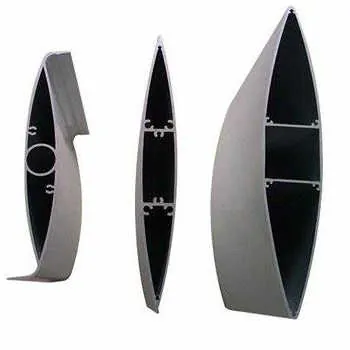
Die design deserves special care. Profiles with uneven wall thickness or sharp transitions require a carefully tuned die: smooth ramps, gradual bearing zones, balanced flow paths. Poor die design causes thin walls or thick spots, open corners, or surface marks.
Maintenance also matters. A correctly aligned press, clean container, good dummy block, lubricated surfaces—these all extend die lifetime and ensure repeatability. A worn container wall or misaligned ram leads to scratches, uneven flow, and die damage over time.
Therefore, successful extrusion demands control over many variables. A mistake in any part of the process can ruin a batch.
Billet quality and homogenization significantly impact the structural integrity of extruded aluminum.真
Poor casting or lack of homogenization leads to internal defects, uneven alloy distribution and increased risk of cracks under load.
If die design is poor, even high-quality billet and correct temperature cannot guarantee good extrusion.真
Die geometry guides flow; poor design causes uneven flow and local defects, regardless of material quality.
Why surface defects require inspection?
Even if extrusion goes without obvious breakage, surface defects often hide deeper problems. Surface flaws signal issues inside the metal or errors in the process. Without inspection, parts may fail later under load, or reject rates rise.
Surface defects like roughness, cracks, pits, or oxide scale often reflect internal stress, poor flow, or contamination — they must be inspected early to avoid bigger failures.
Common surface defects and their causes
| 欠陥の種類 | Possible cause(s) | Implication for quality / use |
|---|---|---|
| Surface roughness / scale | Over‑heating, oxidation, poor lubrication | Poor finish; difficult to anodize or paint |
| Surface cracks / lines | Inclusions, die mis‑alignment, billet impurities | Weak spots; potential structural failure |
| Uneven wall / thickness | Poor die design, uneven flow, incorrect pressure | Dimensional inaccuracy, weak sections |
| Pits / voids inside | Billet porosity, gas trapped in casting | Reduced strength; unpredictable failure points |
| Warping or twist after cooling | Uneven cooling, internal stress, bad support | Bad geometry; part may not fit or function |
Inspection during and after extrusion should not be optional. Simple visual checks may catch scale or obvious defects. But for critical parts, more thorough checks make sense: dye‑penetrant testing for cracks, ultrasonic tests for internal voids, micrometer measurements for wall thickness consistency, and straight‐edge or laser scans for warping.
For example, if a profile has internal voids from poor billet casting, it may look fine at first. But during machining, stress or vibration can cause sudden cracks or failure. I’ve seen such failures during CNC machining: a hidden pore becomes a crack under stress. That ruined a batch and cost rework.
Surface roughness also affects finishing operations. Anodizing a rough or oxidized surface leads to dull finish, uneven color, or acidic pits. Powder coating may hide some imperfections, but poor surface preparation often shows up after coating: blistering, peeling, or uneven thickness.
The takeaway: inspect every batch thoroughly. Don’t assume extrusion is “automatic good.” Even well-controlled processes can have unexpected defects. Catching problems early saves time, money, and ensures reliability.
Surface inspection should include checking for cracks, pits, or scale before finishing or machining.真
Surface defects often reveal internal or process problems that affect strength and finish quality.
If extrusion passes initial inspection, no further checking is needed before machining.偽
Some internal defects or dimensional inaccuracies are not visible; further testing ensures part reliability and correct dimensions.
How to choose the right extrusion alloy?
Alloy selection is a fundamental decision that affects extrudability, strength, finish, and cost. Using the wrong alloy for a given application leads to poor performance or excessive tool wear.
Selecting the correct aluminum alloy depends on the end application: structural strength, finish quality, corrosion resistance, machinability, or cost — each requirement suggests different alloys.

Common alloy considerations
- Extrudability: Some alloys flow easily, fill complex dies, and yield smooth surfaces. Others are harder, resist flow, or require high pressure and careful temperature control.
- 機械的強度: Structural parts need higher strength and toughness. For those, alloys like 6005, 6061, 6082, or specialty high-strength alloys make sense.
- Surface finish and anodizing: Decorative or architectural profiles benefit from alloys that anodize cleanly and uniformly — e.g., 6063 or 6463.
- Machinability: If parts will be machined, drilled, or milled post-extrusion, consider alloys that respond well to machining without tearing or workhardening badly.
- Cost and availability: Common 6000-series alloys offer a good balance. Exotic or high-strength alloys may cost more and limit supply.
- Thermal stability or corrosion resistance: For outdoor, high-humidity, or marine applications, alloys with better corrosion resistance and tolerance to stress-relief cycles (e.g. 6005A, 6063T6) are preferred.
Example alloy comparison
| 合金 | 押出の容易さ | 強さ | Surface Finish / Finishability | 代表的な使用例 |
|---|---|---|---|---|
| 6063 | 非常に良い | ミディアム | Excellent (anodizing, paint) | Architectural profiles, frames, railings |
| 6061 | グッド | 高い | グッド | Machinery parts, structural components |
| 6082 | 中程度 | 高い | 中程度 | Structural beams, heavy frames |
| 6005A | やや硬め | 高い | グッド | High‑strength structural parts, frames |
| 6463 | 非常に良い | ミディアム | Excellent (decorative) | Decorative trims, furniture frames |
Often extrusion houses choose 6063 for decorative or anodized parts and 6061 or 6082 when strength matters. But sometimes custom alloys are needed — then the process must adapt.
From past projects, I learned that using 6061 for architectural trims gave visible surface blemishes unless the die was polished and extrusion conditions ideal. On the flip side, trying to extrude a high‑strength alloy designed for structural beams using a die meant for 6063 resulted in die wear and poor profile shape.
Thus, alloy choice should align with final use — and extrusion process must adapt to that alloy. Communicate with your supplier: alloy, T‑temper, expected loads, finish requirement — all affect setup.
6063 is ideal when surface finish and anodizing are priorities.真
It extrudes easily, yields smooth surfaces and responds well to anodizing or painting.
High‑strength alloys always extrude with the same ease as 6063.偽
Stronger alloys often resist flow, require higher pressure and may cause increased die wear or defects if process is not adjusted.
Can handling errors damage profiles?
Even perfectly extruded aluminum can get ruined by poor handling, storage, or transportation. Simple mistakes lead to scratches, dents, warping — sometimes before the part even leaves the plant.
Extruded aluminum profiles require careful handling, proper storage, and correct handling procedures. Mishandling may distort shape, scratch surfaces, or introduce stress risers that shorten part life.

Common handling mistakes and their consequences
| Mistake or condition | Damage caused | Impact on final product |
|---|---|---|
| Dropping or rough handling | Dents, gouges, surface scratches | Poor appearance; stress concentrations |
| Stacking poorly / no padding | Surface abrasion, scratches | Bad finish, may require polishing |
| Bending during transport | Warping, twist, mis‑alignment | Profiles out of shape; unusable parts |
| Exposure to moisture / contaminants | Corrosion, oxidation, staining | Weakened surfaces; finish problems |
| Improper cutting or machining | Burrs, stress risers, distortions | Weak points, structural failure potential |
Even small dents or scratches on a cosmetic profile ruin its appearance. For structural parts, dents concentrate stress and lead to early fatigue or fracture. Warped profiles may not fit, causing assembly issues.
Preventive measures include:
- Use padded supports when stacking profiles. Soft wood, foam, or rubber helps.
- Use banding or straps with edge protectors for transport.
- Store indoors, dry, and ideally wrapped or covered to avoid moisture or contaminants.
- Handle long profiles carefully — use multiple people or lifting aids.
- Inspect profiles before machining or assembly: check straightness, run a straightedge along length, look for bends.
- Deburr cut ends, clean surfaces, and store flat while awaiting use.
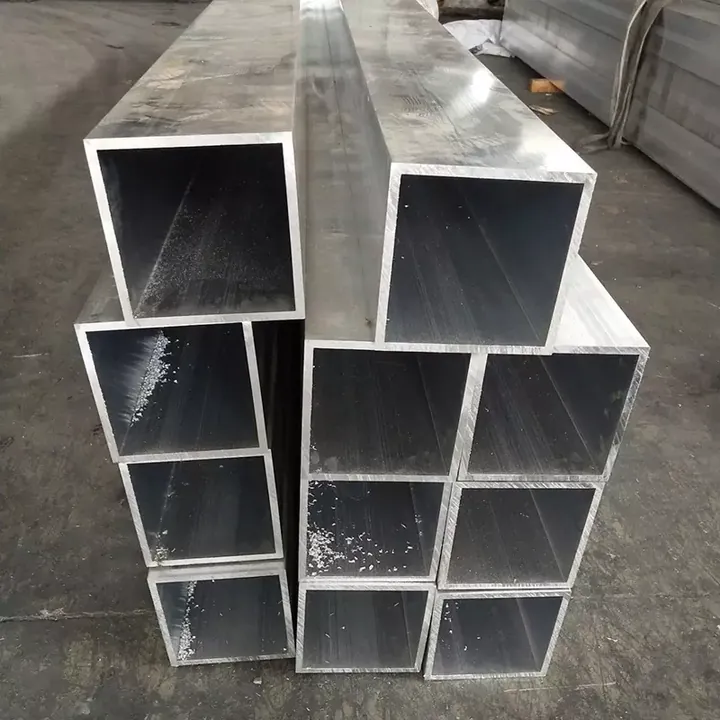
From past projects I recall ordering long 3000 mm profiles for frames. They arrived stacked tightly with no padding — scratched and dented. We had to polish and re-anodize, raising cost and delaying schedule. The lesson: how you handle and store matters as much as how you extrude.
Thus, extruded aluminum is not “finished product” until handling, storage, and transport are done right. Skip that care, and quality goes down.
Improper handling and storage after extrusion can warp or damage profiles before use.真
Dents, bends or moisture exposure degrade surface and structural integrity before any machining or assembly.
Once extrusion is complete, handling does not affect final part performance.偽
Damage during handling or transport can introduce flaws that compromise strength or finish, even if extrusion was perfect.
結論
Aluminum extrusion offers flexibility, efficiency, and versatility. Yet success depends on more than just pushing metal through a die. Billet quality, process control, die design, inspection, alloy choice, and careful handling all play critical roles. Overlooking any of these can compromise strength, surface finish, or dimensional quality. Keeping attention on every step — from raw material to final delivery — ensures the aluminum parts perform as intended.