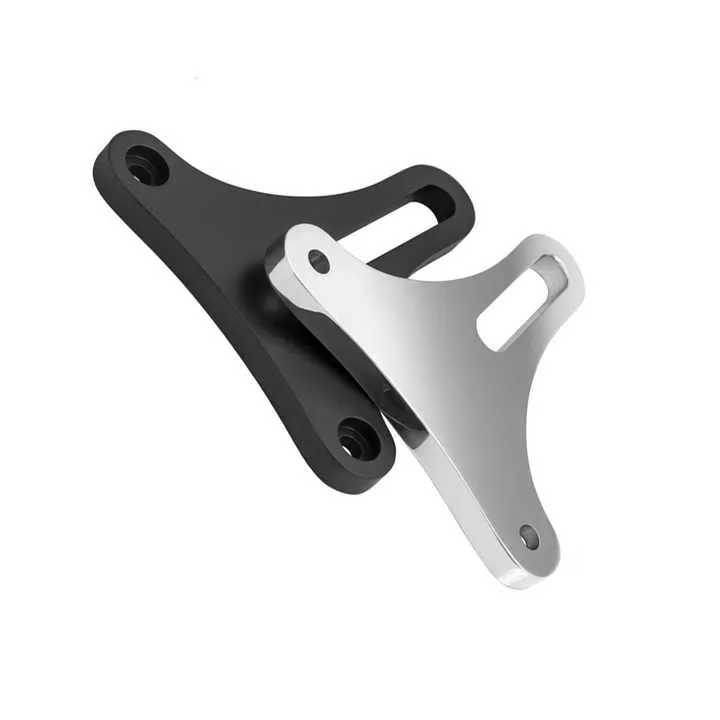
What is the aluminum extrusion machining?

At the heart of aluminium profile manufacturing, extrusion offers shape; machining brings precision and functionality.
Aluminium extrusion machining is the process of taking extruded aluminium profiles and applying secondary operations—such as cutting, drilling, milling, turning, tapping—to create finished parts with tight tolerances and required features.
This article explores how extrusion is machined after forming, why coolant is essential, where machining enhances functionality, and how CNC technology optimises profile accuracy.
How are extrusions machined after forming?
Extruded aluminium profiles come out of the press with the basic cross‑section and primary shape. After forming, many profiles need additional machining operations to meet specific functional, assembly or aesthetic requirements.
After the extrusion process, machining steps such as sawing to length, milling to create slots or pockets, drilling holes, tapping threads, or turning for cylindrical features are applied to bring the profile to the finished state.

When an aluminium profile is extruded, you get a near‑net shape: the major cross‑section is formed, but the part may still need features that extrusion cannot deliver directly. These include precision holes, countersinks, threads, or flat surfaces. Machining is the bridge that completes the part.
Key steps in machining extruded aluminium
- Cutting to length: The long extruded piece is sawed or cut to required dimensions.
- Milling or slotting: For pockets, grooves, or complex geometry.
- Drilling and tapping: For bolts, screws, or inserts.
- Turning: If round features are needed.
- Deburring and inspection: Removing sharp edges and verifying tolerances.
Machining converts an extruded profile into a usable component. It is essential for applications like industrial frames, electronics housings, or transportation components where precise fit is critical. Many aluminium grades such as 6061 or 6063 are selected specifically because they are easy to machine after extrusion.
Extruded aluminium profiles always come out of the press with all needed holes and slots pre‑formed, so machining is optional.偽
Most extruded profiles require additional machining (drilling, milling, tapping) to meet final part features and tolerances.
Machining of aluminium extrusions typically includes operations like sawing, milling, drilling and tapping.真
These operations are common and necessary to achieve final shape and function.
Why coolant is essential when machining?
Machining aluminium may seem easier than harder metals, but proper cooling is critical to achieving quality, prolonging tool life and maintaining dimensional accuracy.
Coolant or lubrication during machining helps control heat, remove chips, reduce tool wear, improve surface finish, prevent burring and avoid part distortion when machining aluminium extrusions.
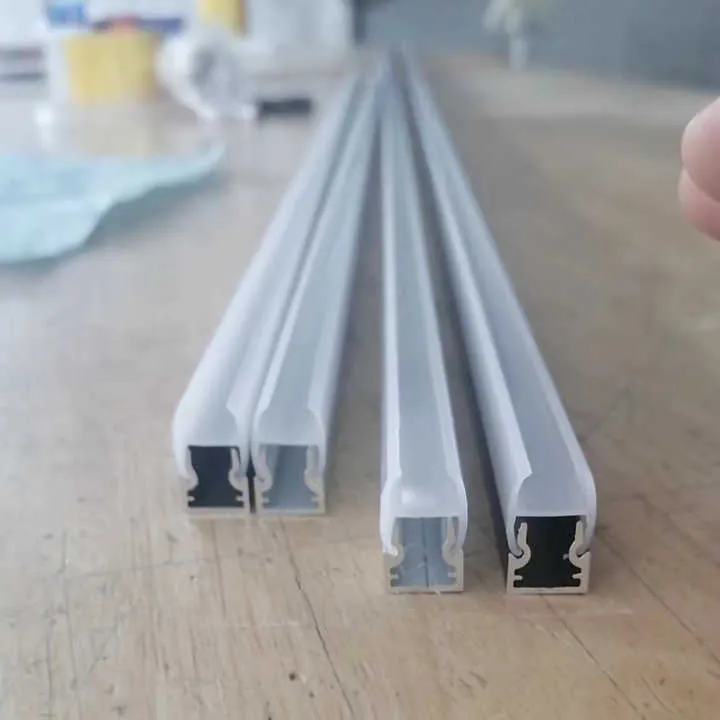
Aluminium conducts heat quickly, but also builds heat rapidly at the cutting zone. If this heat isn’t managed, it causes problems. The part can expand during machining, affecting dimensions. The tool can overheat, dull or break. Chips can stick to the cutting edge and damage the surface finish.
Coolants serve several purposes:
- Heat control: Keeps both part and tool cool.
- Chip removal: Flushes long aluminium chips out of the cutting area.
- Tool life: Reduces friction and wear.
- Surface quality: Prevents built-up edges and burring.
- Dimensional stability: Controls thermal expansion during precise cuts.
In high-speed operations, flood coolant or mist lubrication is used to stabilize the process. Without it, tolerances may shift, especially in thin-walled or complex profiles. For extrusion machining, especially CNC processes, coolant helps maintain repeatability and consistency in tight-tolerance work.
Using coolant during machining of aluminium extrusions helps maintain dimensional accuracy and part integrity.真
By controlling heat, removing chips and reducing thermal distortion, coolant supports accuracy and part quality.
Coolant is unnecessary when machining aluminium extrusions because aluminium is soft and easy to cut.偽
Although aluminium is softer than steel, machining still generates heat, chip issues and potential distortion, so coolant is important.
Where machining improves functionality?
Machining of extruded aluminium profiles is not just about making them look right—it enhances the functionality, assembly compatibility, structural performance and service life of the part.
Machining transforms an extruded profile into a functional component by adding precise features (holes, threads, grooves, flat surfaces), ensuring alignment, assembly fit, finishing, and performance under service conditions.
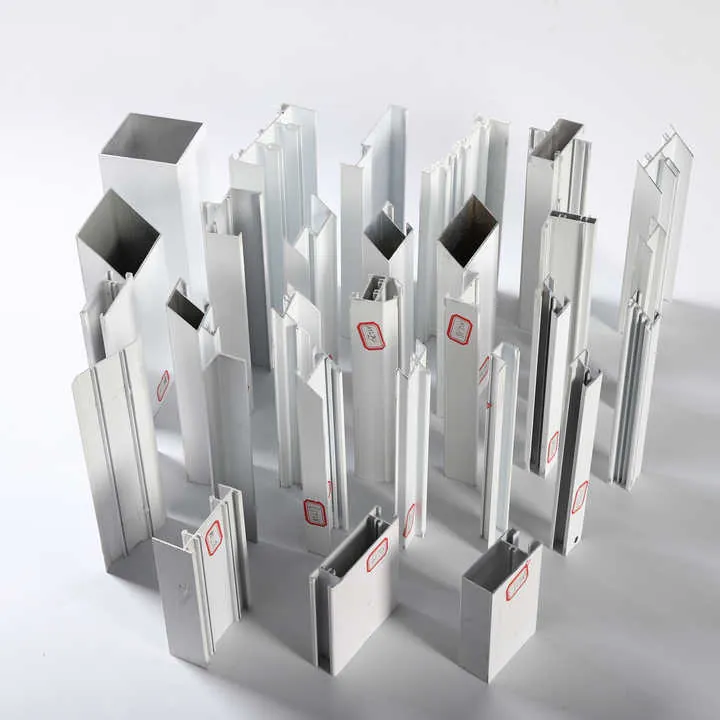
Functional improvements enabled by machining
- Assembly-ready parts: Drilled holes, tapped threads and machined flats allow parts to connect seamlessly with others.
- Structural fit: Flat machined surfaces ensure flush mounting and load distribution.
- Thermal enhancement: Machined surfaces on heat sinks or enclosures improve heat transfer.
- Electrical interface: Surface finish and machining allow grounding and contact points.
- Custom variations: One extrusion can serve multiple products by machining specific slots or holes per customer.
This means that even if the base extrusion is the same, different customers or end-uses can receive customized variants through simple post-machining. It saves cost, simplifies inventory, and improves flexibility.
Here is a table summarising machining’s impact on functionality:
| Functional Area | Machining Benefit | Common Operation |
|---|---|---|
| メカニカル・アセンブリ | Precise holes, threads, flat interfaces | Drilling, Tapping, Milling |
| 構造的完全性 | Better contact and alignment | Milling, Counterboring |
| 熱管理 | Smoother contact with heat sources | Surface Milling |
| カスタマイズ | Per-client variations without changing extrusion | Hole and slot variation |
| Finish Preparation | Smooth surface for coating or anodising | Deburring, Smoothing |
Machining of extruded aluminium profiles is primarily cosmetic and does not impact functional performance.偽
Machining adds functional features—holes, slots, flat surfaces—that directly impact assembly, performance and reliability.
Precision machining of extruded aluminium parts enables integration into assemblies with tight tolerances and reliable fits.真
Tight tolerances and features made via machining allow precise assembly and functional use.
Can CNC optimize profile accuracy?
Yes — Computer Numerical Control (CNC) machining is a key enabler for achieving high accuracy, repeatability, complex features and efficient throughput for extruded aluminium profiles.
CNC machining allows extruded aluminium profiles to be processed with high precision, complex geometries (3-axis, 4-axis, 5-axis), minimal setups, efficient work-holding, and tight tolerances that enhance overall part quality and production efficiency.
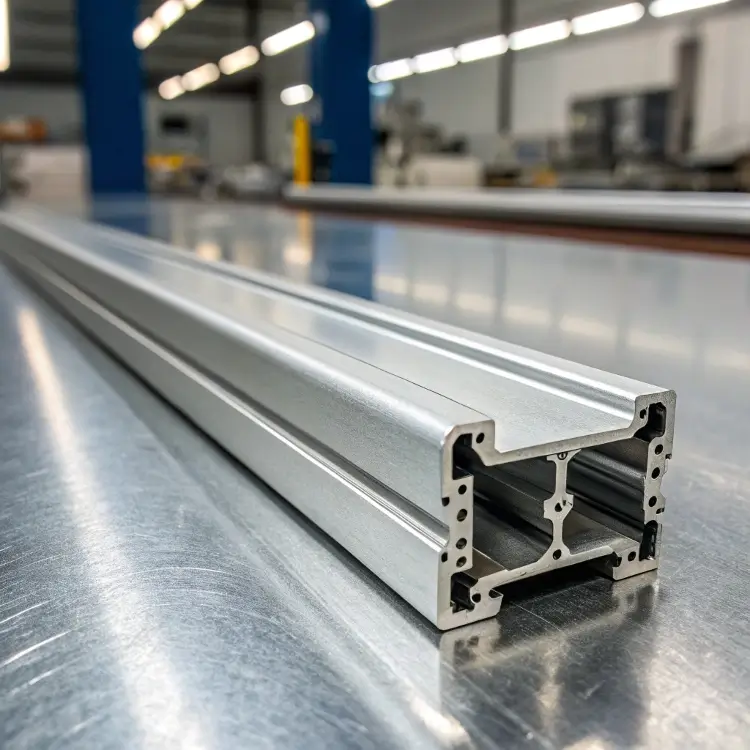
CNC advantages for extrusion machining
- Precision and repeatability: CNC tools follow programmed paths with minimal variation.
- Complex geometry: Allows machining slots, holes, angled faces or recesses in one setup.
- Long profile handling: Large-bed machines can handle extrusions up to several meters.
- Reduced human error: Automation ensures consistency even across thousands of parts.
- Tight tolerances: CNC machines maintain tolerances down to +/- 0.1 mm or better.
- High efficiency: Multi-tool setups, automatic feeders and tool changers boost productivity.
How CNC enhances profile machining
- Eliminates manual measurement error
- Reduces part repositioning
- Allows adaptive machining and real-time compensation
- Supports in-line inspection during machining
- Enables batch processing for high-volume jobs
Designing extrusions with CNC machining in mind allows more precise, lower-cost manufacturing. Designers should plan for tool access, support fixtures, and allowance for surface finishing after machining.
CNC machining of extruded aluminium profiles enables tight tolerances and high repeatability.真
CNC machines provide controlled, automated precision cuts with reliable accuracy for extrusion parts.
CNC machining cannot handle long aluminium extrusion profiles longer than a few feet.偽
Many CNC setups can handle profiles over 10 feet long using long-bed machines and custom fixtures.
結論
Machining of aluminum extruded profiles bridges the gap between basic shape and fully functional component. From post-forming operations, to the critical role of coolant, to functional enhancement by machining, and the precision delivered by CNC, the process ensures that extruded aluminium profiles meet assembly, performance and quality requirements with efficiency and accuracy.