アルミニウム押出成形の製造工程とは?

When I first toured an extrusion plant, I was struck by the giant press, glowing aluminum billets and the mechanical drama of forging shapes. The process is far more than “push metal through a die”.
In short, aluminum extrusion is made by heating a billet, forcing it through a shaped die, cooling and stretching the profile, then finishing and cutting to size.
Let’s walk step by step through the process so you understand how your aluminum profiles are made.
What steps form the aluminum extrusion process?
Imagine starting with a solid cylinder of aluminum and ending up with a long profile ready for machining or anodizing. That transformation happens through a series of steps.
The extrusion process is made of preparing the die, heating the billet, loading it into the press, forcing it through the die, cooling/quenching, stretching, cutting, aging/finish.
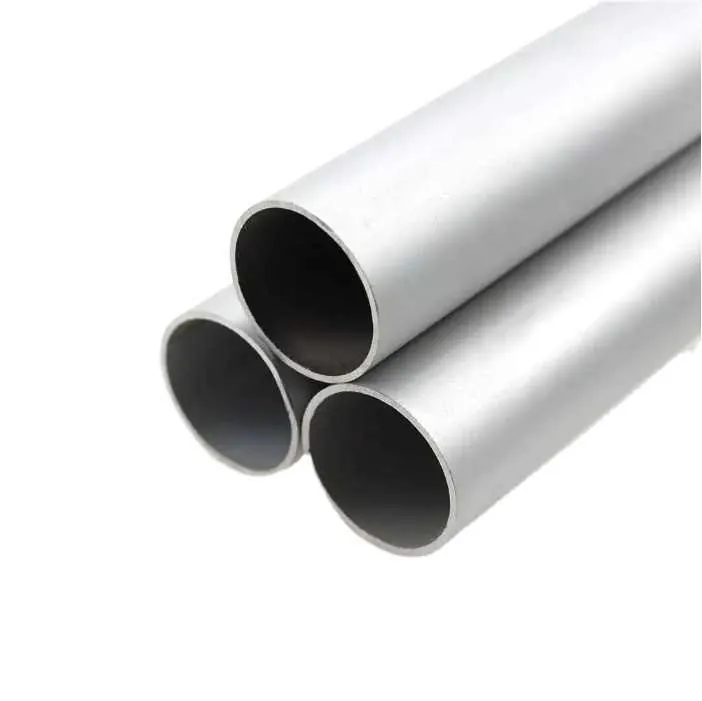
Major Steps of Extrusion
- 標本作成 – A steel die is machined to the shape of the desired profile and preheated to allow smooth flow of aluminum.
- ビレット加熱 – A solid aluminum billet is preheated in a furnace to make it malleable but not molten.
- Billet loading and pressing – The heated billet is loaded into the container of the extrusion press. A hydraulic ram forces the aluminum through the die.
- 押出 – The material exits the die opening and forms a continuous profile in the desired shape.
- Cooling and run-out – The hot profile is cooled using air or water and guided on a long table to stabilize its structure.
- ストレッチ – Mechanical arms stretch the profile to straighten it and relieve internal stresses.
- 切断による長さ調整 – The profile is sawed to customer-specified lengths.
- Aging and finishing – The profile may be heat-treated (T5, T6 temper), anodized, painted or powder-coated.
なぜ各ステップが重要なのか
Every step affects quality. Poor die prep causes distortion. Inconsistent billet heating leads to uneven extrusion. Stretching corrects warping. Even cutting technique affects the downstream assembly and machining.
The extrusion process always uses a molten aluminum state before forcing through the die.偽
In aluminum extrusion the billet is solid but heated to high temperature; it is not melted.
Stretching the extruded profile helps improve its straightness after cooling.真
Stretching mechanically removes twists and bends caused during cooling and extrusion.
Why is billet heating essential in extrusion?
If the billet entering the press is too cold or too soft, you risk defects, die wear, or inefficient production.
Billet heating is essential because it raises the aluminum to a malleable temperature so that it flows smoothly through the die, ensures consistent material properties, and reduces force and tool wear.

What happens during billet heating
The aluminum billet is typically heated between 400–500°C. This makes the metal soft enough to flow under pressure but keeps it solid, not molten. The heating reduces resistance and allows the material to pass through the die more evenly.
Why the right temperature matters
- Too low, the metal flows poorly, increasing pressure and damaging tooling.
- Too high, it risks grain structure damage, inconsistent surfaces, and weakened strength.
- Even heating throughout the billet avoids internal stress or distorted extrusion.
- Proper temperature allows better forming, die life, and final part performance.
Effects on final product
In your operation, if billet heating isn’t consistent, you may see:
- Dimensional variance,
- Poor surface quality,
- Internal voids or inclusions,
- Anodizing or finish defects,
- Shortened die lifespan.
You should ensure your extrusion partners monitor billet temps accurately and use infrared or contact thermometers at multiple stages.
Pre-heating the aluminum billet makes it easier to extrude with less force.真
Heated metal flows more easily, reducing required press force and improving die life.
Billet heating is optional and only needed for very small profiles.偽
Even small profiles benefit from proper billet heating for consistent flow and quality.
Where does extrusion tooling impact quality?
The tooling—especially the die and related components—directly defines the profile shape, tolerance, and surface finish.
Tooling impacts quality because the die controls the profile geometry, the tooling materials and support influence tool life and output consistency, and small errors in tooling cause big defects in the final extrusion.

The role of the die and tooling components
The die is precision-machined from hardened steel and contains the profile’s exact shape. For complex profiles, hollow or semi-hollow, the tooling includes a mandrel or bridge to manage internal voids. Tool alignment, wear, and temperature resistance all affect the result.
Impacts of poor tooling
- Inconsistent wall thickness,
- Twisted profiles,
- Surface scratches or drag lines,
- Wavy edges or collapse,
- Short die life and frequent changeovers.
For your business, poor tooling causes more than bad parts. It increases downtime, waste, and customer complaints. High-quality dies with polished bearings and precise flow paths reduce internal pressure, preserve shape and give clean finish.
Tooling management questions
- Is your supplier using CNC or wire EDM for die machining?
- How do they inspect tool wear?
- How frequently is tooling refurbished or replaced?
- Do they use simulation software to design tool flow paths?
- Can they show cross-sectional samples to confirm tooling accuracy?
Die design and maintenance have a major effect on extrusion profile accuracy.真
Tooling dictates shape, flow, finish and repeatability of the extruded profile.
As long as the press is large, tooling quality matters little for profile quality.偽
Even a large press cannot compensate for poor tooling design or wear.
Can process controls optimize extruded parts?
You can follow every extrusion step correctly, but without good controls, results still vary. Controls are key to consistency.
Yes — process controls (temperature, ram speed, billet temperature, die temperature, cooling rate, puller speed, straightening/stretching) optimize extruded parts for consistency, tolerance, finish and mechanical performance.

Key process control areas
| Control Factor | なぜ重要なのか |
|---|---|
| Billet Temperature | Ensures smooth metal flow and avoids defects |
| Ram Speed | Affects surface finish and material structure |
| 金型温度 | Prevents thermal expansion, ensures flow balance |
| Quench Rate | Controls grain size and tempering |
| Puller Alignment | Prevents bending or dragging on long profiles |
| Stretching Force | Ensures straightness and uniformity |
Process control systems often include thermocouples, feedback loops, programmable logic controllers (PLC), real-time temperature tracking, and operator alerts. A facility with real-time SPC and inspection data will outperform one relying only on visual checks.
Your advantage with good control
In your case, supplying B2B clients across solar, construction and machinery markets, consistency is value. When extrusion output varies:
- Holes may misalign,
- Assembly frames don’t fit,
- Post-processing takes longer.
Process control ensures every meter of profile meets specs, making your downstream CNC or finishing work smoother, faster, and cheaper.
Strict process controls in extrusion reduce variation in profile dimensions and quality.真
Monitoring key variables and using feedback loops improve consistency.
Once the press and die are set up, extra process controls don’t significantly affect part quality.偽
Even with good setup, variations over time need control to maintain quality.
結論
Understanding how aluminum extrusion is made helps you as a supplier to set expectations, ask the right questions of your extrusion partner, and reinforce your value to customers. The process—from die preparation to billet heating, extrusion, cooling, stretching, finishing—depends on tooling, temperature control, and operational discipline. When all these are well managed, you get high-quality, repeatable profiles, ready for your secondary operations and customers.