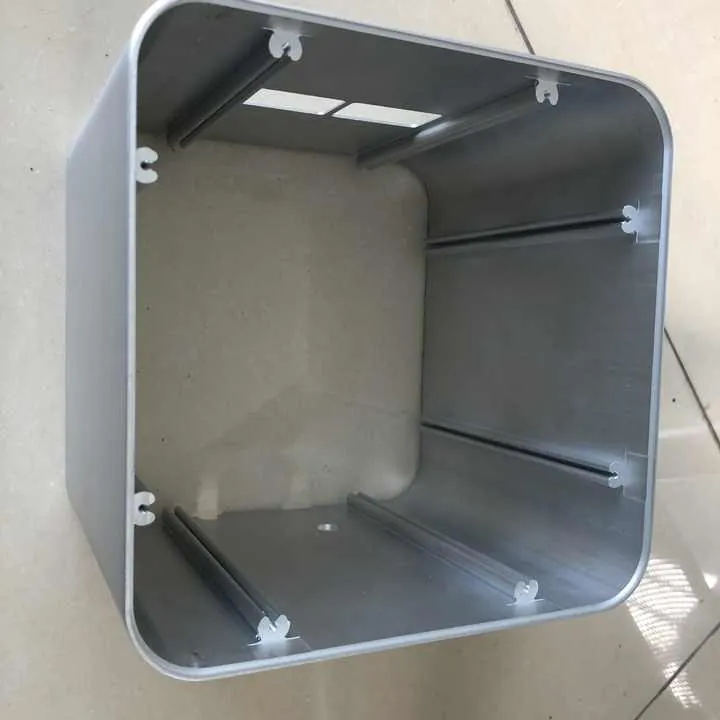
Are aluminum extrusions expensive?

Have you ever wondered whether purchasing aluminum extrusions will blow your budget?
Aluminum extrusions can be quite expensive depending on material, design complexity, finishing, and volume—but with smart choices the cost can be managed.
Let’s walk through what drives the cost, how alloy grades play a role, how to estimate a budget for a project, and how you might reduce cost via design changes.
What factors raise extrusion costs?
When you get a quote for extruded aluminum profiles you might ask “why so high?” The answer lies in several cost drivers.
Major cost drivers include raw material price, tooling/die costs, complex geometry, surface finishing & secondary operations, low volumes and logistics.

When I work through pricing with manufacturers, I always check the following:
-
Raw material cost: The cost of aluminum alloy billets is a large portion of the cost. One source estimates that raw material can account for 60‑75% of the cost per kg for standard architectural profiles.
-
Tooling and die costs: Custom profiles often require custom dies. The die cost is a fixed upfront cost—and if you run small volumes, that cost gets spread across fewer parts, raising per‑unit cost.
-
Design complexity and secondary operations: Profiles with ribs, thin walls, tight tolerances, or added finishing (anodizing, machining) increase per-unit cost.
-
Volume / production efficiency: Large orders reduce cost per unit. Small runs increase overhead and reduce press efficiency.
-
Shipping & regional factors: Sourcing from lower-cost regions may help, but long-distance logistics, import duties, and freight costs may cancel the advantage.
-
Market timing: Fluctuations in aluminum prices, labor costs, and energy affect total cost unpredictably.
| Cost Driver | Effect on Price |
|---|---|
| ötvözet típusa | High-grade = more expensive |
| Die/tooling cost | Fixed → high per-unit cost in small batches |
| Secondary operations | Increases labor and time |
| Rendelési mennyiség | Higher volume = lower unit cost |
| Logisztika | Adds shipping, customs fees |
Raw material cost is the single largest driver of extrusion pricingIgaz
Because billet cost makes up 60‑75% of cost for standard profiles.
Tooling cost becomes negligible for very small volume extrusionsHamis
Tooling cost is fixed and thus per‑unit cost becomes large for small volumes.
Why do alloy grades affect pricing?
The choice of alloy (and temper) is often overlooked when thinking of cost—but it matters a lot.
Higher‑grade alloys cost more because of more expensive raw material, tighter processing, slower machine speeds and sometimes more finishing or quality control.
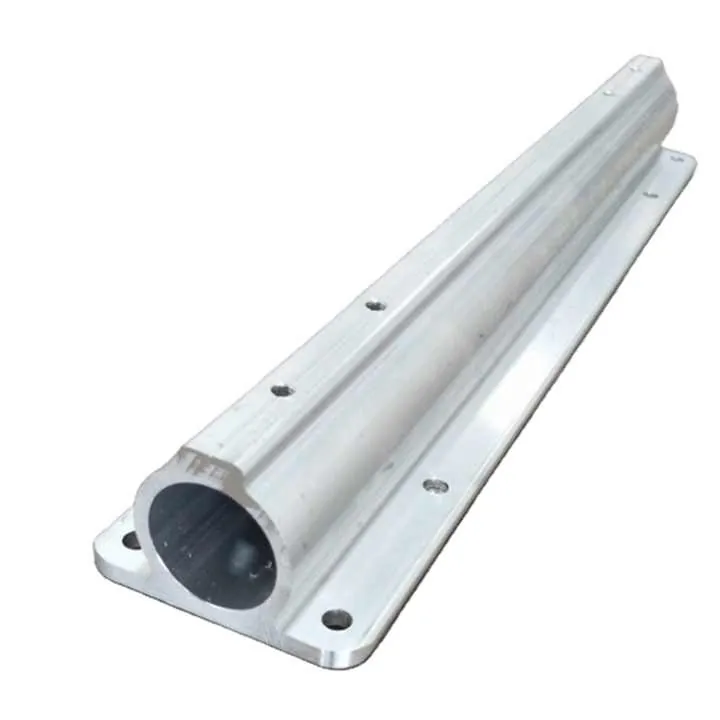
Aluminum alloys are not all the same. Some are cheap, others are costly—based on their composition, workability, and intended performance. Standard architectural extrusions often use 6063 alloy, which is economical and easy to form. But if your application demands more strength, you might consider 6061, 6005, or even aerospace-grade 7075.
The trade-off is cost. Premium alloys involve:
- Higher raw material cost (because of added metals like zinc, magnesium)
- Slower extrusion rates (they’re harder to push through a die)
- More post-processing (like heat treating, artificial aging)
- Stricter quality control (especially for aerospace or precision machinery use)
This table helps summarize the impact of alloy choice:
| Ötvözet | Tipikus használat | Relatív költség | Extrudálhatóság |
|---|---|---|---|
| 6063 | Architectural, general | Alacsony | Kiváló |
| 6061 | Structural, transport | Közepes | Jó |
| 7005/7075 | Légiközlekedés, katonaság | Magas | Nehéz |
Using a standard alloy like 6063 will generally cost less than specifying an aerospace alloyIgaz
Standard architectural alloys are more common, easier to extrude and less processed, hence lower cost.
All alloy grades cost essentially the same in extrusionHamis
Alloy grade influences raw material cost and manufacturing complexity, thus price varies.
How to estimate project extrusion budget?
A budget is only as good as the details behind it. You can’t manage costs if you don’t know what they include.
You estimate by combining material volume, unit cost per kg (or per pound), tooling/setup cost, surface finishing, secondary operations, logistics, and margin for contingency.

Whenever I help a client estimate extrusion costs, I follow a step-by-step breakdown like this:
-
Profile specs & quantity
Estimate the total length and weight needed. Multiply that by expected cost per kg, which varies from $2.50 to $4.50/kg depending on region and finishing. -
Tooling costs
If the design is custom, tooling might cost between $1,200–$2,000. That cost must be divided across your total batch to get a per-unit impact. -
Finishing operations
Add costs for anodizing, powder coating, CNC machining, punching, or packaging. These may add $0.20–$0.80/kg depending on complexity. -
Logisztika
Freight, customs duties, and local taxes can easily add 10–15% to total cost, especially for international orders. -
Contingency margin
Market aluminum prices change fast. Always include a 5–10% buffer in case prices spike.
Example Project Estimate (1,000 kg order):
| Költségtétel | Cost per kg | Részösszeg |
|---|---|---|
| Raw aluminum + extrusion | $3.20 | $3,200 |
| Tooling (amortized) | $0.50 | $500 |
| Felületkikészítés | $0.30 | $300 |
| Shipping/duties | $0.20 | $200 |
| Contingency (5%) | - | $210 |
| Total Estimated | - | $4,410 |
That gives an estimated cost of $4.41/kg for the full project.
You can estimate aluminum extrusion cost simply by multiplying weight by the alloy’s current billet priceHamis
Because you must also include tooling, finishing, low volume, logistics and overhead costs.
Larger order volumes reduce cost per unit of aluminum extrusionIgaz
Because fixed costs like tooling and overhead are spread over more units and production becomes more efficient.
Can design changes reduce extrusion cost?
Smart design doesn’t just solve technical problems—it can also cut your budget significantly.
By simplifying geometry, using standard alloys, optimizing wall thickness, reducing finishing, and planning for volume, you can reduce total extrusion cost by 10–30%.
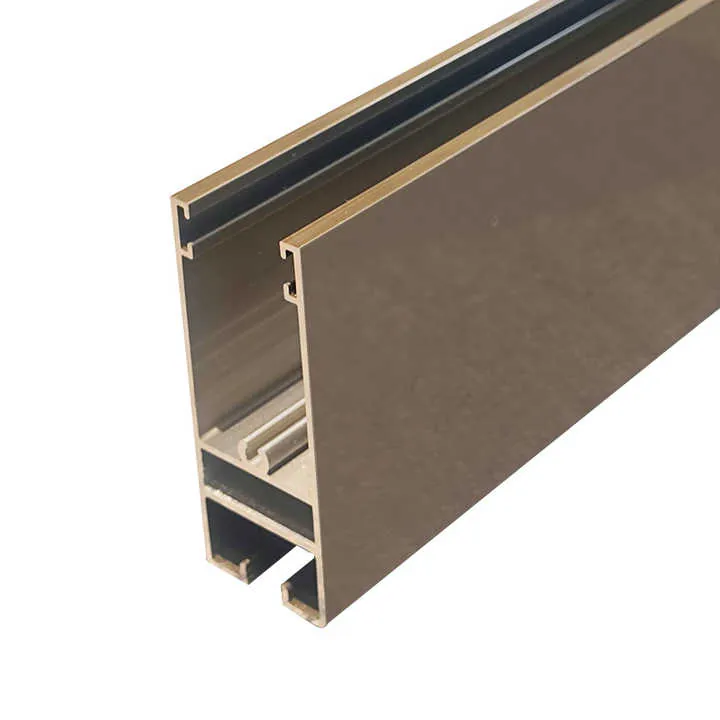
Over the years, I’ve helped multiple clients reduce extrusion cost through design optimization. Here’s how we do it:
Use simpler geometry
Avoid shapes with unnecessary internal ribs, sharp corners, or tight radii. These complicate die design and slow extrusion speed.
Standardize dimensions
Stick to wall thickness between 1.5–3 mm for best press efficiency. Avoid sudden transitions between thick and thin areas.
Minimize machining
Design your profile so that holes, notches, or fastener features can be added post-extrusion—or even integrated directly.
Reduce surface treatments
If natural finish is acceptable, skip anodizing or powder coating to save cost and lead time.
Bundle volume
Plan purchases across departments or locations to increase volume and reduce per-unit cost.
Here’s a comparison of design choices:
| Jellemző | High-Cost Design | Cost-Optimized Design |
|---|---|---|
| Geometria | Complex, thin ribs | Simple, uniform cross-section |
| Falvastagság | Varies widely (1–6 mm) | Consistent (2–3 mm) |
| Felületkezelés | Premium color anodizing | Basic mill finish |
| CNC megmunkálás | Multiple steps | Minimized/avoided |
| Ötvözet | Special 7000 series | Standard 6063 |
Changing to a simpler profile shape can reduce extrusion cost without changing the materialIgaz
Simpler shapes reduce tooling, extrusion time, scrap, and finishing cost.
Switching to a premium alloy always increases cost without any offsetting benefitsHamis
Switching may increase cost but if the performance requirement needs it, the benefits may outweigh cost.
Következtetés
In summary, aluminum extrusions can seem expensive—but they don’t have to be. By understanding what drives the cost and making smart design and purchasing decisions, you can create cost-effective extrusion solutions that still meet your performance and aesthetic needs.