How much does a custom aluminum extrusion cost?

I recently had to quote a custom aluminum extrusion project and I was struck by how many hidden cost levers there are.
A custom aluminum extrusion’s cost depends on raw material, tooling (die), processing, finishing and volume — many orders fall in the range of about US $3‑8 per pound for simple shapes and higher for complex ones.
Let’s dig into what drives those numbers, why tooling matters so much, how to estimate per‑unit cost, and why bulk runs can lower your cost.
What drives custom extrusion pricing?
Imagine you get two quotes for seemingly the same profile but with very different prices. The reason is the mix of cost drivers behind the quote.
Key drivers include raw aluminum price, profile size/weight/complexity, tooling/die cost, labour/overhead, finishing and order volume.

Breakdown of major cost drivers
Here’s a table summarising the main drivers and what you should watch:
| Cost driver | What it is | Why it matters |
|---|---|---|
| Raw material (billet) | The aluminum alloy and weight you consume | Material often 60‑75%+ of cost in many cases |
| Profile size/weight | Cross section size, wall thickness, hollow vs solid | More metal = higher cost; complex shapes add cost |
| Tooling (die, setup) | Custom die design & manufacture | Fixed cost that must be amortised across the run |
| Labour & overhead | Press time, machine cost, local labour rates | Higher labour/overhead raise unit cost |
| Finishing & secondary ops | Anodising, powder coating, CNC machining, bending, etc. | Add extra cost beyond simple extrusion process |
| Logistics & packaging | Shipping, export duties, packaging, handling | Especially relevant for export orders or long supply chains |
| Order volume | How many metres or kg you order | Low volume means fixed costs spread thin → higher unit cost |
From my experience, when I walked a client through the quote we looked at each of those drivers. The raw material price moved week to week, the tooling cost was large but one‑time, and finishing changed depending on whether the profile needed anodising or powder paint.
Practical tip for you
When you ask for quotes, ask the supplier to break down: “What is the die cost? What is the expected run (kg or metres) to amortise it?” Also ask “What is the raw billet cost assumed?” and “What finishing is included?” That helps you compare apples‑to‑apples.
Raw material cost is often the largest variable in custom aluminum extrusion pricing.True
Many sources say the billet/metal cost makes up 60‑75%+ of the cost for many profiles.
Order volume has little impact on the per‑unit cost if tooling cost is already paid.False
For low volumes the tooling cost per unit is high because fixed tooling cost is spread over fewer units.
Why tooling cost affects custom orders?
Tooling (especially the die) is a major fixed cost in a custom extrusion job. If you don’t understand it, you may be blindsided.
Tooling cost matters because the custom die must be built, and it has to be paid for (either up‑front or amortised). The fewer units you order, the bigger the per‑unit share of that tooling cost.

What influences die/tooling cost?
- Profile complexity: If the shape has many hollows, webs, internal features, undercuts, the die is more complex.
- Die size / circumscribing circle diameter (CCD): Larger profiles need larger dies, more material and machining.
- Number of cavities: Multi‑cavity dies may cost more up‑front but can lower unit cost if volume is high.
- Material/tolerance: Harder alloys, tight tolerances, special finishes on the profile may require higher‑grade die steel, more machining.
- Regional tooling cost: Local labour, steel cost, manufacturing capacity vary by location.
How tooling cost appears in your pricing
Let’s say the die cost is US$2,000 for that custom profile. If the expected run is 20,000 kg and you get 20,000 kg / say 10,000 m of profile, then the tooling cost per kg or per metre is very small. But if you only run 2,000 kg, that tooling cost per unit becomes 10×. That’s why low‑volume runs often carry disproportionately high cost.
From my own bidding experience: for one project we had a die cost of ~$1,800 with estimated run of 50,000 metres. But the customer initially requested only 5,000 metres. We quoted a much higher unit cost (because tooling cost amortised over 1/10th the volume) and they opted to commit to a higher volume to normalise the cost.
If you reuse a die for repeat production, the tooling cost per unit can drop significantly.True
Once the die is paid for and reused, fixed cost is spread over more units, lowering unit cost.
A die cost is always less than US$500 for a custom aluminum extrusion.False
Many sources show custom die cost ranging from hundreds to thousands of dollars depending on complexity; e.g., $1,000‑$2,000 or more.
How to estimate per‑unit custom extrusion cost?
You need a simple formula to ballpark cost so you can vet quotes rather than accept blindly.
Method: Break down into material cost + processing cost + finishing + amortised tooling + logistics, then divide by your number of units or weight.
Estimation steps
- Determine weight per metre (or per piece) of your profile.
- Estimate material cost: billet cost ($/kg) × weight per metre = material cost per metre.
- Estimate processing cost: labour, machine, overhead ($/kg or $/metre).
- Add finishing & secondary operations cost: if you need anodising, powder coating, machining, bending.
- Add amortised tooling cost: Die cost ÷ total expected metres (or kg) = tooling cost per metre (or per kg).
- Add logistics/packaging cost: shipping, packaging, export duties ($/metre or per batch).
- Sum: material + processing + finishing + tooling + logistics = total cost per metre (or per kg).
- If you want cost per piece: Cost per metre × length of piece (or weight of piece) = piece cost.
Example (hypothetical)
| Item | Value |
|---|---|
| Profile length | 1 m |
| Weight | 1.5 kg/m |
| Billet cost | US$ 2.50/kg |
| Material cost per m | US$ 3.75 |
| Processing cost | US$ 1.00/m |
| Finishing | US$ 0.50/m |
| Tooling amortisation | US$ 0.02/m |
| Logistics | US$ 0.10/m |
| Total per metre | US$ 5.37 |
| Piece length 2 m → cost | ~US$ 10.74 |
Key things to ask
- What billet cost assumption did you use?
- What is the die cost, and what run length did you assume for amortisation?
- What finishing is included?
- What is the processing cost basis ($/kg or $/metre)?
- What volumes will achieve this cost?
Using this method I was able to compare three quotes on one job and pick the one that gave the best cost breakdown rather than lowest headline number.
A good rule‑of‑thumb for custom aluminum extrusion cost is about US$3‑8 per pound.True
Sources suggest simple custom extrusions fall roughly into US$3 to US$8 per pound depending on complexity and finishing.
Tooling cost does not need to be included when estimating per‑unit cost if volume is large.False
Even with large volume, tooling cost should be included; it's spread over more units but still contributes to per‑unit cost.
Can bulk runs lower custom cost?
Yes — bulk production is one of the most effective levers for lowering unit cost in custom extrusion.
As you increase order volume, the fixed costs (tooling, setup) and even material cost per unit tend to drop, so your per‑unit cost goes down.
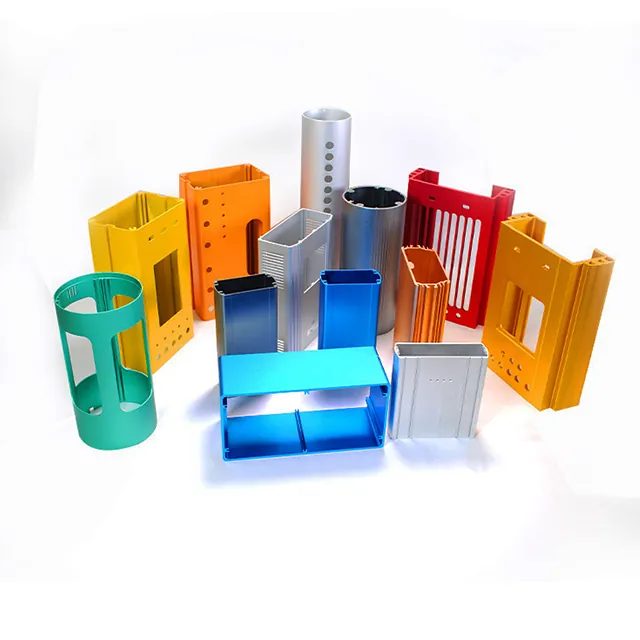
Why bulk helps
- Tooling fixed cost is spread over more units.
- Bulk billet pricing may be better.
- Longer runs reduce change‑over / set‑up time per unit, improving efficiency.
- Secondary operations may be more efficient when done in large batches.
- Logistics/shipping cost per part may fall when you pack larger shipments.
Things to watch
- Don’t over‑order just to hit price break without need — you’ll tie up inventory, storage, cash.
- Ensure your forecast is reliable if committing to high volumes.
- Check if the quote assumes reuse of die or a new die for repeat run.
- Confirm material grade, finish, tolerances are the same between small vs large runs.
- Verify lead time doesn’t blow out for large runs — sometimes longer lead time reduces benefit.
From one of my past projects: We compared ordering 5,000 metres vs 50,000 metres. The die cost per metre when run at 50,000 m was <$0.01/m, but at 5,000 m it was ~$0.10/m. That difference made the larger order ~20% cheaper per metre even though the finishing and material cost were same.
Ordering more metres of custom extrusion always lowers the cost per metre.False
While typically true many volume, tooling and efficiency advantages apply, but other factors like lead time, inventory cost, or material availability may offset benefits.
Tooling cost per unit decreases as total run metres increase.True
Fixed tooling cost spread over more units reduces the cost per unit for that tooling portion.
Conclusion
In my view, the cost of a custom aluminum extrusion is not just about the shape — it’s about how shape, material, tooling, finishing and volume combine. If you control these factors, ask the right questions, and plan for volume, you can get competitive pricing. Conversely, if you skip tooling amortisation or ignore finishing cost, you’ll face surprises.