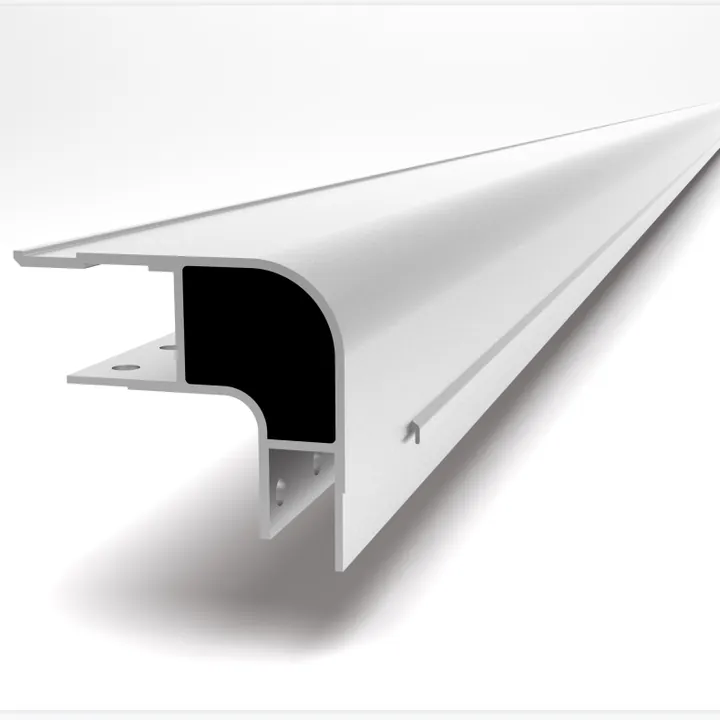
Alumiinipuristustoleranssi kaareville profiileille?

Many buyers assume curved aluminum profiles behave like straight ones. Later, parts do not fit, assemblies stop, and rework cost grows fast. The root problem is often tolerance misunderstanding.
Aluminum extrusion tolerances for curved profiles are wider and more complex than straight profiles, and they depend on bending method, radius, material state, and process control.
Curved profiles add one more variable to an already complex process. Ignoring this reality leads to false expectations. This article explains curved extrusion tolerance in clear and practical terms.
What are standard tolerances for bent extrusions?
Many drawings show curved profiles with straight profile tolerances. That is a common mistake. Curving always changes dimensional behavior.
Standard tolerances for bent aluminum extrusions are looser than straight extrusions and are usually defined by bending standards rather than extrusion standards.

Straight extrusion tolerances follow clear tables. Once bending starts, tolerance control shifts from die accuracy to forming accuracy.
Straight vs bent tolerance logic
Straight extrusion tolerances focus on cross section size and straightness. Bent extrusion tolerances focus on radius, arc length, twist, and springback.
Typical tolerance ranges used in industry
The table below shows common reference values used during early discussion. Final tolerance must be agreed case by case.
| Ominaisuus | Typical tolerance range |
|---|---|
| Outside radius | plus minus 1.0 to 3.0 mm |
| Arc length | plus minus 1.5 to 4.0 mm |
| Cross section distortion | up to 2 percent |
| Twist per meter | 1 to 3 degrees |
These values depend heavily on profile size and alloy.
Why standards give ranges not guarantees
Bending machines, tools, and operators vary. Aluminum also behaves differently from batch to batch. Standards reflect what is realistic, not perfect.
Common buyer misunderstanding
Some buyers request plus minus 0.5 mm radius tolerance on large curved frames. This is often impossible without secondary machining.
Communication matters more than numbers
Clear definition of reference points is critical. Radius measured to which surface matters. Centerline or outer edge confusion causes disputes.
Käytännön ohjeet
If the curve is cosmetic, allow wider tolerance. If the curve controls assembly fit, expect higher cost and longer lead time.
Bent aluminum extrusions typically have looser tolerances than straight extrusions.Totta
Bending introduces springback and distortion that cannot be controlled as tightly as straight extrusion dimensions.
Straight extrusion tolerance tables can be directly applied to curved profiles.False
Curved profiles require separate tolerance consideration based on bending behavior.
How does curve radius affect dimensional accuracy?
Not all curves behave the same. Radius size changes everything from springback to wall thinning.
Smaller bend radii create higher stress, more springback, and lower dimensional accuracy compared to larger radii.
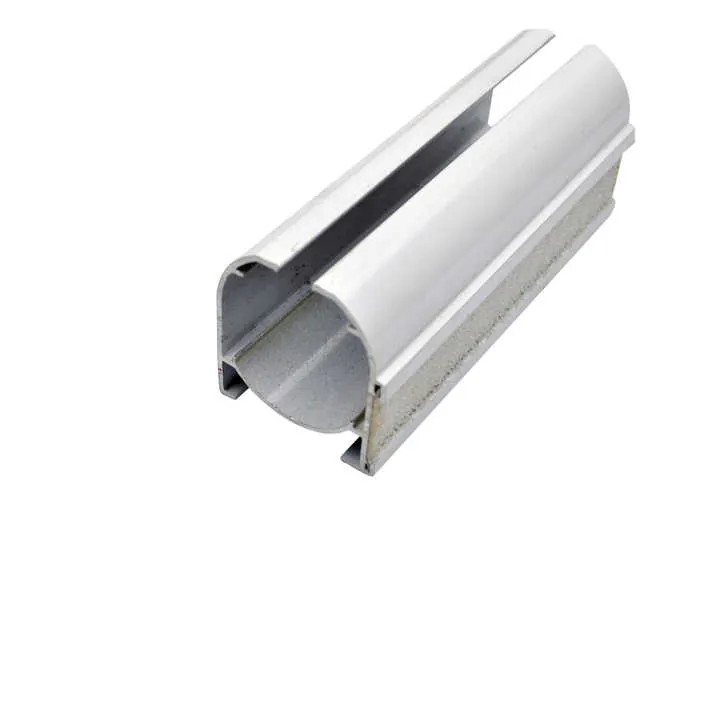
Radius selection should never be cosmetic only. It is a mechanical decision.
Small radius challenges
Tight radii push material limits. Outer walls stretch. Inner walls compress. This imbalance increases distortion risk.
Large radius advantages
Large radii distribute stress more evenly. Springback is lower and more predictable. Tolerances are easier to control.
Radius to profile height ratio
A common rule used in practice is radius should be at least three times the profile height. Smaller ratios increase defect risk.
Impact on cross section shape
Tight curves often cause ovalization. Hollow profiles may collapse slightly. Internal webs can shift.
Practical radius tolerance behavior
| Radius size | Accuracy expectation |
|---|---|
| Very small radius | Low accuracy, wide tolerance |
| Medium radius | Moderate accuracy |
| Large radius | Higher accuracy, tighter control |
Real world example insight
In one project, increasing radius by 15 percent reduced scrap rate by half. The visual change was minor, but tolerance control improved significantly.
Design stage decision
If assembly alignment matters, choose the largest possible radius early. Changing radius later affects tooling and cost.
Smaller bend radii generally reduce dimensional accuracy in aluminum extrusions.Totta
Tighter bends increase stress, springback, and cross section distortion.
Large curve radii make tolerance control more difficult.False
Larger radii usually improve predictability and accuracy.
Can CNC forming achieve tight curved tolerances?
CNC equipment often creates high expectations. Buyers assume machine control removes material behavior limits. That is not always true.
CNC forming improves repeatability but cannot eliminate aluminum springback and material variability.
CNC bending controls motion, not physics.
What CNC forming does well
CNC machines repeat the same path accurately. This improves consistency across batches. It reduces operator variation.
What CNC forming cannot control
Material springback still occurs. Alloy differences and temper changes still affect results. CNC does not change metal behavior.
Typical CNC tolerance improvement
Compared to manual bending, CNC can reduce variation by 20 to 40 percent. It does not reduce tolerance to zero.
Multi step forming strategy
For tight tolerance curves, profiles may be over bent then corrected. This adds time and cost but improves accuracy.
CNC plus measurement feedback
Some systems use in process measurement. The machine adjusts bending angle after first pass. This improves radius accuracy.
Cost reality
CNC forming with feedback costs more. It also increases setup time. This is suitable for high volume or high value projects.
Buyer expectation control
If tolerance demand is very tight, ask whether post machining is required. CNC bending alone may not meet extreme limits.
CNC forming improves consistency of curved aluminum profiles.Totta
CNC machines reduce operator variation and improve repeatability.
CNC forming completely removes springback in aluminum bending.False
Springback is a material property and cannot be eliminated by machine control alone.
What defects are common in curved extrusion shaping?
Curved profiles fail not only by dimension but also by hidden defects. Many appear after installation, not during inspection.
Common defects include springback variation, wall thinning, surface wrinkling, twist, and cross section distortion.
Understanding defects helps prevent unrealistic tolerance demands.
Springback variation
Different batches spring back differently. Even within one profile, springback may vary along length.
Wall thinning and thickening
Outer radius walls thin. Inner walls thicken. Excessive thinning reduces strength.
Surface wrinkling
Compression on inner radius can cause wrinkles. This affects appearance and sometimes strength.
Twist and warping
Bending force may not be symmetrical. This introduces twist along the profile axis.
Cross section collapse
Hollow profiles risk partial collapse without internal support. This affects fit and load performance.
Defect risk by method
| Bending method | Common defect risk |
|---|---|
| Roll bending | Ovalization, springback |
| Venytys taivutus | Seinämän oheneminen |
| Press bending | Local flattening |
| CNC rotary draw | Twist if poorly supported |
Prevention strategies
Use correct tooling. Control temper. Increase radius when possible. Add internal mandrels for hollow profiles.
Inspection challenge
Some defects are subtle. Visual inspection alone is not enough. Measurement of critical areas is needed.
Wall thinning is a common defect on the outer radius of curved aluminum profiles.Totta
Material stretches on the outer bend, leading to thickness reduction.
Curved aluminum extrusions do not experience twist if CNC bending is used.False
Twist can still occur due to asymmetric forces and profile geometry.
Päätelmä
Curved aluminum extrusion tolerance depends on bending method, radius, and material behavior. Expecting straight profile accuracy leads to failure. Clear tolerance definition and realistic design choices protect cost, fit, and performance.