Alumiinipuristuksen enimmäiskoko teollisuuskäyttöön?

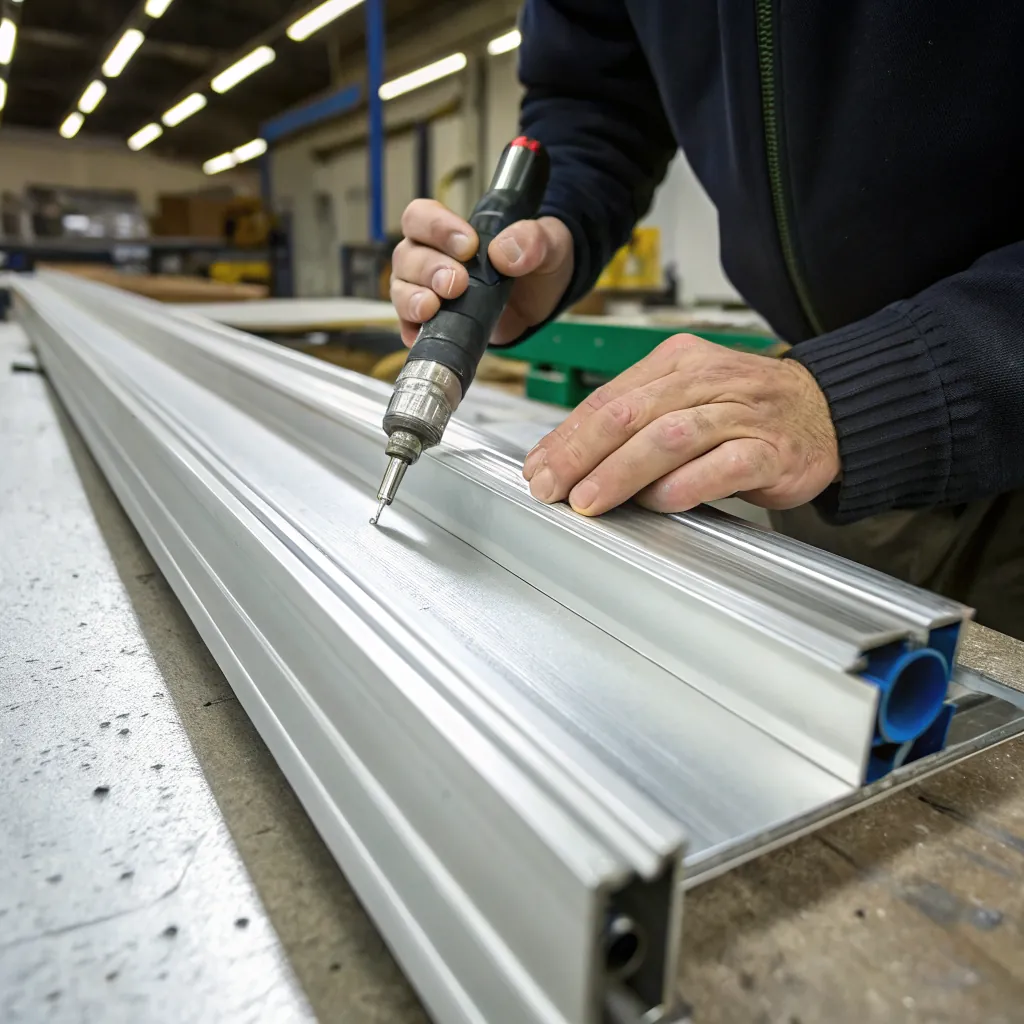
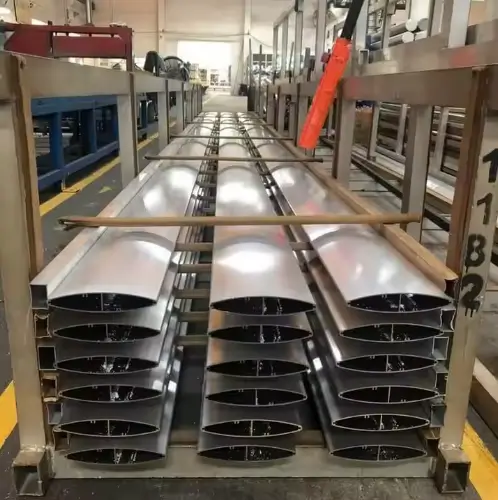
I once saw a giant aluminum beam roll out of an extrusion press. It made me wonder how large we can go before problems start.
The maximum size for industrial aluminum extrusion depends on material, equipment, and design.
Let us dive deeper into what limits exist and how people tackle them.
What factors determine the maximum extrusion size?
Big aluminum extrusions look simple. Yet many hidden factors set their size limits.
Key factors include billet temperature, alloy type, extrusion ratio, press capacity, and cooling method.
The maximum size of an aluminum extrusion depends on several variables. First, the billet size matters: larger billets allow bigger profiles, but heating and pushing a large mass of metal requires more energy and better control. The alloy type also influences the maximum size. Alloys that resist deformation or need high force to shape will limit how big a profile you can extract. The extrusion ratio—the ratio of billet cross‑section to final profile cross‑section—impacts force and metal flow. Higher ratios increase friction and reduce control.
The press’s capacity in tonnes directly affects whether it can push the billet in one shot. And even if the press can do it, there is still cooling and handling. A larger extrusion needs slower, more controlled cooling, which many smaller plants may not manage well. Mishandling during this stage may ruin otherwise good extrusions.
Main factors at a glance
| Tekijä | Influence on Maximum Size |
|---|---|
| Billet diameter and length | Sets the upper bound for profile cross section and length |
| Alloy type (e.g. 6063‑T5 vs 6061‑T6) | Harder alloys require more force, limit profile thickness/complexity |
| Extrusion ratio | Higher ratio = more force needed, limits how thin walls can be when big |
| Press force / ram capacity | Determines if the press can push the billet in one shot |
| Down‑stream cooling / handling | Large extrusion needs controlled cooling to avoid defects |
In practice, engineers combine these factors. For example, if a shop wants a thick, heavy I‑beam from 6061‑T6 alloy, they need a very large billet, high‑capacity press, and careful cooling. If any part falls short, they may reduce profile thickness or break the part into smaller segments. In some cases, they choose a different alloy or use a two‑step process: rough extrusion then secondary welding or joining.
Successful projects often use billets in the range of 300 mm to 500 mm diameter and presses above 3,000 tonnes. Even then the profile design is optimized to avoid thin walls or abrupt transitions that would choke flow. A common mistake is trying to squeeze too much complexity (fins, recesses, thin walls) into a massive profile; that often fails because metal flows unevenly, causing voids or weak spots.
Because of all these factors, there is no single “maximum size.” Instead, shops set a feasible maximum based on equipment, alloy, design, and quality goals.
Maximum extrusion size is determined solely by the press tonnage.False
Press tonnage is important but alloy, billet size, extrusion ratio and downstream handling also matter.
Alloy type affects maximum profile thickness and complexity.Totta
Harder alloys require more force and limit how thick or complex the profile can be when large.
How does die design impact maximum profile dimensions?
A die seems like a simple ring. But its design can make or break large extrusion success.
Die design controls metal flow, wall thickness, hollow sections and affects whether large extrusion can come out sound.

The shape designed into the die sets what the final profile will look like. For large profiles, die design is critical. If the die has complex shapes, thin walls, hollow cavities, and abrupt transitions, metal may not fill properly. This can cause voids, cracks, or surfaces that warp. For big cross‑section, flow distances are long. Metal must travel through entire die evenly. If the die layout does not balance flow paths, parts of the profile may get starved or cooled unevenly. That limits how big you can go.
Die designers often use several tricks. For large, thick profiles, they may use feeder rings tai bridge dies. Feeder rings are extra material rings that surround hollow sections. They help push metal into corners and cavities. Bridge dies break the die into multiple smaller segments, each forging part of the cross section before final shaping. This reduces load per die section and helps make more uniform parts. Another method is to design symmetric profiles. Symmetry helps metal flow evenly. If one side fills slower, you get weak spots or bend.
Also, wall thickness matters. Very thin walls on large profiles are risky. The die may close unevenly, or metal may cool too fast before filling thin walls. That causes weak spots. So for very large profiles, designers often require minimum wall thickness or limit thin webs.
Finally, finish surface and tolerance expectations play a role. If customer needs tight tolerance or smooth surface on a large profile, die design must allow for extra machining or surface treatment. That may influence how big a profile you can offer before deformation or warping becomes prohibitive.
Because of these issues, large profiles often end up simpler. Many large extruded beams are rectangular or tubular shapes with uniform wall thickness. Complex shapes are reserved for smaller or mid‑size profiles.
Complex die shapes make large extrusions more difficult but not impossible.Totta
Die complexity increases challenge for metal flow and uniform filling but proper design (feeders, symmetry) can overcome that.
Any die design will work the same for small and large extrusions.False
Large extrusions increase flow path length and metal volume, making some die designs unsuitable for scale.
Can large aluminum extrusions maintain structural integrity?
Big size may look impressive. But if structure fails, the size is meaningless.
Large extrusions can keep strength if alloy choice, extrusion parameters, and cooling are right.
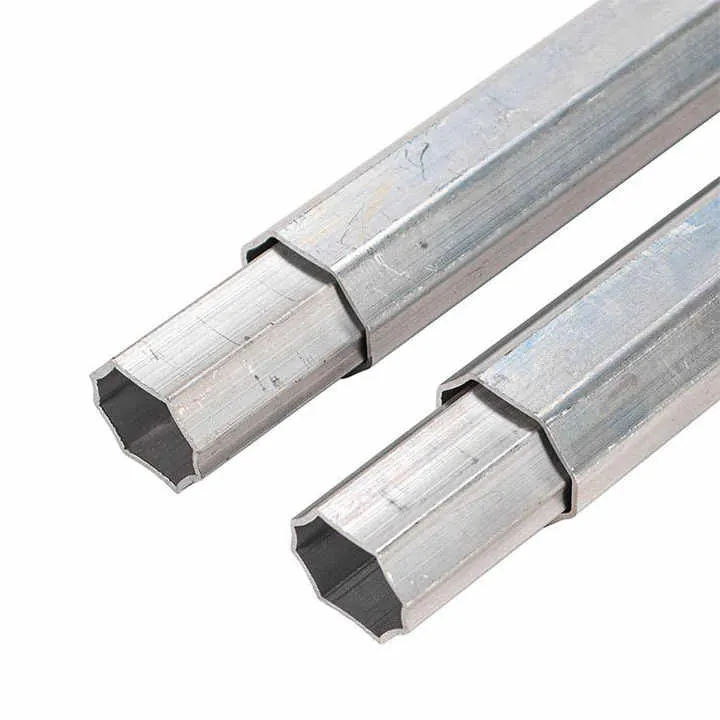
Large extrusions remain strong when shops control every step. The alloy must tolerate deformation without cracking. Alloys like 6063‑T5 or 6061‑T6 work well. Yet even with good alloy, forming a big profile means more material deformation. That triggers grain flow issues, residual stress, and potential cracking.
Proper extrusion parameters help avoid defects. Slow, steady ram speed allows metal to flow without turbulence. Press temperature should stay stable. If billet enters cold or hot unevenly, one side flows faster. That leads to uneven grain structure and weak spots.
Cooling after extrusion is also essential. Large sections cool slowly. If cooled too fast, outer surface may contract before core cooling finishes. That creates residual stress or warp. If cooled too slow in high humidity or improper conditions, oxidation or surface flaws may appear. Often plants use controlled air cooling or water baths, followed by straightening tables to fix minor warping.
Finally, there is heat treatment and aging. Large extrusions may need longer solution‑treat or aging cycles to reach full mechanical properties. Without proper treatment, strength and durability suffer.
In many cases, large extrusions succeed. For example, companies make large I‑beams or frames for solar panels, building structures, or machine bases. They often meet structural standards if process controls are tight. If the process is sloppy, profiles may crack, bend, or fail under load.
Nevertheless, there is a practical limit. Very thick walls and massive cross sections may hide internal defects. Even non‑visible voids can cause failure under weight or vibration. For very large parts, some engineers prefer welded fabrication over extrusion. That allows better control of internal structure and less risk of hidden flaws.
Slow cooling of large extrusions improves structural reliability.Totta
Controlled cooling helps reduce internal stress and avoid warp or cracks.
All extrusions of large size automatically meet strength standards.False
Strength depends on alloy, process control, cooling and post-treatment—not just size.
Are there industry limits on extrusion press capacities?
Not all extrusion presses are the same. Their capacity sets the real upper bound.
Industry standard presses go up to 6,000 tonnes, but most shops use 3,000–4,500 tonne presses for large extrusions.
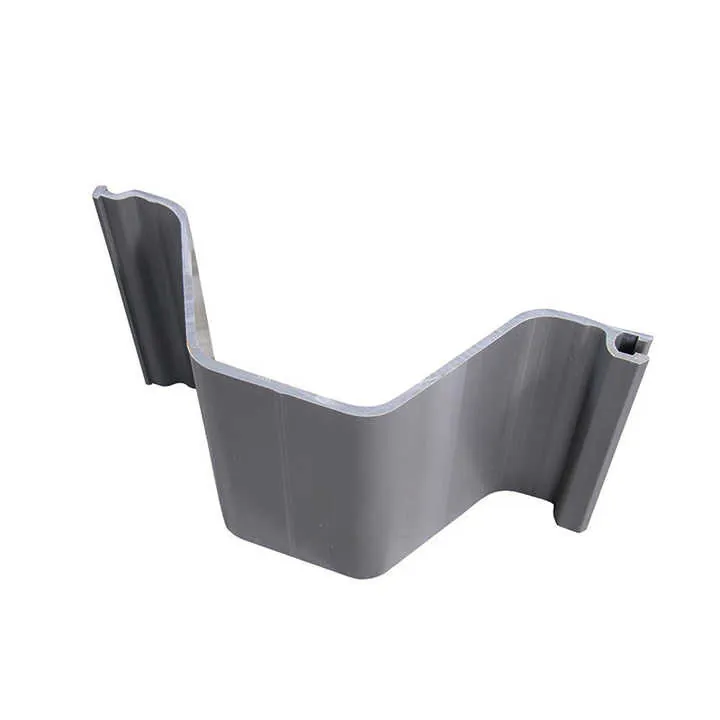
The largest presses in regular commercial use reach 6,000 tonnes of force. These machines can push billets of maybe 500 mm diameter or more. But they are rare. Most factories use presses in 3,000 to 4,500 tonne class. That often limits them to billets around 300–400 mm diameter and profile weights a few hundred kilograms per meter.
Below is a table of typical press capacities and what they can handle.
| Press capacity (tonne) | Typical billet diameter | Typical profile type / size |
|---|---|---|
| 1,500 – 2,000 | 150 – 200 mm | Small profiles, rails, small tubing |
| 2,500 – 3,000 | 200 – 300 mm | Medium profiles, furniture frames |
| 3,500 – 4,500 | 300 – 400 mm | Large profiles, window frames, structural beams |
| 5,000 – 6,000+ | 400 – 500+ mm | Heavy I‑beams, machine bases, large tubing |
Most industry clients select 3,000–4,500 tonne presses because they balance capacity and cost. Larger presses are expensive, consume more power, and need big billets and high alloy costs. Smaller presses are cheaper but limit profile size. Many extrusion shops also have multiple presses. They might extrude a rough shape on a large press and then finish smaller parts on smaller presses. They may also cut large extrusions into segments or weld in sections if production volume or price requires.
Another limit is tooling and material logistics. Large billets need heavy cranes, heating furnaces big enough, and storage space. Rolls of hot logs get heavy. Some factories may not have infrastructure to handle very large billets even if they had a big press. Plant layout and handling gear often limit real-world capacity more than press tonnage alone.
Because of all these practical constraints, industry tends to cap standard extrusion at around 400–500 mm billet diameter, and up to 6,000 tonne presses for heavy structural work. Anything beyond that is rare and usually customized project-based work.
All major shops worldwide own 6000‑tonne presses.False
6000‑tonne presses exist but are rare; most shops use 3000–4500 tonne presses.
Logistics and handling equipment also limit extrusion size beyond just press capacity.Totta
Even with a high‑tonnage press, billets and tooling need proper cranes, furnaces and space, which limit practical size.
Päätelmä
Large aluminum extrusions can reach impressive size. However size always comes with challenges. Design, material, equipment and process all matter. For most industrial work, sizes up to around 500 mm billet and 6000 tonne presses stay practical and safe. Choose carefully before pushing bigger.