How much weight can 1 aluminum extrusion support?

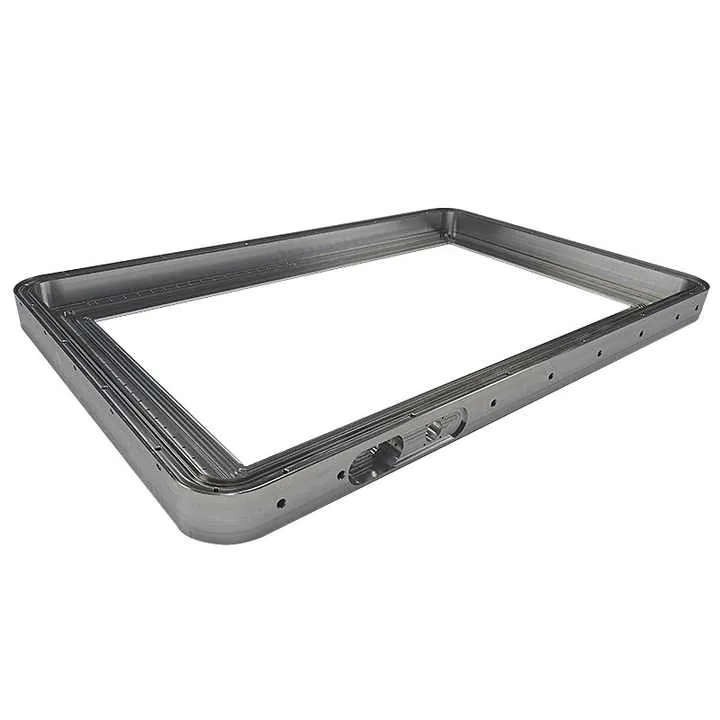
I once faced a scenario where a long aluminum frame structure sagged under a heavy load and I wondered—how much weight can an aluminum extrusion truly support?
The load‑capacity of an aluminum extrusion depends on alloy grade, profile geometry, support conditions, and connection design—there’s no single “how much” number that applies universally.
Let’s walk through the key factors, the geometry side, calculation methods, and how reinforcements help.
What influences extrusion load strength?
When you pick a profile and hang a heavy item—if you didn’t account for everything, failure may happen.
Load capacity is influenced by the material alloy, the length and orientation of the span, how the profile is supported, and how it connects to other parts.

Materiaaliseos ja karkaisu
The alloy matters. For example, 6063‑T6 has a high yield strength, while softer alloys like 1100 series have much lower limits. A stronger alloy results in higher allowable load.
Pituus ja tukiehdot
An extrusion that is 500 mm long and supported at both ends will carry more weight than a 2000 mm span with a cantilever setup. Shorter spans reduce bending and deflection significantly.
Cross-section and geometry
A larger moment of inertia means higher resistance to bending. A thick-walled, tall profile will hold more load than a thin, small one. The shape and wall layout affect strength directly.
Liitännät ja kiinnitys
Even the best extrusion fails if its connections are weak. Poorly fastened joints or brackets can become the failure point. Fixed supports always hold more than loosely fastened ones.
Environment and dynamic loads
Vibration, shocks, and cyclic forces lower the effective strength. Long-term or dynamic loads require safety margins much larger than static applications. Temperature and corrosion also play a role.
Summary of factors
| Tekijä | Miksi sillä on merkitystä |
|---|---|
| Seos ja karkaisu | Defines strength and stiffness |
| Pituus/jänniteväli ja tuki | Affects deflection and moment capacity |
| Cross-section geometry | Determines bending resistance and stability |
| Kiinnitys-/liitäntäsuunnittelu | Influences how loads are transferred or lost |
| Kuormitustyyppi ja ympäristö | External conditions impact durability and safety factors |
Seoslaatu on ainoa tekijä, joka määrää, kuinka paljon painoa alumiiniprofiili voi kantaa.False
Besides alloy grade, geometry, span, support conditions and connection design all play significant roles.
A shorter span extrusion supported at both ends will hold more load than a longer cantilevered one of the same alloy and cross-section.Totta
Because bending moments and deflection increase with span length and weaker support conditions.
Why wall thickness affects capacity?
If you just pick a “20×20 aluminium profile” without checking its wall thickness, you might end up with a sagging beam.
Paksumpi seinämä antaa paremman lujuuden ja vähemmän taipumaa. Ontot profiilit vähentävät painoa, mutta voivat heikentää jäykkyyttä, ellei niitä ole optimoitu.

What wall thickness changes
- Taivutusvastus — Thicker walls increase moment of inertia. This directly reduces deflection under load.
- Taivutusvastus — Wall thickness affects how easily the extrusion deforms under compression or side force.
- Local deformation — Thin walls dent more easily when loads are focused on small areas.
- Nivelen lujuus — Thicker sections can hold screws and fasteners more reliably, reducing risk at connection points.
Esimerkkivertailu
Two extrusions of the same external size—say 40×80 mm—can have very different strengths if one has 2 mm walls and the other has 4 mm. The thicker one resists bending and twisting far better.
Käytännön näkökohtia
- Wall thickness affects both performance and weight.
- You should balance wall thickness with material cost and expected load.
- Uniform wall thickness ensures predictable behavior during extrusion and use.
- In high-load applications, thicker walls provide better durability and reliability.
| Seinämän paksuus | Bending Strength | Deflection | Fastener Strength |
|---|---|---|---|
| 1,5 mm | Matala | Korkea | Heikko |
| 2,5 mm | Kohtalainen | Medium | Hyväksyttävä |
| 4 mm | Korkea | Matala | Vahva |
Thicker wall always doubles the load capacity of the extrusion, regardless of other factors.False
Thicker wall improves capacity but span, alloy, support and geometry still influence the overall load capacity.
Wall thickness is a key factor because it affects moment of inertia, deflection and local resistance of the section.Totta
Wall thickness contributes significantly to sectional properties and stiffness, which are critical in load capacity.
Kuinka lasketaan turvalliset kuormitusrajat?
Kun asiakas pyysi minua määrittämään sallitun kuormituksen räätälöidylle alumiinirungolle, käytin kaavoja arvailun sijaan.
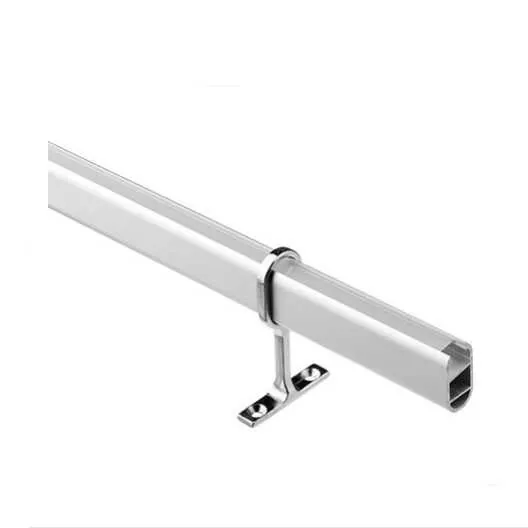
Safe load limit calculation typically uses beam bending and deflection formulas—choosing allowable deflection, then solving for allowable load using section properties and support type.
Basic steps
- Define the span (L), support type (simply supported, cantilevered, etc.)
- Use the correct modulus of elasticity (E), usually around 70 GPa for aluminum
- Find the moment of inertia (I) and section modulus (W) of the profile
- Choose an acceptable deflection limit (often L/1000 or L/500)
- Calculate load (P) using deflection formulas
- Check bending stress and ensure it’s below the material’s yield strength
- Apply safety factors, usually ×2 or ×3 for conservative design
Formula reference
- Deflection (central load):
[
\delta = \frac{P \cdot L^3}{48 \cdot E \cdot I}
] - Solving for load:
[
P = \frac{48 \cdot E \cdot I \cdot \delta}{L^3}
] - Bending stress:
[
\sigma = \frac{M}{W} = \frac{P \cdot L/4}{W}
]
Esimerkki
If a 1000 mm span aluminum profile has I = 4000 mm⁴, and allowable deflection is 1 mm, you can compute P accordingly. Then check that bending stress is well below the yield limit (say, 200 MPa for 6063-T6) and adjust.
| Parametri | Arvo |
|---|---|
| Span (L) | 1000 mm |
| E | 70,000 MPa |
| I |