Alumiiniumprofiilide sirguse mõõtmise meetod?
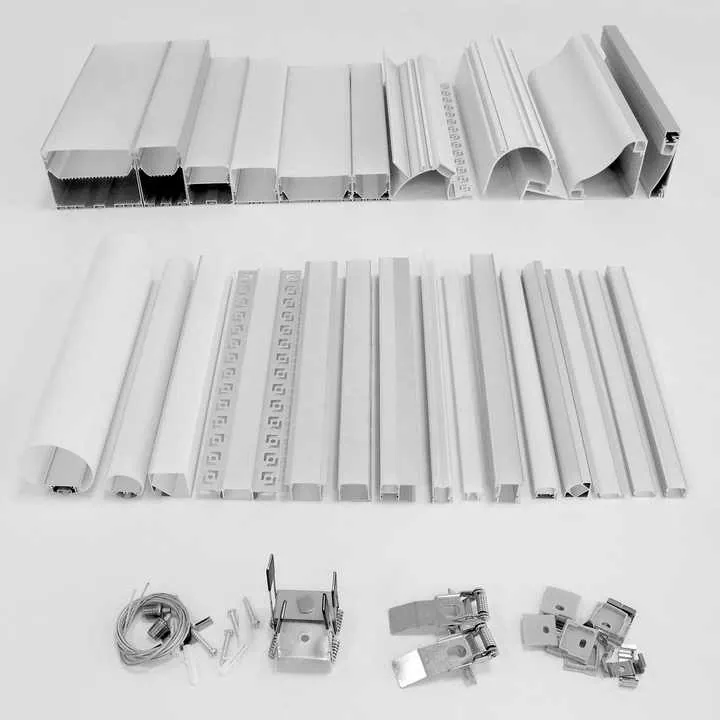
Extruded aluminum profiles may pass visual inspection but still fail in performance due to slight bends or twists. Even small deviations can affect assembly precision and stability.
Straightness measurement checks if a profile stays within acceptable bow or curvature over its full length — ensuring parts will fit and function properly.
Understanding how straightness is measured and controlled helps avoid returns, rework, or assembly line stoppages.
What tools are used to measure profile straightness?
Profiles may appear straight, but accurate tools are needed to confirm their linear integrity over several meters. Different tools serve different needs depending on the profile’s geometry and required tolerance.
Straightness of aluminum extrusions can be measured using straightedges, surface plates with dial indicators, laser scanners, or 3D coordinate measuring machines (CMMs).
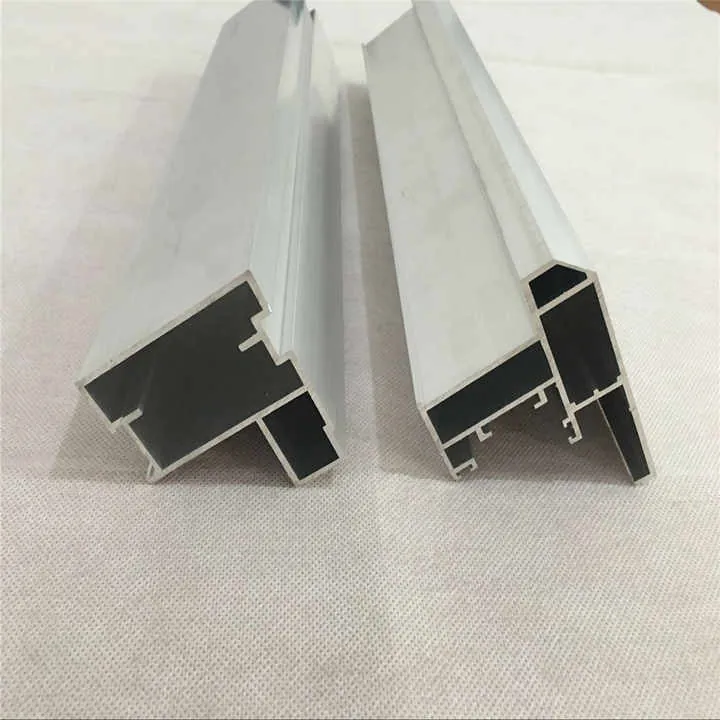
Here’s an overview of common tools:
| Tööriistad | Kuidas see toimib | Best For |
|---|---|---|
| Straightedge & Feeler Gauge | Place straightedge along profile; measure gap using gauge | Quick manual check on short or standard parts |
| Surface Plate + Dial Indicator | Place profile on flat plate; measure deviation using dial gauge | Precise local measurement on flat surfaces |
| Laser Line Scanner | Laser scans full profile for curvature or bow | Long profiles, high precision needs |
| 3D Coordinate Measuring Machine (CMM) | Digitally probes points along profile to map deviation | Complex cross-sections or critical applications |
| Optical Profile Projector | Projects profile shape and compares with template | Smaller sections or repetitive checks |
Each method has its pros and cons. Manual tools are inexpensive but time-consuming. Laser and CMMs are fast and precise but cost more. For regular production, many factories combine both: fast checks on the line, detailed scans in the lab.
Dial indicators on a surface plate provide accurate measurements of local deviation.Tõsi
This method detects small bow or bend by referencing a known flat plane.
Laser scanners are not suitable for checking extrusion straightness.Vale
Laser scanners are commonly used for long profiles and give fast, high-resolution results.
How is deviation from straightness calculated?
Knowing a profile isn’t straight is not enough — we must quantify how much it deviates from a true line over its length. This makes it measurable and comparable.
Deviation from straightness is calculated by measuring the maximum gap between the profile and a reference line or plane, then reporting it as millimeters per meter or total bow.

Here’s how to measure and calculate straightness:
- Place the profile on a flat surface or align it beside a known straightedge.
- Use a feeler gauge or dial indicator to measure the largest gap between the profile and the reference.
- Note the total bow or calculate deviation per unit length, such as mm/meter.
- If using digital tools (laser/CMM), software often calculates max deviation automatically.
Example calculation:
- Profile length: 4 meters
- Measured maximum bow at midpoint: 2.0 mm
- Straightness deviation: 2.0 mm ÷ 4 m = 0.5 mm/m
In this case, the profile has a bow of 0.5 mm per meter — acceptable or not depending on agreed tolerance.
Multiple points can also be checked to detect gradual bending vs sharp warping. For hollow or thin-walled profiles, even small deviations can affect fit or strength.
Straightness deviation is calculated by dividing the max bow by the profile length.Tõsi
This gives a standard unit like mm/m, making it easier to compare across sizes.
Deviation from straightness cannot be quantified and is judged visually.Vale
Proper measurement tools and calculation methods give accurate values for bow or curvature.
Are laser methods better for long profiles?
Laser-based systems are fast becoming standard in quality labs — especially where profiles exceed 3 meters or need tight tolerances.
Yes, laser scanners offer higher speed, precision, and full-length inspection, making them ideal for long aluminum profiles or high-volume production.

Advantages of laser methods:
- Non-contact measurement — avoids physical distortion during inspection
- Scans entire length — not just random sampling
- Fast and automated — can inspect dozens of profiles per hour
- Real-time results — pass/fail flagging instantly
- 3D profile mapping — detect not just bow but also twist, warpage, and dent
These systems are especially useful for:
- Structural aluminum profiles for architecture
- Linear rail extrusions for automation equipment
- Solar panel mounting systems where fit matters
- Automotive or aerospace parts with strict form tolerances
Laser scanners typically work with custom software that visualizes the profile curve in real-time and compares it with nominal CAD data. The operator sees any deviation immediately and logs results for batch records.
Some extrusion factories also integrate laser scanners in-line, enabling real-time process correction. If a profile starts to bend, cooling or tension can be adjusted without halting production.
Laser scanning provides fast, full-length, and highly accurate straightness measurement.Tõsi
It can detect even small deviations and map profile geometry over long lengths.
Laser tools are slower than manual feeler gauge checks for straightness.Vale
Laser tools are faster and can measure multiple profiles quickly and accurately.
What tolerance limits apply to extrusion straightness?
Tolerances define what counts as acceptable vs defective. For straightness, it depends on the profile length, application, and customer spec.
Typical straightness tolerance ranges from 0.5 mm/m for standard profiles to 0.3 mm/m for precision parts, and up to 1 mm/m for less critical applications.
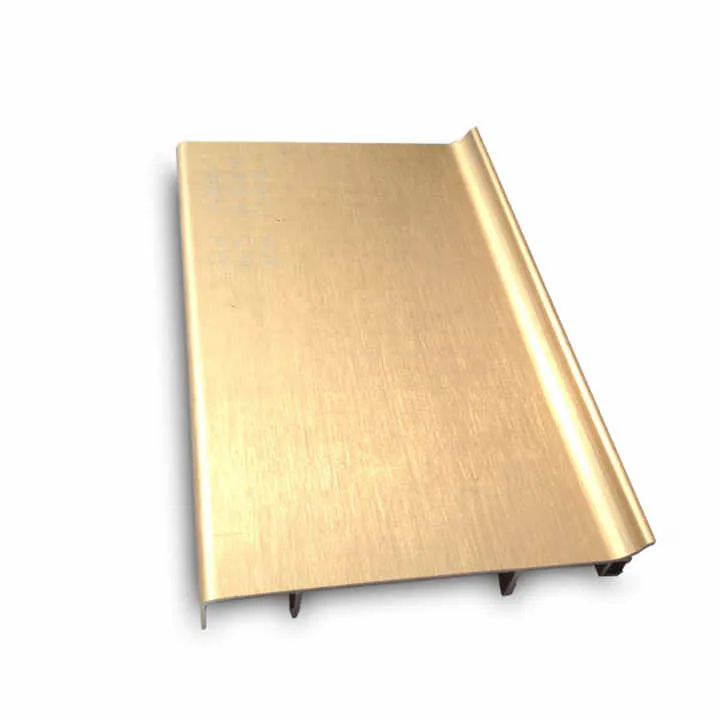
There is no single global rule — but industry guidelines give common values:
| Profiili pikkus | Typical Straightness Tolerance |
|---|---|
| 1–2 meters | ± 0.3 to 0.5 mm per meter |
| 2–4 meters | ± 0.5 mm per meter |
| Over 4 meters | ± 0.7 to 1.0 mm per meter |
| High-precision parts | ± 0.1–0.3 mm per meter (based on spec) |
Tolerances may be tighter when profiles:
- Are used in mechanical assemblies
- Must align with fasteners or tracks
- Are part of machine frames or enclosures
- Will be CNC machined or drilled after extrusion
Buyers should always state straightness tolerance in drawings or purchase contracts. Otherwise, suppliers may use default internal standards, which might not fit the end use.
Some factories use different tolerances based on alloy, profile thickness, and die complexity. For critical projects, clients may even request a straightness certificate showing test data per batch.
Standard extrusion straightness tolerance is typically 0.5 mm per meter unless otherwise specified.Tõsi
This is a widely used benchmark in the industry for general-purpose profiles.
Straightness tolerance does not depend on profile length or application.Vale
Longer or more critical profiles often need tighter control. Tolerance varies based on use case.
Kokkuvõte
Straightness is not just about appearance — it affects fit, function, and performance. Whether you use simple straightedges or advanced laser scanners, the key is to measure deviation precisely, document it clearly, and ensure each batch meets agreed tolerance. Especially for long or precision profiles, good straightness means fewer headaches downstream.