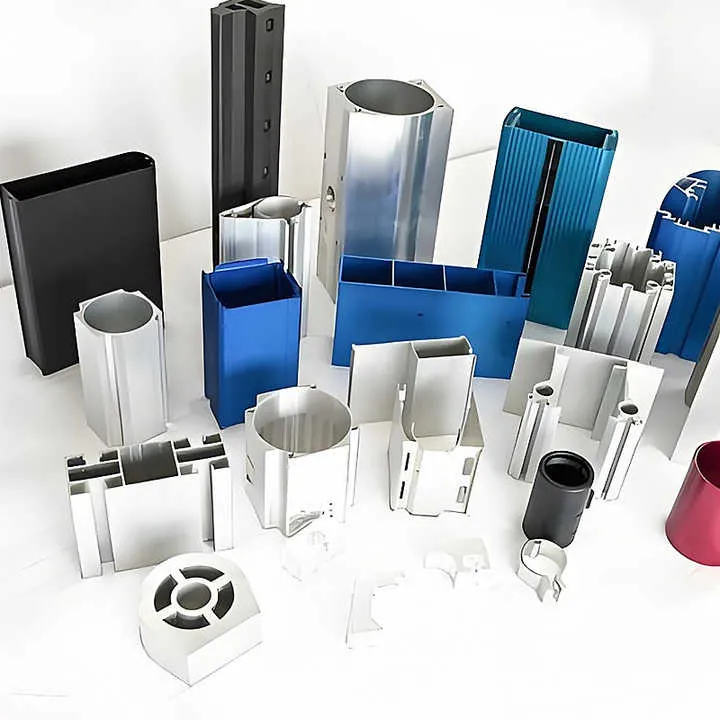
Aluminum extrusion dimensional repeatability standards?

Many aluminum extrusion projects fail not because of strength, but because dimensions slowly change. Small size shifts create assembly issues, delays, and hidden cost. Dimensional repeatability is often assumed, not verified.
Aluminum extrusion dimensional repeatability depends on clear standards, controlled processes, stable tooling, and reliable inspection systems. Without these elements, even experienced suppliers struggle to deliver consistent results.
Repeatability is not about one good batch. It is about achieving the same dimensions again and again, across weeks, months, and production runs.
What standards ensure repeatable extrusion dimensions?

Many buyers ask for tight tolerances, but few understand where these tolerances come from. Standards exist to define what repeatability means in real production.
Dimensional repeatability is guided by international standards, internal factory norms, and agreed customer specifications. These standards define acceptable variation and measurement methods.
Standards create a shared language between buyer and supplier.
International tolerance standards
International standards define basic dimensional limits for aluminum extrusions. These standards consider profile size, shape complexity, and alloy behavior. Larger profiles allow wider tolerances. Smaller profiles allow tighter control.
These standards protect both sides. They prevent unrealistic demands and reduce disputes. When a drawing references a standard, expectations become clear.
Customer-specific specifications
Many projects require tighter limits than general standards. In these cases, customer drawings define critical dimensions. These must be reviewed carefully before production starts.
Factories should confirm which dimensions are critical and which are functional. Treating all dimensions as critical increases cost and scrap.
Internal factory control standards
Strong factories create internal limits that are tighter than external standards. These internal targets help absorb process variation.
When internal limits drift close to customer limits, corrective action starts early. This prevents out-of-spec shipments.
Measurement definition
Standards also define how and where dimensions are measured. Measuring hot profiles gives different results than measuring after aging. Clear definition avoids confusion.
| Standard Type | Eesmärk |
|---|---|
| Rahvusvaheline | Define base tolerance |
| Customer spec | Control function |
| Internal limit | Protect stability |
| Measurement rule | Ensure consistency |
Dimensional repeatability relies on clear tolerance standards and defined measurement methods.Tõsi
Standards align expectations and control variation.
Repeatability means producing profiles with zero dimensional variation.Vale
All production has variation within defined limits.
How do factories control batch-to-batch accuracy?
One good batch does not prove control. Real repeatability appears when batches remain consistent over time.
Factories control batch-to-batch accuracy through process control, parameter locking, and continuous monitoring. Stability matters more than speed.
Repeatability is built into daily habits.
Process parameter control
Extrusion temperature, billet size, extrusion speed, and cooling rate affect dimensions. Strong factories record these parameters for each run.
Once stable settings are found, they are locked. Changes require approval. This reduces random variation between batches.
Standardized setup procedures
Setup errors cause size shifts. Standardized die installation, press alignment, and run startup procedures reduce human variation.
Clear checklists help operators repeat the same setup every time.
Feedback loops between batches
Factories should compare current batch results with previous batches. Trends reveal slow drift before limits are exceeded.
Early correction costs less than full rework.
Change management discipline
Repeatability fails when changes are uncontrolled. New billets, new operators, or new shifts all affect output.
Strong factories document changes and evaluate risk before production continues.
| Kontrollpiirkond | Mõju täpsusele |
|---|---|
| Temperatuuri reguleerimine | Size stability |
| Setup standard | Reduced variation |
| Trend tracking | Early warning |
| Change control | Drift prevention |
Batch-to-batch accuracy depends on stable process parameters and controlled changes.Tõsi
Consistency comes from repeatable setups and monitoring.
If one batch meets tolerance, future batches will naturally match it.Vale
Without control, variation accumulates over time.
Can tooling wear affect dimensional repeatability?
Tooling wear is a silent cause of dimensional drift. Many factories notice problems only after complaints appear.
Tooling wear directly affects extrusion dimensions by changing metal flow and profile shape over time. Managing wear is essential for repeatability.
Ignoring tooling wear turns stable processes unstable.
How dies wear during production
Extrusion dies face high pressure and heat. Over time, bearing surfaces wear down. This changes flow resistance.
As flow changes, dimensions slowly grow or shrink. This drift often stays within tolerance at first, then suddenly exceeds limits.
Wear patterns and profile complexity
Complex profiles wear unevenly. Thin sections and sharp corners wear faster. This creates asymmetry.
Without inspection, these changes remain hidden until assembly issues appear.
Die maintenance and correction
Strong factories inspect dies regularly. They measure bearing wear and polish or correct when needed.
Die correction restores balance and extends tool life. Skipping maintenance saves time short term but increases scrap later.
Tool life tracking
Tracking how many runs a die has completed helps predict wear. Preventive maintenance can then be planned.
Reactive maintenance always costs more.
| Tooling Factor | Effect on Repeatability |
|---|---|
| Bearing wear | Size drift |
| Uneven wear | Shape distortion |
| Hooldus | Stability recovery |
| Life tracking | Predictable control |
Tooling wear causes gradual dimensional drift in aluminum extrusions.Tõsi
Wear changes metal flow and profile size.
Tooling wear only affects surface finish, not dimensions.Vale
Wear directly changes profile geometry.
Which inspection systems verify repeatability?
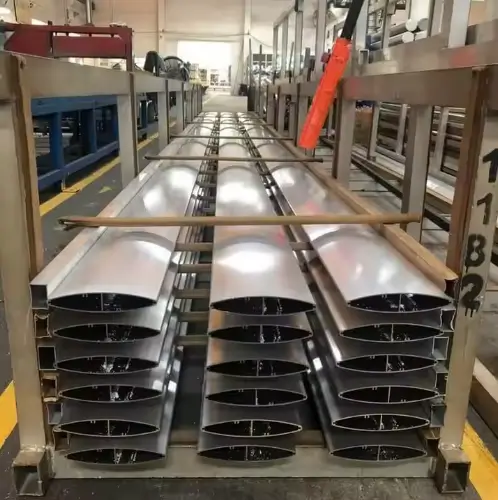
Repeatability cannot be assumed. It must be verified through inspection systems that detect variation early.
Inspection systems verify repeatability by measuring trends, not just single samples. Good systems focus on data, not only pass or fail.
Inspection closes the control loop.
In-process inspection
In-process checks measure profiles during production. This allows quick adjustment before full batches are affected.
Operators measure critical dimensions at defined intervals. Results are recorded and reviewed.
Final inspection systems
Final inspection confirms shipment quality. It ensures profiles meet agreed tolerances after cooling and aging.
Final inspection does not replace process control. It only catches problems late.
Statistical process control
Statistical methods track variation over time. Control charts show whether processes are stable.
When data trends toward limits, action is taken before failure occurs.
Calibration and measurement discipline
Inspection tools must be calibrated. Uncalibrated tools create false confidence.
Measurement method consistency matters as much as tool accuracy.
| Inspekteerimise tüüp | Eesmärk |
|---|---|
| Käimasolevad tööd | Early correction |
| Lõplik | Shipment confirmation |
| Statistical | Trend detection |
| Calibration | Data trust |
Repeatability verification requires trend-based inspection, not only final checks.Tõsi
Trends reveal drift before failure.
Final inspection alone is enough to ensure dimensional repeatability.Vale
Final checks detect issues too late for control.
Kokkuvõte
Dimensional repeatability in aluminum extrusion is controlled, not accidental. Standards define limits, processes hold stability, tooling must be managed, and inspection verifies trends. When all elements work together, repeatable dimensions become predictable instead of risky.