¿Estimación del coste de los troqueles de extrusión de aluminio?

Opening concern: Die cost often shocks people before order hover.
Die cost varies widely, but for typical aluminum extrusion, expect from a few hundred to tens of thousands of dollars depending on complexity and size.
Before we dive in, you should know that die cost depends on many factors. The next parts explain them step by step.
What are typical die costs for aluminum extrusions?
Opening question: Many buyers ask what a “normal” die price might be.
Simple dies for basic profiles often cost under US $1,000; medium complexity dies cost a few thousand dollars; complex or large‑size dies may go up to US $15,000–$25,000 or more.

When a customer asks for a die, the first thing we check is profile design, size, and tolerances. Because aluminum extrusion dies come in very different shapes, costs spread widely. For a small, simple profile (say a square tube 20×20 mm), a basic single‑hole die will have low material requirement and simpler machining. In such case die making may take only a few hours on a CNC and cost mostly material plus machine time. That puts it in the low hundreds to modest thousands of US dollars range.
If the profile becomes larger or includes multiple hollows, webs, or internal cavities, the die block must be bigger. Bigger block means more raw aluminum, more machining time, more tool wear, more inspection. That pushes cost up. Also, if the die must meet tight tolerances or demand special finishing for surface quality, cost increases further.
Large window‑frame dies, structural profiles, or custom industrial shapes often need thick die blocks, multiple inserts, or complex machining. For those, the cost can climb to US $10,000–$25,000 or more.
Here is a rough cost range summary:
| Die type / complexity | Caso típico | Estimated cost (USD) |
|---|---|---|
| Simple, small single‑hole die | Basic tubes, rods, simple profiles | 200 – 1,000 |
| Medium complexity die | Profiles with 2–4 cavities or webs | 1,500 – 5,000 |
| Complex or large‑size die | Large structural, multi‑hollow extrusions | 5,000 – 15,000 |
| Very large, high‑precision die | Big industrial, structural aluminum | 15,000 – 25,000+ |
Price differs by region, raw material cost, machine shop labor cost, and maker experience.
A simple single‑hole die for a small basic profile typically costs less than US $1,000.Verdadero
Such dies require little material and simple machining, lowering cost.
All aluminum extrusion dies cost at least US $10,000.Falso
Simple dies for small, basic profiles often cost much less, in the hundreds or low thousands.
How does profile design influence die pricing?
Opening question: Does the shape you want change die cost?
Yes. The more complex the profile design — internal cavities, thin walls, many corners — the higher the die cost, because tooling must match intricate geometry.
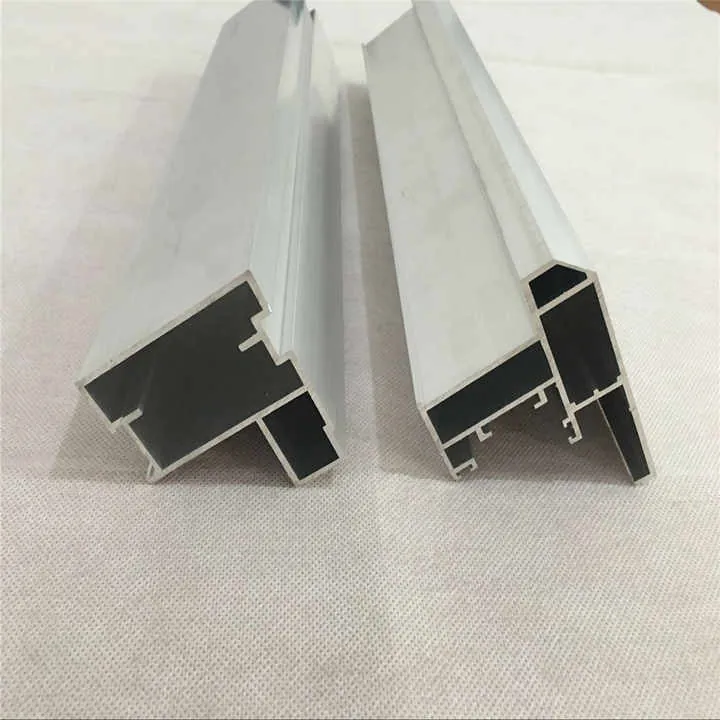
The shape of the extrusion profile is one of the strongest factors in die price. First, a profile with many cavities or thin walls demands more precise die design. Thin walls may need sharp internal corners or precise land widths. That adds time in CAD design and machining. Second, internal webs or hollow regions require hollow‑core formation or removable inserts inside die. Inserts and cores add machining steps and extra parts. Each insert must be carefully machined, heat treated, and fitted.
Third, if the profile has delicate details (rounded corners, tight tolerances, decorative grooves), the die must be finished with fine grinding or polishing. That adds labor. Fourth, the die block size grows if the profile spans large cross‑section area. Larger block means more raw material cost and longer machining.
Here is how complexity affects cost roughly:
| Profile complexity level | Key features | Die cost multiplier over simple die* |
|---|---|---|
| Bajo | Single hollow or solid tube, thick walls | ×1.0 (base) |
| Medio | Two or more hollows, moderate thin walls, few corners | ×2–3 |
| Alta | Multiple hollows, thin walls, internal webs, tight tolerances, detailed features | ×4–6 |
| Very high / custom | Large cross‑section, mixed cavities, complex geometry, decorative surfaces | ×6–10 or more |
*Multiplier is approximate and depends on block size and shop rates.
Design also affects the die life and maintenance. A die with thin lands or delicate features wears faster. The shop may need to plan maintenance or replacement earlier. That factor may add to upfront cost if the die needs better material or special heat treatment.
Design complexity also influences scrap during first runs. If shape is tricky, you may get more rejects before fine tuning. That means more time and sometimes rework — indirectly increasing die cost.
Thus, when you ask for a quote, always share detailed drawings. A simple sketch might hide complexity. Better detail lets tool maker judge difficulty and quote more accurately.
If a profile has multiple hollow sections with thin walls, cost of die usually increases by at least twice compared to a simple profile.Verdadero
More hollows and thin walls require complex inserts and precise machining, raising cost.
Profile design never affects die price; only die size does.Falso
Profile geometry complexity, internal cavities, precise features all influence die cost beyond size.
Are multi-cavity dies more expensive to produce?
Opening question: What about dies that extrude several profiles at once?
Multi‑cavity dies cost more to make and align precisely, but cost per part may drop if you run large volume.
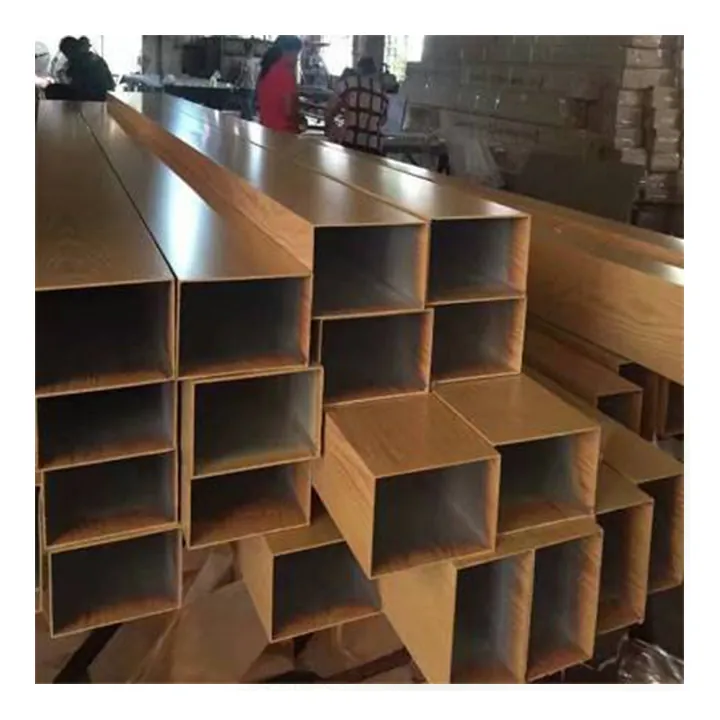
A multi‑cavity die can produce several identical or different profiles in one press cycle. The die block must contain several openings (cavities) with proper alignment and balance. That means much more machining, often a larger block, and more engineering to ensure even flow and balanced exit speed. That raises initial cost.
If you compare a single‑cavity die and a dual‑cavity die for the same profile, the dual‑cavity die might cost 1.5 to 2 times more. For multi‑cavity (say 4–8 cavities), cost may be 3–6 times that of a simple single‑cavity die. But the benefit comes when you extrude large volume and want high output per press stroke.
However multi‑cavity dies have challenges. First, you need more uniform billet heating and more careful press settings. Billet flow must split evenly to each cavity. That needs good design of distribution channels inside die, which adds complexity. Second, wear will be uneven if cavities are not identical, leading to earlier maintenance or mismatched profiles. That may add hidden cost. Third, initial setup and trial runs take longer. You may need tuning after first runs. That increases labor and maybe scrap, adding indirect cost.
Here is rough comparison of die cost vs yield:
| Die type | Cavities | Estimated die cost factor vs simple die | Output per press stroke |
|---|---|---|---|
| Single‑cavity die | 1 | ×1 | 1 profile |
| Dual‑cavity die | 2 | ×1.5–2 | 2 profiles |
| Quad‑cavity die | 4 | ×3–4 | 4 profiles |
| Multi (6–8) cavity | 6–8 | ×4–6 | 6–8 profiles |
If a production run is small, multi‑cavity die may not pay off. Setup and scrap may outweigh benefits. For large runs, saving time per part and reducing unit cost may justify higher die price.
Also keep in mind: Multi‑cavity dies often need stronger die block and better heat treatment because of greater metal stress and thicker core zones. That increases raw material and heat treat cost.
Thus, multi‑cavity dies usually cost more upfront. But if you run large orders, the cost per part goes down. Use multi‑cavity only if volume justifies it and if you have consistent demand.
A multi‑cavity die always costs more to make than a single‑cavity die for the same profile.Verdadero
It requires more machining, larger block, more complex design, so initial cost rises.
Multi‑cavity die always reduces overall cost per part, even for small orders.Falso
For small orders the cost and setup overhead may not be offset by volume, so per‑part cost could stay high or even increase.
Can tooling costs be amortized over large orders?
Opening question: Can the large die cost be spread over many parts to reduce per‑piece cost?
Yes. When you order many tons of extrusion, tooling cost per part becomes small; high die cost makes sense only with large volume runs.
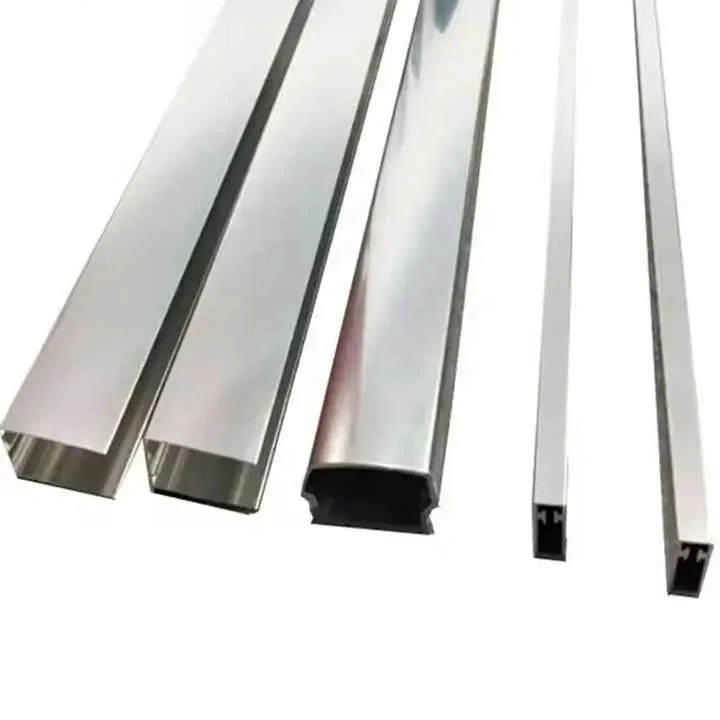
When a die costs, say, US $10,000, that is heavy for a small order. But if you plan to extrude 100,000 kg over time, the die cost per kg becomes tiny. For example, if product cost per kg is $2, and die cost adds only $0.10 per kg, that is acceptable.
Many customers think only about die price, not how many parts they will extrude. For small orders just a few hundred kg, a die costing $5,000 may make final price too high. But for big orders — many thousands or tens of thousands kg — the die cost becomes minor.
Here is a simple amortization example:
| Die cost (USD) | Total extrusion volume (kg) | Die cost per kg (USD/kg) |
|---|---|---|
| 5,000 | 5,000 | 1.00 |
| 5,000 | 25,000 | 0.20 |
| 10,000 | 50,000 | 0.20 |
| 10,000 | 100,000 | 0.10 |
| 20,000 | 200,000 | 0.10 |
This shows if volume is low, the per‑kg cost burden from tooling is high. If volume is large, tooling cost per kg becomes small. That makes high‑cost, complex dies reasonable for big volume orders.
In real work, one must add die maintenance and eventual repairs. Every few thousand tons, die may wear or require re‑work. That cost should also feed into amortization plan. For lifetime estimation, plan for a certain number of runs or tons. If demand remains consistent, amortization works well.
If demand is irregular or small, a high‑cost die may never pay off. In that case, it might be better to use a simpler die or order only small batches.
Tooling cost per part becomes very small when production volume is very large.Verdadero
High die cost is spread over many kilograms, lowering cost per kg significantly.
High die cost always pays off even for small production runs.Falso
If volume is small, die cost per part remains high, making product expensive.
Conclusión
Die cost depends heavily on design complexity, size, and expected volume. For small runs simple dies work. For large and complex profiles multi‑cavity complex dies with amortization deliver value.