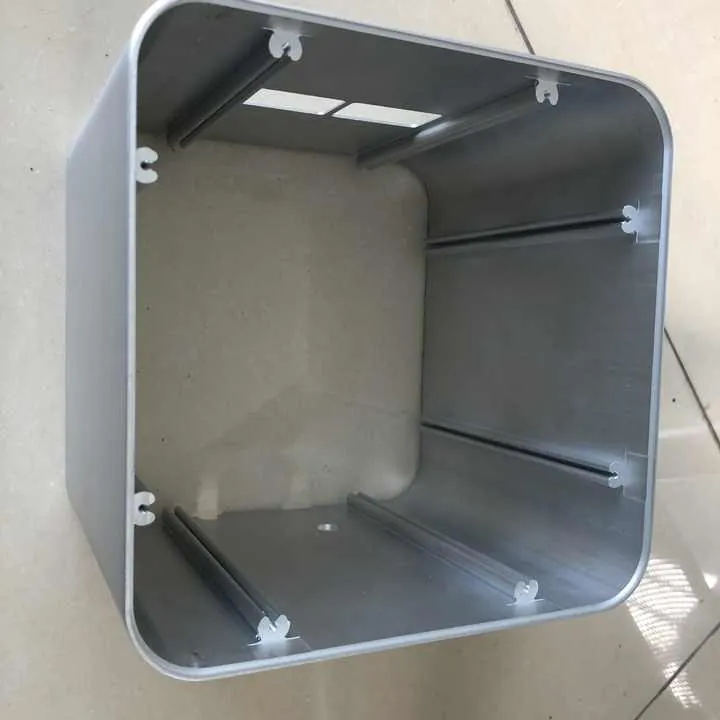
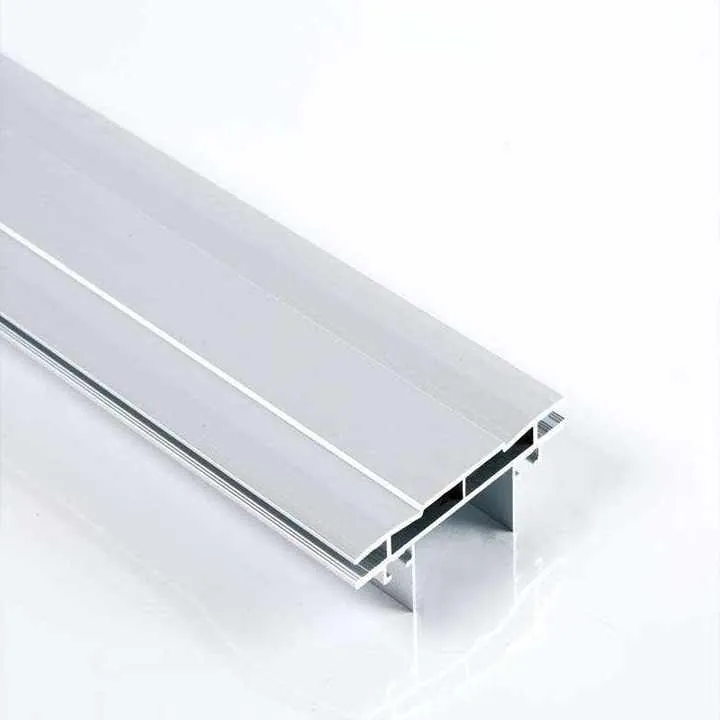
¿Qué es el proceso de extrusión del aluminio?

El proceso de extrusión de aluminio me permite transformar metal sólido en formas complejas forzándolo a través de una matriz mientras controlo el calor y la presión.
En términos sencillos, la extrusión de aluminio consiste en calentar un tocho de metal, empujarlo a través de una abertura perfilada (matriz) bajo presión y, a continuación, enfriar y acabar el perfil.
Le guiaré por los pasos, explicaré por qué la presión es eficaz, describiré dónde se produce el enfriamiento y mostraré cómo un buen control del proceso eleva los resultados.
¿Qué pasos componen el proceso de extrusión?
Una vez observé cómo se procesaba un lingote de aluminio. Ver cada paso me dio una idea mucho más clara de lo que se necesita.
El proceso de extrusión sigue una serie de pasos: preparación de la matriz, calentamiento del tocho, carga, prensado, conformado de la matriz, enfriamiento/enfriamiento, estirado, corte, acabado.

He aquí un desglose de los pasos clave que utilizo al gestionar una línea de extrusión:
1. Preparación del troquel
A la matriz se le da la forma deseada y se precalienta. Esto ayuda a garantizar que el metal fluya uniformemente y llene con precisión la abertura de la matriz.
2. Calentamiento de palanquillas
El tocho de aluminio se calienta hasta un estado blando pero sólido, normalmente entre 400 °C y 500 °C. Esto ablanda el metal para que sea más fácil introducirlo en la matriz. Esto ablanda el metal para que sea más fácil empujarlo a través de la matriz.
3. Carga y lubricación
El tocho se carga en el contenedor. Se aplican lubricantes o agentes desmoldeantes para evitar que se pegue y ayudar a suavizar el flujo de metal.
4. Prensado / Extrusión
Una prensa hidráulica empuja el tocho a través de la matriz utilizando toneladas de presión. A medida que el aluminio fluye por la matriz, adopta la forma de ésta y forma un perfil continuo.
5. Aparición y extinción
Cuando el aluminio moldeado sale de la matriz, se enfría rápidamente con aire o agua. Esto fija la forma y estabiliza la estructura del perfil.
6. Enfriamiento a temperatura ambiente, enderezado y corte
Una vez enfriada inicialmente, la extrusión sigue enfriándose hasta alcanzar la temperatura ambiente. A continuación, se endereza para eliminar cualquier torsión y se corta en las longitudes requeridas.
7. Acabado y tratamiento térmico
En función de las necesidades, los perfiles pueden envejecerse, anodizarse, pintarse o mecanizarse más.
He aquí un resumen en forma de tabla:
| Paso No. | Descripción | Propósito |
|---|---|---|
| 1 | Preparación de la matriz | Control de la forma, temperatura estable de la matriz |
| 2 | Calentamiento de palanquillas | Ablanda el metal sin fundirlo |
| 3 | Carga y lubricación | Evita que se pegue, garantiza un movimiento suave |
| 4 | Prensado/extrusión | Moldea el metal en forma de perfil |
| 5 | Enfriamiento | Estabiliza la forma y la estructura interna |
| 6 | Enfriar, enderezar, cortar | Garantiza la precisión y prepara los pasos siguientes |
| 7 | Acabado y tratamiento | Mejora el rendimiento, el aspecto y la durabilidad |
En mis propios proyectos, la omisión o la gestión incorrecta de cualquier paso provocaba deformaciones, dimensiones inconsistentes o propiedades mecánicas débiles.
¿Por qué la presión moldea eficazmente el aluminio?
Una vez intenté extruir un perfil complejo y me di cuenta de que sin la presión suficiente el metal no llenaría todas las esquinas de la matriz, y la pieza quedó débil y defectuosa.
La presión es la clave, ya que obliga al tocho de aluminio ablandado a fluir hacia la abertura de la matriz y adoptar su forma superando la fricción y la resistencia.
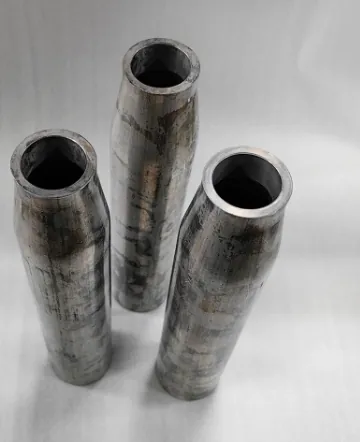
He aquí cómo entiendo el papel de la presión en el proceso de extrusión, desglosado en puntos críticos:
Cómo funciona la presión
Cuando el tocho se calienta, su estructura interna se vuelve más dúctil. A continuación, un cilindro hidráulico lo empuja a través del contenedor hasta la matriz. La presión aprieta el aluminio a través de la abertura moldeada de la matriz.
En la extrusión directa, la matriz permanece inmóvil mientras el tocho se mueve. En la extrusión indirecta, la matriz se mueve hacia un tocho estático. En ambos casos, la presión fuerza la transformación.
Por qué es eficaz
- La presión garantiza un contacto total entre el tocho y la matriz, de modo que el metal rellena paredes finas, huecos, nervaduras y formas complejas.
- La alta presión acelera la deformación para que el metal fluya de forma uniforme, especialmente en aleaciones con mayor resistencia.
- Como el material sigue siendo sólido pero está reblandecido, la presión permite que la extrusión mantenga la integridad en lugar de verter metal fundido (con lo que se conserva mejor la estructura del grano).
Consideraciones importantes
- La capacidad de la prensa (toneladas de fuerza) determina lo grande o complejo que puede ser un perfil extruido.
- Si la presión es demasiado baja para la forma y la aleación, se produce un llenado incompleto, o el perfil puede torcerse o tener huecos.
- Si la presión es demasiado alta sin una temperatura o lubricación adecuadas, puede producirse el desgarro del metal, el desgaste de la matriz o un calentamiento excesivo.
En una línea, utilizamos una prensa que no era lo bastante fuerte. Lo ajustamos precalentando un poco más el tocho y reduciendo la velocidad de extrusión. Esto permitió que el metal fluyera mejor sin agrietar la matriz o el perfil.
¿Dónde se produce el enfriamiento por extrusión?
Cuando observé la línea de extrusión, destacaron las fases de enfriamiento: primero un enfriamiento rápido justo después de la salida de la matriz y luego un enfriamiento más lento hasta la temperatura ambiente. Ambos son muy importantes.
El enfriamiento se produce en primer lugar inmediatamente después de la salida (temple) en una mesa de salida mediante agua o aire, después en una mesa de enfriamiento hasta alcanzar la temperatura ambiente, antes del estirado y el acabado.
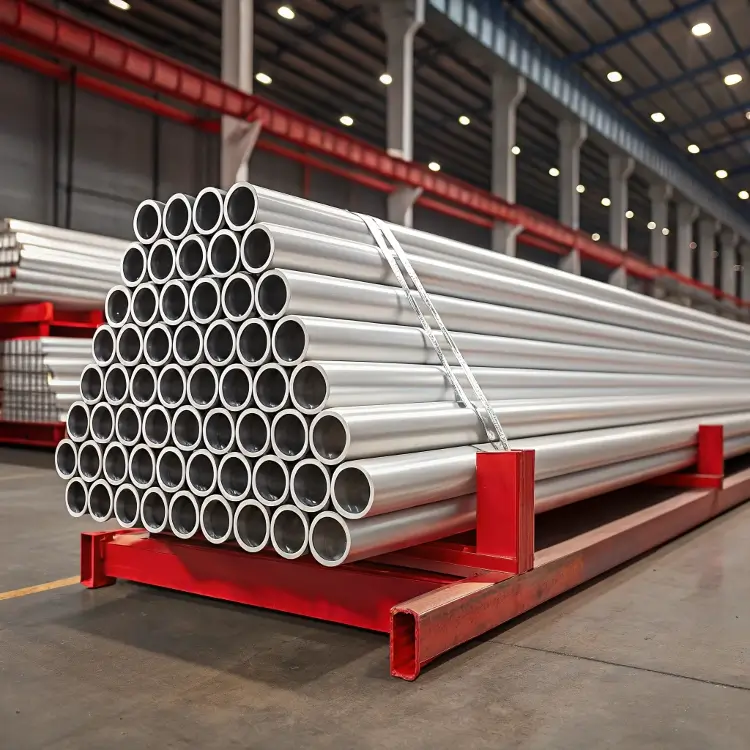
Estos son los detalles que he reunido sobre los lugares de refrigeración y su finalidad:
Enfriamiento inmediato (temple)
El perfil que sale de la matriz está muy caliente y aún maleable. Un extractor lo guía a lo largo de la mesa de salida y se aplica refrigeración -baño de agua, pulverización, ventiladores de aire- para reducir rápidamente la temperatura. Este enfriamiento rápido ayuda a mantener la precisión dimensional y la estructura adecuada del grano.
El enfriamiento rápido también evita cambios microestructurales excesivos (por ejemplo, envejecimiento excesivo, crecimiento de granos grandes) que reducirían la resistencia mecánica.
Enfriamiento a temperatura ambiente / enderezamiento
Tras el temple inicial, los perfiles se trasladan a una mesa de enfriamiento donde reposan hasta alcanzar una temperatura cercana a la ambiente. A continuación se estiran para eliminar cualquier torsión o curvatura. A continuación, se cortan en longitudes utilizables.
Por qué es importante la ubicación de la refrigeración
- Un enfriamiento demasiado agresivo puede provocar alabeos o inducir tensiones residuales; un enfriamiento demasiado lento podría permitir cambios no deseados en la microestructura o distorsiones.
- El enfriamiento debe controlarse porque algunas aleaciones (especialmente las de la serie 6000) dependen de un enfriamiento rápido y una velocidad de enfriamiento específicos para alcanzar el revenido deseado.
- El utillaje y la disposición de las líneas deben permitir que el perfil se enfríe sin interferencias y evitar las zonas en las que los perfiles puedan torcerse o combarse bajo el calor antes del enderezado.
En mis operaciones, siempre controlo la temperatura de salida, la uniformidad del enfriamiento y me aseguro de que la longitud de la mesa de enfriamiento es suficiente para el enfriamiento ambiental antes de la manipulación final. Una etapa de enfriamiento mal gestionada siempre se manifestará como problemas de planitud o un rendimiento mecánico incoherente.
¿Puede el control de procesos mejorar los resultados?
Según mi experiencia, cuando no se controlaban las variables del proceso -temperatura, presión, velocidad-, el resultado eran perfiles incoherentes, mayores índices de desechos y más tiempo dedicado a reelaborar.
Sí: un control estricto del proceso (temperatura, presión, velocidad, diseño de herramientas, supervisión en tiempo real, etc.) mejora notablemente la calidad, la uniformidad, el rendimiento y las propiedades mecánicas de la extrusión.
He aquí cómo me gusta pensar en el control de procesos y cómo mejora los resultados:
Principales variables de control
- Temperatura del lingote: Si el tocho está demasiado frío, la extrusión es lenta y dimensionalmente menos precisa; demasiado caliente, la calidad de la superficie se resiente y las salidas de tolerancia se amplían.
- Velocidad del ariete/velocidad de prensado: Si la velocidad es demasiado alta, es posible que el metal no fluya uniformemente y surjan problemas de calidad; si es demasiado lenta, la productividad se resiente.
- Temperatura de la matriz: El precalentamiento de la matriz garantiza un flujo estable y unas dimensiones uniformes.
- Velocidad de enfriamiento: El enfriamiento rápido y el enfriamiento a temperatura ambiente deben coincidir con los requisitos de la aleación y el perfil para cumplir las especificaciones mecánicas.
- Estado y diseño de las herramientas: Un troquel bien diseñado, unas dimensiones correctas del recipiente y una buena lubricación son fundamentales para evitar defectos.
Ventajas de un control estricto
- Dimensiones de perfil uniformes en toda la longitud y en todos los lotes.
- Menor tasa de desechos (menos defectos como grietas superficiales, alabeos o distorsiones).
- Propiedades mecánicas mejoradas (templado preciso, estructura de grano correcta).
- Mejor acabado superficial y menos tratamiento posterior.
- Productividad optimizada con menos tiempo de inactividad para ajustes.
Mi ejemplo de mejora en el mundo real
En una línea que heredé, la temperatura de las palanquillas era errática en ±20 °C. Introduje sensores de temperatura infrarrojos en línea, una temperatura objetivo estándar y el registro de cada serie. Una vez implantado el control, la chatarra bajó 12 % y la rectitud del perfil mejoró significativamente. Las alertas en línea también evitaron el sobrecalentamiento que había estado causando porosidad en la superficie.
Aquí tienes una tabla de referencia de control:
| Variable | Consecuencia de un control deficiente | Buen resultado del control |
|---|---|---|
| Temperatura del lingote | Flujo pobre, dureza inconsistente | Flujo suave, propiedades consistentes |
| Velocidad / presión del ariete | Colapso de la superficie, desgarro, desgaste de la matriz | Flujo equilibrado, buena superficie, longevidad de la matriz |
| Velocidad de enfriamiento | Alabeo, tensión residual, temple incorrecto | Piezas rectas, microestructura correcta |
| Diseño y estado de las herramientas | Malformaciones, rebabas, errores dimensionales | Perfiles precisos, resultados repetibles |
En resumen, creo que el control del proceso no es sólo un complemento, sino que, para una extrusión de alta calidad, es fundamental. Sin él, se trabaja en “modo esperanza”.
Conclusión
Le he explicado paso a paso el proceso de extrusión del aluminio: cómo fluyen los pasos, por qué es importante la presión, dónde se produce el enfriamiento y cómo el control del proceso mejora los resultados. Cuando gestionamos bien cada uno de estos aspectos, la extrusión se realiza sin problemas y los perfiles cumplen los objetivos de calidad, coste y entrega.