Do aluminum extrusion profiles struggle with sharp corners?
I feel your pain when dealing with aluminum corners. Sharp angles often crack during extrusion if not handled right.
Yes. Extremely sharp corners can cause cracking or surface defects if the die and process are not optimized.
That can slow down production. Let’s explore why corners need care in extrusion.
Can extreme wall-thickness variations cause profile defects?

I once worked on a project with walls from 1?mm to 20?mm thickness in the same profile. That brought big problems.
Yes. Large variations in wall thickness can lead to defects like warping, internal voids, or uneven flow during extrusion.
I will share the technical reasons and solutions in detail below.
Why wall thickness variation matters
Profiles push aluminum through a die in one step. Uneven thickness means some sections flow faster. Thicker areas push slower. That imbalance strains the metal. It can lead to:
- Surface ripples
- Internal voids
- Out?of?round sections
For example, I saw voids in thick sections when the metal did not fill evenly. Fixing that took extra machining and lost time.
How we manage this problem
I divide thick and thin sections with ribs or webs. These help flow balance. We also adjust die speed and temperature zone.
Before final production, we run:
| Test | Purpose |
|---|---|
| Simulation | Predict metal flow and spot trouble |
| Pilot extrusion | Verify surface quality |
| Die tweak | Adjust before full run |
After pilot runs, we improve die or design until defects disappear. It takes time but saves cost long term.
Large wall thickness variations cause uneven metal flow during extrusion.True
Thicker areas flow slower, causing defects like voids and warping.
With modern extrusion machines, wall thickness variation causes no issues.False
Even modern machines need careful design and setup to handle extreme variations.
Are there size limits based on extrusion press capacity?

Once, I tried a profile 400?mm wide on a 4000?ton press. It barely worked, but only after die and billet adjustments.
Yes. Press capacity and billet size set upper limits on profile dimensions and weight.
Let me dive into those limits and how we work around them.
Press capacity and billet size
Extrusion press capacity is rated in tons of force. Common sizes:
| Press size | Max profile width |
|---|---|
| 500?ton | ~100?mm |
| 2000?ton | ~250?mm |
| 4500?ton | ~400?mm+ |
These are rough. Actual width depends on profile shape and wall thickness.
We also select a billet (usually 6?m long). Wider profiles need larger billets. Billet must fill die cleanly. If not possible, we break the profile into two extrusions and weld or mechanically join.
How we handle large profiles
- Use the largest press available
- Design profiles with modular sections
- Split profiles and join later when one press is not enough
That way, we still meet client specs without risking press overload.
Extrusion press tonnage limits the maximum profile width and complexity.True
The press force must match profile cross-sectional area; insufficient capacity can cause defects or press failure.
You can make unlimited wide profiles on small presses by slowing speed.False
Slowing speed does not overcome physical tonnage limits and may cause scrap or broken presses.
Is die complexity a barrier for intricate profiles?
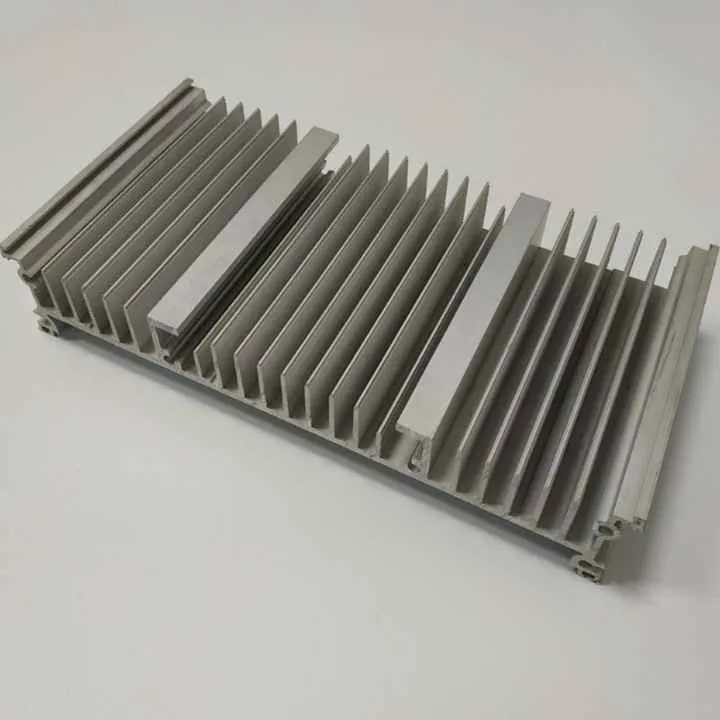
I faced this when a client wanted a profile with holes, text, and 0.5?mm fin walls. The die got extremely complex.
Yes. Complex die shapes raise costs and technical risk, but skilled design and experience can manage it.
Below I explain the limits and our solutions.
The challenges of complex dies
Complex profiles can include text, holes, or tight ribs. These features cause:
- High die manufacturing cost
- Powdered metal risk in thin webs
- Higher force needed and die stress
- Greater risk of defects and die wear
We saw premature die wear in a profile with 10 fine ribs under 0.5?mm thick. It needed frequent repair, raising cost and downtime.
How we overcome die complexity
I work with our die design team to:
- Simplify features where possible
- Use multi?stage or segmented dies
- Use stronger tool steels
- Simulate flow and stress before production
Once tested, we run a trial and iterate quickly. This process eases die complexity without sacrificing design.
Example case
A client needed an intricate heat-sink profile with 0.8?mm fins. We used:
- Multi-cavity die
- High grade tool steel
- Flow simulation
- Trial extrusion and die polish
We delivered defect-free production runs. It cost more upfront but saved time and improved quality.
Complex die shapes always prevent us from making intricate profiles.False
While complex dies raise cost and technical risk, we can still make profiles with smart design and multi-stage tooling.
Die complexity impacts cost, die lifespan, and extrusion quality.True
More complex dies are harder to build, wear faster, and require careful process control.
Conclusion
I have shared how corners, wall thickness, press size, and die complexity affect aluminum extrusion. With expert design and process control, we can manage these challenges well.