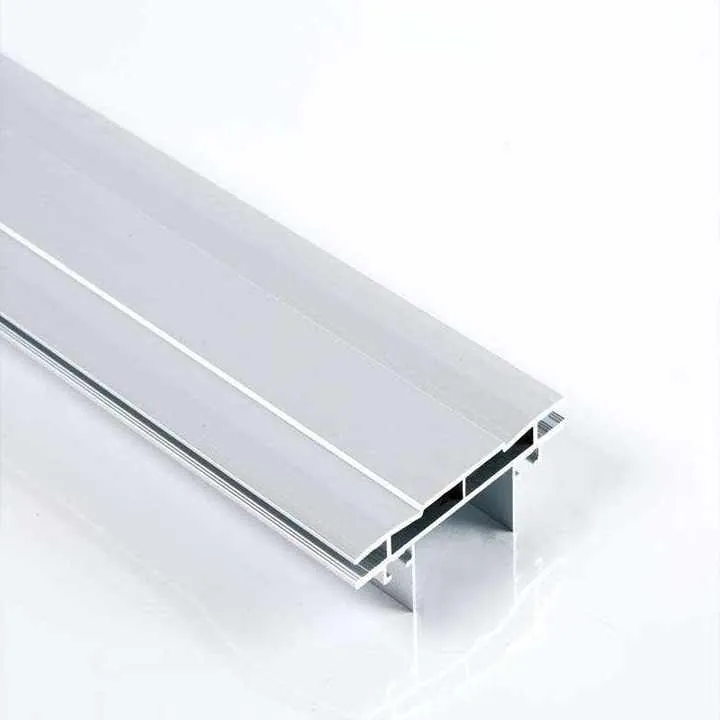
What is extrusion aluminum?

I still remember visiting a facility where a glowing log of aluminum was pushed through a steel tool and out came a long shaped profile. That moment made me appreciate what “extrusion aluminum” really means.
Extrusion aluminum refers to aluminum material that has been forced through a shaped die to create a continuous profile of a specific cross‑section.
In the sections ahead I’ll walk through how the process works, why structures often use it, where it finds wide use, and how it can boost overall efficiency.
How is extrusion aluminum produced?
When I first saw the extrusion press in action I was amazed at the power and precision. The story begins with a billet, and ends with a profile ready for finishing.
The production of extrusion aluminum involves heating an aluminum billet, pushing it through a die under high pressure, cooling and finishing the resulting profile.
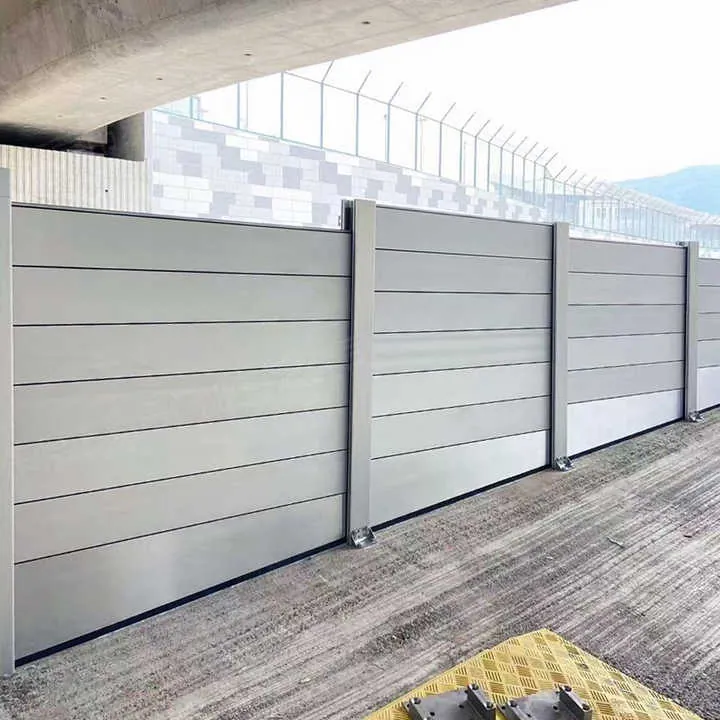
Here’s a detailed breakdown from what I’ve seen in aluminum extrusion manufacturing:
Trin for trin-proces
-
Billet preparation
A billet is a solid, cylindrical piece of aluminum alloy. It is cut to length and checked for surface quality and alloy composition. -
Opvarmning
The billet is heated in a furnace until it reaches the required plasticity for extrusion—typically around 400–500°C. This makes the aluminum soft enough to flow without melting. -
Die setup
Meanwhile, a die (a hardened steel tool) is prepared and preheated. This die defines the shape of the profile that will be extruded. -
Ekstruderingspresse
The heated billet is loaded into a container, and a hydraulic ram pushes it through the die. Immense pressure forces the aluminum to take the die’s cross-sectional shape. -
Køling og håndtering
The extruded shape exits the press as a long profile and is immediately cooled using air or water. The cooling process is critical to control shape and surface properties. -
Udstrækning
To remove internal stresses and correct any twists or warping, the extruded profiles are stretched. This step ensures straightness and dimensional accuracy. -
Skæring til længde
Profiles are cut to standard or custom lengths based on the order. Typical lengths range from 3 to 6 meters, but longer lengths are possible. -
Varmebehandling
Depending on the alloy, the extrusions are aged or heat-treated to increase mechanical strength. Tempers like T5 or T6 are commonly used for structural parts. -
Efterbehandling
Optional finishes include anodizing, powder coating, brushing, or polishing. This enhances corrosion resistance and appearance.
From start to finish, this process transforms a simple billet into a highly functional component used across many industries.
Extrusion aluminum profiles always require welding to join sectionsFalsk
Extruded aluminum profiles are continuous lengths and often joined by mechanical fasteners rather than welding; welding is not always necessary.
The extrusion process for aluminum always begins by heating the billet to 400‑500°CSandt
In the extrusion process the billet is preheated to a temperature in the range of 400–500°C to make it malleable before pressing.
Why select extrusion aluminum for structures?
Whenever a structural engineer asks me about material options, I always bring up extrusion aluminum. The benefits go far beyond just the material itself.
Extrusion aluminum is chosen for structures because it offers lightweight construction, design flexibility, integrated features, efficient production and strong performance under many conditions.

Here’s why many builders, designers and engineers go with it:
Structural advantages
-
Højt forhold mellem styrke og vægt
Aluminum is roughly one-third the density of steel. With the right alloy and design, extruded profiles deliver impressive stiffness without the bulk. -
Brugerdefineret geometri
You can design any cross-section you need. Rectangular tubes, channels, I-beams, T-slots—these can all be integrated into a single profile. -
Built-in functionality
T-slots, mounting holes, wire management channels, or decorative grooves can all be part of the design. This reduces secondary machining and part count. -
Nem montering
Most structural extrusion systems rely on standardized brackets, nuts, and bolts. This allows fast, modular assembly on-site or at the shop. -
Modstandsdygtighed over for korrosion
Extruded aluminum is naturally resistant to rust and environmental damage. With anodizing or powder coating, durability is further enhanced. -
Aesthetic options
Aluminum extrusions can be polished, anodized, coated, or brushed to suit architectural or commercial visual standards.
I’ve worked on multiple projects where extrusion aluminum replaced welded steel frameworks. The reasons were always clear: lighter transport loads, easier handling, faster assembly, and more attractive results.
Extrusion aluminum is rarely used in structural applications due to low strengthFalsk
Extruded aluminum profiles are widely used in structural applications because they can provide good design flexibility and strength when properly specified.
Extrusion aluminum allows structural integration of mounting features and functional groovesSandt
One of the advantages of extruded profiles is that they can include integrated slots, channels, mounting features as part of the profile's geometry.
Where is extrusion aluminum widely used?
I often tell clients to just look around—extrusion aluminum is everywhere once you know what to look for.
Extrusion aluminum is widely used across industries including construction, transportation, industrial automation, electronics, solar energy and consumer goods.
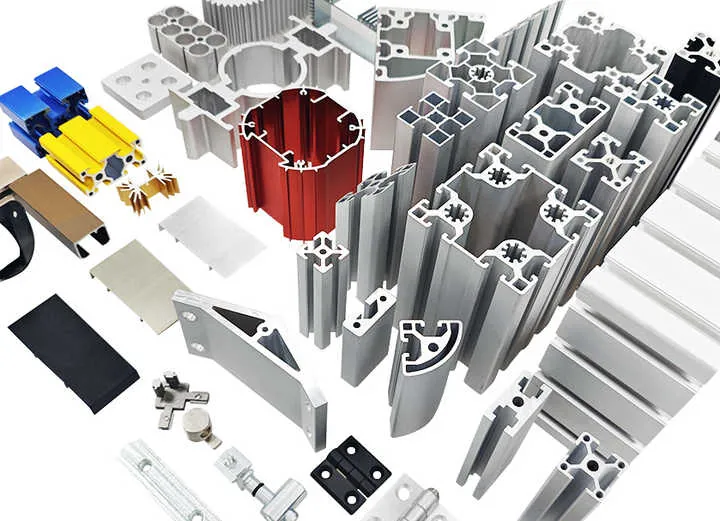
Here are the top sectors:
Konstruktion
Window frames, curtain wall systems, partition panels, structural brackets, and façade grids. Lightweight and corrosion-resistant features make extrusions ideal for modern buildings.
Biler og transport
Bumpers, roof rails, electric vehicle battery frames, trailers and truck bodies all benefit from the strength and low weight of extruded aluminum.
Machinery and Industrial Equipment
Factory frames, conveyor supports, modular workstations, and enclosures use extrusion aluminum because of the ease of customization and reassembly.
Vedvarende energi
Solar panel frames, mounting brackets, and structural bases in wind and solar energy systems often use extruded aluminum for corrosion resistance and weight savings.
Forbrugerelektronik
Laptop housings, monitor frames, speaker covers, and cooling fins benefit from the combination of heat dissipation and formability.
Retail and Furniture
Store fixtures, shelving systems, exhibition booths, and modular furniture make extensive use of extrusions for sleek designs and quick setup.
In our company, I’ve worked with clients from at least ten different countries in the last year. One used custom aluminum extrusions to build solar racking for extreme environments in the Middle East. Another used them to design light frames for German manufacturing systems. The versatility is unmatched.
Extruded aluminum is only used in building facades and not in transport or electronicsFalsk
Extruded aluminum finds use in transport, electronics, renewable energy and many sectors beyond just building facades.
Extruded aluminum profiles can be used to create complex shapes like hollow tubes, channels, and multi‑chamber profilesSandt
The extrusion process allows creation of solid, hollow and semi‑hollow profiles and complex cross‑sections adapted for many applications.
Can extrusion aluminum boost efficiency?
In today’s competitive market, saving time, material, and effort means everything. That’s where extrusion aluminum comes in.
Yes—extrusion aluminum can boost efficiency by reducing material waste, shortening production time, simplifying assembly, enabling modularity and reducing transport and handling costs.
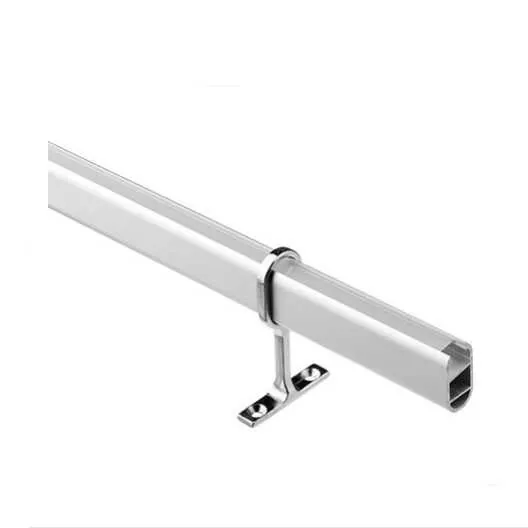
Let’s break that down:
Designets effektivitet
Because extrusions are designed to be close to final shape, there’s little need for milling, turning or shaping afterward. That saves both material and labor.
Assembly speed
Extruded profiles often come with built-in channels for T-nuts, bolts and plates. This allows for tool-free or minimal-tool assembly of large frames and enclosures.
Let vægt
When transporting or installing large structural elements, aluminum is easier to carry, lift and position. On a construction site, this directly affects labor costs.
Repeterbarhed
Once you have a custom die, it’s easy to reproduce the same profile over and over. That’s perfect for scaling production or replicating successful designs.
Finish-ready surfaces
Extrusions often come out with a smooth surface that requires little sanding or polishing. Ready-to-anodize or paint conditions reduce prep work.
Lifecycle cost savings
Because aluminum does not rust and is easy to clean, maintenance costs are lower over time—especially outdoors or in demanding environments.
I’ve had clients tell me they cut installation time by 30% just by switching to an extruded aluminum frame system. Fewer parts, faster connections, and no welding—all add up to real savings.
Using extrusion aluminum profiles always increases production cost compared to machined partsFalsk
Although tooling may cost more, the efficiency gains in production, assembly, and lifecycle often reduce overall cost.
Extrusion aluminum enables faster assembly and reduced machining compared to parts made from raw stockSandt
Because extruded profiles are near-net shape and often include mounting features, they reduce the need for machining and simplify assembly.
Konklusion
In this article I’ve explained what extrusion aluminum is, how it’s made, why it’s ideal for structural uses, where it’s widely used, and how it can improve overall efficiency. If you work in manufacturing, design or construction, aluminum extrusion offers an unmatched mix of strength, flexibility, speed, and sustainability.