Tolerance for ekstrudering af aluminium til lange profiler?

At times extra‑long aluminum parts seem solid and consistent. But small shifts can ruin a full profile.
When profiles stretch out in length, controlling tolerances becomes harder yet critical for final fit.
There are technical rules and smart methods to help keep long extrusions accurate. Keep reading to explore them step by step.
Transitioning from short sections or small frames to long profiles changes many details. The geometry, the cooling, the tooling all shift. In the next sections I walk through how length matters, what increases deviation risks, what rules to follow, and how custom tooling can help.
How does profile length impact tolerance control?
At first glance, a long extrusion seems the same as a short one. But the longer the profile, the more factors influence its shape.
Length adds struggles for consistent dimensions across the profile.

When an extrusion is only a foot or two long, maintaining cross‑section tolerances and straightness is straightforward. The die shaping and immediate cooling close to the die give uniform results. But as length grows — say several meters — more time passes before the tail leaves the press. The metal has more time to flex, bend, or twist under its own weight or catch thermal gradients.
Also the cooling at a distance from the die becomes less uniform. The earliest part of the profile is already cooled and somewhat rigid. The later part is still warm and soft. If cooling fans or water sprays are not consistent along the full length, the profile may develop slight warps, bow, or twist.
Another issue is handling after extrusion. To move long bars demands rollers, conveyors, or long supports. Improper support or uneven roller spacing can bend the bar under gravity before it fully stabilizes.
In addition, the longer the extrusion, the harder it is to keep cross‑section dimensions within tolerance from start to end. Slight die wear, temperature change, or even variation in billet material will show up more clearly across long spans. A small difference near the start might amplify a few millimeters by the end.
Thus controlling tolerance over long profiles demands careful process design. The die must be stable. Cooling must be even over the full bank. Support and handling must be precise. Otherwise the final product may fail dimensional requirements.
Because of these added risks, many producers keep tighter control at each stage — from die design, extrusion speed, temperature, cooling, to handling. I have seen that lines with unstable cooling or rough handling create long parts that bend more than expected. In contrast, well‑designed lines produce long profiles that stay within tight tolerance.
To show typical difference, here is a rough comparison:
| Profile length | Key risk | Need attention on… |
|---|---|---|
| Short (≤ 1‑2 m) | Minor variation | Die calibration, initial cooling |
| Medium (2‑4 m) | Cooling gradients, weight support | Uniform cooling, controlled handling |
| Long (≥ 4‑6 m) | Warp, twist, cumulative cross‑section drift | Roller spacing, cooling consistency, material uniformity |
In short, as profile length increases, tolerance control moves from a simple die‑to‑cut process to a complex system balancing shape, temperature, support, and handling.
Longer profiles require more process controls than short ones to maintain toleranceSandt
Because added length increases risks of warp, thermal gradient effects, and cross‑sectional variation over distance.
Profile length alone does not affect tolerance control if die is perfectFalsk
Even with a perfect die, cooling, handling, and material uniformity also influence final tolerance over long spans.
Are longer profiles more prone to deviation?
Long aluminum bars often look correct at first glance. Still small deviations can appear once the bar cools or as it is moved.
Yes. Longer profiles generally show more deviation risk than shorter ones.

With long sections, the same small error that is invisible on a short piece becomes visible and often more serious. For example, slight thermal expansion or contraction during cooling might not change shape for a short segment. But over 5 or 6 meters, that accumulates into noticeable bow or twist.
Also internal stresses build up along the length. Aluminum extruded under heat and pressure is still soft initially. As it cools, metal shrinks. If shrinkage is not uniform, some parts will pull more than others. In a short profile, stress can dissipate quickly. In a long profile, stresses add up and might warp the bar later.
Further, long profiles are harder to cool evenly. Cooling often uses air fans or water sprays along the run. If some fans are weaker or water spray is uneven, certain spots stay hotter longer. Hotter segments remain softer longer, and when they cool later, they shrink differently than already cooled sections. This non‑uniform cooling leads to twist, bow, or cross‑section distortion.
On top of that, handling plays a bigger role. Short bars are easy to lift or move by hand. Long bars need conveyors, rollers, and strong support frames. If rollers are spaced too far apart or misaligned, the profile may sag between supports. That sag under gravity can bend or twist the metal before it fully stabilizes.
Also, during storage or stacking, long profiles need careful arrangement. Uneven stacking, no spacers, or unsupported ends can cause bending or twisting over time even after final dimensional checks.
Finally, measuring long profiles with high precision is more difficult. Errors in measurement tools, improper support during measurement, or insufficient measuring equipment can hide deviations. Then a bent bar may be shipped and only warp becomes visible later during installation.
Because of all these factors, producers often allow slightly larger tolerances for long profiles compared to short ones. That helps to avoid rejecting too many parts. But it means long profiles will inherently have more variation potential.
| Faktor | Effect on long profiles |
|---|---|
| Thermal shrinkage over length | Higher chance of bow or length variation |
| Cooling uniformity | Uneven cooling may cause twist or warp |
| Handling and support | Gravity sag, bending under own weight |
| Storage and stacking | Long‑term deformation if unsupported |
| Sværhedsgrad ved måling | Skjulte afvigelser under inspektion |
Fordi lange profiler er mere udsatte for afvigelser, skal producenterne være mere omhyggelige med at planlægge køling, support, opbevaring og inspektion.
Lange profiler er mere tilbøjelige til at afvige i form end korte profilerSandt
Fordi de er udsat for ujævn afkøling, vægtsænkning, håndteringsstress og akkumuleret krympning over lang tid.
Hvis en profil er lang, men afkøles nøjagtigt ensartet, har den samme afvigelsesrisiko som en kort profil.Falsk
Ensartet køling er svær at opretholde over lange længder, og andre faktorer som håndtering, støtte og måling medfører stadig risiko for afvigelser.
Hvilke standarder styrer tolerancer for lange profiler?
Mange industristandarder giver vejledning i acceptable tolerancer for ekstruderet aluminium. Disse varierer afhængigt af profilstørrelse, vægt, tværsnit og længde.
Standarder fastsætter maksimalt tilladte afvigelser for lange profiler for at sikre funktionel pasform og ensartethed.

Almindelige standarder for ekstrudering af aluminium omfatter rethed, tværsnitsdimensioner, vridning, bøjning og længdenøjagtighed. Fælles regler kommer fra regionale eller internationale standarder. For eksempel:
| Standard/specifikation | Hvad den kontrollerer | Noter |
|---|---|---|
| “Tolerancetabel for ekstrudering af aluminium” (branchevejledning) | Rethed, tværsnit, længde, vægt | Udbredt i mange fabrikker |
| ASTM B221 (eller lignende) | Tolerance for profildimension, overfladefinish | Almindelig i USA og Nordamerika |
| Kundespecificerede tegninger eller specifikationsark | Fuldt toleranceomfang skræddersyet til deres behov | Ofte strammere end generelle standarder |
I de fleste af disse standarder udvides tolerancebåndene, når profillængden øges. Det imødekommer den højere risiko for afvigelse over lange stænger. For eksempel kan et kort profil på 1 m tillade ±0,2 mm i tværsnitsmål, mens et profil på 6 m kan tillade ±0,5 mm eller mere. For rethed kan en tommelfingerregel være “ikke mere end 1 mm bøjning pr. meter”, men for en 6 m lang stang kan det akkumulere til 6 mm.
Producenter klassificerer ofte lange profiler efter “længdebånd”, når de afgiver tilbud eller producerer. Typiske bånd kan være 0-2 m, 2-4 m, 4-6 m, over 6 m. Hvert bånd har sin egen tolerancetabel.
Her er et eksempel på en tolerancetabel for hvert længdebånd (værdierne er vejledende):
| Længdebånd | Tolerance for rethed | Tolerance for tværsnit | Tolerance for længde |
|---|---|---|---|
| ≤ 2 m | 0,5 mm / m | ±0,2 mm | ±2 mm |
| 2-4 m | 0,7 mm / m | ±0,3 mm | ±3 mm |
| 4-6 m | 1,0 mm / m | ±0,4 mm | ±5 mm |
| > 6 m | 1,2 mm / m | ±0,5 mm | ±5-10 mm |
Ofte vil specifikationen også definere maksimal tilladt vridning (f.eks. maksimalt 2 grader pr. meter) eller maksimal bøjningsradius, hvis den er under belastning.
Det er vigtigt, at købere og specifikationer er enige om, hvilken standard eller tolerancetabel der gælder før produktionen. Ellers kan delene blive afvist ved den endelige inspektion.
Producenter bør opbevare en kopi af standard- eller kundetegningen med tolerancenoter ved hvert job. Det hjælper med at sikre ensartet kvalitet på tværs af forskellige partier.
Standarder tillader større tolerancer for længere profiler end for korte.Sandt
Da længere profiler har større risiko for afvigelser, slækker standarderne normalt på tolerancegrænserne, når længden øges.
Alle standarder for ekstrudering af aluminium håndhæver den samme faste tolerance uanset profillængdeFalsk
I praksis grupperer standarder eller retningslinjer tolerancer efter længdebånd, så længere profiler får bredere tolerancegrænser.
Kan specialværktøj reducere tolerancevariationen?
Standardværktøjer og ekstruderingslinjer giver acceptable tolerancer. Men når emnerne kræver snævrere tolerancer på tværs af lange profiler, hjælper specialværktøj og procesjusteringer.
Custom tools and careful process design can cut variation even on long profiles.
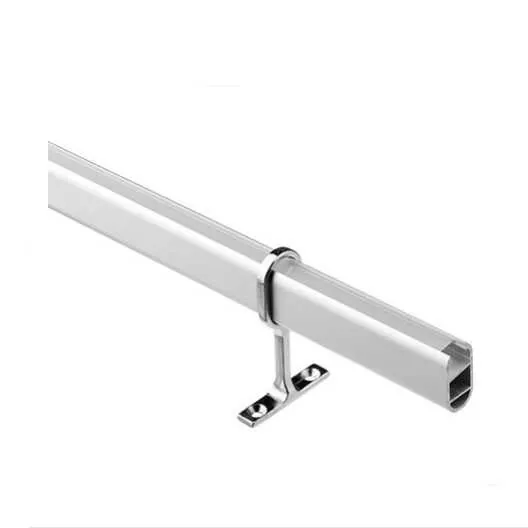
One effective method is to design a die that matches the profile cross section precisely for long run. Good die design reduces stress concentrations. It helps the metal flow evenly through the cross section. Uneven flow can cause internal stress and inconsistencies. A well‑balanced die leads to a more uniform profile.
In addition, custom tooling can include post‑extrusion straightening tools. Some lines use straightening benches, stretching machines, or bending correction rigs immediately after extrusion while the metal is still hot and slightly pliable. This helps correct minor bends or twists before the profile fully cools.
Also custom cooling fixtures help a lot. For long profiles, using controlled water sprays, air fans, and conveyor speed adjustments ensures uniform cooling from start to end. It prevents thermal gradients that cause warping. Some advanced lines even use zone‑by‑zone cooling: different fan settings or spray intensity along the length.
Tooling for handling matters too. Custom rollers, support jigs, and conveyors that match the profile length and weight help avoid sag under gravity. Rolling supports spaced at short intervals reduce bending risk during extrusion and cooling.
Finally, custom measurement jigs allow accurate inspection of long profiles. Adjustable measuring frames, laser scanning systems, or long‑span straight edges help detect warps, twist, or cross‑section deviations along the full length. Early detection means parts can be corrected or rejected before shipping.
Here is a table summarizing typical custom tooling and process adjustments:
| Tool / Method | Formål | Benefit for long profiles |
|---|---|---|
| Custom die | Control flow, reduce stress | More uniform cross‑section, lower internal stress |
| Post‑extrusion straightening bench | Correct bends/twist while hot | Better straightness before cooling sets metal |
| Controlled cooling system | Uniform temperature drop | Reduces warping and shrinkage distortion |
| Specialized support rollers/conveyors | Prevent sag under gravity | Maintains straight shape during processing |
| Precision inspection jigs | Detect deviations over length | Early rejection or correction of flawed parts |
Using custom tooling adds cost and complexity. It also requires skilled operators and maintenance. But for long profiles used in demanding applications (like window frames, structural components, or long rails), the improvement in tolerance and straightness often outweighs the cost.
Therefore, if a project calls for tight tolerances over long lengths, investing in proper tooling and process design is justified.
Custom tooling and process controls can meaningfully reduce tolerance variation in long aluminum extrusionsSandt
Because they improve flow uniformity, cooling consistency, support during extrusion, and allow post‑extrusion correction and proper inspection.
Custom tooling is not helpful for long profiles when standard production is already stableFalsk
Even stable standard lines may not control temperature gradients, sag, or internal stresses well enough for tight tolerances over long profiles.
Konklusion
Ensuring tight tolerance on long aluminum extrusions requires care beyond standard die pressing. With careful tooling, cooling, handling, and inspection, long profiles can meet strict specs. For projects needing high precision over length, investing in custom tooling and process control brings real value.