Where can I buy aluminum extrusion?
I’ve been asked many times: “Where should we buy aluminum extrusions so we get both good price and good quality?”
Here’s the short answer: You can buy from specialist extrusion manufacturers, stock‑profile distributors, or online B2B platforms — but you must compare suppliers, verify quality, and order the right volume for best pricing.
Now I’ll walk through how I assess buying options step by step.
What suppliers offer aluminum extrusion?
You might think “any metal‑shop will do” — but in fact extrusion has its own specialists.
Answer: Suppliers include large global extrusion manufacturers, regional custom‑extruders, and stock‑profile distributors. Each offers different advantages in price, lead time and customization.

When I look for suppliers for aluminum extrusion I categorize them into three key types:
1. Global / large‑scale extrusion manufacturers
These are very big companies with high production capacity, global footprint, and often advanced finishing/secondary operations.
Výhody: They can handle large volumes, complex profiles, strong QA, and global logistics.
Trade‑offs: Minimum order volume may be high; shipping/lead‑time may be longer; price may reflect higher overhead.
2. Regional / custom extruders & job‑batch specialists
These are smaller factories that specialize in custom profiles, lower volumes, more localized support.
Výhody: More flexible for custom shapes, smaller MOQs, sometimes quicker turnaround.
Trade‑offs: May have higher per‑unit cost, fewer finishing/secondary capability, maybe less global shipping support.
3. Stock‑profile distributors / standard catalogue suppliers
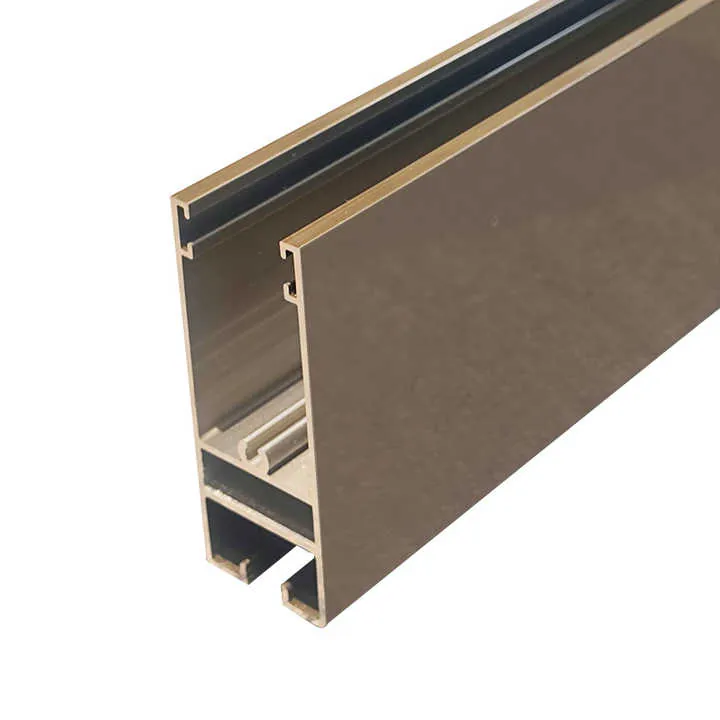
These offer standard aluminum extrusions — common profiles (angles, channels, tubes) in catalogue form from stock.
Výhody: Very fast delivery, lower tooling cost (no custom die needed), predictable pricing.
Trade‑offs: Less customization, limited shapes, may not fit unique design.
My advice for choosing a supplier:
- Define clearly whether you need a custom profile or a standard stock profile.
- Get quotes from at least two types (one large manufacturer & one smaller custom) to compare lead time, MOQ, price.
- Ask about certifications, finishing, secondary operations offered (machining, anodising, powder‑coat).
- Check location/logistics: If the supplier is far away shipping & import cost may erode savings.
- Ask for references or past projects to assess reliability.
In summary: There are many supplier options — your choice depends on volume, customization, finish, shipping & cost priorities.
Why compare prices before buying extrusions?
You might be tempted to pick the first quote that “looks okay” to save time. But that can be risky.
Answer: Because pricing varies widely depending on alloy, profile complexity, finishing, volume and logistics — comparing prices lets you understand where cost comes from and avoid overpaying.

When I advise clients I always recommend comparing multiple supplier quotes for these reasons:
Understanding cost drivers
When you compare quotes you can see how different suppliers break out costs (material, tooling, finish, shipping). That helps you see which element is making one quote higher than another. Without this you might accept a higher price without knowing why.
Avoiding hidden costs
Some suppliers will price extremely low but have hidden costs later (poor finishing, longer lead time, higher scrap rate, shipping delays). Getting more than one quote helps expose these risks.
Vyjednávací páka
When you have two quotes you can use them to negotiate with your preferred supplier. For example: “Supplier A gives $X for finish Y, but Supplier B is at $X‑10% — can you match or beat?” This drives better pricing or better service.
Volume & scale effects
As you compare quotes at different volume levels you will see how volume reduces cost. If you only get one quote you miss that volume lever.
Quality vs cost trade‑off
A cheaper quote might come from lower quality alloy, worse finishing, higher scrap or more logistic risk. By comparing you can evaluate “is the cheaper cost really worth the trade‑offs?”
My checklist for comparing quotes:
- Ensure all quotes are for the same specification: alloy, profile weight/section, finish, tolerance, quantity, delivery terms.
- Ask each supplier to show cost breakdown: material cost, tooling/die cost (if custom), machining/secondary cost, finishing cost, shipping/packaging cost.
- Check lead‑time: often faster quote = higher cost.
- Confirm whether packaging/protection and export logistics (if applicable) are included or extra.
- Check their minimum order quantity (MOQ) and how that affects unit cost.
- Compare terms: payment terms, warranty, quality assurance process, defect policy.
- Don’t only look at “$/kg” or “$/meter” – check that parts are equally treated (surface finish, tolerances, alloy).
What you’ll often find: One supplier’s quote might be say USD $6.50 per kg while another is USD $5.80 per kg for what looks like the same alloy and weight. When you dig deeper you often find that the cheaper one has: smaller batch, longer lead‑time, simpler finish, heavier tolerances. Understanding that helps you decide whether the cheaper quote is acceptable or too risky.
So yes — comparing prices is essential if you want to buy smart.
How to verify extrusion quality before purchase?
You might receive a quote and think “looks fine” — but how do you be sure the extrusion you get meets your specs?
Answer: You verify quality by reviewing supplier certification, requesting sample parts, checking alloy/temper certificates, performing inspection of dimensions, finish and mechanical properties before full purchase.

Here’s how I advise verifying extrusion quality step by step:
1. Supplier credentials & certifications
- Ask if supplier has ISO 9001 or other relevant quality management certifications.
- Verify their extrusion press capabilities: max billet size, press tonnage, alloy capability.
- Check if they have finishing/secondary operations in‑house or can coordinate them.
- Ask for past project references.
2. Material/alloy documentation
- Ask for alloy certificate: confirms which alloy (e.g., 6063‑T5, 6061‑T6) and temper was used.
- If you have stringent mechanical requirement ask for test reports: yield strength, tensile strength, elongation.
- Confirm that supplier’s billets are traceable and that they meet recognized standards.
- Inspect whether recycled or virgin material is being used (if that matters for your application).
3. Sample inspection or pilot run
- Obtain a sample length of the extrusion from the supplier prior to full order.
- Measure critical dimensions: wall thickness, cross‑section, hollows, tolerance, straightness.
- Check surface finish: any scratches, marks, straightness, bending, twisting.
- If finish is required (anodise, powder coat) inspect the sample for finish thickness, colour uniformity, adhesion.
- Ask for documentation of processing: extrusion press details, annealing, sizing, straightening.
4. In‑factory or third‑party inspection
- Where possible arrange a factory visit or ask for third‑party QA verification especially for large orders.
- Inspect their tooling maintenance, cleanliness, change‑over process.
- Review their defect and scrap rate history.
5. Pre‑shipment inspection & packaging
- Confirm how the profiles will be packaged, protected for shipping (especially if export).
- Check for shipping damage risk, bundling, labeling, documentation (alloy/heat lot trace, finish spec).
- Ask for a pre‑shipment inspection report or video.
My practical tips:
- Don’t skip the sample: even a short piece exposes many issues (finish, straightness, dimension).
- Add quality clauses in contract: e.g., supplier must replace or refund profiles not meeting tolerance or finish.
- For export orders especially check packaging and shipping method — damage on arrival is common.
- Consider sending finished parts back to your lab or in‑house QC for mechanical or finish verification if critical.
- Keep records: alloy certificates, QA reports, deviation logs — good suppliers maintain these.
Quick true/false checks:
You can rely solely on the quoted price and skip sample inspection if the supplier is large and well‑knownFalse
Even large suppliers can have issues with a specific die or run; sample inspection still catches issues.
Verifying material alloy and temper before purchase reduces risk of failure in applicationPravda
Correct alloy/temper ensures mechanical & performance specifications are met.
In short: Quality verification is just as important as price when buying aluminum extrusions.
Mohou hromadné objednávky snížit náklady na vytlačování?
You hope that ordering a large quantity will automatically cut your unit cost — and you’re right, but there are trade‑offs.
Answer: Yes, larger volumes reduce per‑unit cost because fixed costs (tooling, setup, die amortisation) are spread over more units. But you must consider design stability, commitment and inventory risk.
Here’s how bulk ordering affects cost, and how I weigh pros & cons:
Why bulk orders reduce per‑unit cost
- Fixed costs (tooling, die cost) amortised over more units → lower cost per unit.
- Setup/overhead: machine set‑up, change‑overs, QA checks somewhat fixed per run; bigger runs absorb that cost better.
- Raw material procurement: Larger order often allows supplier to buy more material at better cost.
- Logistics/packaging: A full container shipment or larger order often/may reduce shipping per unit cost and packaging per meter cost.
- Better yield: Larger continual runs often give better yield, fewer defects, faster cycle time.
Things to watch / plan
- Inventory risk: If you buy large volume and demand changes you may hold stock, tied capital, risk of obsolescence or design change.
- Lead‑time: Larger orders may require longer run time, more freight lock, which may affect your schedule.
- Payment terms: Supplier may require larger deposit or upfront payment for large runs, which increases cash‑flow risk.
- Design stability: Only place bulk orders if design is unlikely to change; otherwise you may pay for obsolete stock.
- Storage conditions: If profiles are delivered earlier than needed you must store properly to prevent damage.
- MOQ / breakpoints: Supplier may have cost breakpoints: e.g., 1,000 m price, 5,000 m price, 20,000 m price — you must understand these.
My approach when negotiating bulk orders:
- Ask supplier: “What is the price at 1,000 m, 5,000 m, 10,000 m for this profile?”
- Build volume forecast: How many metres will you need this year and next year? Can you commit?
- Consider phased order: Maybe lock price for larger volume but call off in smaller batches so you don’t take all stock at once.
- Negotiate die reuse: If you plan future orders, ask supplier to “hold the die” at reduced cost for next run.
- Compare storage cost vs savings: If you save $0.50 per metre but you store and hold for 12 months, is the saving still worth it?
- Understand shipping/logistics: Bulk order may arrive in one large shipment — ensure you have receiving/storage capacity.
True/false checks:
Ordering more metres always gives a lower per‑metre cost for extrusionsFalse
Ordering more *can* give lower cost, but if you incur storage, design change or outdated stock risk, benefits may reduce.
If you commit to a repeat order or ongoing contract then suppliers will offer better pricing for custom extrusionsPravda
Ongoing commitment gives supplier certainty which allows them to offer discounts in tooling and overhead.
So yes — bulk orders can reduce extrusion cost significantly, but you must plan smartly and manage risk.
Závěr
In my experience, buying aluminum extrusion is more than just picking a price and placing an order. It involves selecting the right type of supplier, comparing quotes intelligently, verifying quality thoroughly, and using volume strategy to optimize cost. If you follow a structured approach—define your profile and requirements, obtain multiple quotes, assess supplier credentials, inspect samples, and plan volume wisely—you’ll buy smarter and avoid surprises. Good buying starts with good questions.